

Bumble bees and honey bees are often mistaken for one another because of their similar appearance and shared role in pollination. However, they are very different in how they live, build colonies, and produce honey. While both are vital to our ecosystem, only honey bees create the golden, shelf-stable honey humans consume. Let’s explore how these two fascinating insects differ, especially in their honey-making habits.
Do Bumble Bees Make Honey?
Yes, bumble bees do make honey—but only in small amounts. Their honey production is mainly for survival rather than storage. Bumble bee colonies are small and seasonal, usually lasting just one summer. They gather nectar from flowers, store it in wax pots, and consume it when needed, especially on rainy days when foraging isn’t possible.
Unlike honey bees, bumble bees don’t produce honey in large quantities. Their honey is thinner, more watery, and not designed for long-term storage. This means you won’t find jars of “bumble bee honey” in stores, as it’s impractical to harvest without harming their small colonies.
Bumble Bee Honey vs Honey Bee Honey

The main difference between bumble bee honey and honey bee honey lies in quantity and consistency. Honey bee honey is thick, dense, and long-lasting, ideal for feeding colonies throughout winter. In contrast, bumble bee honey has a higher water content and is consumed almost immediately.
| Feature | Bumble Bee Honey | Honey Bee Honey |
| Texture | Watery and thin | Thick and sticky |
| Storage | Short-term use | Long-term storage |
| Quantity | Very small amounts | Large, harvestable amounts |
| Taste | Mild and floral | Rich and sweet |
In short, while both insects produce honey-like substances, only honey bees generate the kind humans can harvest and preserve.
Appearance and Identification

It’s easy to confuse these two bees, but several physical differences help tell them apart:
- Bumble Bees: Round, large, and covered in thick fuzz. They have black and yellow stripes, giving them a “teddy bear” look.
- Honey Bees: Smaller, more slender, and less hairy. Their color ranges from golden brown to amber, with faint stripes.
- Quick Tip: If it looks plump and fuzzy, it’s likely a bumble bee; if it’s slim and shiny, it’s a honey bee.
These physical traits not only distinguish their appearance but also affect how they collect pollen and survive in different climates.
Nesting and Colony Size
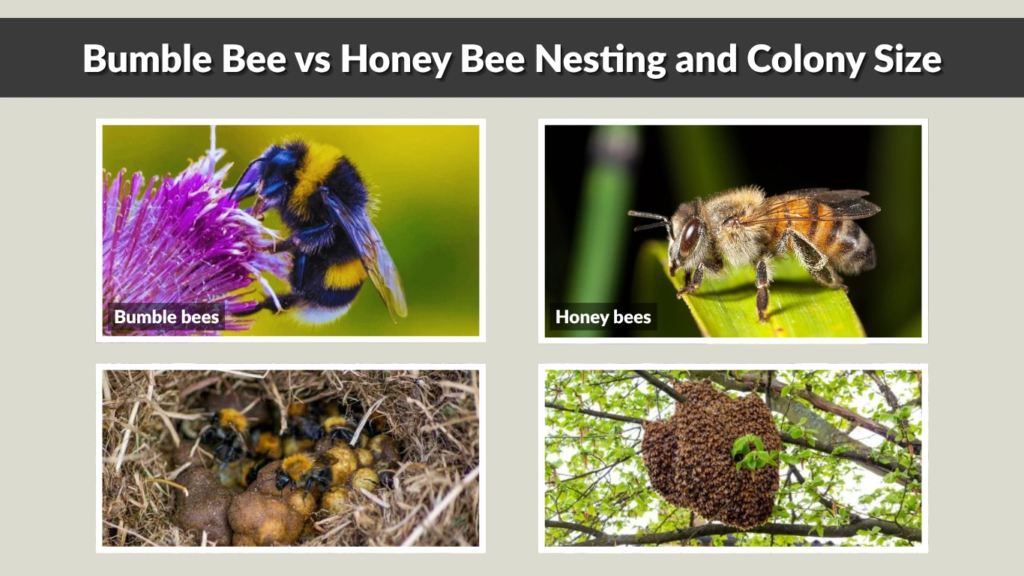
Bumble bees and honey bees also differ significantly in how they build their homes and organize their colonies. Bumble bees prefer underground nests or sheltered spaces such as abandoned rodent burrows, compost piles, or grassy banks. Their colonies are small, often containing 50 to 400 bees.
Honey bees, however, are master builders. They construct large, intricate wax combs that can hold tens of thousands of bees. These hives are designed for year-round living, allowing them to store vast amounts of honey to sustain the colony through winter.
Another key difference is longevity. Bumble bee colonies die off in late autumn, with only the young queens hibernating through winter to start new nests in spring. Honey bee colonies, on the other hand, remain active throughout the year, with workers clustering to keep warm during cold months.
Behavior and Honey Production
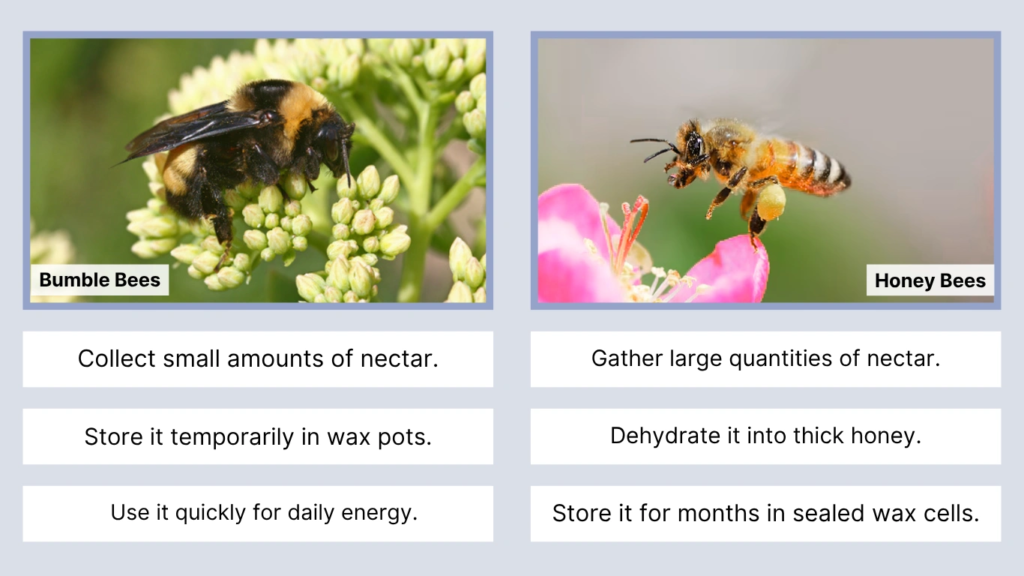
Here’s how the two species differ in behavior and honey-making habits:
- Bumble Bees:
- Collect small amounts of nectar.
- Store it temporarily in wax pots.
- Use it quickly for daily energy.
- Collect small amounts of nectar.
- Honey Bees:
- Gather large quantities of nectar.
- Dehydrate it into thick honey.
- Store it for months in sealed wax cells.
- Gather large quantities of nectar.
This difference explains why honey bees are essential for honey production, while bumble bees focus more on pollination efficiency.
Bumble Bee vs Honey Bee: Pollination Role
Both bees are excellent pollinators, but they use slightly different techniques. Bumble bees are known for buzz pollination, where they vibrate their bodies to release pollen from deep within flowers. This makes them highly effective for crops like tomatoes, blueberries, and peppers.
Honey bees, however, are generalist pollinators, visiting a wider variety of flowers. They’re responsible for pollinating many commercial crops, including almonds, apples, and berries. Because they live in large colonies, honey bees can pollinate massive areas quickly, making them vital to agriculture.
Stings and Aggression
Despite their size, bumble bees are less aggressive than honey bees. They sting only when provoked and, unlike honey bees, they can sting multiple times because their stinger doesn’t detach. Honey bees sting once and die afterward because their stinger stays lodged in the skin.
If you encounter a bumble bee, it’s best to leave it undisturbed. They are gentle and focused on their work, rarely bothering humans unless threatened.
Bumble Bee vs Honey Bee vs Carpenter Bee
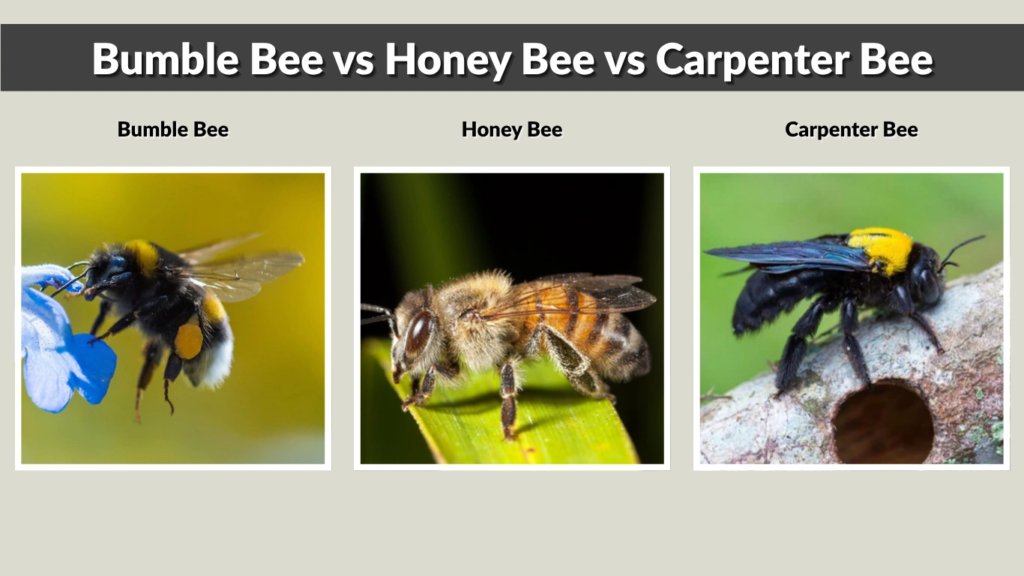
Bumble Bee
Bumble bees are large, fuzzy insects with black and yellow bands. They live in small colonies and are excellent cold-weather pollinators. Their gentle nature and ability to vibrate flowers make them valuable for certain crops that honey bees can’t efficiently pollinate.
Honey Bee
Honey bees are smaller and less hairy, known for their highly organized hives. They are the world’s main honey producers, creating vast quantities of thick, sweet honey for human use. Their colonies can last for years and contain tens of thousands of workers.
Carpenter Bee
Carpenter bees differ from both. They are solitary, shiny, and black, often mistaken for bumble bees. Instead of living in hives, they bore into wood to lay eggs. Although they don’t produce honey, they still play a small role in pollination.
Importance to Ecosystems
Both bumble bees and honey bees are vital to maintaining biodiversity and food production. Bumble bees excel in cooler climates, where their fuzzy bodies allow them to work in early mornings and colder seasons. They specialize in pollinating flowers with deep corollas, ensuring the survival of certain plant species.
Honey bees, on the other hand, are essential for large-scale agriculture. They contribute to over one-third of the food we eat, from fruits and nuts to seeds and vegetables. Their ability to form large colonies and pollinate vast areas makes them indispensable to the global food chain.
Together, these species ensure that plants reproduce and ecosystems remain balanced, supporting wildlife and human agriculture alike.
Can Humans Use Bumble Bee Honey?
Although bumble bees produce honey, humans rarely harvest it. The reasons include:
- Quantity: Bumble bee honey production is minimal, often just enough for the colony’s daily needs.
- Shelf Life: It has a high moisture content, which causes it to ferment quickly.
- Ethical Concerns: Harvesting from such small colonies could destroy them entirely.
While edible, bumble bee honey is more of a biological curiosity than a practical resource. Scientists study it to understand bee behavior and ecology rather than for consumption.
FAQs
Do bumble bees make honey like honey bees?
Bumble bees do make a honey-like substance, but it’s only for short-term use. Their colonies are small and don’t need to store large reserves for winter, unlike honey bees, which produce thick honey that can last for months.
Why don’t we collect bumble bee honey?
The main reason is the colony size. Bumble bees make very little honey—just enough to feed themselves. Harvesting it would destroy the colony, making it unsustainable for human collection or farming.
Which is more important: bumble bees or honey bees?
Both species are equally important but serve different purposes. Bumble bees are superior at pollinating certain plants through buzz pollination, while honey bees are crucial for agricultural crops and commercial honey production.
Are bumble bees and honey bees the same species?
No, they belong to different genera. Bumble bees are part of the Bombus genus, and honey bees belong to Apis. They differ in appearance, nesting habits, colony structure, and honey-making abilities.
Can bumble bees survive without making much honey?
Yes. Bumble bees rely on fresh nectar and produce just enough honey for immediate survival. Since their colonies don’t need to last through the winter, storing large amounts isn’t necessary for their life cycle.
