

Carpenter bees are fascinating yet destructive insects known for their wood-boring behavior. Unlike honeybees, they do not live in hives; instead, they create tunnels inside wood to lay eggs and protect larvae. Understanding how to identify, locate, and remove a carpenter bee nest is key to preventing long-term damage to your property.
Understanding Carpenter Bees
Carpenter bees resemble bumblebees but have shiny, hairless abdomens. These solitary insects prefer dry, untreated wood such as decks, fences, and eaves. The females bore round, smooth holes into wood surfaces, creating tunnels where they lay eggs. Males, although aggressive in guarding the nest, cannot sting. Carpenter bees play an important role in pollination but can cause significant structural damage over time.
What Does a Carpenter Bee Nest Look Like?

A carpenter bee nest is easy to recognize once you know what to look for. The entrance hole is perfectly round—about the size of a pencil—and usually appears on soft or weathered wood. Beneath the surface, the tunnel extends several inches, often branching into multiple chambers. These chambers hold eggs and stored pollen to nourish developing larvae.
Common signs include:
- Fresh sawdust near wooden surfaces
- Yellowish stains on wood from pollen
- Continuous buzzing sounds around eaves or railings
Photographs or images of carpenter bee nests often show smooth tunnels and small circular openings along beams or outdoor furniture.
Where Do Carpenter Bees Nest?

Carpenter bees prefer nesting in softwoods such as pine, cedar, or redwood. They often target wooden structures like decks, siding, window frames, and fences. In nature, they also bore into trees and fallen logs. Though rare, carpenter bees can nest in the ground, especially if soil conditions are dry and firm.
They typically avoid painted or varnished wood, which is why treating surfaces can help prevent nesting. Homes near wooded areas or older constructions are at higher risk for infestations.
Carpenter Bee Nesting Habits

These bees start nesting in spring when temperatures rise. Females drill into wood to create a tunnel system where they lay 6–10 eggs, separated by partitions of pollen and sawdust. After hatching, young bees remain in the nest until late summer before emerging to forage.
Key behaviors include:
- Reusing old nests: Females often return to the same holes yearly, expanding tunnels.
- Limited colony size: Usually only 2–6 bees share a nest, making them less social than honeybees.
- Protective males: Males hover near entrances to deter intruders but cannot sting.
Over time, reused nests can become large and complex, weakening beams or rafters if not managed early.
Types of Carpenter Bee Nests

Carpenter bee nests vary based on location and environment.
1. Carpenter Bee Nest in Wood:
The most common type, found in decks, porches, and house eaves. These nests are typically hidden but cause gradual damage to wooden surfaces.
2. Carpenter Bee Ground Nest:
Though less common, some carpenter bees tunnel into soil banks or dry ground. These nests are shallow and less damaging to structures.
3. Carpenter Bee Nest in Trees or Walls:
Bees may also burrow into dead tree limbs or exposed wooden walls. In homes, wall cavities can serve as protected nesting areas, leading to noise and minor insulation damage.
4. Carpenter Bee Nest Box:
Artificial nest boxes can attract bees away from structures. These mimic natural tunnels and are useful for bee observation or conservation.
Identifying a Carpenter Bee Infestation
Finding a carpenter bee nest early helps avoid serious damage. Look for pencil-sized entry holes, piles of sawdust, and buzzing activity around wooden surfaces. In severe cases, multiple holes may appear close together, indicating an expanding colony. You can also gently tap the wood—if hollow-sounding or crumbly, bees may be tunneling inside.
If the infestation is new, sealing the hole after the bees exit in late summer can stop re-entry. For older nests, professional inspection is advised.
Carpenter Bee Nest Damage
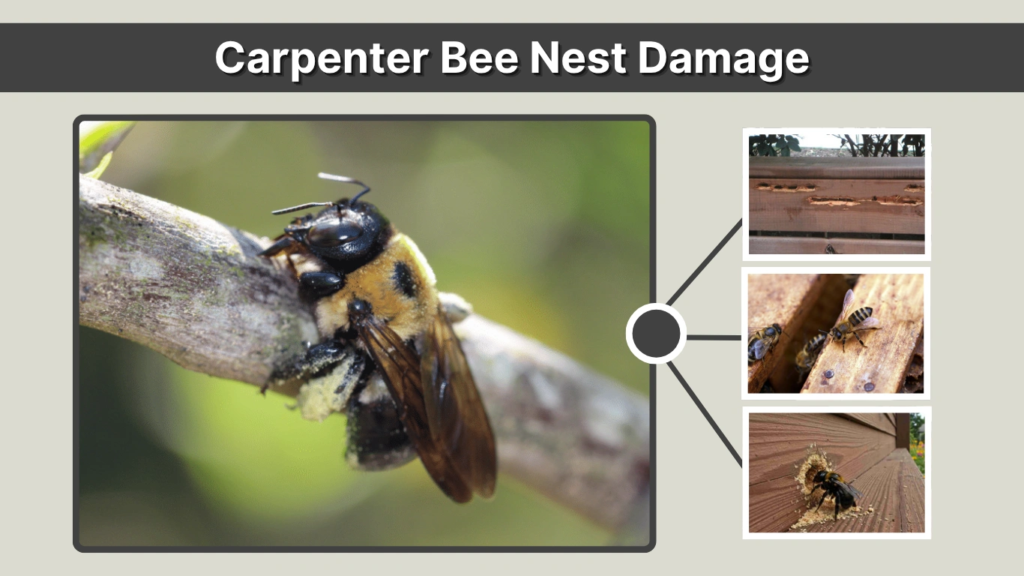
Carpenter bees don’t eat wood, but their drilling weakens structures over time. Repeated nesting can lead to:
- Cracked beams or railings
- Entry points for moisture and other insects
- Unsightly wood surfaces
Even though one nest may seem minor, several reused tunnels can compromise wooden integrity. Birds like woodpeckers may also peck at the wood to feed on larvae, causing further destruction.
How to Get Rid of a Carpenter Bee Nest
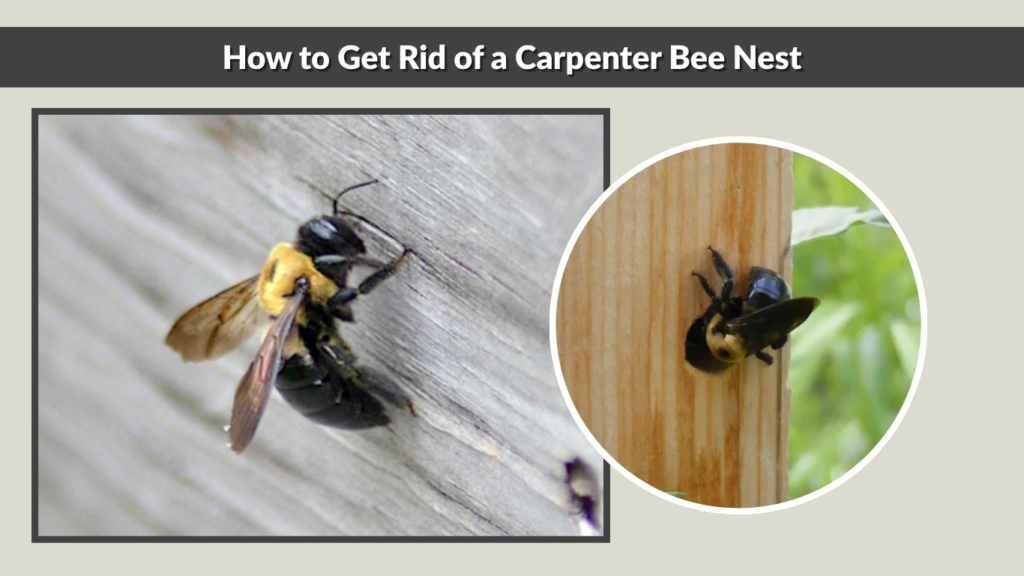
Removing carpenter bee nests requires care to protect both property and pollinators. Use these steps for safe elimination:
- Locate all active nests. Check for buzzing and visible holes.
- Apply treatment at dusk. Spraying foaming insecticide like Spectracide Carpenter Bee & Ground Nesting Yellowjacket Killer into holes works effectively.
- Wait and seal holes. After ensuring bees have exited, fill tunnels with wood putty and repaint the surface.
- Use deterrents. Hanging fake wasp or hornet nests nearby discourages new bees from nesting.
In large infestations, hiring a pest control expert ensures full removal without harming nearby ecosystems.
Best Carpenter Bee Nest Removal Products

When dealing with persistent carpenter bee infestations, using the right products ensures safety and long-term results.
Spectracide Carpenter Bee & Ground Nesting Yellowjacket Killer Foaming Aerosol is one of the most effective solutions. The foam expands inside tunnels, killing bees on contact and blocking future entry. It’s especially useful for reaching deep or hidden nests.
Alternative products like dust insecticides or residual sprays can also help but must be applied carefully to avoid harming beneficial pollinators.
Other reliable options include:
- Spectracide Carpenter Bee and Nesting Yellowjacket Killer: For quick elimination in wooden or underground nests.
- Eco-friendly bee deterrent sprays: Made from natural oils such as peppermint and citronella.
- Wood sealants: Prevents bees from re-drilling into old holes.
Always wear gloves and protective clothing while applying treatments, and perform these actions at dusk when bees are less active.
Using Fake Nests to Deter Carpenter Bees
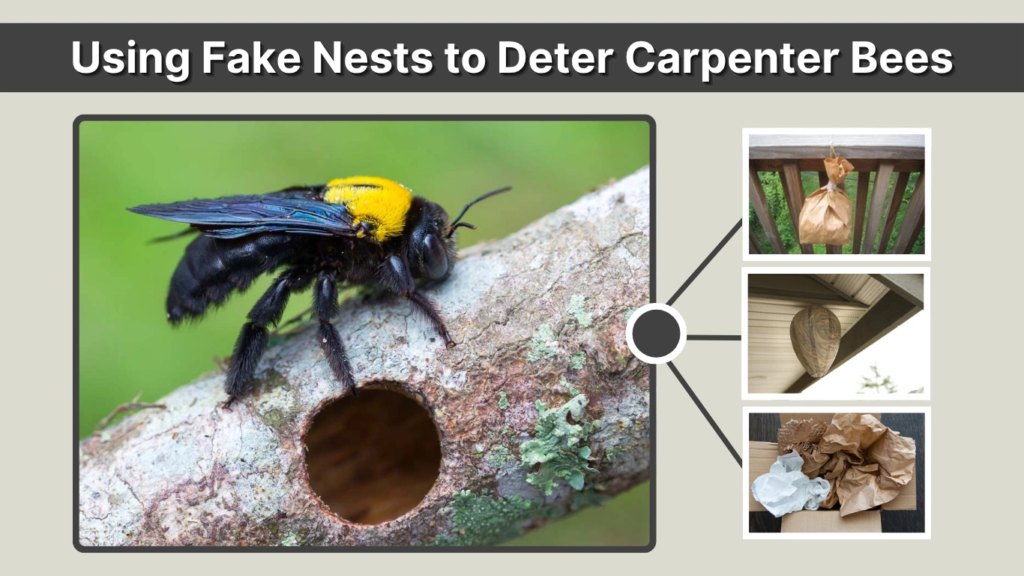
Carpenter bees are territorial and avoid nesting near other colonies. This behavior can be exploited using fake wasp or hornet nests. Hanging a decoy—such as a paper bag, fabric nest, or plastic replica—can deter them from boring into nearby wood.
Do Fake Nests Really Work?
Yes, to some extent. While fake nests don’t physically repel bees, they create the illusion of an occupied territory. When placed in visible areas like porches, patios, or garden sheds, carpenter bees often move elsewhere to find new nesting grounds.
Common types include:
- Paper bag hornet nests: Simple and affordable deterrents.
- Commercial wasp nest decoys: Designed to look realistic and weather-resistant.
- Homemade options: Crumpled brown paper or cloth stuffed with plastic bags.
For maximum effectiveness, hang decoys in early spring before bees start building nests. Replace them every season to maintain their appearance.
Preventing Carpenter Bees from Nesting Again
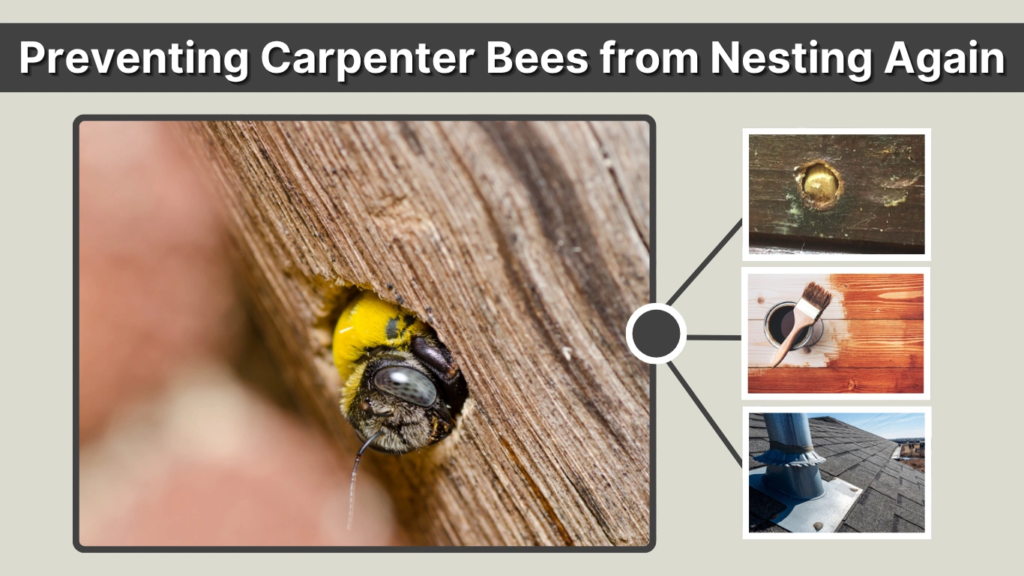
Once the current infestation is handled, prevention is crucial. Carpenter bees often return to old tunnels, so sealing and treating affected areas helps avoid re-infestation.
Here are effective preventive strategies:
- Seal all holes: Use wood filler or caulk to close old tunnels after ensuring no bees remain inside.
- Paint or varnish wood: Treated and painted surfaces discourage drilling.
- Install metal flashing: Cover exposed beams or deck edges.
- Use repellents: Spray natural deterrents like citrus or almond oil around high-risk areas.
- Provide alternative nesting spots: A carpenter bee nest box can redirect them away from homes while preserving pollination.
Routine maintenance, especially before spring, significantly reduces the likelihood of bees returning to your property.
Carpenter Bee Nest and Bumblebee Nest Differences
Carpenter bees and bumblebees are often confused, but their nesting habits differ greatly. Bumblebees build waxy colonies underground or in thick vegetation, while carpenter bees tunnel into solid wood. Bumblebee nests look like soft wax clusters, whereas carpenter bee nests have clean, circular holes. Identifying these differences helps determine the correct control method and avoid harming non-destructive bee species.
FAQs
What does a carpenter bee nest look like?
A carpenter bee nest starts with a round, smooth hole about half an inch wide. Inside, it contains long tunnels and chambers packed with pollen for larvae. You may also notice sawdust piles and yellow stains on nearby wood.
Do carpenter bees nest in the ground or in wood?
Carpenter bees mostly nest in wood, but some species can burrow into firm, dry soil. Ground nests are shallow compared to wooden ones and usually found in undisturbed areas like embankments or gardens.
How many carpenter bees are in one nest?
Each nest typically contains 2–6 adult bees, depending on the season. Females are the builders and egg layers, while males guard the entrance. Older tunnels reused each year can house more bees over time.
Do fake wasp nests really deter carpenter bees?
Yes, fake nests can help prevent carpenter bees from settling near your home. Since bees avoid territories already occupied by other insects, hanging a decoy nest in early spring discourages them from drilling new holes in wood.
How can I permanently get rid of carpenter bee nests?
To eliminate nests permanently, treat all active tunnels with insecticidal foam, wait a few days, then seal holes with wood putty. Repaint or varnish the area, hang fake nests nearby, and maintain treated wood to prevent future infestations.
