
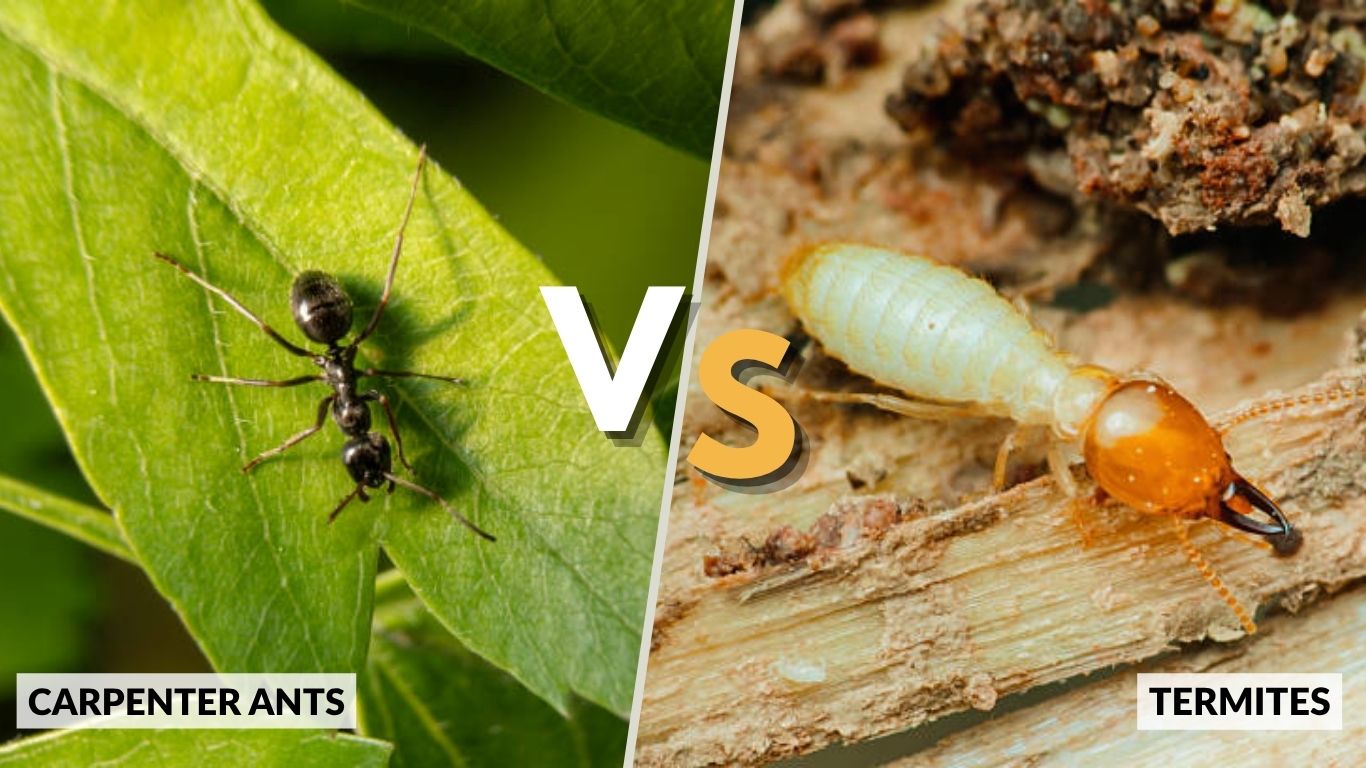
Carpenter ants and termites are two of the most commonly confused pests in homes, yet they behave very differently and require completely different treatment methods. Both can damage wood, but the way they do it—and the speed of destruction—varies significantly. Misidentifying them can lead to ineffective control and costly repairs. By understanding their physical differences, damage patterns, and warning signs, homeowners can quickly determine which pest they’re dealing with and take the right action before the problem worsens.
Carpenter Ants vs Termites: Overview
Understanding the basic difference between carpenter ants and termites is the first step toward proper identification and control.
What Are Carpenter Ants?
- Nest in wood but do not eat it
- Prefer damp or decaying wood
- Create smooth tunnels (galleries)
What Are Termites?
- Feed on wood and cellulose materials
- Live in large colonies underground or inside wood
- Cause hidden and rapid structural damage
Physical Differences: Carpenter Ant vs Termite
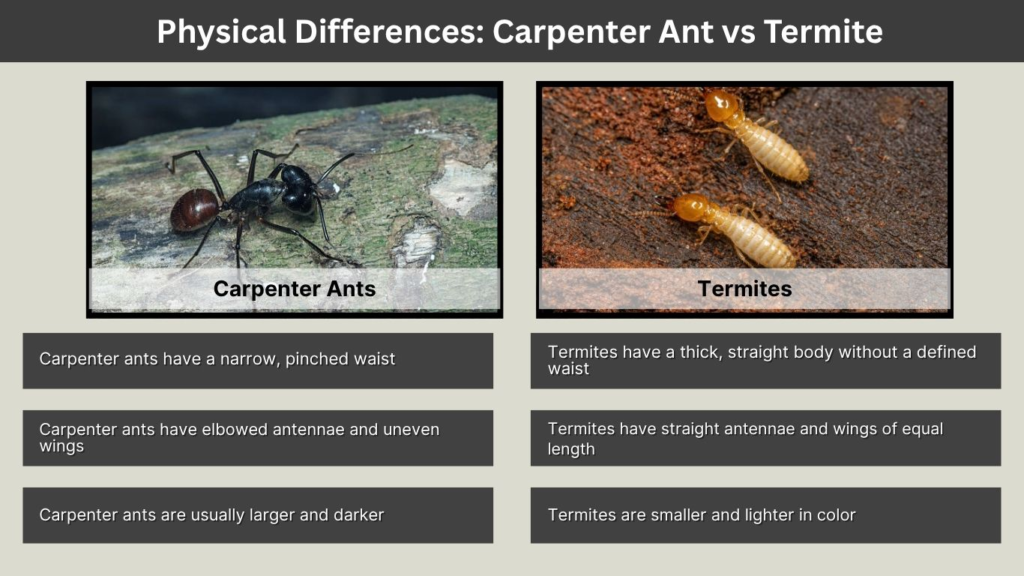
Physical appearance is one of the easiest ways to tell these pests apart, especially when you see them up close or during swarming season.
Body Shape and Structure
- Carpenter ants have a narrow, pinched waist
- Termites have a thick, straight body without a defined waist
Antennae and Wings
- Carpenter ants have elbowed antennae and uneven wings
- Termites have straight antennae and wings of equal length
Size Comparison
- Carpenter ants are usually larger and darker
- Termites are smaller and lighter in color
Carpenter Ants With Wings vs Termites
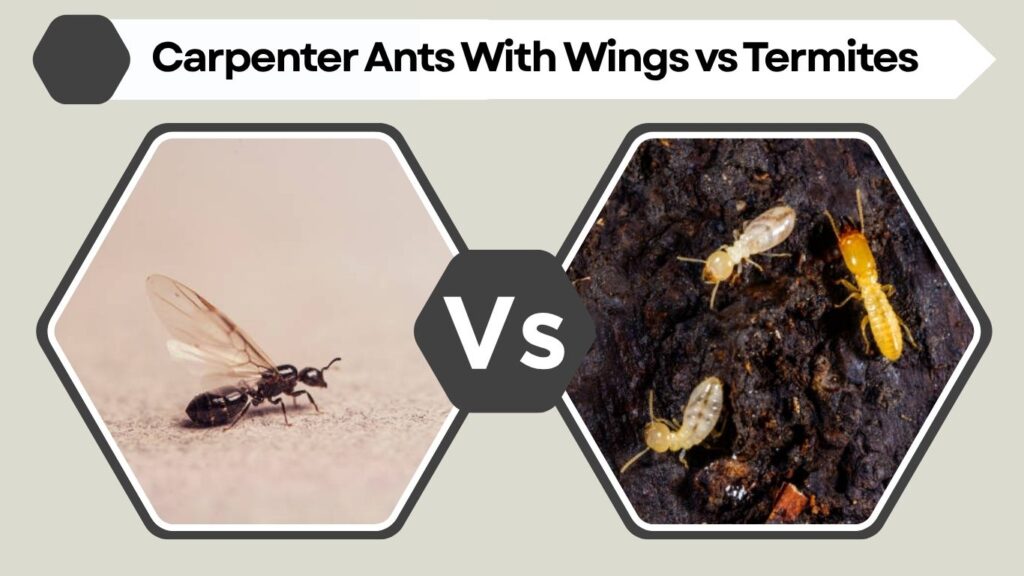
Winged insects are often the most confusing stage for homeowners, as both pests produce swarmers during certain times of the year.
Wing Differences
- Carpenter ants have front wings longer than back wings
- Termites have two pairs of wings that are equal in size
Swarmer Behavior
- Carpenter ant swarmers are often seen near their nest
- Termite swarmers usually indicate an active infestation inside the structure
Carpenter Ant Damage vs Termite Damage

Carpenter ants and termites both damage wood, but the way they do it is very different. Recognizing these differences can help you identify the pest even if you don’t see the insects themselves.
Carpenter ants tunnel through wood to create nests, leaving behind smooth, clean galleries. They do not consume the wood, which means the damage develops gradually. Termites, on the other hand, eat wood from the inside out, often leaving only a thin outer layer intact. This type of damage can go unnoticed for long periods and may lead to serious structural issues much faster than carpenter ant activity.
Carpenter Ant Frass vs Termite Frass
Frass, or insect droppings, is one of the most reliable signs for distinguishing between carpenter ants and termites.
Carpenter Ant Droppings
- Sawdust-like material
- Mixed with insect parts and debris
- Found near nesting areas
Termite Droppings
- Small, uniform pellet-shaped waste
- Dry and sand-like in texture
- Often found in piles near infested wood
Signs of Carpenter Ants vs Termites
Recognizing the signs early can help prevent extensive damage and allow for quicker treatment.
Signs of Carpenter Ants
- Large ants visible inside the home
- Frass piles near wood structures
- Faint rustling sounds in walls
Signs of Termites
- Mud tubes along walls or foundation
- Discarded wings near windows or doors
- Hollow-sounding or damaged wood
Carpenter Ant Holes vs Termite Holes

Carpenter ants and termites leave different types of entry and exit points in wood. Carpenter ants create clean, smooth holes as they excavate wood for nesting. These openings are often visible and may be surrounded by frass. Termites, however, typically remain hidden and build mud tubes to travel, leaving fewer visible holes. Their entry points are often concealed, making termite infestations harder to detect until significant damage has occurred.
Damage Signs: Carpenter Ants vs Termites
Understanding how each pest damages wood helps you identify the problem even if you never see the insects themselves.
Wood Damage Comparison
- Carpenter ants hollow out wood but leave smooth, clean tunnels
- Termites consume wood, leaving rough and uneven internal damage
- Carpenter ant damage often includes visible debris nearby
Structural Impact
- Carpenter ants cause gradual weakening over time
- Termites can cause rapid and severe structural failure
- Termite damage is often hidden until it becomes serious
Carpenter Ants vs Termites in Trees
Both pests can begin their activity outdoors before moving into homes. Carpenter ants commonly nest in damp or rotting trees and may expand into nearby structures. Termites, especially subterranean types, live in soil and can infest tree roots or dead wood. When trees near a house are affected, they can act as a bridge, allowing pests to spread indoors if conditions are favorable.
Which Is Worse: Carpenter Ants or Termites?
When comparing overall impact, termites are generally considered more destructive because they actively consume wood and can spread unnoticed. Carpenter ants, while still harmful, mainly excavate wood for nesting, which slows the damage process. However, both pests can lead to costly repairs if ignored, and the severity often depends on how long the infestation goes undetected.
How to Identify Carpenter Ants vs Termites
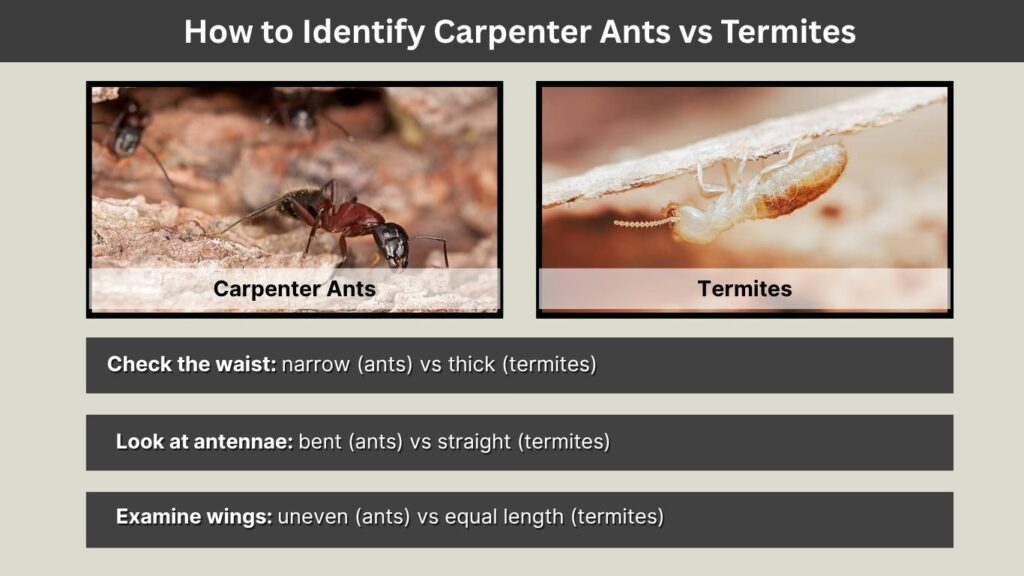
Correct identification is essential before starting any treatment, as control methods differ significantly.
Step-by-Step Identification
- Check the waist: narrow (ants) vs thick (termites)
- Look at antennae: bent (ants) vs straight (termites)
- Examine wings: uneven (ants) vs equal length (termites)
Common Mistakes
- Confusing flying ants with termite swarmers
- Ignoring frass differences
- Misjudging damage patterns
Treatment Differences: Carpenter Ant vs Termite Control
Each pest requires a different control strategy, so proper identification ensures effective treatment.
Carpenter Ant Control
- Use bait systems to eliminate colonies
- Reduce moisture and repair damaged wood
- Locate and remove nests
Termite Control
- Apply soil treatments around the foundation
- Install bait stations for long-term control
- Seek professional pest control for severe cases
Prevention Tips
Preventing infestations is the most effective way to avoid costly repairs and long-term problems.
Preventing Carpenter Ants
- Fix leaks and reduce indoor moisture
- Remove decaying wood near the home
- Seal cracks and entry points
Preventing Termites
- Keep wood away from soil contact
- Maintain proper drainage around the house
- Schedule regular inspections
FAQs
How can you tell carpenter ants from termites?
You can identify them by body shape, antennae, and wings. Carpenter ants have a narrow waist, bent antennae, and uneven wings, while termites have straight bodies, straight antennae, and wings of equal size.
Which causes more damage: termites or carpenter ants?
Termites generally cause more damage because they eat wood continuously. Their activity is often hidden, allowing them to weaken structures faster than carpenter ants.
What is the difference between carpenter ant frass and termite frass?
Carpenter ant frass looks like sawdust mixed with debris, while termite frass appears as small, uniform pellets. This difference is a key sign for identifying the pest.
Are flying carpenter ants the same as termites?
No, flying carpenter ants and termites differ in wing size and body structure. Ants have uneven wings and a narrow waist, while termites have equal wings and a straight body.
Should I treat carpenter ants and termites the same way?
No, treatment methods are different. Carpenter ants are controlled with bait and moisture reduction, while termites often require soil treatments and professional pest control solutions.
