
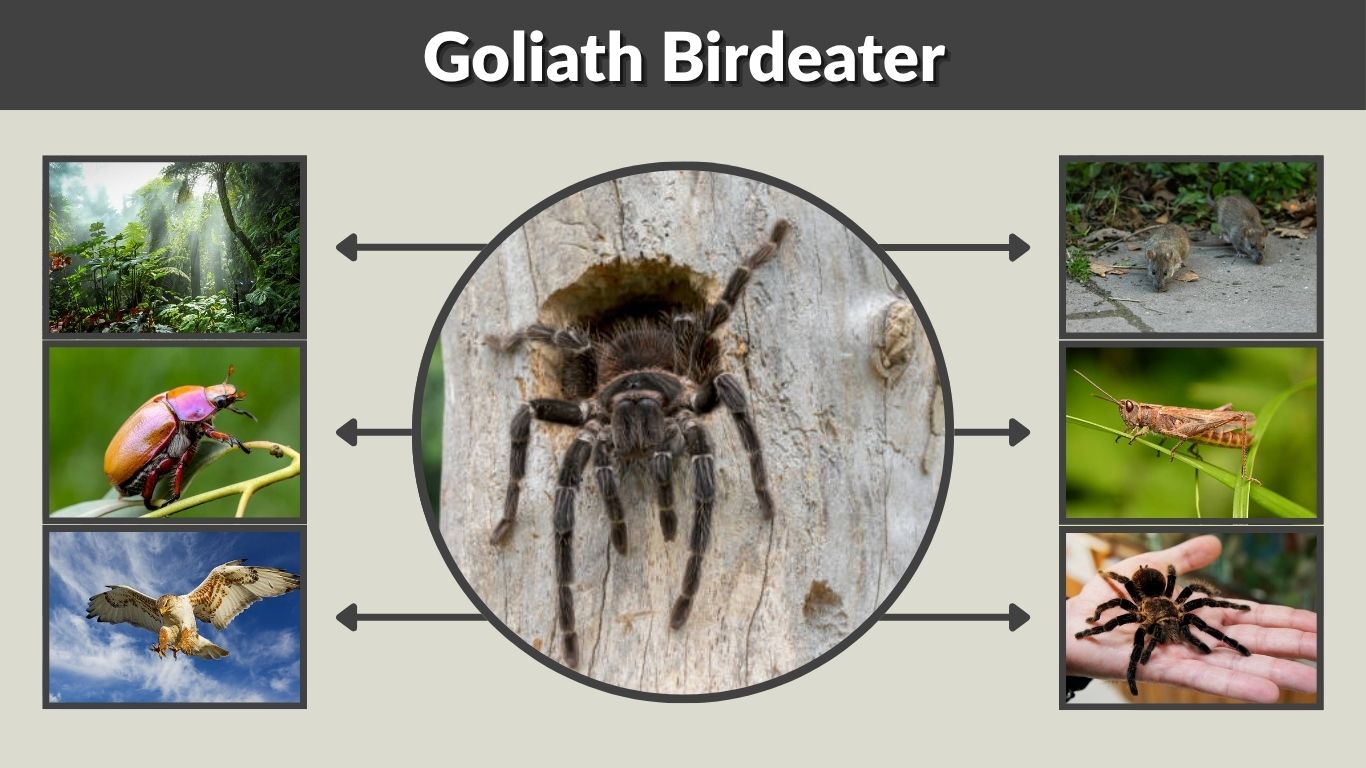
The Goliath birdeater is one of the most fascinating and intimidating creatures in the spider world. Known for its massive size and unique hunting abilities, this tarantula often sparks curiosity and fear at the same time. Despite its reputation, it is not as dangerous as many people think. Native to the rainforests of South America, it plays an important role in the ecosystem. In this guide, you will learn about its size, behavior, habitat, diet, and whether it is truly dangerous.
What Is the Goliath Birdeater?
The Goliath birdeater, scientifically known as Theraphosa blondi, is the largest spider in the world by mass. It belongs to the tarantula family and is famous for its heavy body and long legs. Although its name suggests it regularly eats birds, that behavior is actually quite rare.
This spider is more commonly found hunting insects and small animals on the forest floor. Its large size and hairy body make it one of the most recognizable tarantulas in the world. It is often confused with other giant spiders, but its weight and build set it apart.
Goliath Birdeater Size and Physical Features
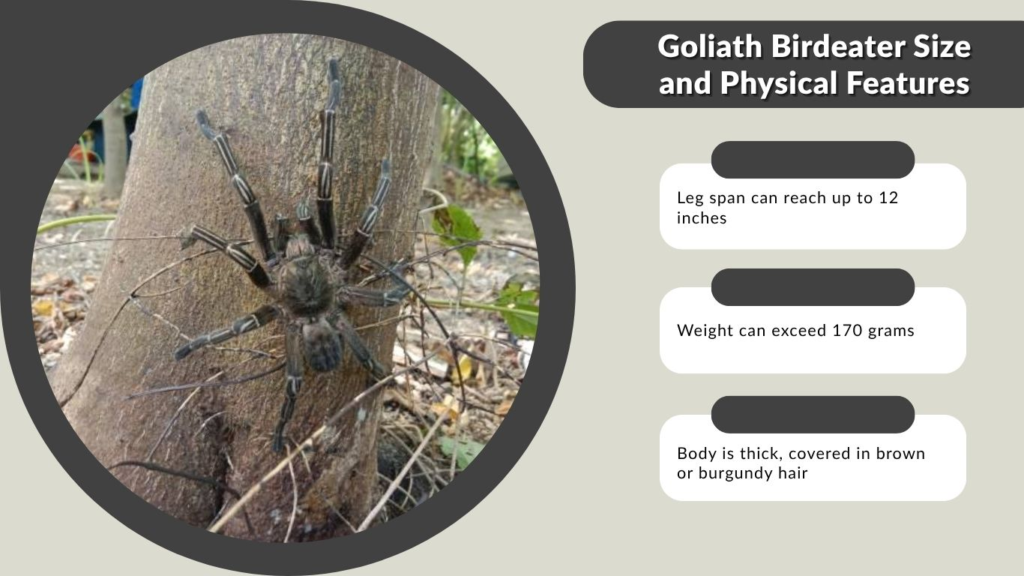
The size of the Goliath birdeater is what makes it truly remarkable. It is considered the heaviest spider on Earth and can appear quite overwhelming when seen up close.
- Leg span can reach up to 12 inches (30 cm)
- Weight can exceed 170 grams
- Body is thick, covered in brown or burgundy hair
In addition to its size, it has large fangs that can grow up to an inch long. These fangs are used primarily for capturing prey rather than defense. Compared to a human hand, a fully grown Goliath birdeater can easily cover the entire palm, making it one of the largest spiders people can encounter.
Is It the Biggest Spider in the World?
Many people believe the Goliath birdeater is the biggest spider in every category, but that is only partly true. It holds the record for weight, not for leg span.
- Largest by mass: Goliath birdeater
- Largest by leg span: Giant huntsman spider
- More robust body compared to thinner species
The giant huntsman spider may have longer legs, but it is much lighter and less bulky. This makes the Goliath birdeater the true heavyweight champion among spiders. Its thick legs and dense body give it a powerful appearance that few other spiders can match.
Where Does the Goliath Birdeater Live?
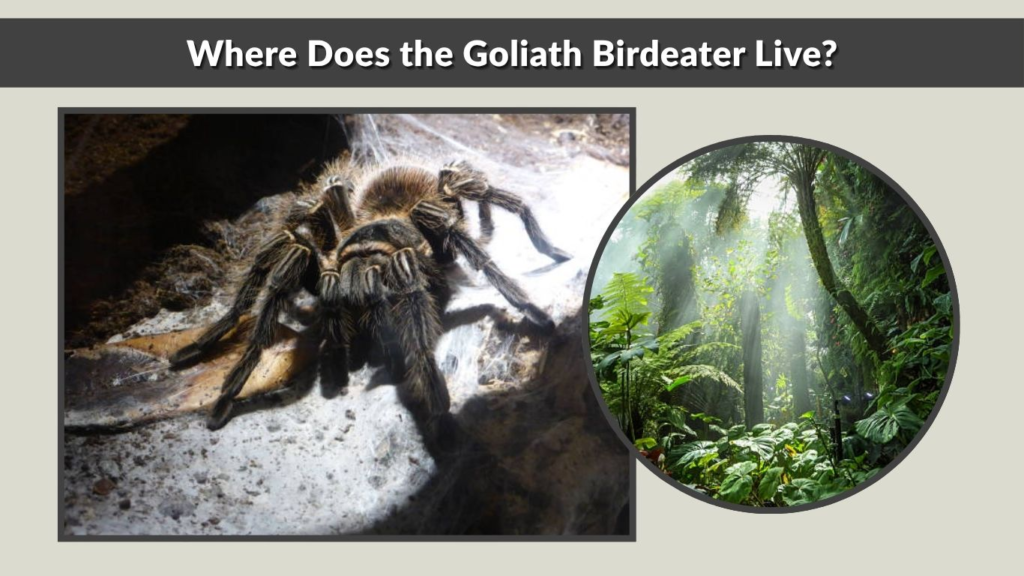
The Goliath birdeater is found in the tropical rainforests of South America. It prefers warm, humid environments where it can hide and hunt effectively. These spiders usually stay close to the ground rather than climbing trees.
They build burrows in soft soil or take over abandoned holes made by other animals. These burrows provide protection from predators and help maintain moisture, which is essential for their survival. The dark, damp conditions of the rainforest floor make an ideal habitat for this species.
Countries where they are commonly found include Brazil, Venezuela, and Guyana. In these regions, they play an important role in controlling insect populations and maintaining ecological balance.
Goliath Birdeater Diet and Hunting Behavior
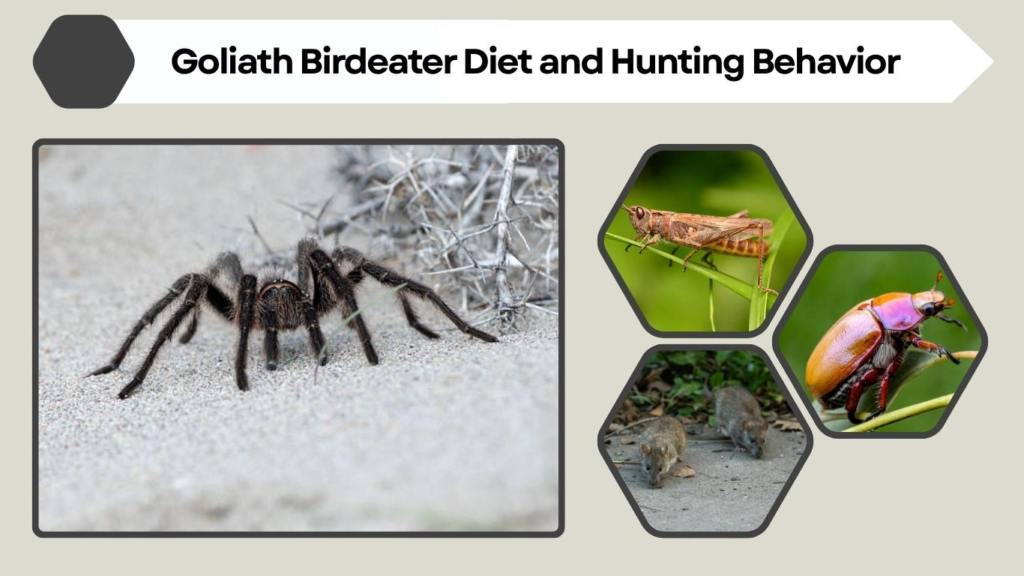
Despite its dramatic name, the Goliath birdeater does not rely on birds as its main source of food. It is an opportunistic predator that feeds on a wide variety of animals.
- Insects such as crickets and beetles
- Small vertebrates like frogs and mice
- Occasionally birds or reptiles
It uses an ambush hunting strategy, waiting quietly near its burrow for prey to come close. Once an animal is within reach, the spider strikes quickly and injects venom to immobilize it. Its strong fangs allow it to handle prey larger than what most spiders can manage.
Goliath Birdeater Bite and Danger Level
The Goliath birdeater may look frightening, but it is not deadly to humans. Its venom is relatively mild compared to more dangerous spider species. A bite can be painful, often described as similar to a wasp sting, but serious harm is very rare.
What makes this spider more defensive is its ability to release tiny, irritating hairs from its abdomen. These hairs can cause itching and discomfort if they come into contact with skin or eyes. Instead of attacking, the spider usually prefers to avoid confrontation and will only bite if threatened.
Overall, the Goliath birdeater is more of a misunderstood giant than a true danger.
Lifespan and Growth of the Goliath Birdeater
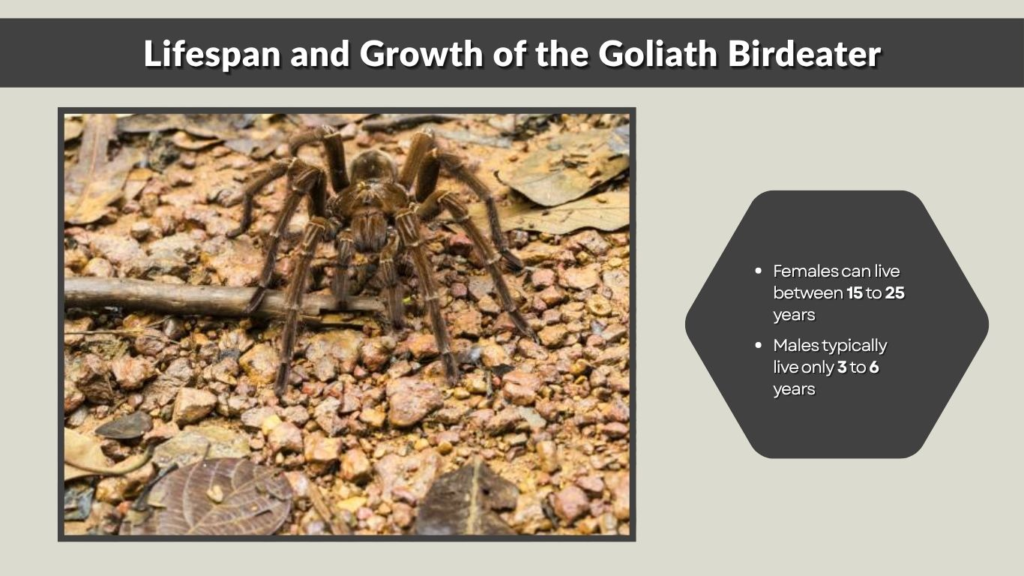
The lifespan of the Goliath birdeater varies greatly between males and females. Like most tarantulas, females live significantly longer, making them more desirable for enthusiasts and researchers.
- Females can live between 15 to 25 years
- Males typically live only 3 to 6 years
- Growth occurs through molting, where the spider sheds its exoskeleton
Molting is a critical stage in their life cycle. During this time, the spider becomes vulnerable and avoids movement. After molting, it emerges larger and continues its slow growth toward full size.
Are Goliath Birdeaters Dangerous or Friendly?
The Goliath birdeater is often misunderstood due to its size and appearance. In reality, it is not aggressive toward humans and prefers to stay hidden. However, it can become defensive if it feels threatened.
- Uses a hissing sound (stridulation) to warn predators
- Flicks urticating hairs as a defense mechanism
- Bites only as a last resort
These behaviors are meant to scare off threats rather than cause harm. Most encounters with humans end without any physical contact, as the spider usually retreats when given the chance.
Goliath Birdeater as a Pet
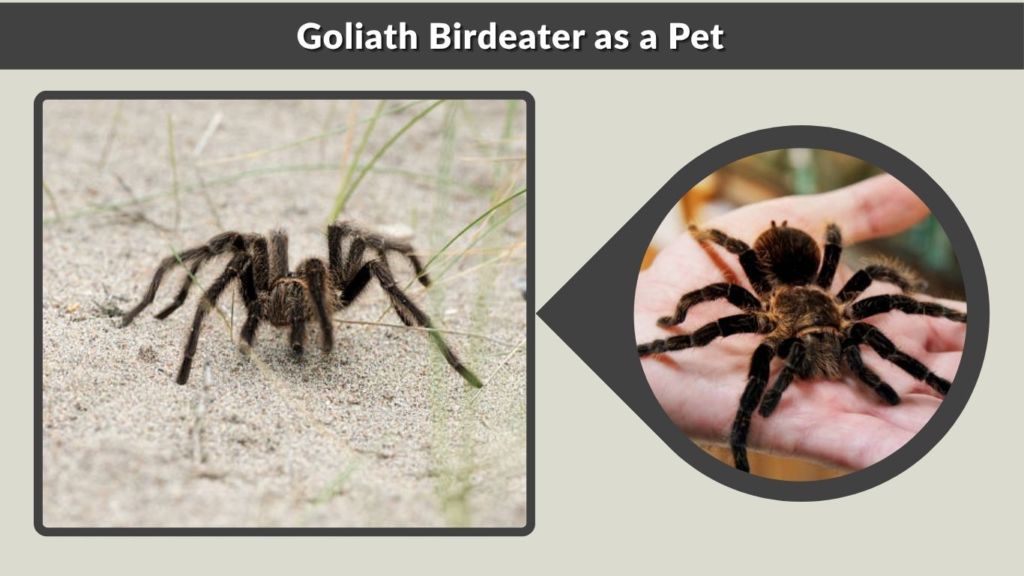
Keeping a Goliath birdeater as a pet is possible, but it requires experience and proper care. This species is not ideal for beginners due to its size, defensive traits, and environmental needs.
Care Requirements
A suitable enclosure must replicate the spider’s natural habitat. This includes maintaining high humidity, soft substrate for burrowing, and a stable temperature. Regular feeding with live insects is also necessary to keep the spider healthy.
Handling is generally discouraged because the spider can become stressed or defensive. Instead, it is best observed rather than touched. With proper care, it can live for many years and become a fascinating display animal.
Cost and Availability
The availability of Goliath birdeaters varies depending on location and regulations. In some regions, they are rare and expensive due to import restrictions.
Prices can differ widely based on age, size, and breeding conditions. Ethical sourcing is important, and captive-bred specimens are always preferred over wild-caught ones.
Predators and Natural Threats
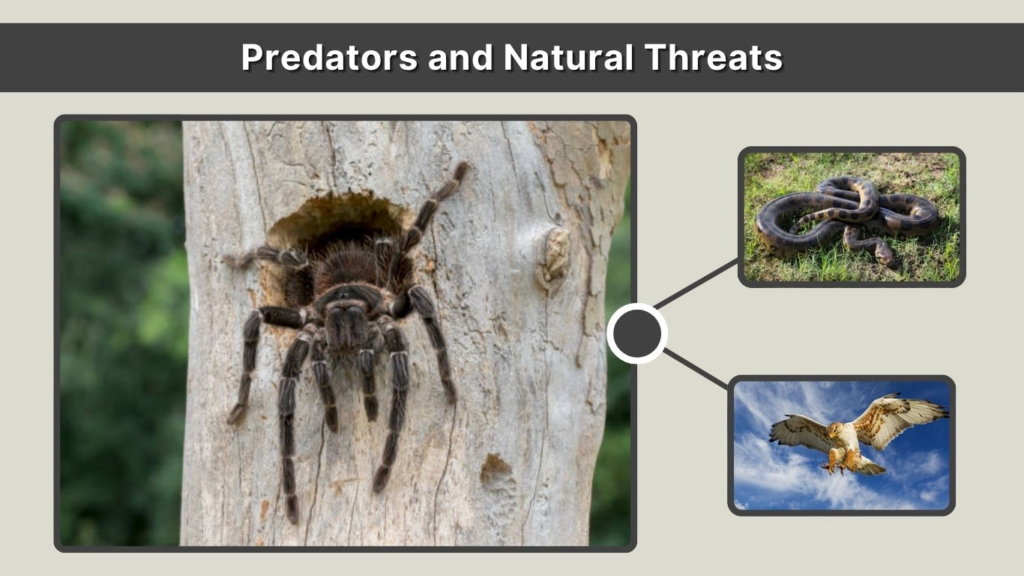
Even though the Goliath birdeater is large and powerful, it still faces dangers in the wild. Several animals prey on or threaten this spider in its natural environment.
- Large snakes that hunt on the forest floor
- Birds of prey capable of lifting them
- Humans through habitat destruction
Deforestation and environmental changes pose the biggest long-term threat. As rainforests shrink, the natural habitat of the Goliath birdeater continues to decline.
Unique Facts About the Goliath Birdeater
The Goliath birdeater has several unusual traits that make it stand out among spiders. One of its most surprising abilities is producing a loud hissing sound by rubbing its legs together, a behavior rarely seen in other spiders. It also has some of the largest fangs of any spider species, allowing it to subdue relatively large prey.
Another interesting fact is that it does not build traditional webs to catch food. Instead, it uses silk mainly to line its burrow and detect vibrations. This makes it a highly efficient ground hunter rather than a web-based predator.
FAQs
Can a Goliath birdeater kill a human?
No, it cannot kill a human. Its venom is relatively mild and not designed to harm large animals. While a bite can be painful and uncomfortable, it is rarely dangerous and usually does not require serious medical treatment.
Does the Goliath birdeater really eat birds?
Yes, but very rarely. Despite its name, it mainly feeds on insects, frogs, and small animals. Bird predation has been observed but is uncommon and not a regular part of its diet.
How big is a Goliath birdeater compared to a human hand?
A fully grown Goliath birdeater can be about the size of a large human hand, with a leg span reaching up to 12 inches. Its body mass makes it appear even larger and more intimidating.
Is the Goliath birdeater venomous or poisonous?
It is venomous, meaning it injects venom through its fangs. It is not poisonous, which would mean it is harmful when touched or eaten. Its venom is mild compared to more dangerous spiders.
Can you keep a Goliath birdeater as a pet?
Yes, but it is not recommended for beginners. It requires a carefully maintained environment with high humidity and proper feeding. Its defensive nature also makes handling risky, so it is better suited for experienced keepers.
