
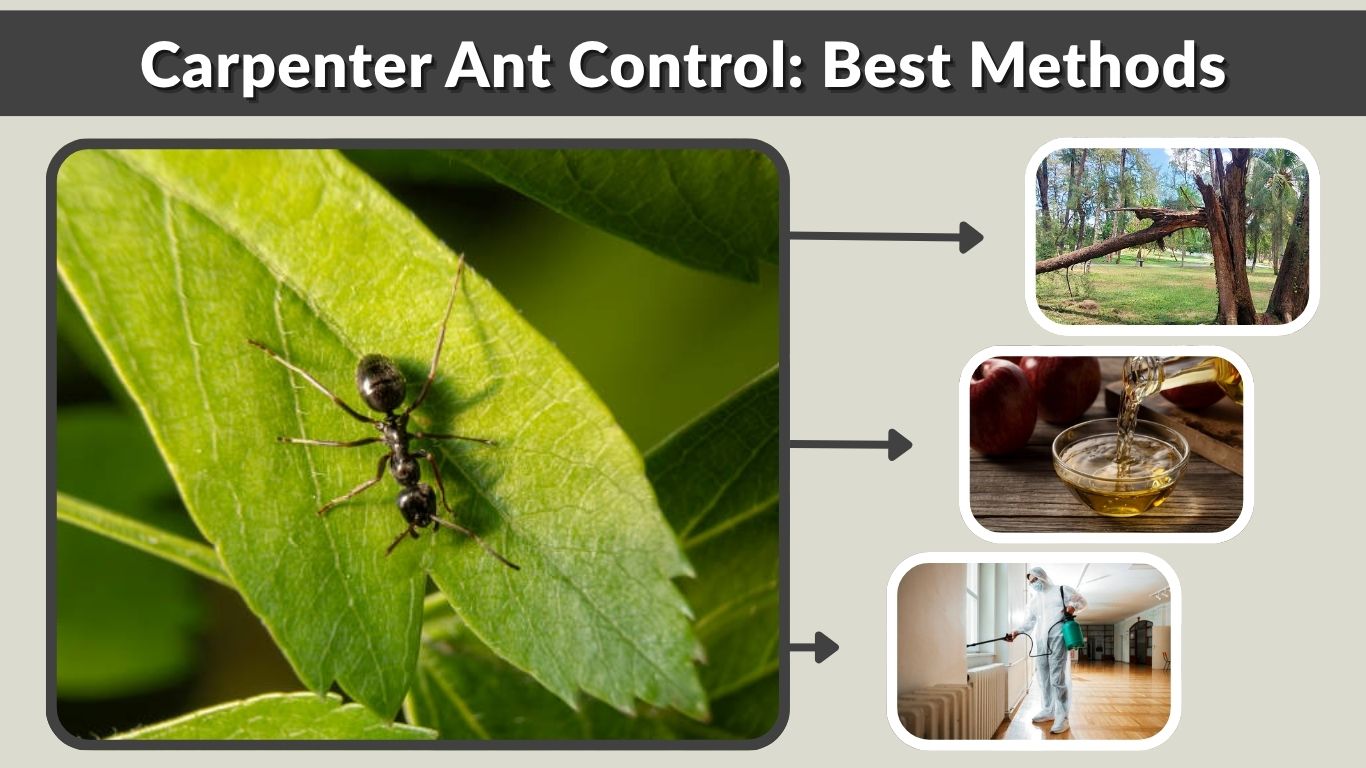
Carpenter ants can cause serious structural issues if left untreated, making proper control essential for homeowners. These ants don’t eat wood but tunnel through it to build nests, weakening beams, walls, and other wooden structures. Many infestations go unnoticed until damage becomes visible, which is why early detection and effective treatment matter. Whether you choose DIY solutions or professional pest control, understanding the right methods will help you eliminate carpenter ants and prevent them from returning.
What Is Carpenter Ant Control?
Carpenter ant control refers to the process of identifying, managing, and eliminating carpenter ant infestations using targeted strategies. Unlike simple ant problems, carpenter ants require a more thorough approach because they often create hidden nests inside wood.
Why Control Is Important
- Prevent damage to wooden structures
- Stop colony expansion and satellite nests
- Reduce the risk of recurring infestations
Signs You Need Carpenter Ant Pest Control
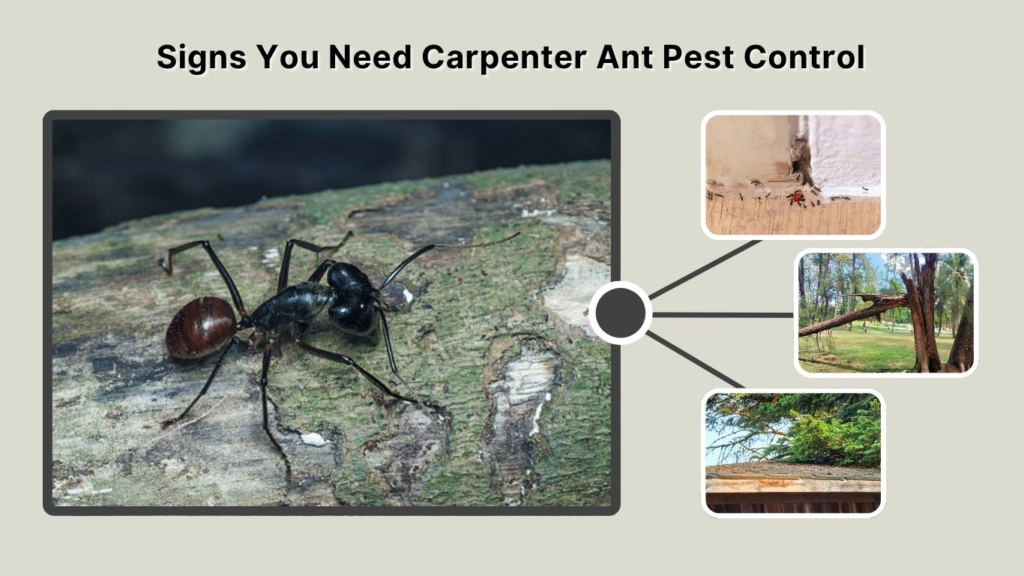
Identifying the early signs of carpenter ants can save time, money, and structural damage. These ants are often active at night, so infestations may go unnoticed during the day.
Early Warning Signs
- Occasional large ants inside the house
- Increased activity near kitchens or water sources
Clear Infestation Signs
- Small piles of sawdust-like debris (frass)
- Hollow or weakened wood
- Carpenter ants in trees close to the home
How to Control Carpenter Ants
Effective control involves more than just killing visible ants. The main goal is to locate and eliminate the colony, including the queen, while preventing future infestations.
Step-by-Step Control Process
- Identify high-activity areas
- Locate nests (main and satellite colonies)
- Choose the right treatment method
- Monitor and repeat if necessary
Best Way to Control Carpenter Ants
- Combine bait systems with insecticides
- Fix moisture problems that attract ants
- Seal cracks and entry points around the home
DIY Carpenter Ant Control
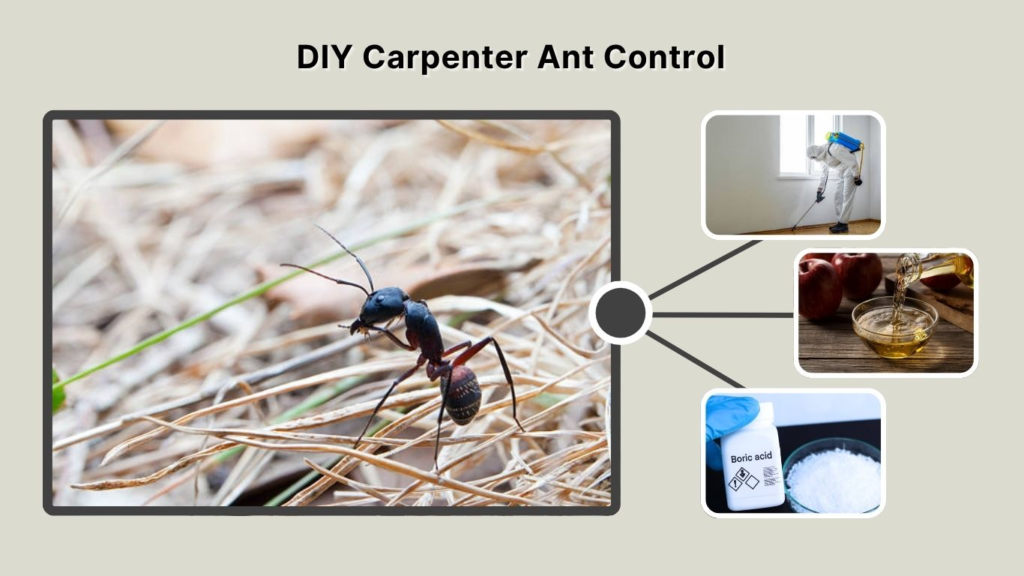
DIY methods can be effective for small infestations or early-stage problems. They are often affordable and easy to apply but may require patience and consistency.
Do-It-Yourself Methods
- Use borax or boric acid bait to target the colony
- Apply vinegar or essential oil sprays as repellents
- Create homemade bait stations near ant trails
Pros and Limitations
- Cost-effective compared to professional services
- Works best for minor infestations
- May not reach hidden or deep nests
Carpenter Ant Control Products
There are many products available that can help manage carpenter ants, ranging from sprays to bait systems. Choosing the right product depends on the severity of the infestation and where the ants are located.
Common Treatment Products
- Carpenter ant sprays for immediate results
- Bait stations to eliminate colonies
- Control kits designed for home use
Where to Buy
- Home improvement stores
- Online pest control suppliers
- Local hardware shops
Natural Carpenter Ant Control
Natural control methods are a safer alternative for households that prefer non-toxic solutions. These methods focus on repelling ants and disrupting their activity without harsh chemicals.
Natural Methods
- Diatomaceous earth applied to entry points
- Essential oils like peppermint or tea tree
- Vinegar solutions for cleaning ant trails
When Natural Control Works Best
- Small infestations
- Preventive maintenance
- Indoor environments with children or pets
Carpenter Ants in Trees Control
Carpenter ants often establish colonies in trees before moving into homes. Controlling outdoor nests is an important step in preventing indoor infestations. Treating tree-based colonies reduces the chances of ants spreading toward nearby structures and forming satellite nests inside walls or wooden components.
Professional Carpenter Ant Pest Control
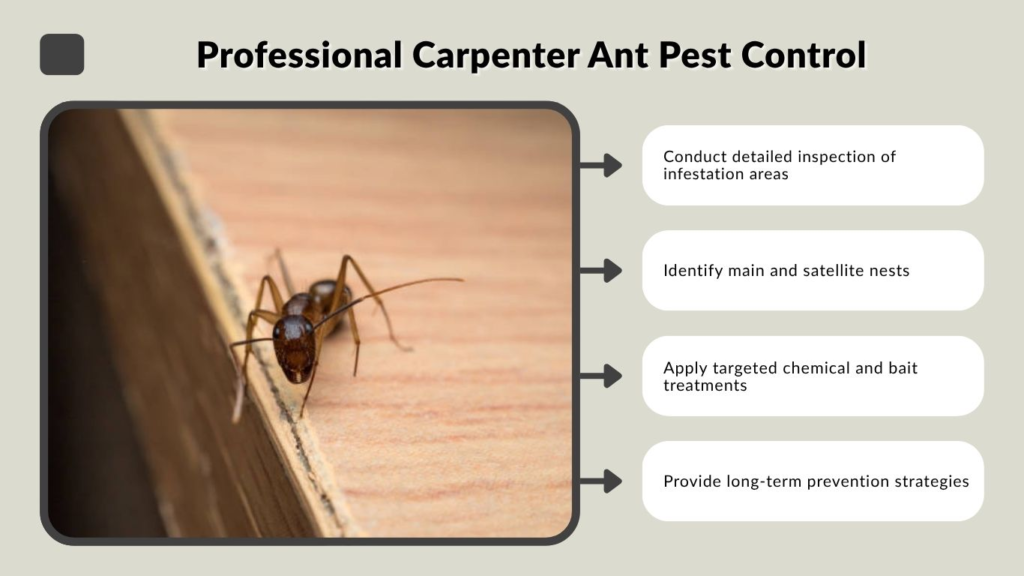
When infestations grow large or nests are hidden inside walls, professional pest control becomes the most effective solution. Experts use specialized tools and treatments to locate and eliminate colonies completely.
What Pest Control Companies Do
- Conduct detailed inspection of infestation areas
- Identify main and satellite nests
- Apply targeted chemical and bait treatments
- Provide long-term prevention strategies
When to Call Professionals
- Repeated infestations despite DIY efforts
- Signs of structural damage
- Presence of multiple colonies indoors
Carpenter Ant Control Cost
The cost of carpenter ant control varies depending on the severity of the infestation and the type of treatment used. Professional services typically include inspection, treatment, and follow-up visits.
Average Cost Factors
- Size and location of infestation
- Type of treatment (bait, spray, or full service)
- Number of visits required
Typical Price Range
- Basic treatment: lower cost for small infestations
- Moderate infestations: higher cost with follow-ups
- Severe infestations: full-service pest control plans
Carpenter Ant Control in House
Controlling carpenter ants indoors requires a focused approach that targets both visible ants and hidden nests. Simply spraying ants is not enough, as the colony may remain active behind walls or in wooden structures.
Indoor Treatment Methods
- Place bait near ant trails and entry points
- Apply insecticides in cracks and crevices
- Reduce moisture in kitchens, bathrooms, and basements
Prevention Tips
- Seal gaps around doors, windows, and pipes
- Store food in airtight containers
- Repair leaks and improve ventilation
Best Carpenter Ant Control Methods
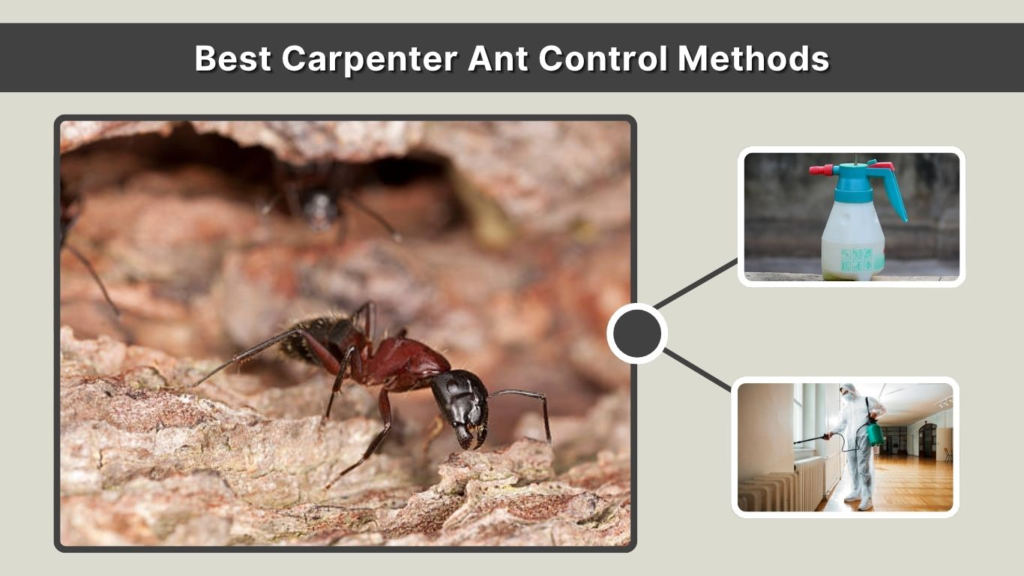
Choosing the right control method depends on the infestation level and location. A combination of treatments often delivers the best results.
Most Effective Solutions
- Bait systems to eliminate the entire colony
- Chemical sprays for immediate reduction
- Professional pest control for severe infestations
Carpenter Ant Control Treatment Plan
A successful treatment plan follows a structured process that ensures long-term results rather than temporary relief. Consistency and monitoring are key to preventing reinfestation.
Step-by-Step Plan
- Inspect the property thoroughly
- Identify nesting and activity areas
- Apply appropriate treatment methods
- Monitor and maintain prevention measures
FAQs
How do you control carpenter ants effectively?
Effective control involves locating the nest, using bait systems to eliminate the colony, and addressing moisture issues that attract ants. Combining multiple methods ensures better results than relying on a single treatment.
What is the best pest control for carpenter ants?
Professional pest control services are often the most reliable option. They use integrated methods such as baiting, targeted insecticides, and prevention strategies to eliminate both visible ants and hidden colonies.
How much does carpenter ant pest control cost?
Costs vary based on infestation size, treatment type, and location. Basic treatments are more affordable, while severe infestations may require multiple visits and higher overall expenses.
Can pest control get rid of carpenter ants permanently?
Yes, pest control can eliminate carpenter ants permanently if the colony is fully destroyed and preventive steps are followed. Ongoing maintenance helps ensure they do not return.
What is the best DIY carpenter ant control method?
Boric acid bait is one of the most effective DIY methods because it targets the colony. Worker ants carry the bait back to the nest, gradually eliminating the entire population over time.
