
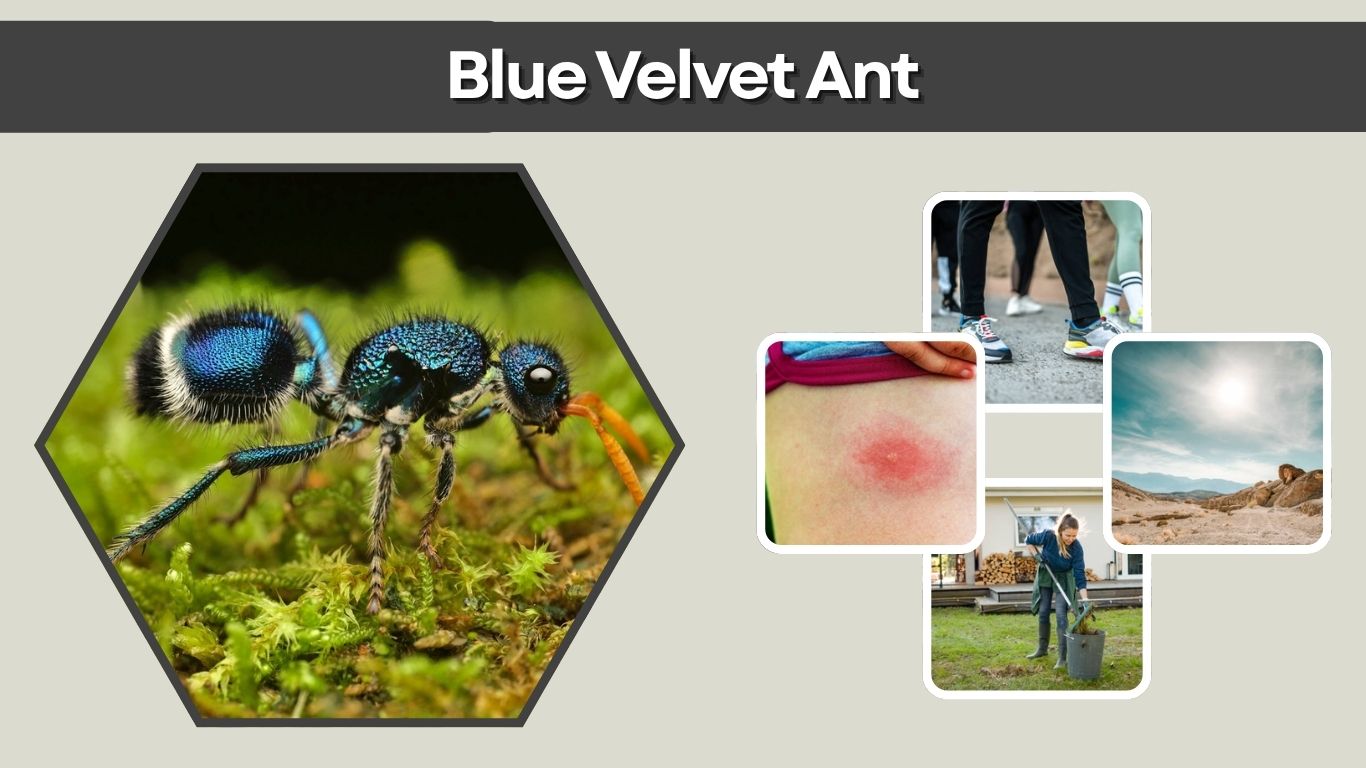
The blue velvet ant is a rare and eye-catching insect known for its metallic blue or dark shimmering appearance. Despite its name, it is not an ant but a type of wasp. Like other velvet ants, it is famous for its powerful sting and tough body. Because of its unusual color and intimidating reputation, many people are curious about whether it is dangerous. In this guide, you’ll learn how to identify the blue velvet ant, understand its behavior, and know how to stay safe if you encounter one.
What Is a Blue Velvet Ant?
The blue velvet ant is a member of the Mutillidae family, a group of wasps commonly known as velvet ants due to their fuzzy appearance. Although less common than red velvet ants, the blue variety stands out because of its unique metallic coloration.
Scientific Classification
Blue velvet ants belong to the Mutillidae family, which includes thousands of species worldwide. These insects are solitary wasps, meaning they do not live in colonies like ants or bees.
They are closely related to other velvet ants, sharing similar traits such as a strong exoskeleton and defensive sting. Despite their ant-like appearance, their biology clearly classifies them as wasps.
Why It’s Called a Velvet Ant
The name “velvet ant” comes from the insect’s dense, hair-like covering that gives it a soft, velvety look. This texture is often combined with bright or metallic colors that make the insect highly noticeable.
The “ant” part of the name comes from the wingless female, which resembles an ant as it moves quickly along the ground. However, this resemblance is only superficial.
Blue Velvet Ant Identification
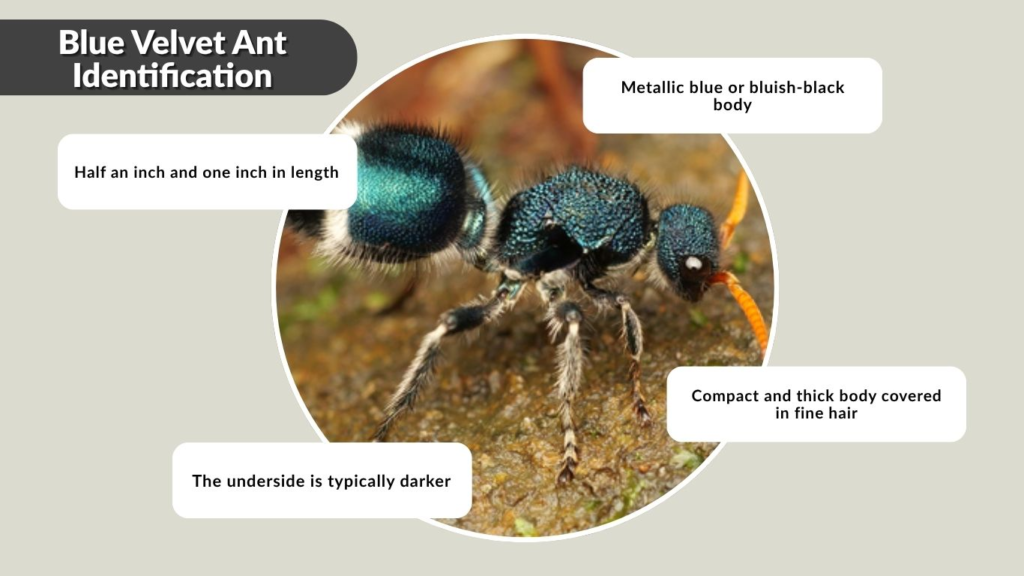
Blue velvet ants are not as commonly seen as other velvet ants, which makes identification especially important. Their unique color helps distinguish them from other insects.
Key Physical Features
The most distinctive feature of the blue velvet ant is its metallic blue or bluish-black body. This color may appear shiny or reflective in sunlight, giving it a striking appearance.
Like other velvet ants, it has a compact and thick body covered in fine hair. The texture gives it a slightly fuzzy look, even though its body is very tough.
The underside is typically darker, and the contrast between light reflection and shadow enhances its visibility.
Size and Appearance
Blue velvet ants usually measure between half an inch and one inch in length. Their size makes them noticeable, especially when moving across open ground.
They have a strong, solid body structure that appears more robust than that of typical ants. Their movement is quick and purposeful, often across sandy or dry surfaces.
Because of their metallic coloration and size, they are easy to spot when present, even though they are relatively rare.
Blue Velvet Ant Male vs Female
Male and female blue velvet ants have significant differences in both appearance and behavior. These differences are important for understanding their role and level of risk.
Female Velvet Ant
The female blue velvet ant is wingless and is the one most commonly seen on the ground. She resembles a large, fuzzy ant and is responsible for the insect’s reputation.
She has a powerful stinger, which she uses for defense. This is the main reason velvet ants are known for their painful sting.
Her metallic coloration acts as a warning signal, helping to deter predators.
Male Velvet Ant
The male blue velvet ant has wings and looks more like a typical wasp. He is less often noticed because he spends more time flying.
Unlike the female, the male does not have a stinger and cannot sting. This makes him harmless to humans.
Although males and females belong to the same species, their differences can make them appear unrelated at first glance.
Blue Velvet Ant Sting
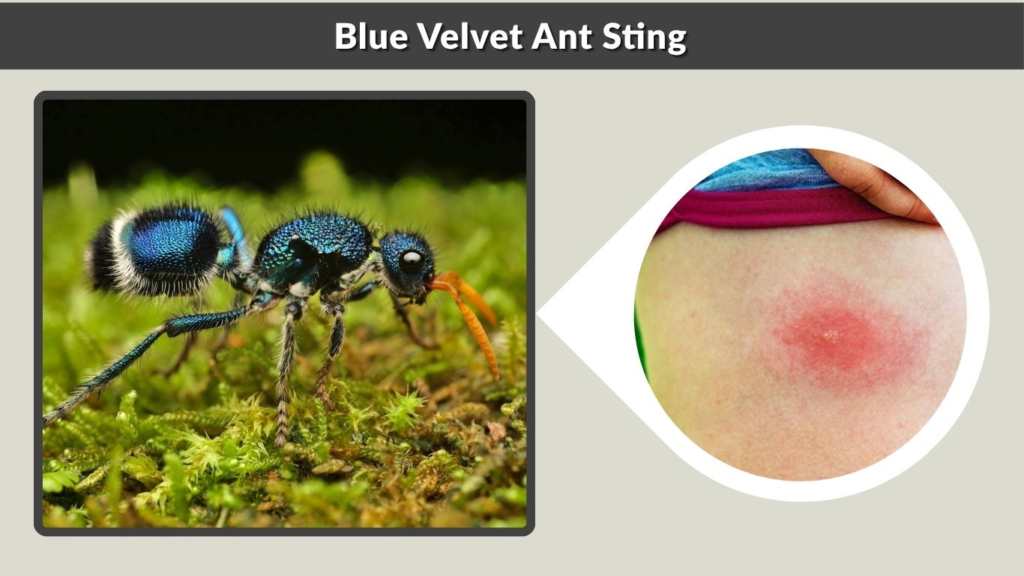
The sting of a blue velvet ant is one of its most notable features. It is extremely painful and is the main reason people are concerned about this insect.
How Painful Is the Sting?
The sting is very intense and is often described as sharp and immediate. It ranks among the more painful insect stings, though not all encounters result in stings.
The pain is usually short-lived but can be strong enough to cause discomfort for a brief period.
This sting is used purely for defense and is not delivered unless the insect feels threatened.
What Happens When Stung
When stung, a person typically experiences immediate pain followed by redness and swelling. The affected area may remain sensitive for a short time.
In most cases, the symptoms are temporary and do not cause serious harm. However, individuals who are allergic to insect stings may experience stronger reactions.Because of the intensity of the sting, it is best to avoid handling or disturbing these insects.
Are Blue Velvet Ants Dangerous?
Blue velvet ants may look intimidating, but they are not considered highly dangerous to humans in most situations.
Risk Overview
| Factor | Risk Level |
| Pain | Very high |
| Aggression | Low |
| Toxicity | Low |
| Medical risk | Minimal |
They are not aggressive and will only sting when provoked or handled. Most people can safely observe them from a distance without any risk.
When to Be Concerned
There are a few situations where caution is necessary:
- If you are allergic to insect stings
- If multiple stings occur
- If the sting happens in a sensitive area
- If symptoms go beyond normal swelling
For most people, the sting is painful but not dangerous. Avoiding contact is the best way to stay safe.
Habitat and Where They Live
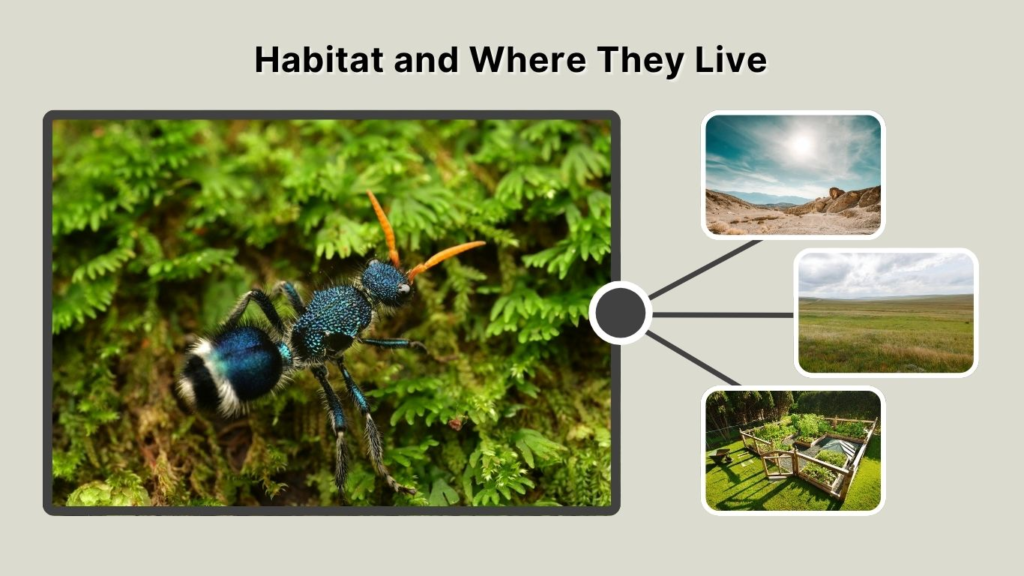
Blue velvet ants prefer environments that support their ground-based movement and unique lifecycle.
- Dry, sandy soil areas
- Grasslands and open fields
- Forest edges
- Gardens and lawns
- Warm climates
These insects are most commonly found in sunny, dry locations where the soil is easy to move through. Such environments also support the insects they rely on for reproduction.
They are typically active during warm months and may be seen walking across open ground in search of food or host nests.
Behavior and Defense Mechanisms
Blue velvet ants rely on a combination of physical and behavioral defenses to survive in the wild. Despite their small size, they are highly protected against predators.
- Metallic warning coloration to signal danger
- Extremely painful sting used for defense
- Hard exoskeleton that resists crushing
- Ability to produce sound when threatened
- Fast movement to escape danger
Their metallic blue color acts as a warning signal, similar to bright colors in other insects. This type of coloration tells predators that attacking them is not worth the risk.
Another unique defense is their ability to produce a squeaking sound. This noise can surprise predators and act as an additional deterrent.
Their tough outer shell also makes them difficult to injure, giving them an extra advantage in avoiding harm.
Blue Velvet Ant vs Red Velvet Ant
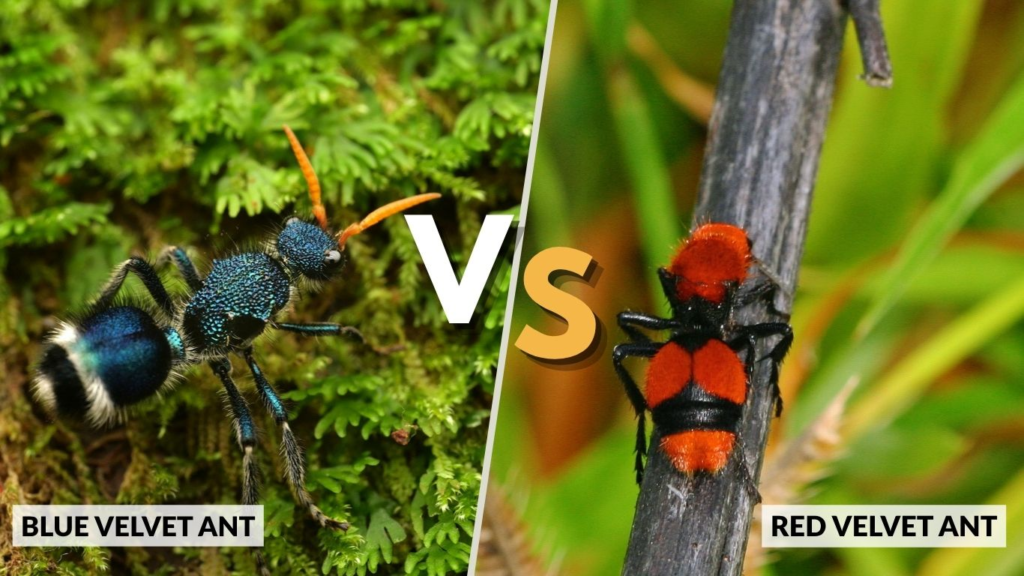
Blue and red velvet ants share many similarities, but their differences help with identification and understanding their distribution.
| Feature | Blue Velvet Ant | Red Velvet Ant |
| Color | Metallic blue/black | Bright red/orange |
| Visibility | Rare | Common |
| Sting | Very painful | Very painful |
| Habitat | Dry, sandy areas | Similar environments |
| Behavior | Defensive, fast-moving | Defensive, fast-moving |
| Family | Mutillidae | Mutillidae |
Both species belong to the same family and have similar behaviors, including their powerful sting and solitary lifestyle.
The main difference lies in their coloration and how frequently they are encountered. Red velvet ants are more commonly seen, while blue velvet ants are less frequent but equally distinctive.
Life Cycle and Reproduction
Blue velvet ants have a unique and parasitic lifecycle that depends on other insects. This process allows them to develop in a protected environment.
Reproduction Behavior
Female velvet ants lay their eggs inside the nests of other ground-nesting insects, such as bees or wasps. This provides a safe place for their offspring to grow.
After hatching, the larvae feed on the host insect’s larvae or stored food. This ensures they have enough nutrients to complete development.
Development Stages
The life cycle includes several stages:
- Egg stage
- Larva stage
- Pupa stage
- Adult stage
This complete transformation allows the insect to mature fully before emerging as an adult. The availability of host nests is essential for successful reproduction.
How to Avoid Blue Velvet Ant Stings
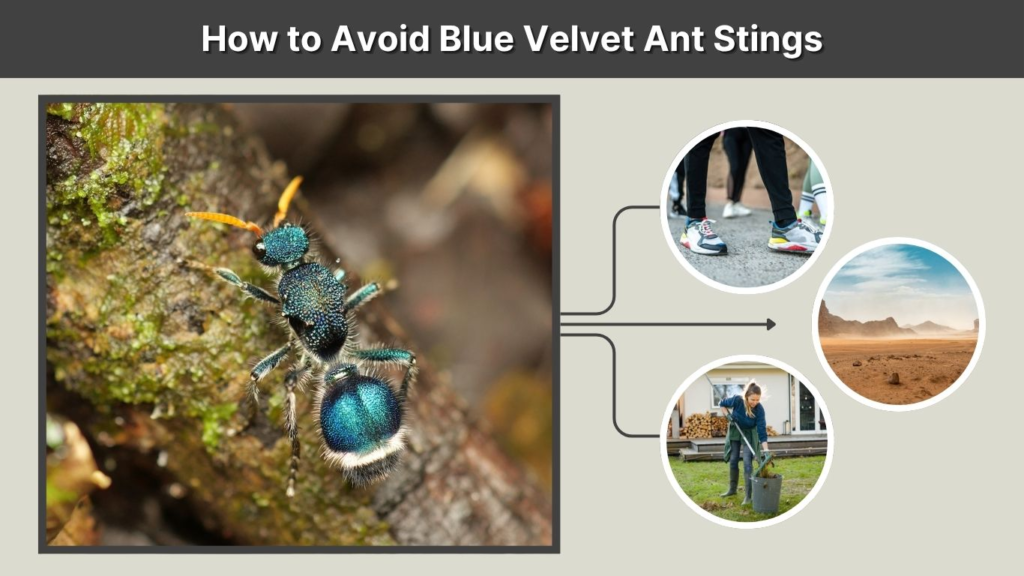
Avoiding contact is the best way to stay safe around blue velvet ants. Since they are not aggressive, simple precautions can prevent most stings.
- Do not touch or handle them
- Wear shoes when outdoors
- Be cautious in sandy or dry areas
- Avoid disturbing them
- Keep outdoor spaces clean
Most stings happen when the insect is accidentally stepped on or handled. Staying aware of your surroundings can greatly reduce the risk.
Wearing protective footwear is especially important in areas where these insects are known to live.
Interesting Facts About Blue Velvet Ants
Blue velvet ants have several unique characteristics that make them fascinating and different from many other insects.
- They are not true ants but wasps
- Known for their extremely painful sting
- Females are wingless, males can fly
- Produce sound when threatened
- Have a very tough outer body
Despite their small size, they are highly adapted for survival. Their combination of warning coloration, strong defenses, and unique behavior makes them difficult for predators to attack.
Their rarity and metallic coloration also make them one of the more unusual velvet ant species to encounter.
FAQs
What is a blue velvet ant?
A blue velvet ant is a type of solitary wasp with a metallic blue or bluish-black body. Despite its name, it is not an ant. The wingless female often resembles an ant, which is why it is commonly misidentified.
How painful is a blue velvet ant sting?
The sting is extremely painful and can feel sharp and intense immediately. The pain is usually short-lived but strong. Most people recover quickly without serious complications unless they have an allergic reaction.
Are blue velvet ants dangerous to humans?
They are not considered dangerous for most people. They are not aggressive and only sting when handled or threatened. However, the sting can be very painful, and allergic individuals should take extra precautions.
Where are blue velvet ants commonly found?
Blue velvet ants are typically found in warm, dry environments such as sandy areas, grasslands, gardens, and forest edges. They are more active during warmer months and are often seen moving along the ground.
What is the difference between male and female blue velvet ants?
The main difference is that females are wingless and can sting, while males have wings and cannot sting. Females are more commonly seen because they walk on the ground, whereas males spend more time flying.
