
Bees flying around decks, fences, sheds, and wooden structures can quickly become a concern, especially when they begin nesting nearby. A reliable bee trap can help reduce unwanted activity without requiring constant spraying or complicated equipment. In this guide, we review seven of the best bumble bee traps for outdoor use, focusing on design, ease of installation, durability, and overall effectiveness. Most options listed are specifically made for carpenter bees, which are often mistaken for bumblebees because of their similar size, color, and buzzing behavior.
1. GRTRE 4-Pack Wooden Carpenter Bee Traps
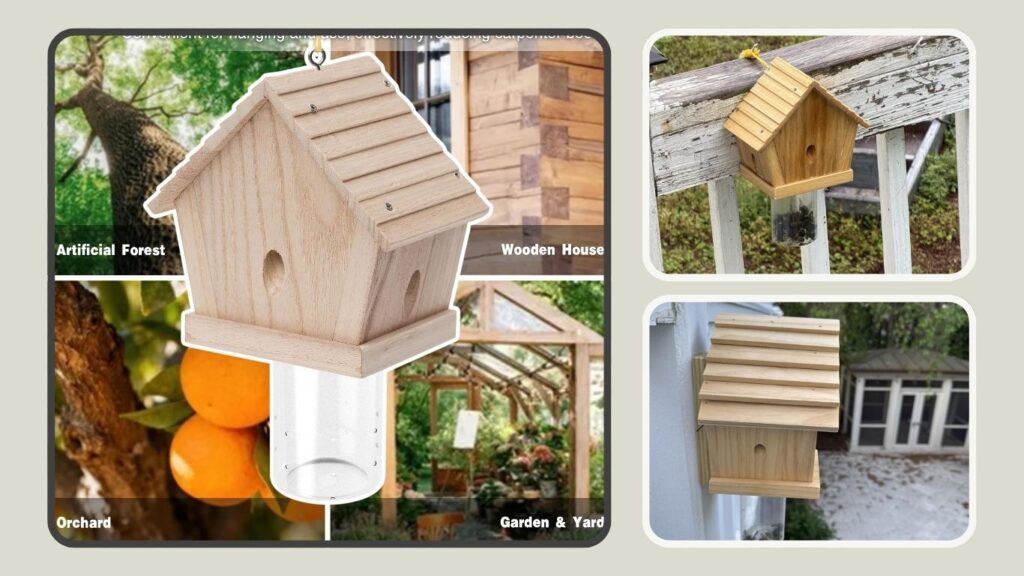
The GRTRE Wooden Carpenter Bee Trap set provides a simple, chemical-free way to reduce carpenter bee activity around decks, fences, sheds, porches, and other wooden structures. The package includes four chalet-style traps, allowing you to protect several outdoor areas at once. Each trap is made from natural paulownia wood and includes a transparent collection container at the bottom.
Key Features
- Includes four wooden carpenter bee traps
- Made from natural paulownia wood
- Reinforced with screws and fasteners
- Rustic chalet-style outdoor design
- Transparent, removable collection container
- No electricity, batteries, or chemical sprays required
- Suitable for hanging near carpenter bee activity
- Reusable construction
Why It’s Best For
This four-pack is best for homeowners who need to cover several carpenter bee problem areas. You can hang individual traps near roof overhangs, wooden railings, pergolas, sheds, fences, or existing nesting holes.
The natural wooden design blends more easily with outdoor structures than brightly colored plastic traps. However, this product is specifically designed for carpenter bees, not ordinary bumblebees, which generally nest underground or in abandoned cavities.
Performance and Durability
Carpenter bees enter through openings in the wooden trap and move toward the clear collection container, where they become trapped. Placement is important, so the traps should be installed near visible carpenter bee holes or locations with frequent activity.
The paulownia wood construction is reinforced with screws and fasteners to improve strength and outdoor durability. Applying an exterior wood sealer may provide additional protection in rainy or humid environments.
Pros, Cons, and Overall Verdict
Overall Verdict: The GRTRE 4-Pack Wooden Carpenter Bee Traps are a practical choice for protecting multiple outdoor wooden areas. Their reusable design, natural appearance, and battery-free operation make them convenient for seasonal carpenter bee control.
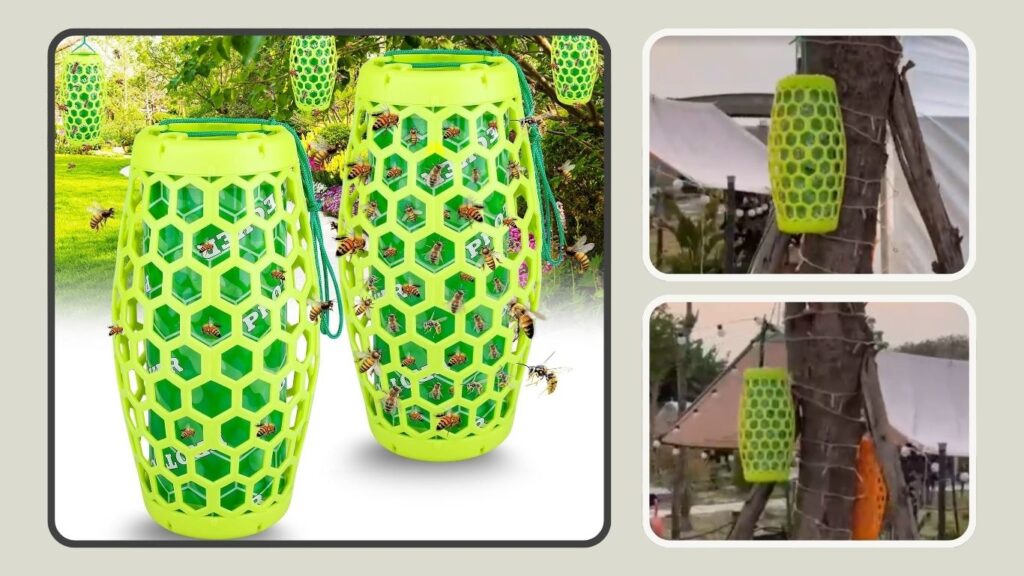
2. Mozvoltek 4-Pack Outdoor Hanging Bee and Wasp Traps
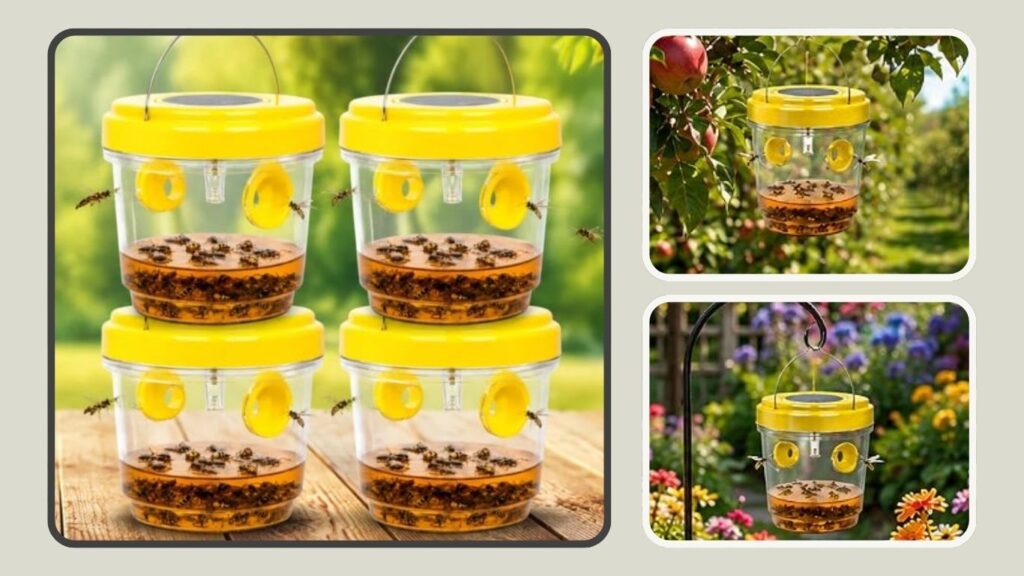
The Mozvoltek outdoor trap set includes four reusable hanging traps for reducing flying-insect activity around patios, gardens, yards, balconies, farms, and campsites. Each trap uses a bait reservoir rather than pesticides or electricity. Although “carpenter bee trap” appears in the listing title, its bait-based design is primarily promoted for wasps, hornets, yellow jackets, and similar flying insects.
Key Features
- Includes four hanging outdoor traps
- Refillable bait reservoir
- Improved snap-fit construction
- Made from weather-resistant ABS and PP plastic
- Uses sugar water, honey, or another suitable bait
- Requires no electricity or batteries
- Washable and reusable design
- Suitable for patios, gardens, yards, and campsites
Why It’s Best For
This set is best for homeowners who need broad coverage across several outdoor areas. The four-pack allows traps to be placed near a deck, garbage area, garden boundary, shed, or outdoor dining space.
Setup is straightforward: add bait to the reservoir, secure the trap, and hang it where flying insects are active. However, it is better suited to wasps and yellow jackets than wood-boring carpenter bees.
Performance and Durability
The snap-fit structure is designed to remain securely assembled while hanging outdoors. Its ABS and PP construction should tolerate ordinary outdoor exposure better than untreated wooden traps.
Performance depends heavily on bait choice, location, and seasonal insect activity. The reservoir must be emptied, cleaned, and refilled regularly to prevent odor buildup and maintain attraction.
Pros, Cons, and Overall Verdict
Overall Verdict: The Mozvoltek four-pack is a practical outdoor flying-insect control option. It offers good value and simple maintenance, but buyers seeking a true carpenter-bee trap should consider a wooden nesting-style model instead.
3. Amish-Made Rustic Cedar Carpenter Bee Trap
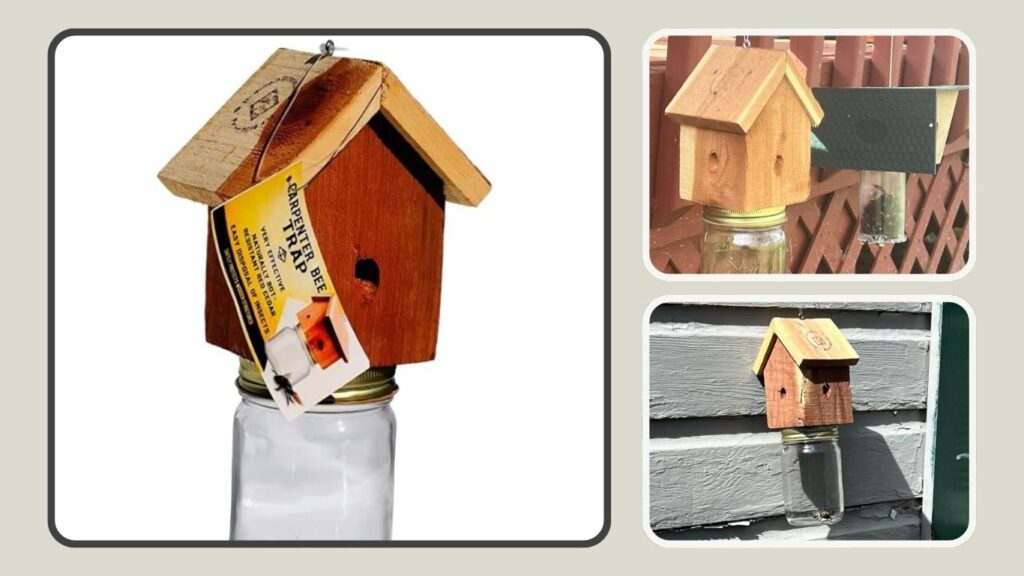
The Amish-Made Rustic Carpenter Bee Trap combines traditional wooden construction with a simple, chemical-free trapping system. Made from natural cedar, it resembles a potential carpenter-bee nesting site and is designed for hanging near decks, porches, eaves, fences, sheds, and other exposed wooden structures. Its rustic appearance allows it to blend naturally into many outdoor settings.
Key Features
- Handcrafted rustic design
- Made from natural cedar wood
- Measures approximately 4.5 by 3.25 by 10 inches
- Manual, chemical-free operation
- Mimics a carpenter bee’s nesting location
- Requires no batteries or electricity
- Designed for hanging outdoors
- Intended specifically for carpenter bees
Why It’s Best For
This trap is best for homeowners who want an attractive, natural-looking solution for carpenter bees damaging exposed wood. Cedar construction complements cabins, porches, barns, pergolas, and rustic garden areas better than brightly colored plastic traps.
It requires no complicated assembly. The trap can simply be hung close to existing nesting holes or areas where carpenter bees repeatedly inspect or bore into wood.
Performance and Durability
The entrance design imitates a prepared carpenter-bee nest. After entering the wooden chamber, the bee is directed toward the collection section and becomes unable to exit easily.
Cedar offers a stronger, more weather-tolerant structure than lightweight untreated softwood. However, outdoor exposure can still cause gradual discoloration or cracking. Applying a bee-safe exterior sealer to the outside may help extend its service life without coating the entrance holes.
Pros, Cons, and Overall Verdict
Overall Verdict: The Amish-Made Rustic Carpenter Bee Trap is a strong option for homeowners who value durability and natural appearance. Its cedar body and nesting-style design make it especially suitable for protecting porches, decks, sheds, and other wooden structures.
4. RESCUE! Carpenter Bee TrapStik 4-Pack
The RESCUE! Carpenter Bee TrapStik uses a visually attractive pattern and sticky surface instead of a wooden chamber or bait container. The four-pack is designed to catch carpenter bees, red wasps, other wasps, and mud daubers from spring through fall. Once insects land on the adhesive surface, they remain trapped and eventually die.
Key Features
- Includes four adhesive TrapStiks
- Uses VisiLure colors and patterns
- Targets carpenter bees, wasps, and mud daubers
- Designed to catch queens and workers
- Glue Guards help shield the sticky surface
- No liquid bait or electricity required
- Made in the USA
- Intended for spring-through-fall use
Why It’s Best For
This product is best for users who want a ready-to-hang trap without preparing bait or emptying a collection jar. The four units can be positioned near multiple vulnerable areas, including decks, fences, patios, eaves, and sheds.
Its visual pattern is designed to attract target insects without a separate chemical lure. However, it is a lethal adhesive trap rather than a catch-and-release option.
Performance and Durability
The VisiLure pattern draws insects toward the adhesive surface, where they become stuck. Glue Guards create a protective boundary around the sticky area and are intended to reduce accidental non-insect contact.
Performance may decline when the adhesive becomes covered with insects, dust, pollen, or debris. Each TrapStik is disposable and must be replaced when full or no longer sticky.
Pros, Cons, and Overall Verdict
Overall Verdict: The RESCUE! TrapStik is a convenient choice for targeted carpenter-bee and wasp control. Its visual attraction system and four-pack coverage are useful for active infestations, but homeowners seeking a reusable or nonlethal trap should choose a wooden container model instead.
5. Best Bee Trap Flag Cabin Carpenter Bee Trap
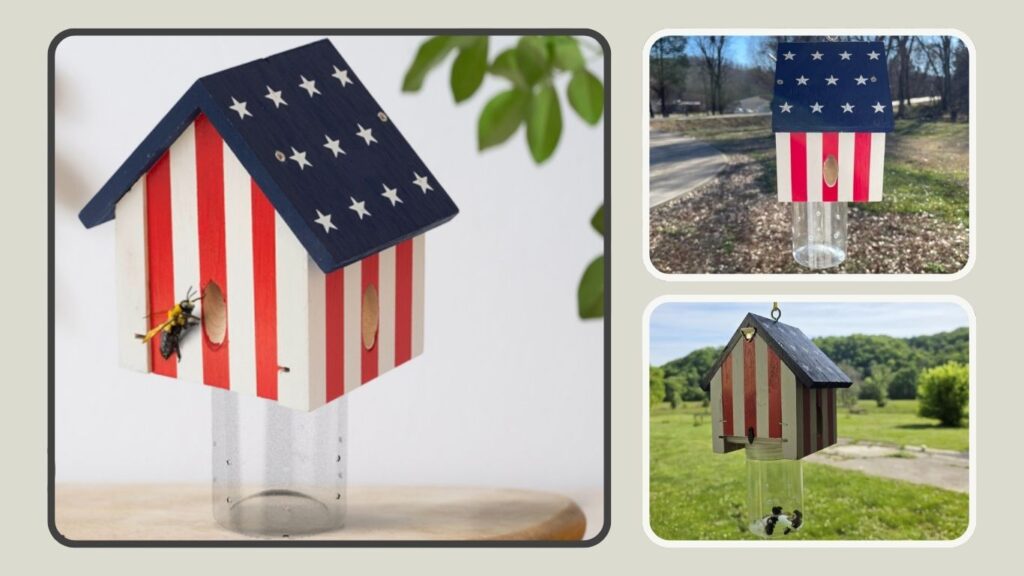
The Best Bee Trap combines a functional carpenter bee trap with a decorative flag-cabin design. Made from natural wood, it measures approximately 5.6 by 4.1 by 9.3 inches and includes a removable collection vault. Its manual design requires no electricity, batteries, or chemical bait, making it a convenient option for porches, decks, sheds, fences, and other exposed wooden areas.
Key Features
- Natural wooden construction
- Decorative flag-cabin appearance
- Patented carpenter bee-catching design
- Removable collection vault
- Approximately 5.6 by 4.1 by 9.3 inches
- Reinforced with screws and fasteners
- Manual, battery-free operation
- Designed for outdoor hanging
Why It’s Best For
This trap is best for homeowners who want carpenter bee control without making their outdoor space look unattractive. Its flag-cabin design resembles a small garden decoration, helping it blend with porches, barns, fences, sheds, and rustic outdoor décor.
The manufacturer recommends hanging it near visible carpenter bee activity, particularly around wooden eaves, patios, and decks. It is designed for carpenter bees rather than true bumblebees.
Performance and Durability
The wooden chamber provides entrance holes that resemble potential carpenter bee nesting sites. Once a bee enters, it is directed toward the removable lower vault and has difficulty returning through the original entrance.
Natural wood and reinforced fasteners provide reasonable outdoor durability. However, even weather-resistant wood can fade or crack after long exposure to rain and sunlight. Applying an appropriate exterior finish around—not inside—the entrance holes may extend its usable life.
Pros, Cons, and Overall Verdict
Overall Verdict: The Best Bee Trap Flag Cabin model is a good choice for homeowners who want a carpenter bee trap that looks like part of their outdoor décor. Its removable vault, natural wood body, and reusable design offer a practical balance of appearance and functionality.
6. BB PRO 200 Carpenter Bee Blocker Kit
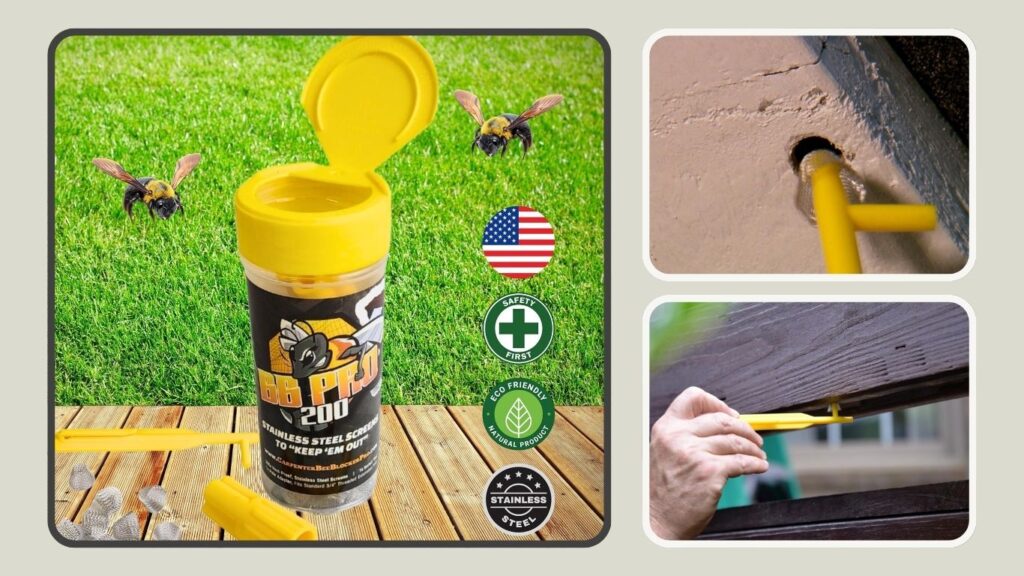
The BB PRO 200 is different from a traditional hanging bee trap. Instead of attracting flying carpenter bees, it uses 200 stainless-steel mesh plugs to block existing carpenter bee entrance holes. The plugs create a physical barrier in decks, siding, fascia boards, fences, pergolas, and other wooden structures. This large pack is especially suitable for widespread damage involving numerous holes.
Key Features
- Includes 200 mesh hole-filler plugs
- Made from 304 stainless steel
- Designed to resist rust and chewing
- Friction-fit installation
- Blocks existing carpenter bee holes
- Compatible with other treatment methods
- Requires no batteries or ongoing bait
- Suitable for large residential or commercial areas
Why It’s Best For
This kit is best for properties that already have numerous carpenter bee holes. A standard hanging trap may reduce adult bee activity, but it does not close the tunnels that remain in wooden surfaces. BB PRO plugs directly address those openings.
The 200-count package offers enough material for large decks, barns, fences, siding, eaves, or multiple buildings. It may be excessive for a homeowner who has discovered only one or two holes.
Performance and Durability
The mesh plugs are designed to fit into standard carpenter bee openings and create a durable physical barrier. The listing identifies the material as certified 304 stainless steel, which should resist rust better than ordinary steel wool and avoid leaving orange stains on exterior wood.
Installation requires locating each hole and inserting the plug securely. Because it does not attract or collect flying bees, it may work best as part of a broader control and wood-repair plan.
Pros, Cons, and Overall Verdict
Overall Verdict: The BB PRO 200 is best viewed as a carpenter bee exclusion and repair product rather than a conventional trap. It is a strong option for property owners who need to close many existing holes and want a more durable alternative to temporary fillers.
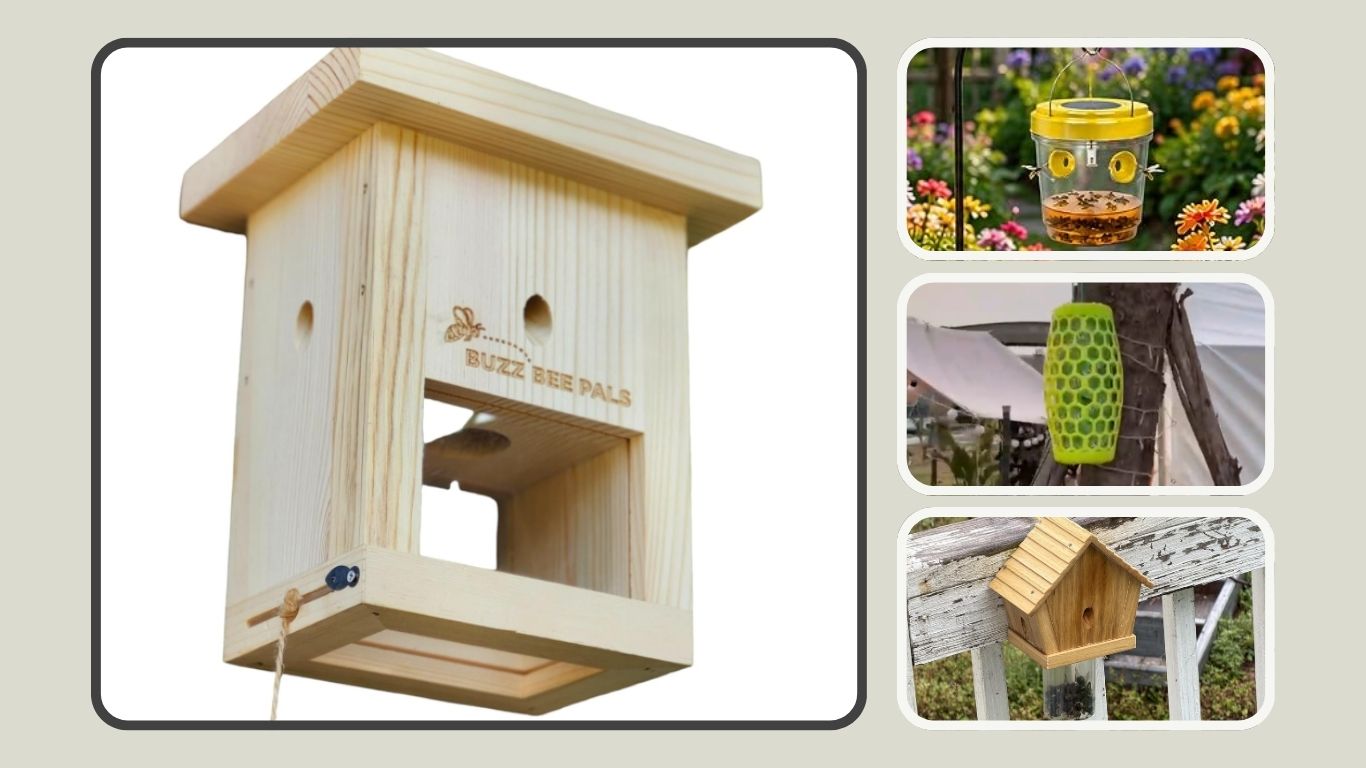
7. Buzz Bee Pals Carpenter Bee Defender Trap B1
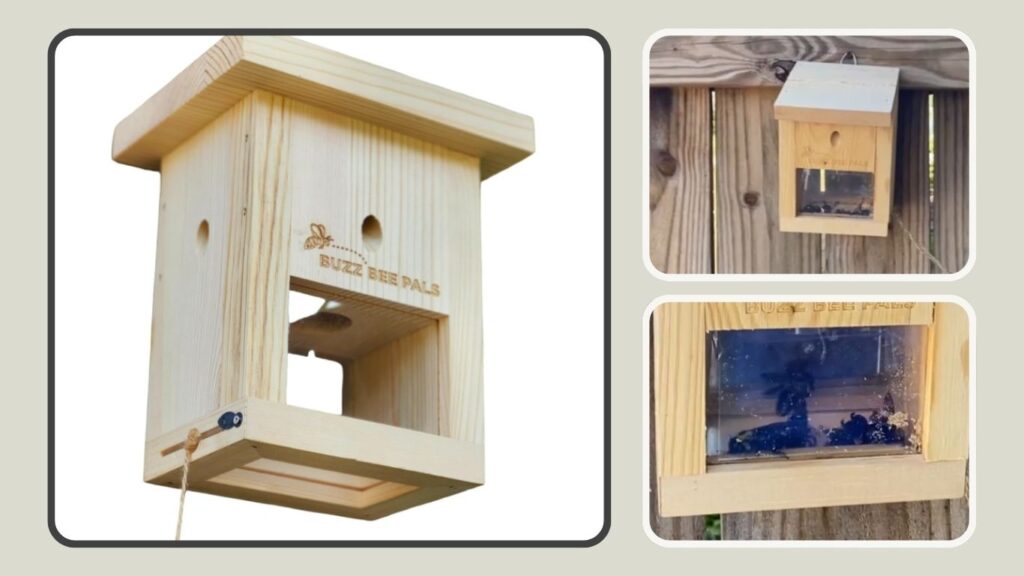
The Buzz Bee Pals Defender Trap B1 is a large wooden carpenter bee trap with a distinctive flat roof and yellow exterior. Measuring approximately 5 by 6.5 by 7.5 inches, it provides a spacious trapping chamber and multiple mounting options. Viewing windows let users check for captured bees, while a sliding bottom door supports easier emptying or release.
Key Features
- Natural pinewood construction
- Flat-roof outdoor design
- Approximately 5 by 6.5 by 7.5 inches
- Multiple carpenter bee entrance holes
- Two mounting points
- Metal chain and hanging hardware included
- Viewing windows around the chamber
- Sliding door at the bottom
- No chemical attractants required
Why It’s Best For
This model is best for homeowners who want a larger wooden trap that can be installed in different ways. The included eye screws, hanging chain, and wall-mounting hardware provide flexibility for positioning it under eaves, beside a deck, on a fence, or near another damaged wooden surface.
The windows are particularly useful because they allow the trap to be checked without taking it down or opening the bottom.
Performance and Durability
The trap uses natural pine with a visible wood grain intended to resemble material carpenter bees may select for nesting. According to the listing, each trap is glued, nailed, and inspected, while the larger chamber is designed to hold more bees than smaller jar-style models.
Its wood construction is suitable for outdoor use, but occasional inspection is recommended. The sliding bottom door and windows should also be checked for damage or debris that might interfere with operation.
Pros, Cons, and Overall Verdict
Overall Verdict: The Buzz Bee Pals Defender Trap B1 is a well-equipped option for homeowners who want a spacious, reusable carpenter bee trap. Its viewing windows, bottom door, included hardware, and flexible mounting system make it especially convenient for regular outdoor monitoring.
FAQs
1. Do carpenter bee traps also catch bumblebees?
Most wooden bee traps are designed specifically for carpenter bees, not bumblebees. Carpenter bees bore holes into wood, while bumblebees usually nest underground or inside abandoned cavities. Correct identification is important before choosing a trap or control method.
2. Where should I hang a carpenter bee trap?
Hang the trap close to active carpenter bee holes, unfinished wooden surfaces, roof eaves, decks, fences, sheds, or porch railings. Place it in a visible, sunny location when possible. Proper placement greatly affects how quickly carpenter bees discover and enter the trap.
3. Do carpenter bee traps require bait?
Many wooden carpenter bee traps work without liquid bait because their entrance holes imitate natural nesting tunnels. However, placing the trap near existing damage may improve results. Some homeowners also use approved carpenter bee attractants, but the product instructions should always be followed carefully.
4. How long does a carpenter bee trap take to work?
A trap may begin catching carpenter bees within several days, but results depend on bee activity, season, weather, and placement. Traps are usually most effective during spring and early summer when carpenter bees are searching for nesting locations and actively visiting wooden structures.
5. Are carpenter bee traps safe for beneficial bees?
Carpenter bee traps can affect pollinators, so they should only be placed near confirmed carpenter bee damage. Avoid hanging sticky traps near flowering plants or beehives. Using targeted placement and repairing exposed wood can help reduce unnecessary risks to honeybees, bumblebees, and other beneficial insects.
