
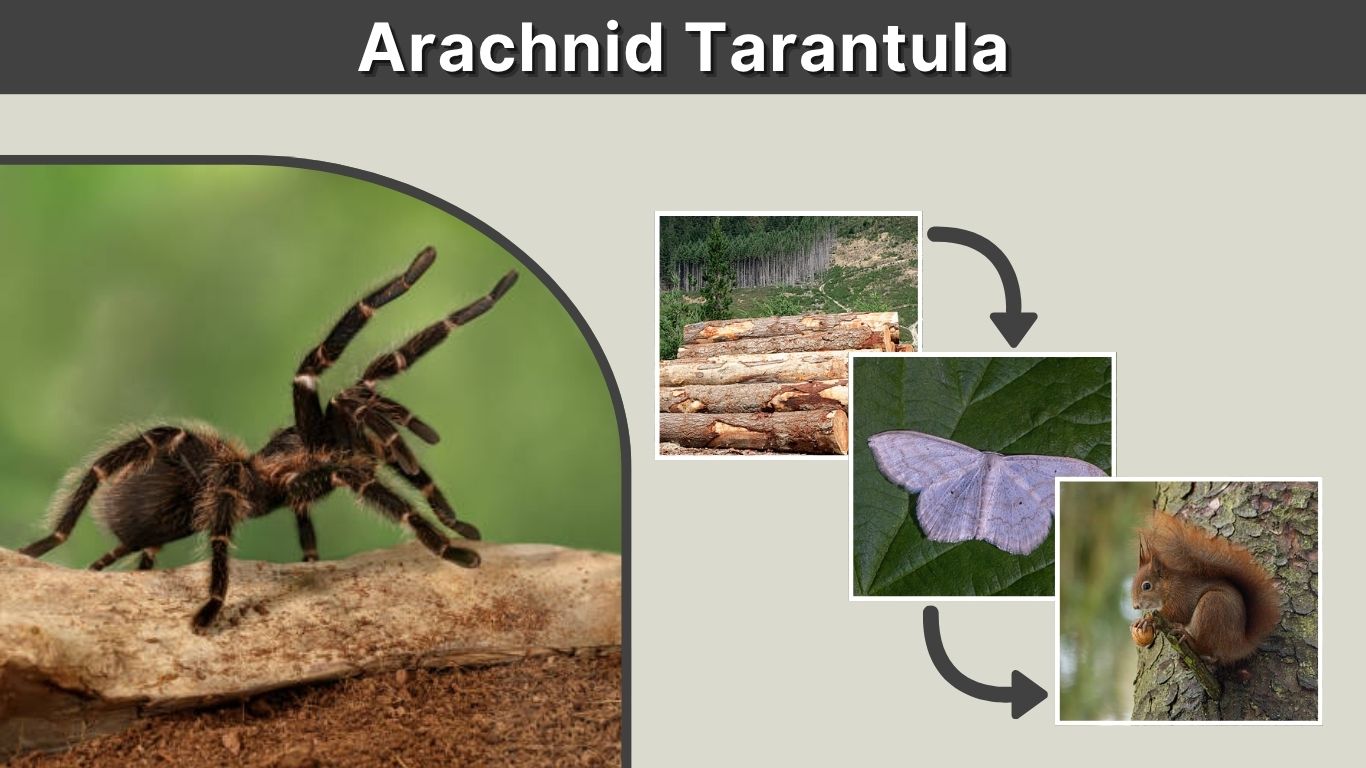
A tarantula is both a spider and an arachnid. Tarantulas belong to the class Arachnida, which also includes scorpions, ticks, mites, and other spiders. More specifically, they belong to the spider order Araneae and the family Theraphosidae. These large, hairy arachnids are famous for their impressive size, eight legs, powerful fangs, and unusual appearance. Despite their intimidating reputation, most tarantulas are secretive predators that prefer avoiding humans and spend much of their time hunting insects or resting inside burrows and sheltered retreats.
Is a Tarantula an Arachnid?
Yes, a tarantula is an arachnid. The term arachnid refers to animals belonging to the class Arachnida. Tarantulas meet all of the basic characteristics used to classify spiders as arachnids, including having eight legs, two main body regions, and no antennae.
A tarantula can therefore correctly be described as both an arachnid and a spider.
Tarantula Classification
The basic scientific classification of a tarantula is:
- Kingdom: Animalia
- Phylum: Arthropoda
- Class: Arachnida
- Order: Araneae
- Infraorder: Mygalomorphae
- Family: Theraphosidae
The family Theraphosidae contains the spiders generally recognized as true tarantulas.
Why Tarantulas Are Arachnids
Tarantulas share important features with other arachnids. They have eight walking legs rather than six, lack wings and antennae, and possess specialized mouthparts called chelicerae.
Their bodies consist mainly of the cephalothorax, also known as the prosoma, and the abdomen, known as the opisthosoma.
Is a Tarantula a Spider or an Arachnid?
A tarantula is both. These terms describe different levels of biological classification rather than two competing categories.
All true spiders are arachnids, but not every arachnid is a spider. Scorpions, ticks, harvestmen, and mites are arachnids but belong to different groups.
Arachnid vs. Spider vs. Tarantula
Think of the relationship this way:
Arachnid → Spider → Tarantula
Arachnid is the broad category. Spider is a more specific group within Arachnida, and tarantulas are a particular family of spiders.
Therefore, calling a tarantula an arachnid is correct, but describing it as a spider gives more specific information.
Is a Tarantula an Insect?
No. Tarantulas are not insects.
Insects normally have six legs, three major body regions, and one pair of antennae. Tarantulas have eight legs, two main body regions, and no antennae.
These differences make it relatively easy to distinguish tarantulas and other arachnids from insects.
Arachnid Tarantula Identification
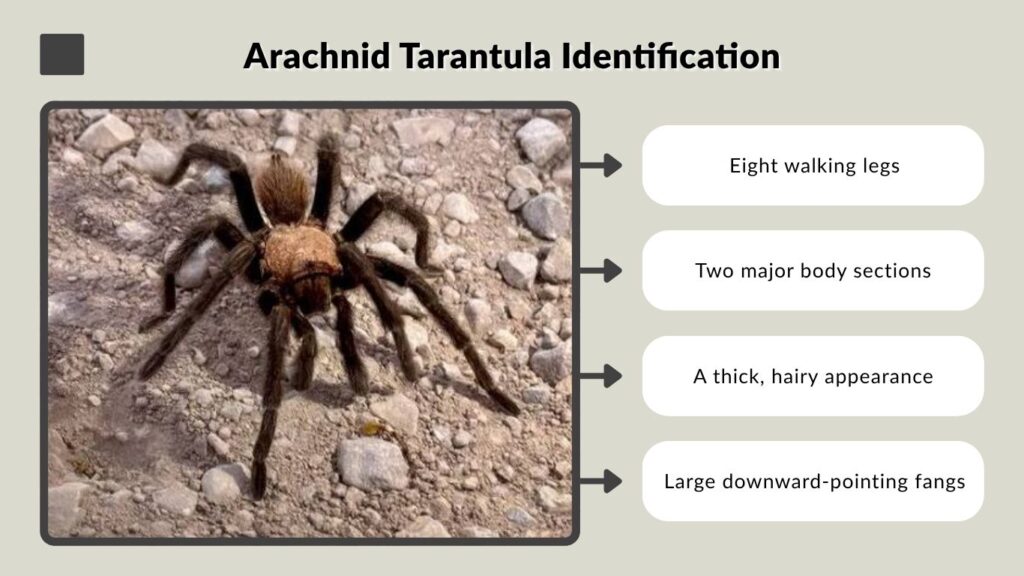
Tarantulas are among the easiest spiders to recognize because many species have large, robust bodies covered with thick hairs or setae. However, size and coloration can vary widely between species.
Some tarantulas are brown or black, while others display striking blue, orange, red, green, or metallic markings.
Main Identification Features
An arachnid tarantula typically has:
- Eight walking legs
- Two major body sections
- A thick, hairy appearance
- Large downward-pointing fangs
- Two pedipalps near the mouth
- Multiple small eyes
- Spinnerets at the rear of the abdomen
- Strong legs adapted for walking, digging, or climbing
Tarantulas do not use their eyesight as heavily as humans might expect. Instead, they are highly sensitive to vibrations and movements around them.
How Many Legs Does a Tarantula Have?
Like other spiders, an adult tarantula has eight legs.
The two smaller appendages near the mouth are pedipalps and are not counted as walking legs. Pedipalps help tarantulas sense their surroundings, manipulate food, and perform reproductive functions.
Arachnid Tarantula Habitat
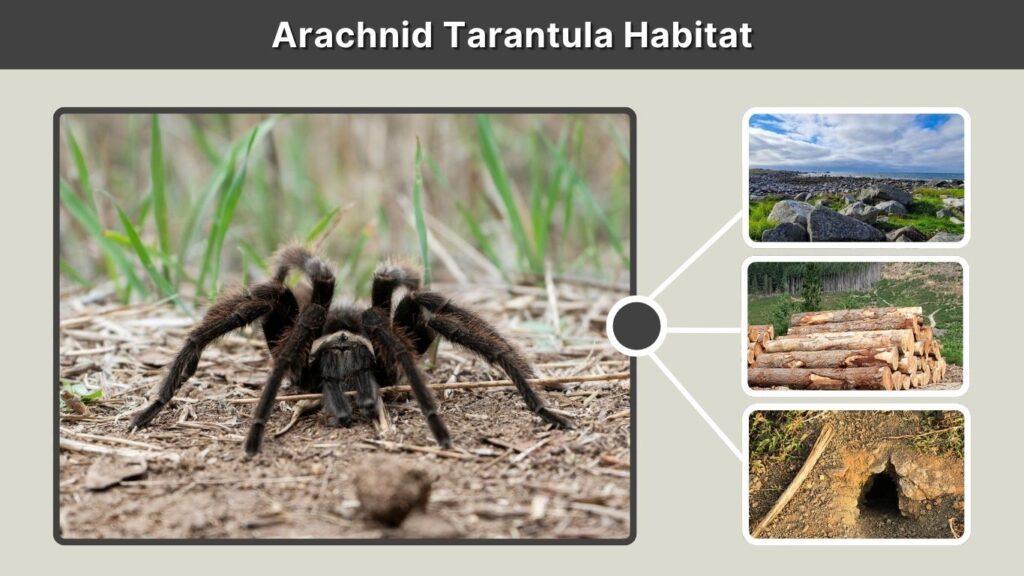
Tarantulas occur in a wide variety of habitats, particularly in warmer parts of the world. They can be found throughout parts of North America, Central America, South America, Africa, Asia, and Australia.
Their exact habitat depends on the species.
Ground-Dwelling Tarantulas
Many species live on the ground and shelter beneath rocks, logs, vegetation, or other natural cover.
Some create silk-lined retreats that allow them to remain protected during the day before emerging to hunt.
Burrowing Tarantulas
Numerous terrestrial tarantulas spend most of their lives inside burrows.
A burrow provides protection from predators and extreme environmental conditions. Silk around its entrance can also help the spider detect vibrations caused by approaching prey.
Arboreal Tarantulas
Some tarantulas are adapted for life in trees.
These species often hide inside hollow trunks, bark crevices, leaves, or silk-lined retreats above the ground. Arboreal tarantulas frequently have relatively long legs that make climbing easier.
What Do Arachnid Tarantulas Eat?
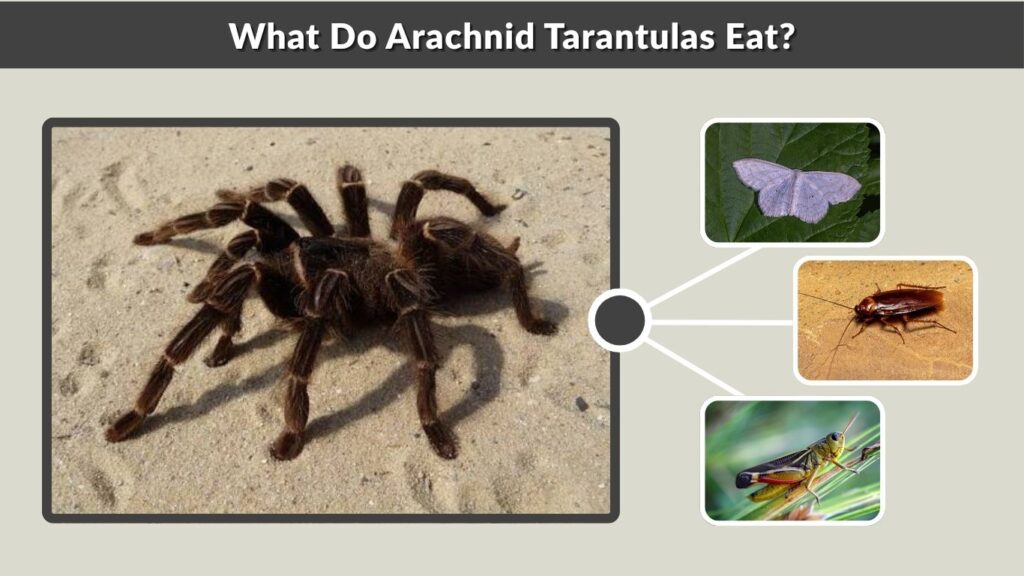
Tarantulas are carnivorous predators. Their diet consists primarily of insects and other small animals they are capable of overpowering.
They generally hunt by detecting movement and vibrations rather than relying on elaborate prey-catching webs.
Common Tarantula Foods
Typical prey includes:
- Crickets
- Cockroaches
- Beetles
- Grasshoppers
- Moths
- Caterpillars
- Other spiders
- Various small arthropods
Large tarantulas may occasionally capture frogs, lizards, small rodents, or other small vertebrates.
How Tarantulas Catch Prey
A tarantula often waits near the entrance of its shelter until it senses potential prey.
Once close enough, the spider quickly attacks using its powerful legs and fangs. Venom helps immobilize the prey.
Digestive fluids then break down the prey’s internal tissues, allowing the tarantula to consume the liquefied material.
Are Arachnid Tarantulas Dangerous?
Tarantulas can look intimidating because of their size and large fangs, but most do not actively seek confrontations with people.
Their first response to danger is often to escape or hide.
Tarantula Defense
Depending on the species, a threatened tarantula may:
- Retreat into a burrow
- Raise its front legs
- Display its fangs
- Strike when heavily threatened
- Bite defensively
- Release irritating hairs
Many tarantulas from the Americas possess specialized urticating hairs on their abdomen. They can brush these hairs toward an approaching predator.
The hairs may irritate the skin and can be particularly troublesome if they reach the eyes.
Do Tarantulas Have Venom?
Yes. Tarantulas possess venom primarily for capturing prey.
A defensive bite can cause pain and other symptoms. The effects vary depending on the species and individual circumstances, so tarantulas should never be deliberately handled or provoked without appropriate knowledge.
Blue Arachnid Tarantulas
Some of the most visually striking tarantulas possess vivid blue coloration. Blue coloration occurs naturally in several unrelated tarantula species.
Rather than simply being pigment like paint, some brilliant blue appearances result largely from microscopic structures on the hairs that interact with light.
Examples of Blue Tarantulas
Blue coloration may appear on the legs, body, or entire spider depending on the species.
Well-known examples include cobalt-blue and metallic-blue tarantulas. Their dramatic appearance has made these species especially recognizable among tarantula enthusiasts.
Color alone, however, should not be used to identify a species because several different tarantulas can display similar shades.
Tarantulas as Predators and Prey
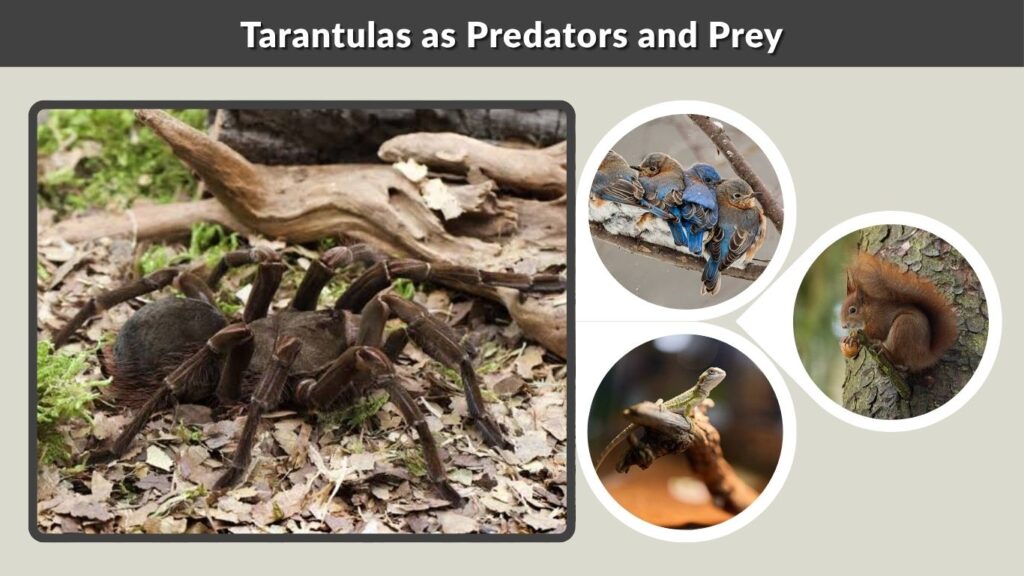
Although tarantulas are effective hunters, they are also part of the diets of other animals.
Their position in the food web means they function as both predators and prey.
What Preys on Tarantulas?
Potential predators include birds, reptiles, mammals, amphibians, and other arthropods.
One particularly famous predator is the tarantula hawk wasp. Female tarantula hawks can attack and paralyze tarantulas before using them as food for their developing larvae.
Tarantulas rely on camouflage, shelters, defensive postures, hairs, venom, and physical strength to survive these threats.
Why Tarantulas Are Important Arachnids
Tarantulas contribute to healthy ecosystems by helping control populations of insects and other small animals.
They also provide food for predators and play a role in complex terrestrial food webs.
Because there are many species with different lifestyles, tarantulas are also valuable for studying spider behavior, venom, evolution, reproduction, movement, and ecological adaptations.
Despite the fear often associated with them, tarantulas are highly specialized arachnids with an important place in nature.
FAQs
1. Is a tarantula an arachnid?
Yes. Tarantulas belong to the class Arachnida and are therefore arachnids.
2. Is a tarantula a spider or an arachnid?
It is both. A tarantula is a spider, and all spiders belong to the larger arachnid group.
3. Is a tarantula an insect, crustacean, or reptile?
None of these. A tarantula is an arachnid belonging to the spider order Araneae.
4. How many legs does an arachnid tarantula have?
An adult tarantula has eight walking legs. It also has two pedipalps near the mouth that serve sensory and reproductive functions.
5. What kind of arachnid is a tarantula?
A tarantula is a mygalomorph spider belonging to the family Theraphosidae. This family contains the spiders commonly recognized as true tarantulas.
