

Yellow moths are among the most vibrant and eye-catching insects found across gardens, forests, and open fields. Their bright wings, unique patterns, and diverse shapes make them fascinating to observe both day and night. This list highlights seventeen distinct yellow moth species, offering simple identification notes along with details about their habitats, behaviors, and life cycles to help you better understand and recognize these beautifully colored moths in the wild.
1. Yellow Underwing Moth
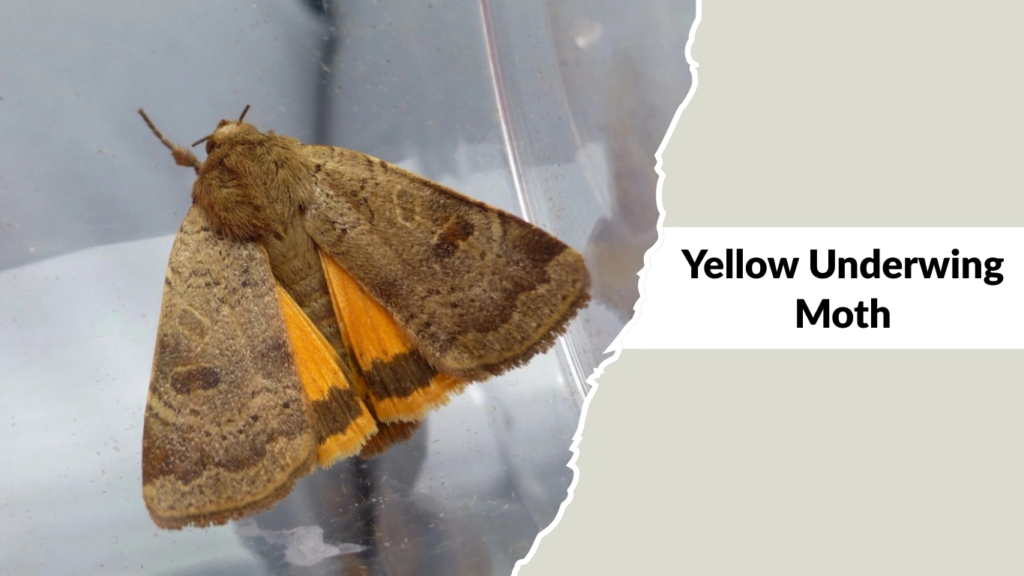
The Yellow Underwing Moth (Noctua pronuba) is a widespread and easily recognized moth known for its dull brown forewings and striking yellow-orange hindwings. Common across Europe and North America, it is frequently seen in gardens, meadows, and near lights on warm nights.
Identification
- Brown or gray forewings with mottled patterns
- Bright yellow-orange hindwings with a bold black band
- Wingspan: 50–60 mm
- Stout body with smooth scales
- Caterpillars are green or brown “cutworms” with subtle stripes
Habitat
Yellow Underwing Moths inhabit gardens, fields, meadows, forest edges, and open grassy areas. They thrive in both rural and urban environments and are especially active during late summer.
Behaviors
These moths are nocturnal and strongly attracted to artificial lights. They fly quickly and may flash their bright hindwings when disturbed to startle predators. Caterpillars hide in soil during the day and feed at night.
Diet and Lifecycle
Adults may sip nectar occasionally. Caterpillars feed on grasses, clover, dandelions, and many garden plants. The lifecycle includes egg, larva (overwintering), pupa in soil, and adult, typically producing one generation per year.
2. Brimstone Moth
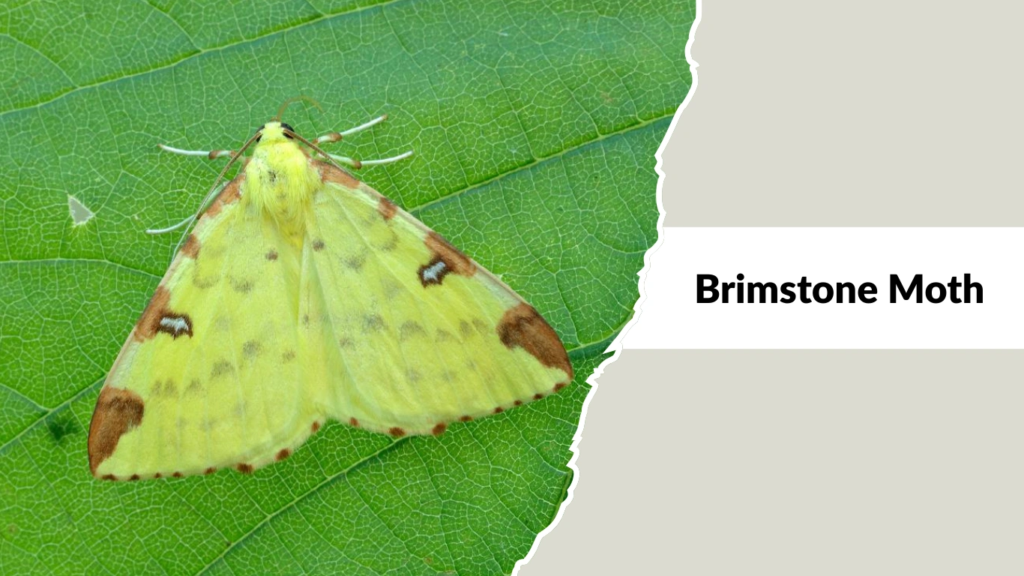
The Brimstone Moth (Opisthograptis luteolata) is a bright yellow, highly visible moth commonly found across Europe and parts of Asia. Its vivid coloring and delicate wing shape make it one of the most recognizable yellow moth species in gardens and woodlands.
Identification
- Bright lemon-yellow wings
- Brown or reddish angled markings on forewings
- Wingspan: 33–42 mm
- Slender body with smooth yellow scales
- Caterpillars are brown, twig-like, with small white spots
Habitat
Brimstone Moths inhabit gardens, hedgerows, woodlands, and shrubby areas. They prefer places with abundant deciduous plants such as hawthorn and blackthorn, which serve as larval host plants.
Behaviors
These moths are mostly nocturnal but may fly at dusk. They are strongly attracted to lights and are commonly seen on warm summer nights. Caterpillars mimic twigs for camouflage and remain motionless when threatened.
Diet and Lifecycle
Adults typically do not feed. Caterpillars eat hawthorn, blackthorn, apple, and various shrubs. Their lifecycle includes egg, larva, pupa (often in leaf litter), and adult, with two generations per year in warmer regions.
3. Yellow Shell Moth

The Yellow Shell Moth (Camptogramma bilineata) is a small, beautifully patterned yellow moth commonly found throughout Europe and parts of Asia. Its scalloped wings and intricate lines give it a shell-like appearance, making it easy to identify in grassy and shrubby habitats.
Identification
- Soft yellow to golden wings
- Fine brown wavy lines creating a “shell” pattern
- Wingspan: 20–25 mm
- Slender body with delicate scaling
- Caterpillars are green or brown and loop like inchworms
Habitat
Yellow Shell Moths inhabit meadows, grassy fields, woodland edges, and gardens. They thrive in sunny, open areas rich in herbaceous plants.
Behaviors
These moths are mostly nocturnal but can also be seen flying during the day when disturbed. They are attracted to lights and have a fluttery, low flight pattern. Adults are commonly active in summer.
Diet and Lifecycle
Adults do not feed. Caterpillars consume low-growing plants such as bedstraw, dandelion, and other meadow species. The lifecycle includes egg, larva, pupa (in soil or grass), and adult, often producing one or two generations per year.
4. Clouded Buff Moth

The Clouded Buff Moth (Diacrisia sannio) is a striking yellow moth known for its soft pastel hues and distinctive reddish or purplish markings. Found across Europe and parts of Asia, it inhabits open, sunny environments rich in grasses and wildflowers.
Identification
- Soft yellow or cream wings with reddish or purple markings
- Hindwings yellow-orange with subtle shading
- Wingspan: 30–40 mm
- Furry body typical of tiger moths
- Caterpillars are dark brown and hairy
Habitat
Clouded Buff Moths are found in heathlands, meadows, grassy fields, and moorlands. They prefer open, dry areas with abundant wild plants that support their larvae.
Behaviors
These moths are active mainly at night but may occasionally fly during the day. Males are strong, fast fliers, while females tend to be more sedentary. Adults are attracted to lights in summer.
Diet and Lifecycle
Adult Clouded Buff Moths do not feed. Caterpillars eat a variety of low plants, including heather, dock, and clover. Their lifecycle includes egg, larva, pupa (in a silken cocoon), and adult, typically with one generation per year.
5. Yellow Peach Moth

The Yellow Peach Moth (Conogethes punctiferalis) is a vibrant yellow moth widely found in Asia and Australia. Known for its bold black spots and agricultural importance, it is especially associated with fruiting plants, including peaches.
Identification
- Bright yellow wings with distinct black spots
- Wingspan: 18–25 mm
- Rounded wings with smooth edges
- Slender yellow body
- Caterpillars are pale with brown heads
Habitat
Yellow Peach Moths inhabit orchards, farms, gardens, and forest edges. They thrive in warm climates with abundant fruit-bearing plants and shrubs.
Behaviors
These moths are nocturnal and strongly attracted to lights. They are active fliers and frequently move around fruit crops. Caterpillars bore into fruits, making them significant agricultural pests.
Diet and Lifecycle
Adults rarely feed. Caterpillars feed on peaches, guavas, maize, and other soft fruits and crops. The lifecycle includes egg, larva (boring into fruit), pupa, and adult, with multiple generations yearly in warm regions.
6. Yellow Slant-Line Moth

The Yellow Slant-Line Moth (Tetracis crocallata) is a graceful yellow moth recognized by the diagonal line that stretches across its wings. Found mainly in North America, it is commonly seen in forests and shaded habitats during late spring and summer.
Identification
- Pale to bright yellow wings
- Distinct slanted brown line across forewings
- Wingspan: 35–45 mm
- Slender body with smooth yellow scales
- Caterpillars are twig-like and brownish, typical of geometrid loopers
Habitat
Yellow Slant-Line Moths inhabit deciduous forests, woodland edges, parks, and shrubby areas. They prefer shaded environments where their host plants grow abundantly.
Behaviors
These moths are nocturnal and frequently attracted to artificial lights. Their flight is gentle and fluttery, and they often rest on leaves or tree trunks during the day. Adults are most active from late spring through mid-summer.
Diet and Lifecycle
Adults do not feed. Caterpillars feed on a variety of shrubs and trees, including alder, birch, and maple. The lifecycle includes egg, larva, pupa (in leaf litter), and adult, with one generation per year in most regions.
7. Four-Spotted Yellow Moth

The Four-Spotted Yellow Moth (Acontia lucida) is a small, vivid moth known for its bright yellow wings marked with four bold dark spots. Found across Europe, Asia, and North Africa, it prefers warm, open spaces with plenty of wildflowers.
Identification
- Bright yellow forewings with four prominent black or brown spots
- Hindwings pale with light shading
- Wingspan: 20–25 mm
- Compact body with fine yellow scales
- Caterpillars are greenish or brown with faint striping
Habitat
This moth inhabits meadows, dry grasslands, agricultural fields, and roadside vegetation. It thrives in sunny, open habitats with plenty of herbaceous host plants.
Behaviors
Four-Spotted Yellow Moths are nocturnal and often come to lights. They fly quickly and are active mainly in late spring and summer. Caterpillars feed openly on leaves and may move between nearby plants.
Diet and Lifecycle
Adults rarely feed. Caterpillars feed on various low-growing plants, including mallow and bindweed. The lifecycle includes egg, larva, pupa (often in soil or leaf litter), and adult, usually with two generations in warmer regions.
8. Yellow-Spotted Tiger Moth

The Yellow-Spotted Tiger Moth (Lophocampa maculata) is a striking moth known for its vivid yellow spots and fuzzy appearance. Found across North America, it is especially common in forests and mountainous regions.
Identification
- Dark wings with bright yellow or cream-colored spots
- Furry yellow-and-black patterned body
- Wingspan: 35–45 mm
- Males have feathered antennae
- Caterpillars are fuzzy black-and-orange banded “woolly” larvae
Habitat
Yellow-Spotted Tiger Moths inhabit coniferous and mixed forests, woodland edges, and mountainous areas. They prefer regions rich in host trees such as birch, willow, and poplar.
Behaviors
These moths are nocturnal and readily attracted to lights. Adults have a soft, fluttering flight, while caterpillars are known for curling defensively when touched. They are most active in late spring and summer.
Diet and Lifecycle
Adults do not feed. Caterpillars feed on the leaves of birch, poplar, willow, and other hardwoods. The lifecycle includes egg, larva, pupa (in a silk cocoon), and adult, typically producing one generation per year.
9. Yellow Horned Moth
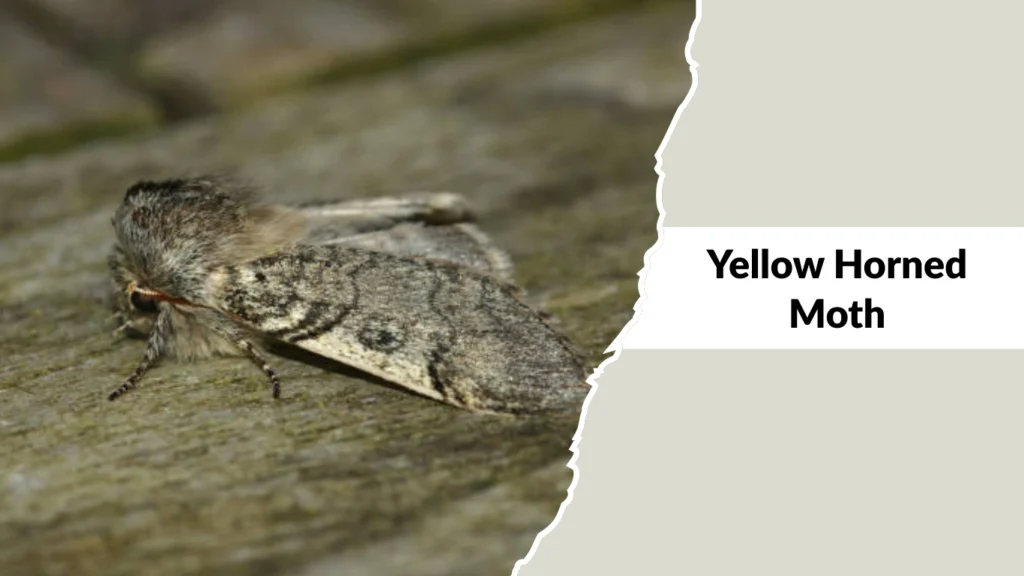
The Yellow Horned Moth (Achlya flavicornis) is a pale yellow to creamy moth known for its distinctive “horned” antennae, especially prominent in males. Found across Europe and parts of Asia, it is one of the earliest spring moths to appear.
Identification
- Pale yellow to creamy wings with faint brown markings
- Wingspan: 30–40 mm
- Males have bright yellow, horn-like feathered antennae
- Stout, fuzzy body
- Caterpillars are green with white side lines
Habitat
Yellow Horned Moths inhabit deciduous woodlands, forest edges, parks, and shrubby areas. They are especially common in regions with birch trees, the primary food source for their larvae.
Behaviors
These moths are nocturnal and are frequently seen at lights early in the spring season. They rest on tree trunks during the day and fly actively during cool evenings. Adults emerge very early, often before many other months.
Diet and Lifecycle
Adults generally do not feed. Caterpillars feed mostly on birch leaves. The lifecycle includes egg, larva, pupa (overwintering in a cocoon), and adult, typically producing one generation per year.
10. Yellow-Headed Cutworm Moth

The Yellow-Headed Cutworm Moth (Apamea amputatrix) is a medium-sized moth recognized for its muted yellow-gray tones and distinctive pale head. Found primarily in North America, it inhabits fields, meadows, and forested regions.
Identification
- Yellowish-gray or tan wings with fine speckling
- Pale yellow or cream-colored head
- Wingspan: 35–45 mm
- Slender body with subtle markings
- Caterpillars are smooth, gray or brown cutworms
Habitat
These moths inhabit grasslands, farms, gardens, forest edges, and mountain meadows. They thrive in cool or temperate climates where grasses and crops are abundant.
Behaviors
Yellow-Headed Cutworm Moths are nocturnal and strongly attracted to lights. Adults fly from late spring through summer and rest low on vegetation during the day. Caterpillars hide in soil and feed at night.
Diet and Lifecycle
Adults may sip nectar occasionally. Caterpillars feed on grasses, clovers, and agricultural crops. The lifecycle includes egg, larva, pupa (in soil), and adult, typically producing one generation yearly, though two may occur in warmer areas.
11. Yellow-Barred Brindle

The Yellow-Barred Brindle (Acasis viretata) is a small, attractive moth known for its subtle greenish-yellow tones and narrow dark bands. It is commonly found across Europe and parts of Asia, especially in wooded and shrubby habitats.
Identification
- Greenish-yellow to pale yellow wings
- Two narrow dark bars across the forewings
- Wingspan: 18–22 mm
- Slender body with fine scales
- Caterpillars are green with tiny white dots
Habitat
Yellow-Barred Brindles inhabit woodland edges, hedgerows, gardens, and areas with dense shrub growth. They favor cool, moist environments rich in broadleaf plants.
Behaviors
These moths are nocturnal and attracted to lights. They fly in a fluttery, erratic pattern and rest on leaves or branches during the day. Adults are most active in spring and summer.
Diet and Lifecycle
Adults do not feed. Caterpillars feed on ivy, clematis, and other climbing plants. The lifecycle includes egg, larva, pupa (in leaf litter), and adult, typically with one or two generations per year.
12. Yellow-Tailed Moth
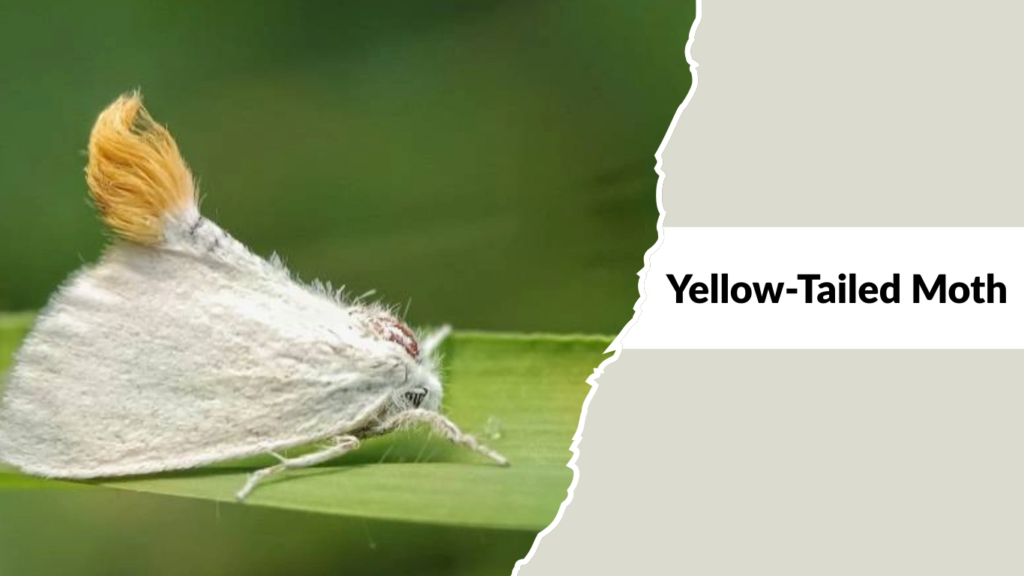
The Yellow-Tailed Moth (Euproctis similis) is a striking white-and-yellow species known for the bright tuft on its abdomen. Found across Europe and parts of Asia, it is easily recognized and often seen in summer months.
Identification
- White wings with silky texture
- Distinct bright yellow tuft at the tip of the abdomen
- Wingspan: 35–45 mm
- Furry body with pale yellow tones
- Caterpillars are dark with orange and yellow stripes and tufts of hair
Habitat
Yellow-Tailed Moths inhabit woodlands, gardens, hedgerows, and parklands. They thrive in areas with abundant deciduous trees and shrubs such as oak, apple, and hawthorn.
Behaviors
These moths are nocturnal and readily drawn to lights. Caterpillars are social when young and can defoliate host plants in large numbers. Adults rest on foliage during the day and fly actively at night.
Diet and Lifecycle
Adults do not feed. Caterpillars feed on a wide range of deciduous trees including oak, apple, willow, and birch. The lifecycle includes egg, larva, pupa (in a cocoon), and adult, with one generation per year.
13. Yellow-Striped Oakworm Moth
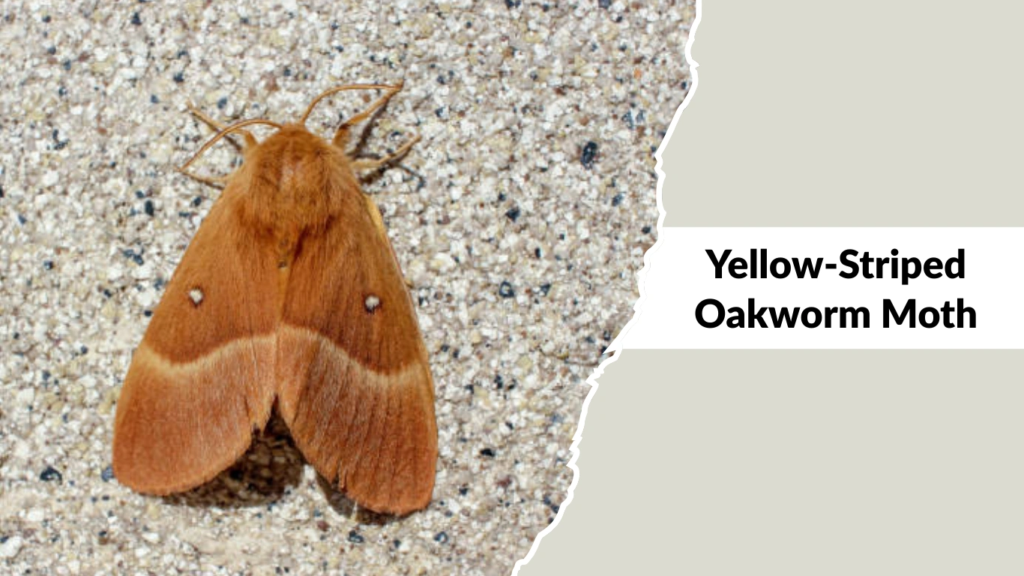
The Yellow-Striped Oakworm Moth (Anisota peigleri) is a bold, yellow-toned moth known for its striking caterpillars and warm-colored adult wings. Common in parts of North America, it is closely associated with oak-rich habitats.
Identification
- Yellowish to orange-brown wings
- Subtle darker lines across forewings
- Wingspan: 45–55 mm
- Robust, fuzzy body
- Caterpillars are black with bright yellow stripes and short spines
Habitat
Yellow-Striped Oakworm Moths inhabit oak forests, woodland edges, and suburban areas with mature oak trees. They thrive in warm climates where their host trees are abundant.
Behaviors
These moths are nocturnal and show strong attraction to lights. Adults have a short flight season, typically late summer. Caterpillars feed in groups when young and later disperse, often seen crawling on sidewalks during migration to pupate.
Diet and Lifecycle
Adults do not feed. Caterpillars feed exclusively on oak leaves. The lifecycle includes egg clusters laid on oak foliage, larval feeding, pupation in soil, and adult emergence, producing one generation per year.
14. Yellow-Winged Moth
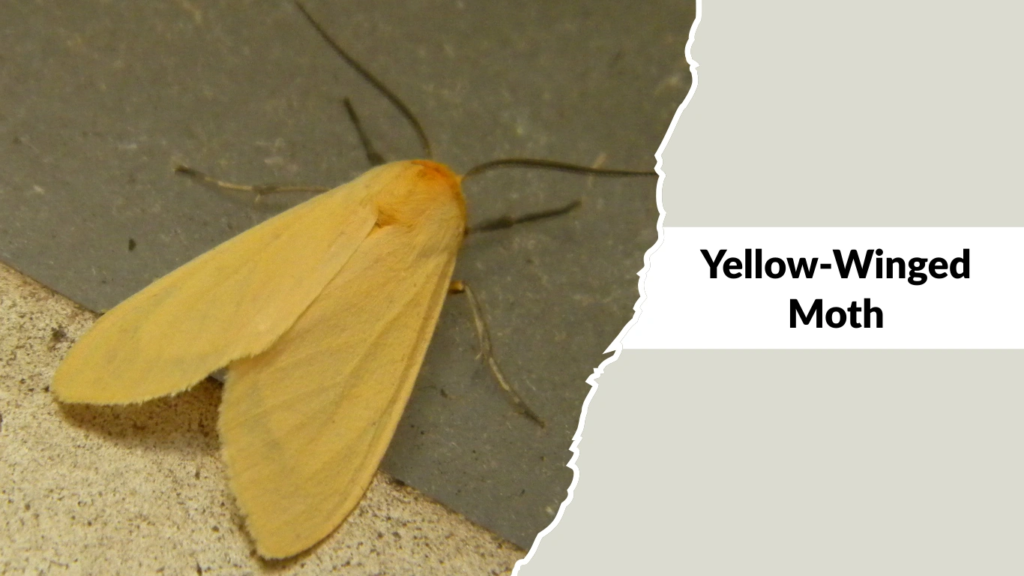
The Yellow-Winged Moth (Ophiusa tirhaca) is a vibrant moth species noted for its bold yellow hindwings and contrasting darker forewings. Widely distributed across Africa, Asia, and Australia, it thrives in warm climates and open habitats.
Identification
- Dark brown or charcoal forewings
- Bright yellow hindwings with a dark central band
- Wingspan: 50–60 mm
- Sturdy body with fine scaling
- Caterpillars are green or brown with distinctive diagonal stripes
Habitat
These moths inhabit savannas, grasslands, agricultural fields, and forest edges. They prefer warm regions with abundant shrubs and broadleaf plants.
Behaviors
Yellow-Winged Moths are nocturnal and strongly attracted to artificial lights. Their dramatic flash of bright yellow hindwings helps startle predators. Adults are active through much of the warm season.
Diet and Lifecycle
Adults may sip nectar occasionally. Caterpillars feed on a variety of plants including castor, cotton, and other cultivated crops. The lifecycle includes egg, larva, pupa (in soil or leaf litter), and adult, with multiple generations per year in warm climates.
15. Yellow Marbled Moth
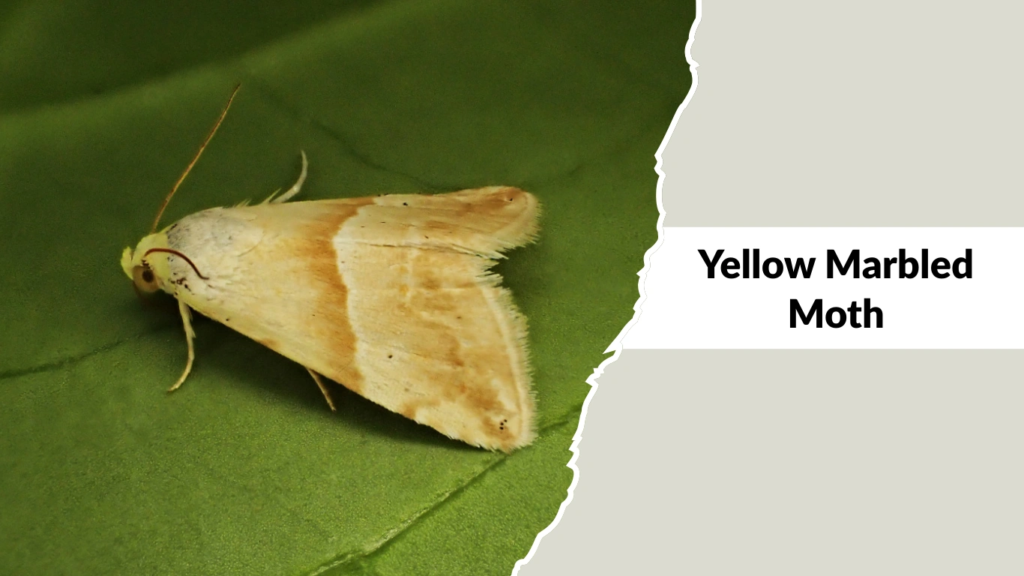
The Yellow Marbled Moth (Dichomeris flavocostella) is a small, beautifully patterned moth marked by yellow marbling along the wings. It is found in parts of Europe and Asia, especially in warm, dry environments.
Identification
- Yellow and brown marbled forewings
- Distinct yellow streaks along the wing edges
- Wingspan: 12–18 mm
- Slender, elongated body
- Caterpillars are pale and feed within leaf folds
Habitat
Yellow Marbled Moths inhabit dry meadows, shrubby areas, woodland edges, and gardens. They favor warm habitats with plenty of low plants.
Behaviors
These moths are nocturnal and often attracted to lights. They are quick fliers for their size and remain hidden within foliage during the day. Adults are typically active in late spring and summer.
Diet and Lifecycle
Adults do not feed. Caterpillars feed on herbaceous plants, often rolling or folding leaves to create shelter. The lifecycle includes egg, larva, pupa (within leaf folds or litter), and adult, often producing two generations annually.
16. Yellow Scallop Moth

The Yellow Scallop Moth (Anania hortulata) is a striking species known for its bright yellow hindwings and contrasting black-and-white forewings. This colorful moth is commonly found in Europe and parts of Asia, frequenting gardens and flowery habitats.
Identification
- Yellow hindwings with soft shading
- Forewings patterned in black and white
- Wingspan: 24–28 mm
- Slender body with delicate scales
- Caterpillars are green with fine hairs
Habitat
Yellow Scallop Moths inhabit gardens, meadows, hedgerows, and sunny woodland edges. They are especially common in areas with mint and related plants, which serve as their primary larval hosts.
Behaviors
These moths are mostly nocturnal and attracted to lights, but may also fly during the day when disturbed. They have a quick, fluttery flight and often rest on leaves or flowers.
Diet and Lifecycle
Adult moths rarely feed. Caterpillars consume mint, nettle, and other herbaceous plants. The lifecycle includes egg, larva, pupa (in a loose cocoon), and adult, usually with one or two generations per year depending on climate.
17. Yellow Plume Moth

The Yellow Plume Moth (Platyptilia calodactyla) is a delicate and uniquely shaped moth known for its bright yellow coloring and deeply divided wings. This species is found across Europe and parts of Asia, often in grassy or shrubby environments.
Identification
- Bright yellow wings divided into feather-like “plumes”
- Wingspan: 18–22 mm
- Slender, stick-like body
- Long legs and narrow resting posture
- Caterpillars are pale green and feed inside plant tissues
Habitat
Yellow Plume Moths inhabit meadows, grassy fields, gardens, and hedgerows. They prefer sunny habitats with abundant flowering plants, especially those that serve as larval hosts.
Behaviors
These moths are mostly nocturnal but may be seen at dusk. They hold their wings tightly rolled when resting, giving them a distinctive T-shaped posture. They are lightly attracted to artificial lights and fly gently above low vegetation.
Diet and Lifecycle
Adults typically do not feed. Caterpillars feed within stems and flower heads of plants such as tansy and ragwort. The lifecycle includes egg, internal larval feeding, pupation within plant tissues or debris, and adult emergence, usually producing one generation per year.
FAQs
1. Why are some moths bright yellow?
Many moths are yellow for camouflage or signaling. Yellow coloration helps them blend with flowers, leaves, or dry grasses. In some species, bright yellow also serves as a warning color to deter predators or to enhance visibility during mating displays.
2. Are yellow moths harmful?
Yellow moths are harmless to humans. They do not bite or sting. While some species may have caterpillars that feed on garden plants or crops, adult moths pose no direct threat and are mostly peaceful, nighttime insects.
3. Do yellow moths come out during the day?
Most yellow moths are nocturnal, but some species may fly at dusk or when disturbed during the day. Their bright coloration often helps them blend into flowers and foliage, making daytime activity safer for certain species.
4. What attracts yellow moths to lights?
Like most nocturnal moths, yellow moths use natural light for navigation. Artificial lights interfere with this, causing them to fly toward lamps, porch lights, and windows. Their lighter wing colors often make them more noticeable around lights.
5. Do yellow moths feed as adults?
Many adult yellow moths do not feed at all, relying on stored energy from their caterpillar stage. Some species, however, may sip nectar or other plant fluids. Caterpillars are the primary feeding stage in the moth lifecycle.
