
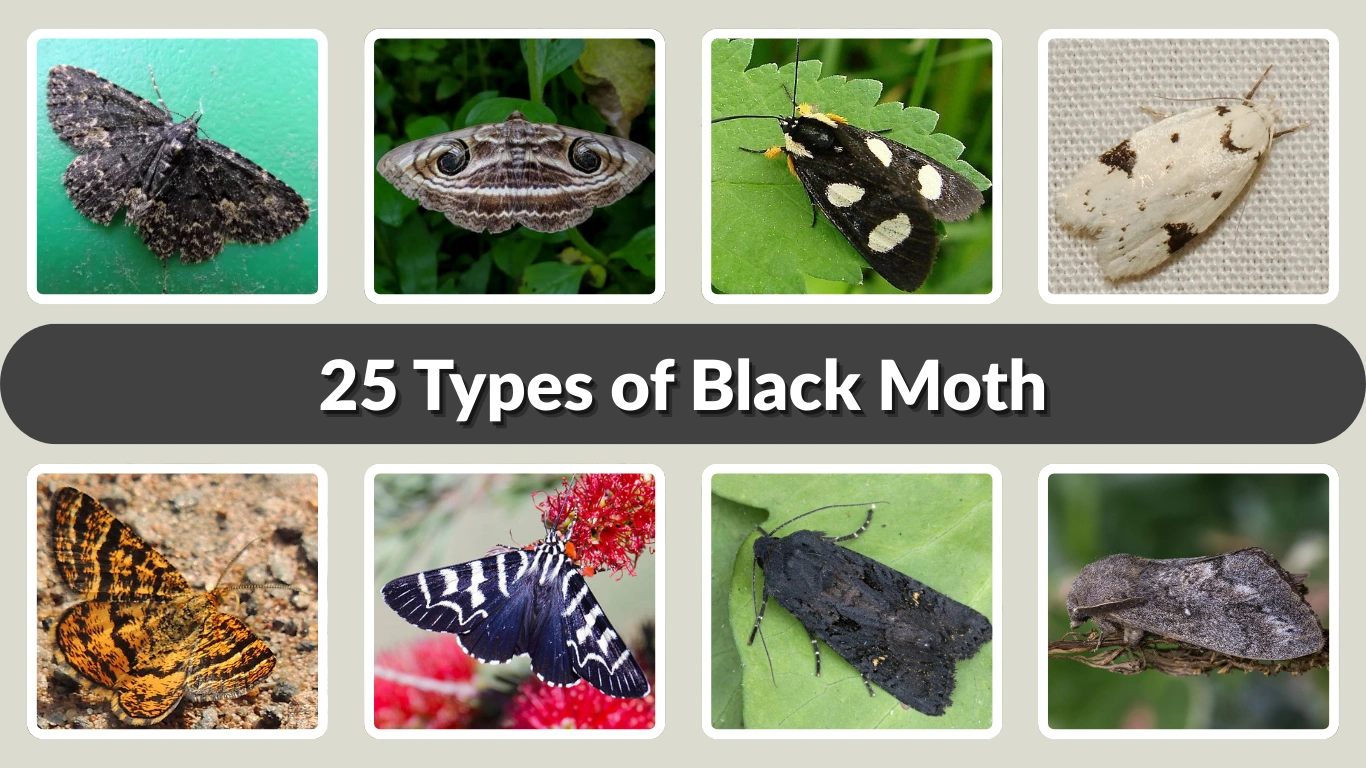
Black moths are some of the most visually striking nighttime insects, known for their deep, shadowy wings and fascinating patterns. Found in forests, grasslands, mountains, and even urban environments, these moths thrive in a wide range of habitats. This collection highlights twenty-five unique black moth species, offering simple identification details, habitat insights, behaviors, and lifecycles to help you better recognize and understand these mysterious nocturnal creatures.
1. Black Witch Moth

The Black Witch Moth (Ascalapha odorata) is one of the largest and most iconic moth species in the Americas. Known for its dark wings and impressive size, it often sparks curiosity and superstition. This nocturnal traveler can migrate long distances and is frequently seen near lights during warm months.
Identification
- Very large wingspan: 5–7 inches (12–18 cm)
- Dark brown to black wings with marbled patterns
- Pale or lavender line across wings
- Females show a distinct white spot on each forewing
- Thick, robust body with subtle patterning
Habitat
Black Witch Moths inhabit tropical and subtropical regions, including forests, gardens, and urban areas. They are widely distributed from South America to North America, often appearing in southern U.S. states during migration.
Behaviors
These moths are strong nighttime fliers and highly attracted to lights. They migrate seasonally, sometimes traveling thousands of kilometers. Despite their ominous appearance, they are gentle and rarely seen feeding as adults.
Diet and Lifecycle
Adult Black Witch Moths rarely feed, relying mostly on stored energy. Caterpillars feed on legumes such as acacia, mesquite, and wattle trees. Their lifecycle includes egg, larva, pupa (in leaf shelters), and adults, with multiple generations in warm climates.
2. Black Arches Moth

The Black Arches Moth (Lymantria monacha) is a striking moth known for its bold black-and-white patterns. Found across Europe and parts of Asia, it is commonly seen in forested areas where its caterpillars feed on coniferous trees. Its contrasting markings make it one of the more visually distinctive moth species.
Identification
- White wings with bold black curved lines (“arches”)
- Wingspan: 35–50 mm
- Males have feathery antennae; females are larger and heavier
- Body is black-and-white banded
- Caterpillars are dark with tufts and red dorsal spots
Habitat
Black Arches Moths inhabit coniferous and mixed forests, especially regions with spruce and pine. They thrive in temperate climates and are frequently found resting on tree bark during the day.
Behaviors
These moths are nocturnal and strongly attracted to lights. Males fly actively in search of females, while females move less. Populations may occasionally rise sharply, leading to noticeable increases in caterpillar activity.
Diet and Lifecycle
Adults typically do not feed. Caterpillars consume the needles of spruce, pine, and fir trees. The lifecycle includes egg, larva, pupa (often in bark crevices), and adult. Usually one generation appears per year.
3. Black Dotted Glyph Moth

The Black Dotted Glyph Moth (Polygrammate hebraeicum) is a medium-sized moth recognized for its dark wings decorated with pale lines and distinct black dots. Commonly found in North America, it inhabits wooded areas where its larvae feed on various tree species.
Identification
- Dark charcoal to black wings with pale, wavy lines
- Prominent black dots centered on the forewings
- Wingspan: 30–40 mm
- Slender body with fine scaling
- Caterpillars are smooth and typically feed high in the canopy
Habitat
This species inhabits deciduous and mixed woodlands, especially areas rich in mature trees. It is often encountered near forest edges and shaded trails.
Behaviors
Black Dotted Glyph Moths are nocturnal and often come to artificial lights. They have a gentle, gliding flight and generally stay close to wooded environments. Adults are most active in late spring and summer.
Diet and Lifecycle
Adults do not feed, relying on energy stored from the larval stage. Caterpillars feed on oaks, maples, and other hardwood trees. Their lifecycle includes egg, larva, pupa (hidden in bark or leaf litter), and adult, usually producing one generation yearly.
4. Black Zale Moth
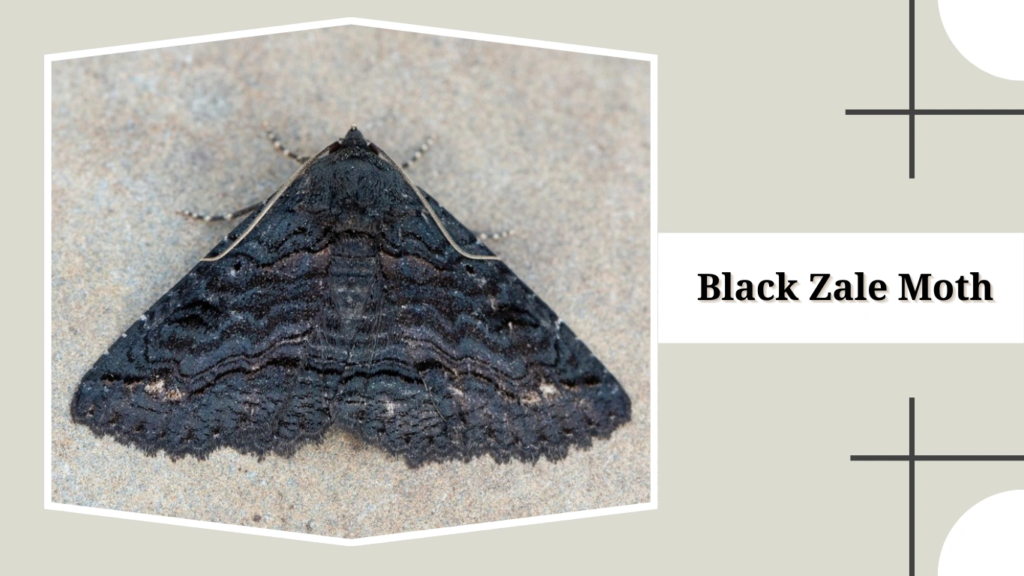
The Black Zale Moth (Zale undularis) is a dark, boldly patterned moth often found in forested regions of North America. Known for its jagged wing lines and deep charcoal coloring, it blends easily into tree bark and nighttime shadows.
Identification
- Deep black to dark gray wings
- Distinct jagged, wavy lines across forewings
- Wingspan: 35–45 mm
- Strong, angular wing shape
- Caterpillars are mottled green or brown with twig-like camouflage
Habitat
Black Zale Moths inhabit deciduous forests, mixed woodlands, and shrubby edges. They prefer areas with abundant hardwood trees, especially oaks, which support their larvae.
Behaviors
These moths are strictly nocturnal and come readily to lights. They rest flat on tree trunks during the day, using their dark camouflage to avoid predators. Adults are most active in spring and early summer.
Diet and Lifecycle
Adults do not feed. Caterpillars feed primarily on oaks, but may also use cherry or other hardwoods. The lifecycle includes egg, larva, pupa (in soil or leaf litter), and adult, typically producing one generation per year.
5. Black-Bordered Lemon Moth

The Black-Bordered Lemon Moth (Marimatha nigrofimbria) is a small, distinctive moth known for its contrasting black wing edges and subtle yellowish body. Widespread in warmer regions, it is often seen in gardens, fields, and shrubby habitats.
Identification
- Dark brown to black outer wing borders
- Pale yellow to lemon-toned central wings
- Wingspan: 18–25 mm
- Slender body with smooth scales
- Caterpillars are thin, greenish, and feed on low plants
Habitat
These moths inhabit grasslands, meadows, gardens, and woodland edges. They prefer warm climates and are especially common in southern parts of North America and tropical regions.
Behaviors
The Black-Bordered Lemon Moth is nocturnal and strongly attracted to lights. Its flight is quick and flickering, making it easy to spot near illuminated areas at night. Adults appear throughout much of the warmer season.
Diet and Lifecycle
Adults may sip nectar occasionally, unlike many moth species. Caterpillars feed on amaranth, pigweed, and other herbaceous plants. Their lifecycle includes egg, larva, pupa, and adult, with multiple generations per year in warm climates.
6. Black Carpet Moth
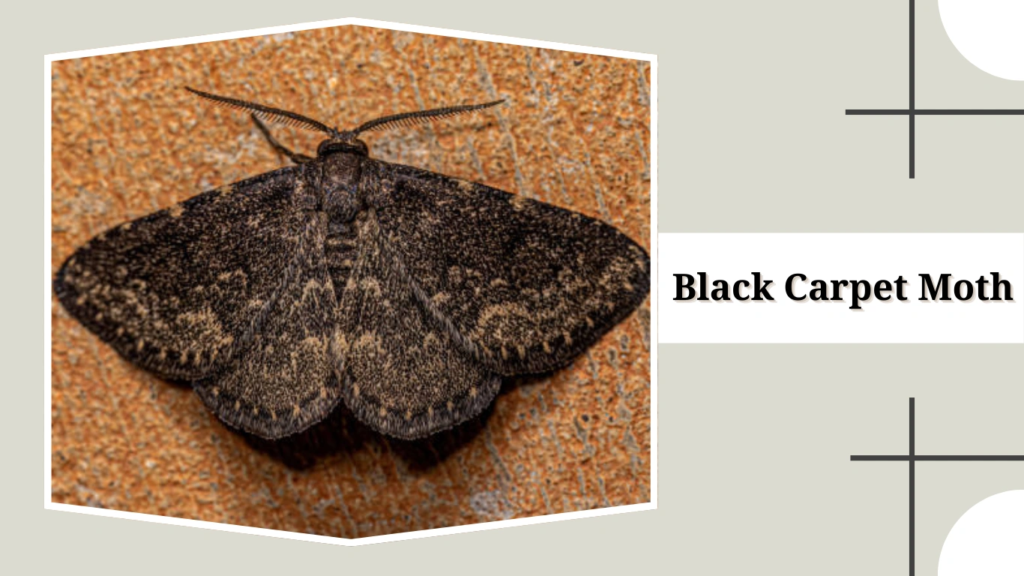
The Black Carpet Moth (Thera obeliscata) is a dark, patterned moth commonly found across Europe and parts of Asia. Its distinctive “carpet-like” wing markings help it blend seamlessly into bark and shaded forest environments.
Identification
- Dark gray to black wings with intricate banding
- Central pale crossband often present
- Wingspan: 30–38 mm
- Slender body with subtle mottling
- Caterpillars are green with pale stripes, typical of geometrid loopers
Habitat
Black Carpet Moths inhabit coniferous and mixed forests, especially areas dense with spruce and fir. They rest on tree trunks, branches, and shaded understory vegetation.
Behaviors
These moths are nocturnal and readily attracted to lights. They fly quietly among conifers and often remain motionless during the day. Adults emerge mainly in late summer and autumn.
Diet and Lifecycle
Adults do not feed. Caterpillars feed primarily on spruce and occasionally on other conifers. The lifecycle includes egg, larva, pupa (overwintering), and adult, usually producing one generation annually.
7. Black V Moth
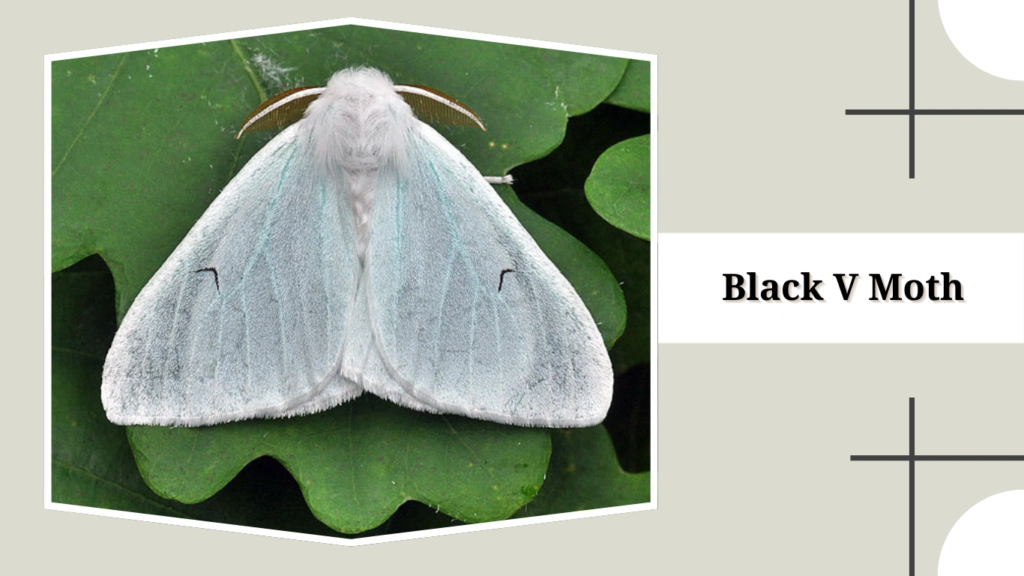
The Black V Moth (Arctornis l-nigra) is named for the distinctive black “V” or “L” shape that marks its forewings. Found mainly in parts of Asia and Eastern Europe, it is a visually striking species with contrasting patterns.
Identification
- Pale wings featuring a clear black V-shaped mark
- Wingspan: 35–45 mm
- Body covered in soft whitish-gray hairs
- Antennae feathery in males
- Caterpillars grayish or brown with fine hairs
Habitat
Black V Moths inhabit deciduous forests, woodland edges, and shrubby areas. They prefer regions where birch and other broadleaf trees are abundant, as these support their larvae.
Behaviors
These moths are nocturnal and frequently drawn to lights. Males fly actively in search of females, while females tend to remain more stationary. They rest on foliage or bark during daylight hours.
Diet and Lifecycle
Adults do not feed. Caterpillars feed on birch and other hardwoods. The lifecycle includes eggs laid on leaves, larval feeding, pupation in cocoons, and adult emergence. Typically, one generation appears per year.
8. Black-Tipped Forest Looper
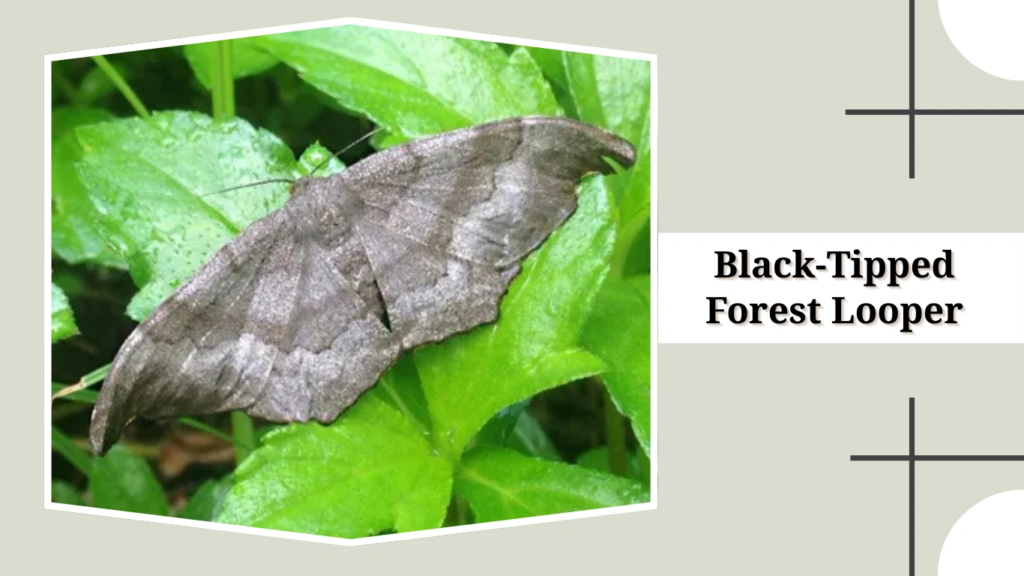
The Black-Tipped Forest Looper (Hylaea fasciaria) is a slender, dark-toned moth known for the subtle black edging on its wings. Common across parts of Europe, it inhabits wooded regions dominated by coniferous trees.
Identification
- Dark brown to blackish wings with subtle bands
- Distinct black tips on the forewings
- Wingspan: 25–32 mm
- Slender body and narrow wings
- Caterpillars are green or brown with looping movement typical of geometrid larvae
Habitat
This moth inhabits pine forests, spruce stands, and mixed woodland environments. It prefers cool, shaded habitats where conifers dominate.
Behaviors
The Black-Tipped Forest Looper is nocturnal and is often attracted to artificial lights. It exhibits a fluttery, low flight and usually stays close to conifer foliage. Adults are most active during summer.
Diet and Lifecycle
Adults do not feed. Larvae feed mainly on spruce, fir, and pine needles. The lifecycle consists of egg, larva, pupa (in soil or leaf litter), and adult, typically producing a single yearly generation.
9. Black-Etched Prominent

The Black-Etched Prominent (Cerura scitiscripta) is a bold and intricately patterned moth native to North America. Its distinct black, etched markings give it a dramatic appearance, making it easy to identify among tree bark and foliage.
Identification
- White to pale gray wings with strong black etched lines
- Thick, fuzzy body with black accents
- Wingspan: 45–55 mm
- Distinct resting posture with wings tented
- Caterpillars are green with a unique tail fork and warning posture
Habitat
This species inhabits deciduous forests, woodland edges, and riparian areas. It is frequently found near willow and poplar trees, which serve as its primary larval hosts.
Behaviors
Black-Etched Prominent moths are nocturnal and readily attracted to lights. They rest on bark during the day, blending well despite their bold markings. Caterpillars exhibit defensive displays, raising their tails when disturbed.
Diet and Lifecycle
Adults do not feed. Larvae feed on willow and poplar leaves. The lifecycle includes egg, larva, pupa (often in bark crevices), and adult, with typically one generation per year.
10. Black-Patched Clepsis
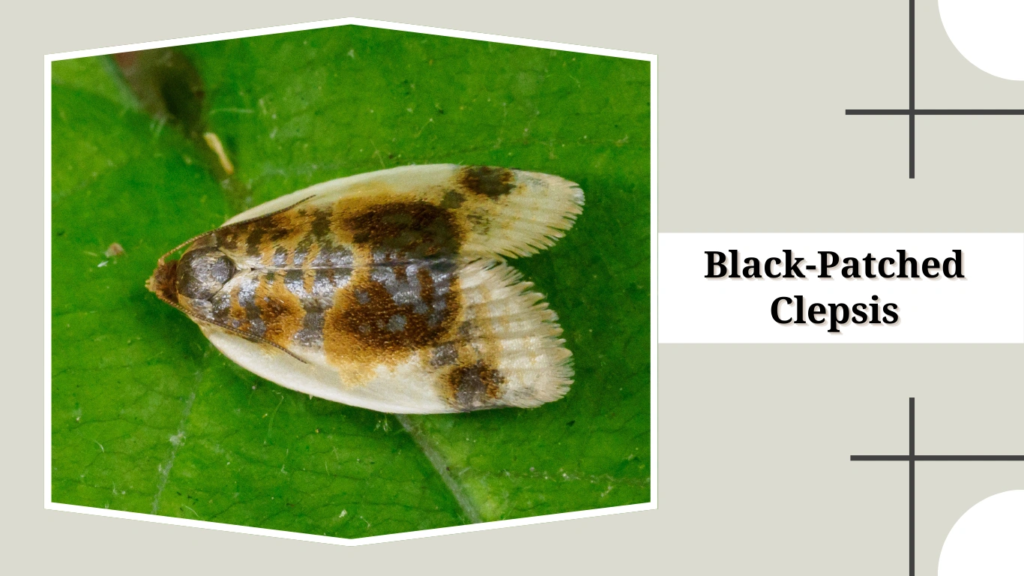
The Black-Patched Clepsis (Clepsis penetralis) is a small but distinctive moth noted for its dark patches against lighter forewings. Found mainly in North America, it inhabits open fields, meadows, and lightly wooded areas.
Identification
- Light tan to cream wings with bold black patches
- Wingspan: 15–22 mm
- Narrow, slightly rounded wings
- Fine scales giving a soft texture
- Caterpillars are small, greenish, and feed within rolled leaves
Habitat
This moth prefers sunny, open habitats such as meadows, gardens, roadside vegetation, and shrubby clearings. It thrives in regions with plenty of low plants that support its larvae.
Behaviors
The Black-Patched Clepsis is nocturnal and drawn to artificial lights. It has a quick, darting flight pattern and rests low on vegetation during the day. Adults appear throughout summer.
Diet and Lifecycle
Adults rarely feed. Caterpillars feed on herbaceous plants, often rolling leaves to create protective shelters. The lifecycle includes egg, larva, pupa (within rolled leaves), and adult, with multiple generations per year in warm climates.
11. Black Wedge-Spot Moth
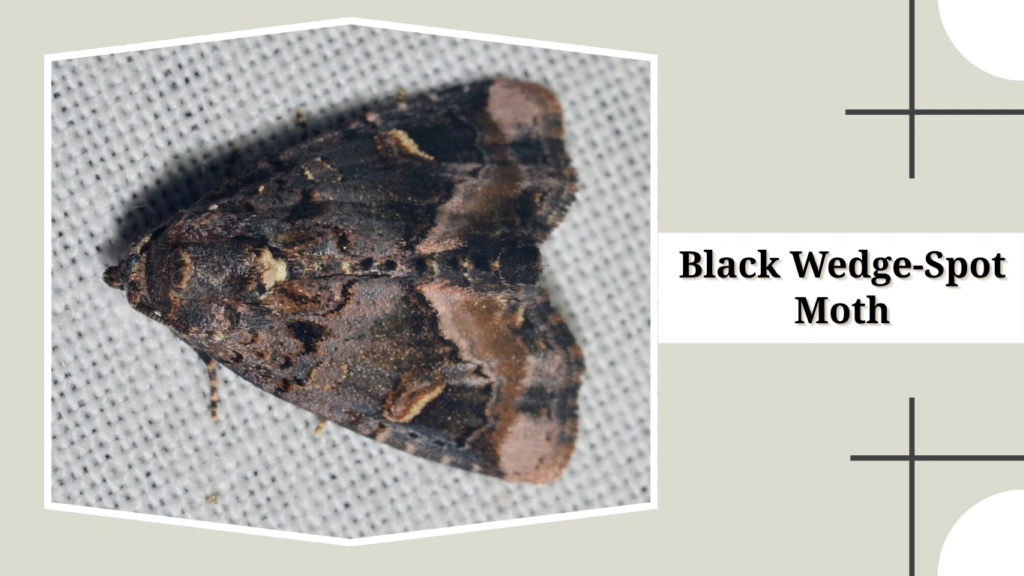
The Black Wedge-Spot Moth (Lasionycta anthracina) is a dark, compact moth species known for its distinctive wedge-shaped spots on the forewings. Found in cooler climates, it inhabits mountainous regions and northern forests.
Identification
- Charcoal to black wings
- Prominent pale wedge-shaped spots on forewings
- Wingspan: 25–32 mm
- Sturdy, compact body
- Caterpillars typically green or brown, feeding on low vegetation
Habitat
This moth occurs in alpine meadows, boreal forests, tundra edges, and high-elevation grasslands. It thrives in cool, open environments with short vegetation.
Behaviors
Black Wedge-Spot Moths are nocturnal and attracted to lights. They fly low and steadily, often staying close to the ground. Adults appear mainly in midsummer, depending on elevation.
Diet and Lifecycle
Adults generally do not feed. Caterpillars consume herbaceous plants and grasses found in alpine and northern habitats. The lifecycle includes egg, larva, pupa (in soil), and adult, usually with one generation per year due to cool climates.
12. Black Underwing Moth
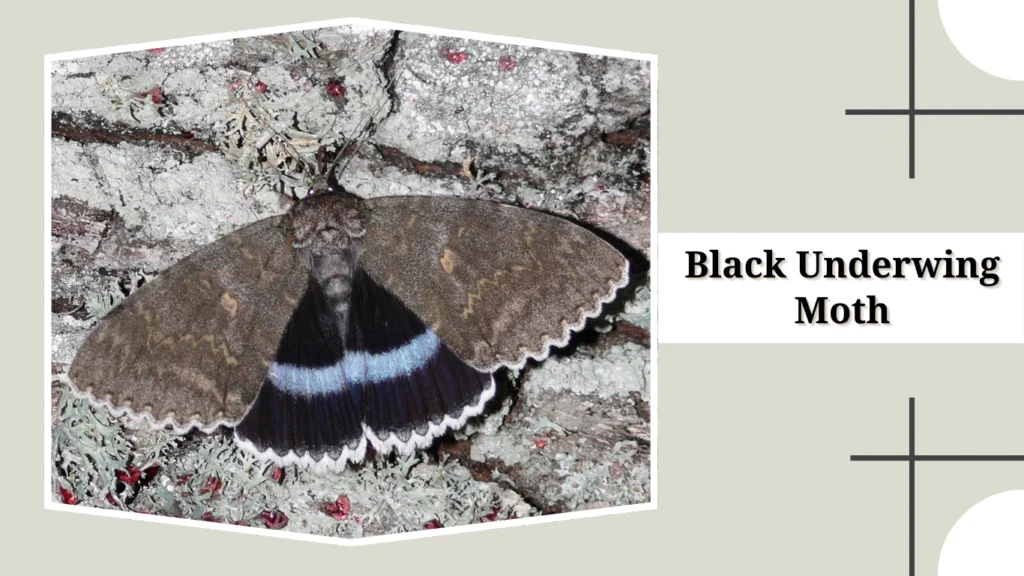
The Black Underwing Moth (Catocala agrippina) is a large, dramatic species known for its dark forewings and striking hindwings. It belongs to the underwing moth group, famous for their camouflage and sudden flashes of color.
Identification
- Dark gray to black forewings with intricate patterns
- Hindwings often deep black with pale or white bands
- Wingspan: 70–90 mm
- Heavy body with strong legs
- Caterpillars are smooth and twig-like in appearance
Habitat
Black Underwing Moths inhabit mature deciduous forests, especially areas with abundant oak and hickory trees. They prefer shaded woodland environments and forest edges.
Behaviors
These moths are nocturnal and highly attracted to lights. When resting, they blend into tree bark using their dark forewings. If disturbed, they flash their contrasting hindwings to startle predators. Adults are most active in late summer.
Diet and Lifecycle
Adult underwings may sip tree sap or rotting fruit. Caterpillars feed on oak, hickory, and other hardwood trees. Their lifecycle includes egg, larva, pupa (in soil or leaf litter), and adult, typically producing one generation annually.
13. Black Bean Moth
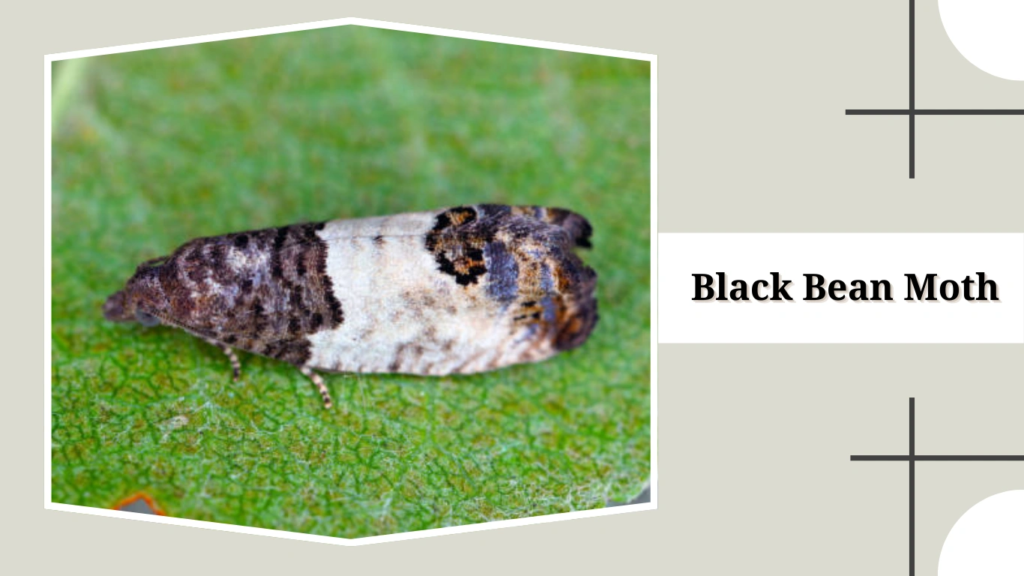
The Black Bean Moth (Cadra cautella) is a small, dark-colored moth commonly found in stored food environments. Also known as the Almond Moth, it is a global species often associated with grains, nuts, and dried goods.
Identification
- Dark brown to blackish forewings
- Lighter hindwings with fine fringes
- Wingspan: 14–20 mm
- Slender body with long antennae
- Caterpillars are creamy white with brown heads
Habitat
Black Bean Moths inhabit warehouses, pantries, grain storage areas, and dried food facilities. In the wild, they may be found in warm regions near food sources but are mostly considered a stored-product species.
Behaviors
These moths are nocturnal and often appear around indoor lights. They are strong fliers for their size and reproduce quickly, which can lead to infestations in stored food products.
Diet and Lifecycle
Adult moths do not feed. Caterpillars feed on grains, beans, nuts, seeds, and dried foods. The lifecycle includes egg, larva, pupa, and adult, with multiple generations per year in warm indoor conditions.
14. Black Cutworm Moth

The Black Cutworm Moth (Agrotis ipsilon) is a widespread nocturnal moth known for its dark coloration and its caterpillars’ reputation as agricultural pests. Found across the globe, it thrives in both natural and cultivated environments.
Identification
- Dark gray to blackish forewings with subtle streaking
- Lighter hindwings with fine veins
- Wingspan: 35–50 mm
- Stout body with smooth scaling
- Caterpillars are thick, gray to nearly black, and curl when disturbed
Habitat
Black Cutworm Moths inhabit fields, gardens, grasslands, and agricultural zones. They prefer areas with abundant vegetation and moist soil, where larvae can burrow and feed.
Behaviors
These moths are strong nocturnal fliers and often migrate long distances. They are attracted to lights and frequently encountered around buildings at night. Caterpillars hide in soil during the day and feed at night, cutting young plants at the base.
Diet and Lifecycle
Adults may occasionally sip nectar. Larvae feed on many crops, including corn, beans, tomatoes, and leafy vegetables. The lifecycle includes egg, larva, pupa (in soil), and adult, with several generations per year depending on climate.
15. Black Shield Moth
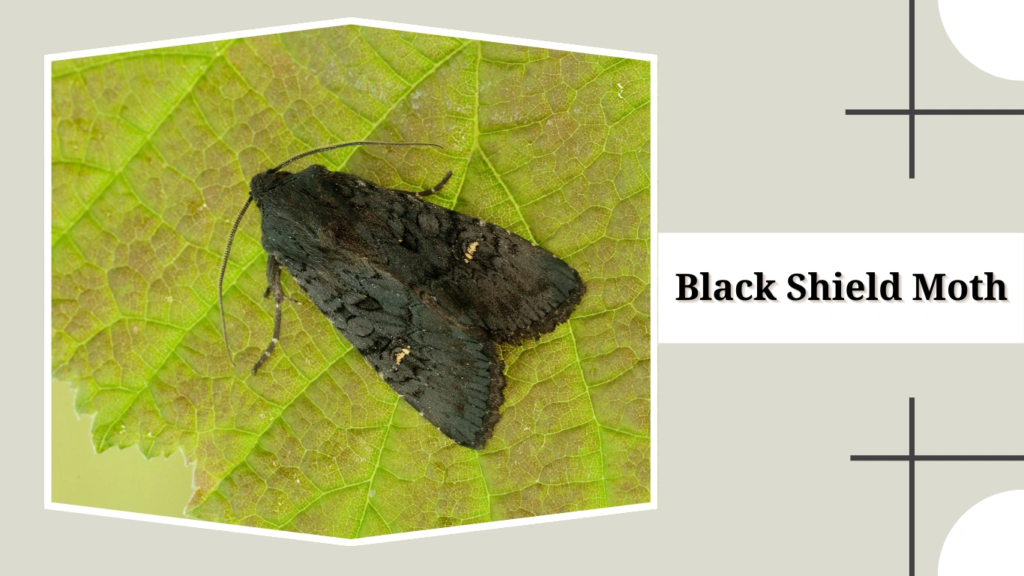
The Black Shield Moth (Diathrausta harlequinalis) is a small but distinctive moth named for the dark, shield-like markings on its wings. Common in parts of North and Central America, it is frequently found in grassy or weedy habitats.
Identification
- Light tan to cream wings with bold black shield-shaped patches
- Intricate dark markings across forewings
- Wingspan: 15–20 mm
- Slim body with delicate scaling
- Caterpillars are small, greenish, and feed on low vegetation
Habitat
Black Shield Moths inhabit meadows, fields, roadside plants, and open woodland edges. They prefer warm environments rich in herbaceous plants that support their larvae.
Behaviors
These moths are nocturnal and readily attracted to lights. Their flight is quick and zigzagging, making them easy to spot near illuminated areas. Adults are most active during the summer months.
Diet and Lifecycle
Adults seldom feed. Larvae consume a variety of low-growing plants, often sheltered within leaf folds. The lifecycle includes egg, larva, pupa (usually in leaf litter), and adult, typically producing multiple generations per year in warm climates.
16. Black Pine Moth
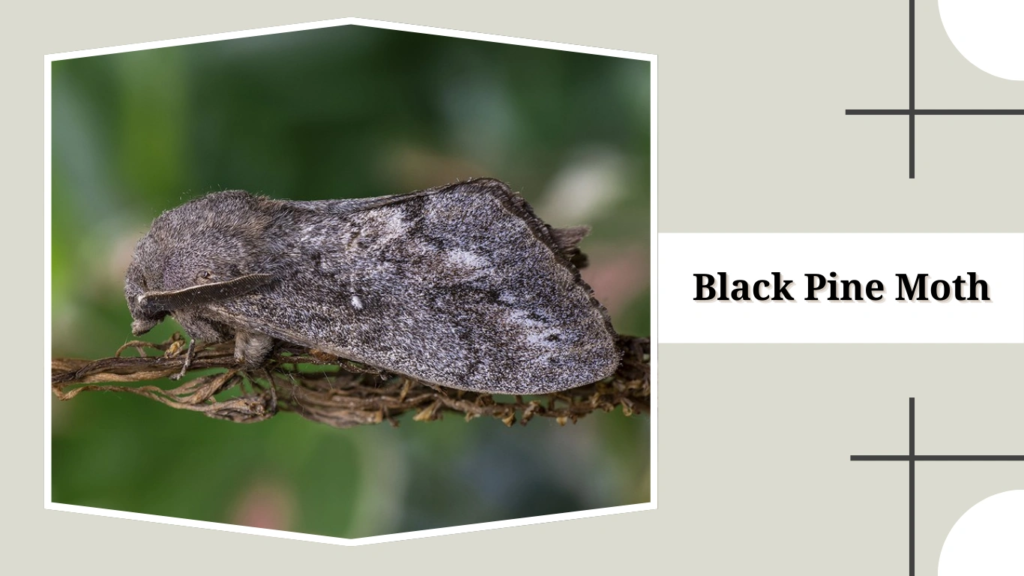
The Black Pine Moth (Conistra vaccinii) is a dark, compact moth frequently found in pine forests and mixed woodlands. Its muted blackish coloring provides excellent camouflage against tree bark.
Identification
- Dark brown to blackish wings with subtle mottling
- Wingspan: 28–35 mm
- Chunky body with fine scales
- Forewings rounded and smooth-edged
- Caterpillars are gray or green with faint striping
Habitat
Black Pine Moths inhabit pine forests, mixed woodlands, heaths, and shrubby areas. They prefer cooler climates and are often active in early spring or late autumn, depending on region.
Behaviors
These moths are nocturnal and attracted to lights. Their flight is steady and low, often occurring near pine trunks and understory plants. Adults are among the earlier or later seasonal fliers depending on climate.
Diet and Lifecycle
Adults do not feed. Caterpillars feed on pine needles and occasionally other conifers. The lifecycle includes egg, larva, pupa (in soil or litter), and adult, generally producing one generation per year.
17. Black Rustic Moth
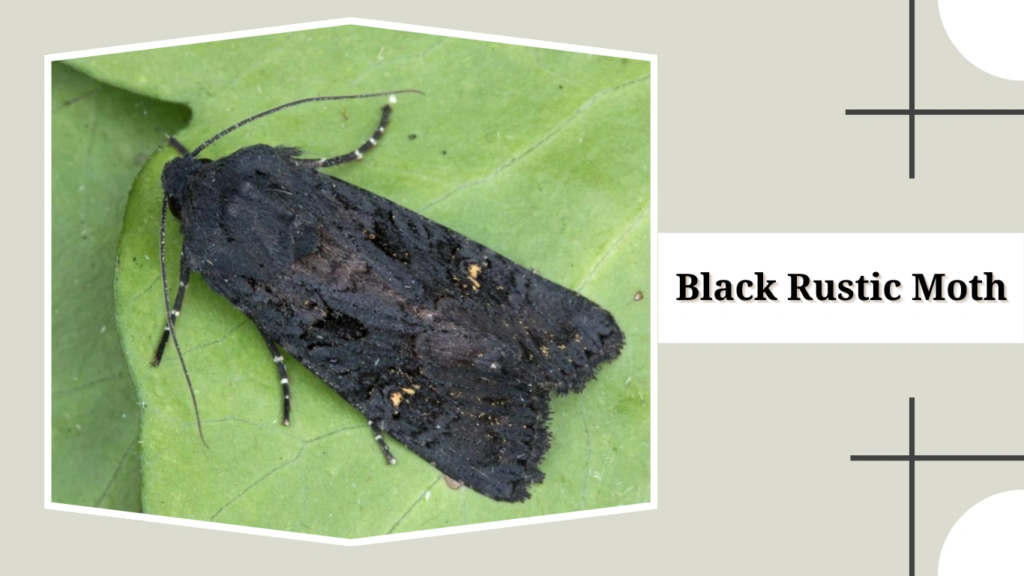
The Black Rustic Moth (Aporophyla nigra) is a deep black, velvety-winged moth commonly found across Europe. Its rich, uniform coloration makes it one of the darkest moth species in its range.
Identification
- Uniform black to very dark brown wings
- Wingspan: 40–48 mm
- Smooth, velvety wing texture
- Slender body with subtle patterning
- Caterpillars are green or gray with fine stripes
Habitat
Black Rustic Moths inhabit heathlands, meadows, woodland edges, and coastal areas. They prefer open habitats with abundant herbaceous plants.
Behaviors
These moths are nocturnal and strongly attracted to lights. Adults fly in autumn, often appearing during cooler nights. They rest low in vegetation during the day and blend seamlessly into dark backgrounds.
Diet and Lifecycle
Adults rarely feed. Larvae consume a variety of low-growing plants such as clovers, grasses, and heathers. The lifecycle includes egg, larva (overwintering), pupa, and adult, usually resulting in one generation per year.
18. Black Pug Moth
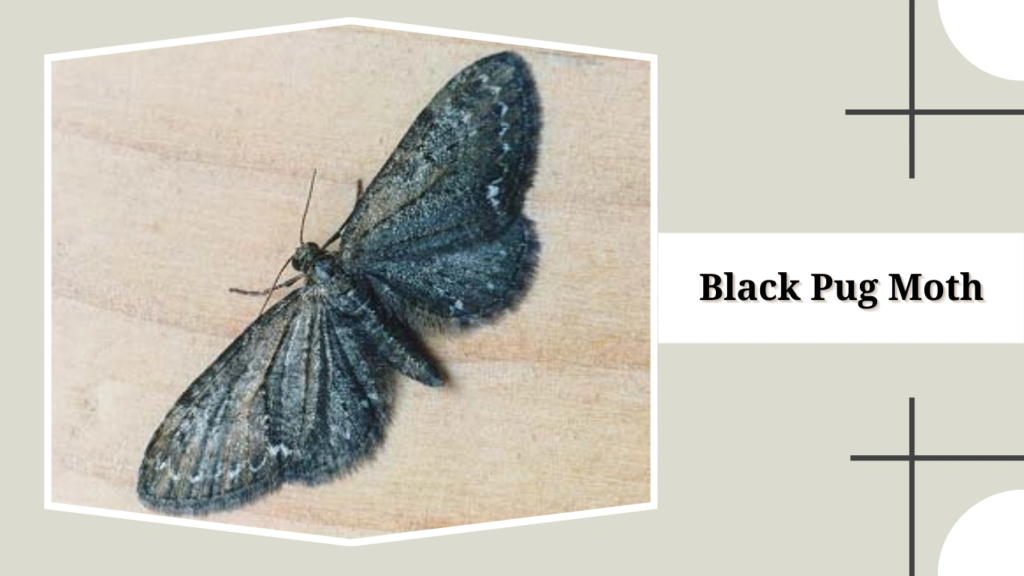
The Black Pug Moth (Eupithecia atricapilla) is a small, shadowy moth known for its dark coloration and subtle wing patterns. It is commonly found across parts of Europe and Asia.
Identification
- Dark gray to nearly black wings
- Very fine, barely visible crosslines
- Wingspan: 16–22 mm
- Slender body typical of pug moths
- Caterpillars are green or brown, well-camouflaged among flowers and buds
Habitat
Black Pug Moths inhabit meadows, gardens, forest edges, and shrubby areas. They prefer regions with abundant flowering plants that support their caterpillars.
Behaviors
These moths are nocturnal and drawn to artificial lights. They fly with a quick, fluttering motion and are most active from late spring to early summer. During the day, they hide in vegetation.
Diet and Lifecycle
Adults do not feed. Caterpillars feed on flowers, buds, and small leaves of herbaceous plants. The lifecycle includes egg, larva, pupa (in soil or leaf litter), and adult, generally producing one generation yearly.
19. Black Sexton Moth
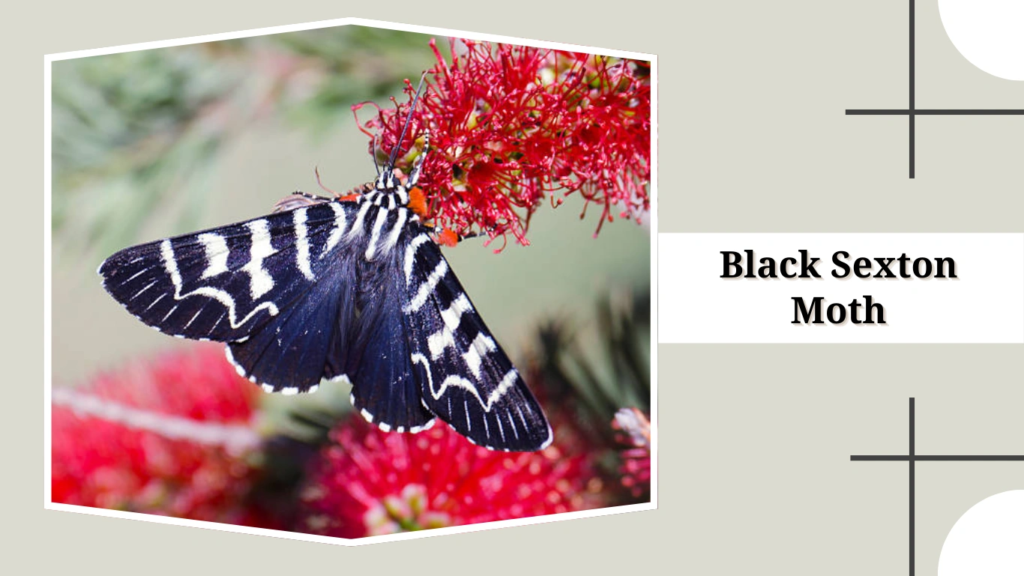
The Black Sexton Moth (Nicrophorus vespilloides – adult beetle-like moth misconception) is often confused with true moths, but the term is sometimes informally used for dark moth species with burial-beetle-like coloration. In moth classification, it refers to very dark, ground-dwelling noctuids.
Identification
- Deep black wings with faint mottling
- Wingspan: 28–35 mm
- Thick body resembling ground-dwelling noctuids
- Low, flattened resting posture
- Caterpillars usually dark with minimal striping
Habitat
These moths inhabit damp forests, rich leaf litter zones, grasslands, and woodland floors. They prefer shaded, moist environments where underground pupation is easy.
Behaviors
Black Sexton–type moths are nocturnal and remain close to the ground. They fly rarely and prefer crawling into thick vegetation. They are occasionally attracted to low-level lights near the forest floor.
Diet and Lifecycle
Adults rarely feed. Caterpillars feed on grasses, decaying plant matter, or low-growing vegetation depending on species. Their lifecycle includes egg, larva, pupa (often in soil), and adult, typically with one generation per year.
20. Black-Banded Orange Moth
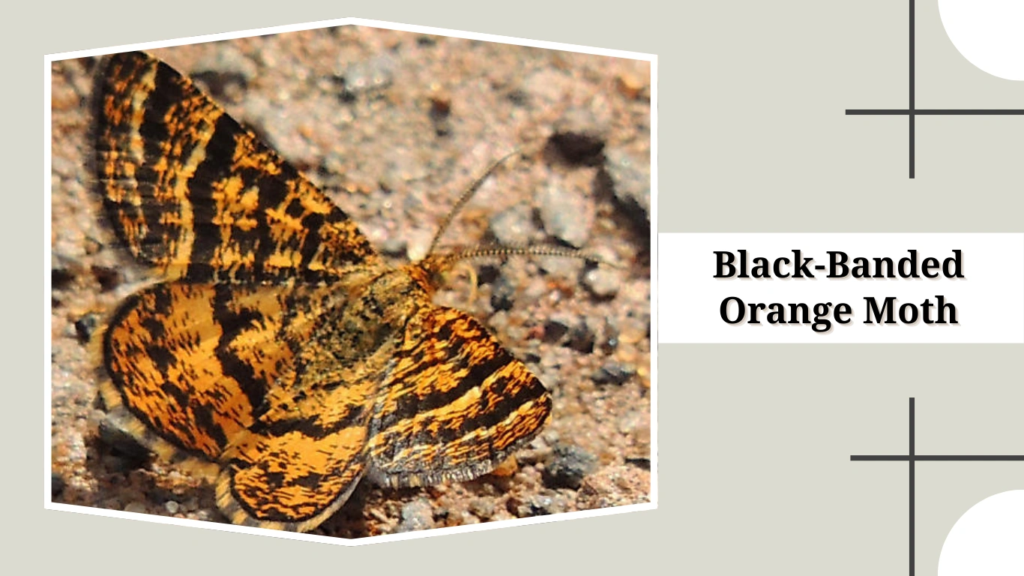
The Black-Banded Orange Moth (Pyrrharctia isabella – orange-black forms) is a strikingly patterned moth featuring vivid orange tones contrasted with bold black bands. Though best known for the Woolly Bear caterpillar, this color form of the adult moth is particularly eye-catching.
Identification
- Bright orange wings with strong black banding
- Wingspan: 45–60 mm
- Furry thorax with orange and black markings
- Hindwings often brighter than forewings
- Caterpillars are the well-known black-and-orange Woolly Bears
Habitat
This moth inhabits meadows, forest edges, gardens, and open fields across North America. It thrives in sunny habitats rich in herbaceous plants.
Behaviors
Black-Banded Orange Moths are nocturnal and strongly attracted to lights. Their flight is soft and fluttery. Caterpillars are hardy, cold-tolerant, and often seen wandering in autumn.
Diet and Lifecycle
Adults do not feed. Caterpillars eat a wide range of plants, including grasses, dandelions, clover, and asters. The lifecycle includes egg, larva (overwintering), pupa, and adult, usually with one generation per year.
21. Black-Spotted Inga Moth
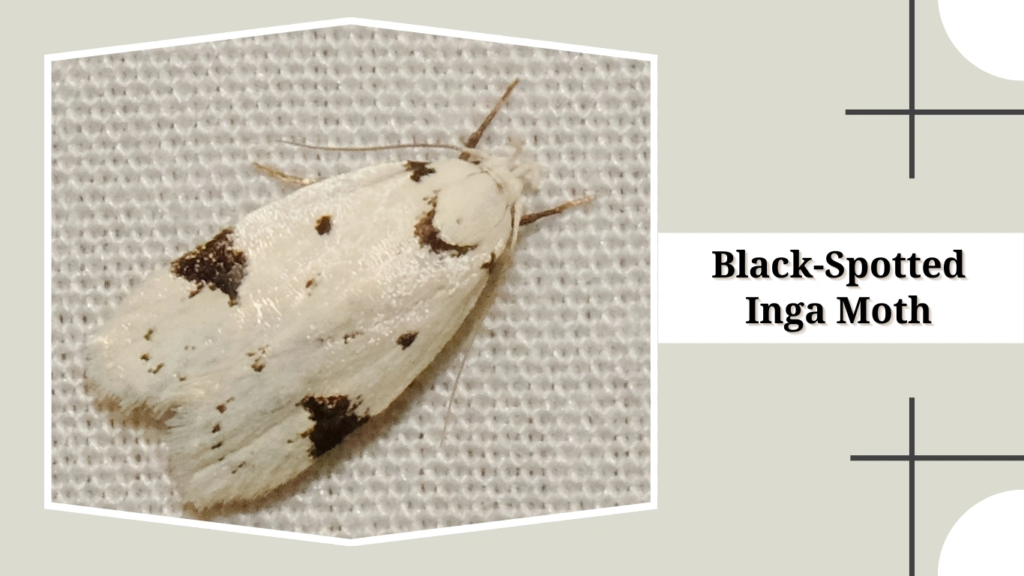
The Black-Spotted Inga Moth (Inga sparsiciliella) is a small, dark moth known for its fine black speckling and subtle wing sheen. Found mainly in the Americas, it inhabits tropical and subtropical environments.
Identification
- Dark gray to blackish wings with tiny black spots
- Slight metallic sheen on forewings
- Wingspan: 12–18 mm
- Narrow, delicate wings
- Caterpillars are slender and feed on foliage of various trees
Habitat
Black-Spotted Inga Moths inhabit tropical forests, wooded edges, gardens, and shrubby areas. They prefer warm zones with abundant host plants.
Behaviors
These moths are nocturnal and drawn to artificial lights. Their small size and quick, darting flight make them easy to overlook. They are active throughout much of the warm season.
Diet and Lifecycle
Adults seldom feed. Caterpillars feed on leaves of Inga trees and other tropical host plants. The lifecycle includes egg, larva, pupa (usually in leaf folds), and adult, often with multiple generations per year in warm climates.
22. Black Forester Moth
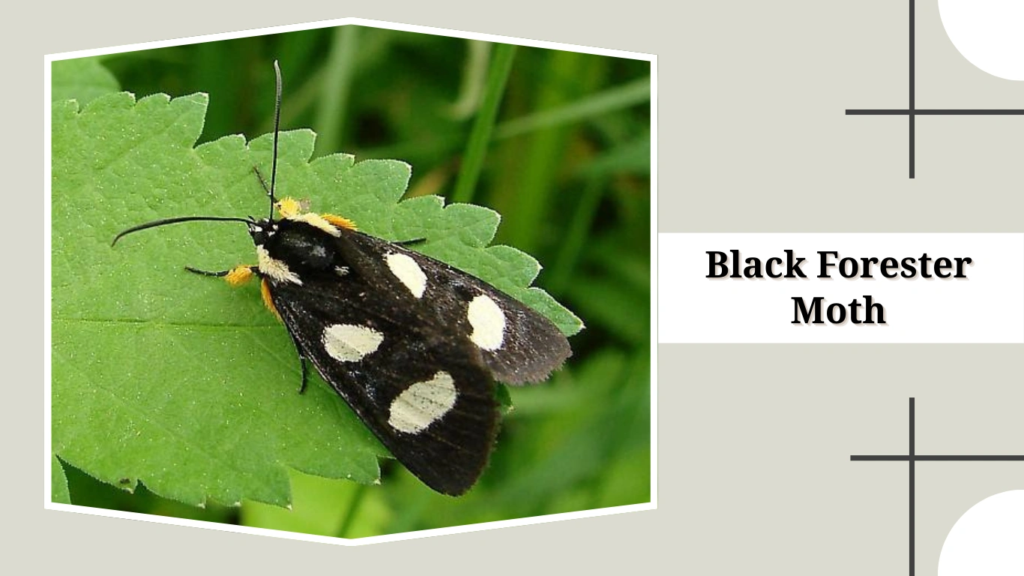
The Black Forester Moth (Aedia leucomelas) is a bold, dark moth recognized for its striking contrast of black forewings and pale hindwings. Its dramatic coloration makes it easy to identify in many parts of Europe and Asia.
Identification
- Deep black forewings with white or pale yellow patches
- Hindwings pale with dark margins
- Wingspan: 38–45 mm
- Sturdy body with contrasting coloration
- Caterpillars are greenish with fine stripes
Habitat
Black Forester Moths inhabit grasslands, forest edges, meadows, and gardens. They prefer areas where herbaceous host plants such as sow-thistle and bindweed are plentiful.
Behaviors
These moths are nocturnal and strongly attracted to lights. They are agile fliers and often rest on leaves or stems during the day. Adults are active mostly in summer.
Diet and Lifecycle
Adult moths may sip nectar occasionally. Caterpillars feed on bindweed, sow-thistle, and related plants. The lifecycle includes egg, larva, pupa (in soil or leaf litter), and adult, with one to two generations per year depending on climate.
23. Black Ground Moth
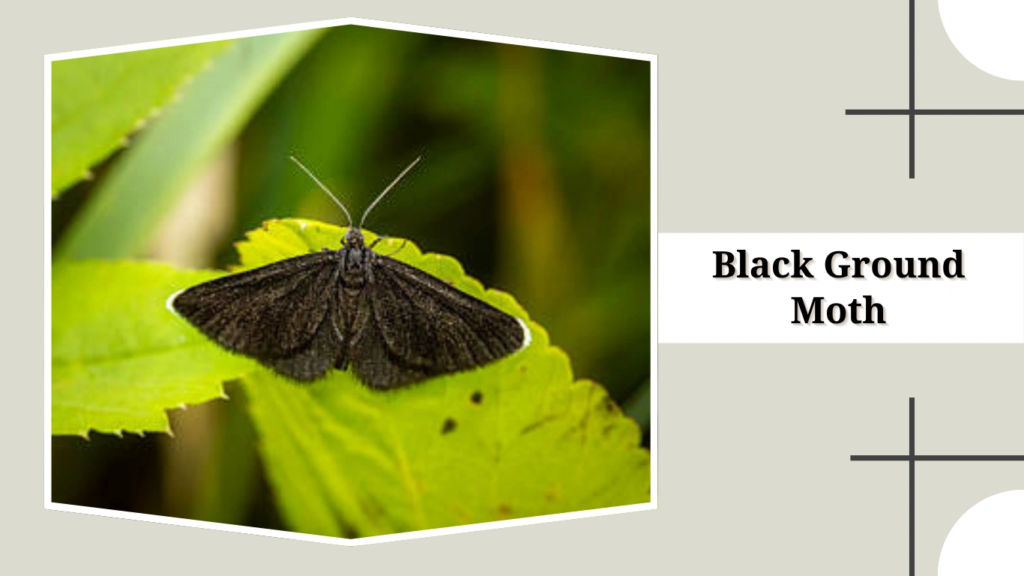
The Black Ground Moth (Hypena scabra – also called the Green Cloverworm Moth) is a dark, low-flying moth commonly found across North America. Its shadowy coloring allows it to blend easily into soil, bark, and ground vegetation.
Identification
- Dark brown to blackish wings
- Long, narrow forewings with subtle patterns
- Wingspan: 25–30 mm
- Slender body with pointed wing tips
- Caterpillars green and smooth, known as “cloverworms”
Habitat
Black Ground Moths inhabit gardens, crop fields, woodland edges, and grassy areas. They prefer habitats with abundant low vegetation, especially clover-rich ground.
Behaviors
These moths are nocturnal and fly low to the ground. They are strongly attracted to lights and often rest on soil or leaves during the day. Adults are most active from late spring through autumn.
Diet and Lifecycle
Adults may sip nectar occasionally. Caterpillars feed on clover, alfalfa, soybeans, and other low plants. The lifecycle includes egg, larva, pupa (in leaf litter or soil), and adult, with multiple generations per year in warm climates.
24. Black Owl Moth
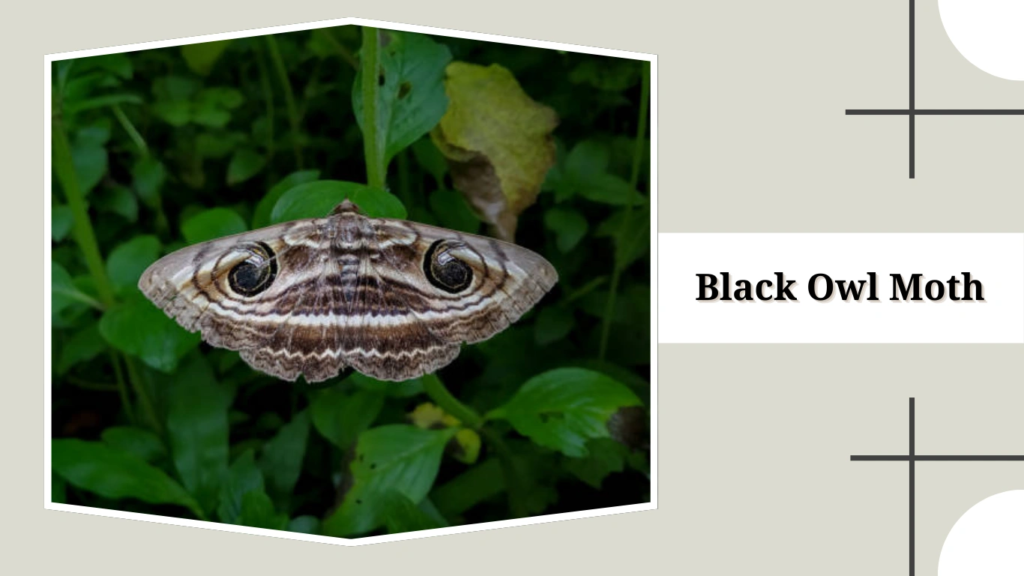
The Black Owl Moth (Bastilla circumsignata) is a bold, dark moth with striking “owl-like” patterns on its wings. Found in parts of Asia, it is known for its dramatic camouflage and strong nocturnal activity.
Identification
- Deep black to very dark brown wings
- Distinct pale or tan circular markings resembling owl eyes
- Wingspan: 45–55 mm
- Sturdy, compact body
- Caterpillars are greenish with subtle striping
Habitat
Black Owl Moths inhabit tropical and subtropical forests, wooded edges, and shrubby environments. They prefer warm climates with abundant host plants and dense foliage.
Behaviors
These moths are nocturnal and readily attracted to lights. They often rest on tree trunks during the day, using their owl-like spots to confuse predators. Adults are strong fliers and active through the warm season.
Diet and Lifecycle
Adults may occasionally sip nectar or sap. Caterpillars feed on various broadleaf plants. The lifecycle includes egg, larva, pupa (often in leaf litter), and adult, typically with multiple generations in warm regions.
25. Black Wave Moth

The Black Wave Moth (Idaea seriata) is a small, shadowy moth recognized for its wavy, dark-lined wings. Common in Europe and parts of Asia, it thrives in urban, suburban, and lightly wooded habitats.
Identification
- Pale gray to charcoal wings with thin black wavy lines
- Wingspan: 18–22 mm
- Slender body typical of geometrid moths
- Resting posture flat with wings spread
- Caterpillars are thin, brownish, and camouflaged among stems
Habitat
Black Wave Moths inhabit gardens, hedgerows, forest edges, and parks. They adapt well to human-influenced environments and are often found near lights at night.
Behaviors
These moths are nocturnal and show a gentle, fluttering flight. They are frequently attracted to artificial lighting and remain hidden in vegetation during the day. Adults appear mainly in summer.
Diet and Lifecycle
Adults do not feed. Caterpillars feed on various low plants such as dandelion, plantain, and knotgrass. The lifecycle includes egg, larva, pupa (in soil or leaf litter), and adult, with typically one to two generations per year depending on climate.
FAQs
1. Why are some moths completely black?
Many moths are black for camouflage. Their dark coloration helps them blend into tree bark, soil, or nighttime shadows, protecting them from predators. In some species, black wings also help absorb heat, aiding activity in cooler climates.
2. Are black moths dangerous?
Black moths are harmless to humans. They do not bite, sting, or carry diseases. Their caterpillars may have hairs that irritate skin in rare cases, but adults pose no threat and are peaceful nocturnal insects.
3. What attracts black moths to lights?
Like many nocturnal insects, black moths navigate using natural light. Artificial lights disrupt this instinct, causing them to fly toward lamps and windows. This behavior is especially noticeable in darker species with strong night activity.
4. Do black moths feed as adults?
Most adult black moths do not feed. They rely on stored energy from their larval stage. However, a few species may sip nectar, tree sap, or rotting fruit. Caterpillars do nearly all the feeding during the lifecycle.
5. Where are black moths most commonly found?
Black moths can be found in forests, grasslands, gardens, mountains, and even urban areas. Their dark coloration makes them well-suited to shaded environments like woodland floors, tree trunks, and nighttime habitats across many regions.
