

Every summer, as the California sun sets and porch lights flicker on, clumsy brown and green beetles begin to buzz through the warm evening air. These are June bugs, also known as May beetles, members of the scarab beetle family that thrive across the Golden State. While they may seem like pests, June bugs play a unique role in California’s ecosystem. Let’s explore where they live, what species you’ll find, and why their numbers peak each summer.
Overview of June Bugs in California

What Are June Bugs?
June bugs belong to the Scarabaeidae family, a large group of beetles that includes over 250 species in North America. They are easily recognized by their oval bodies, hard shells, and slow, heavy flight patterns. June bugs are primarily nocturnal, meaning they’re most active at night — especially around bright lights.
These beetles are not dangerous to humans but can become a nuisance when they swarm near windows, patios, or street lamps. Most of their life, however, is spent underground as grubs feeding on plant roots.
Where They’re Found
June bugs thrive in California’s warm and semi-arid climate, especially in areas with irrigated lawns or farmland. They are found throughout:
- Southern California: Los Angeles, San Diego, and desert regions.
- Central California: San Joaquin Valley, Bakersfield, and Fresno.
- Northern California: Sacramento, Redding, and forested foothills.
They prefer moist soil, gardens, and orchards, making suburban areas ideal habitats. The combination of mild winters and long summers provides the perfect breeding environment for these beetles.
Common Species of June Bugs in California

California hosts several species of June bugs, each with distinct colors, habits, and activity patterns.
Brown June Bug (Phyllophaga spp.)
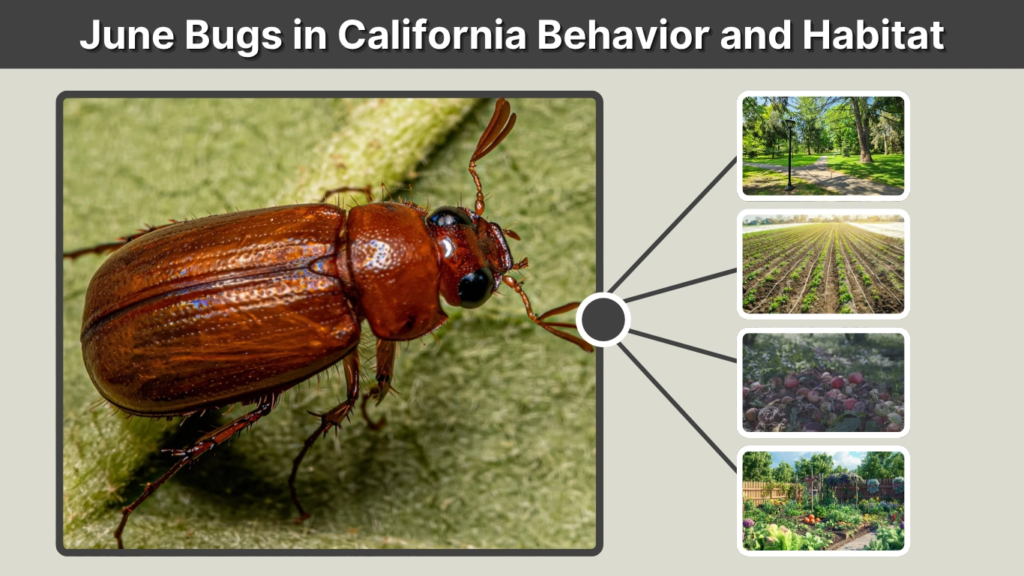
The brown June bug is the most common species statewide. It has a shiny, reddish-brown shell and measures around one inch long. These beetles are strictly nocturnal, often seen flying around porch lights after dusk.
Their larvae, known as white grubs, live underground for one to three years, feeding on the roots of grasses, flowers, and crops — which can sometimes lead to lawn damage.
Brown June bugs are especially common in northern and inland California, where the cooler climate supports longer larval development cycles.
Green June Bug / Figeater Beetle (Cotinis mutabilis)
The green June bug, also known as the Figeater beetle, is famous for its metallic emerald-green body with golden or bronze reflections. This species is native to the southwestern U.S. and is especially common in Southern and Central California.
Unlike the brown June bug, the green June bug is diurnal, meaning it flies during the day. You’ll often see them hovering noisily over lawns, fruit trees, and compost piles. They feed on ripe or decaying fruit, making them frequent visitors to gardens and orchards.
Despite their size and loud buzzing, green June bugs are harmless to people and pets. They actually help break down organic matter, playing a small role in decomposition.
Regional Species Differences
- Southern California: Green June bugs and Figeater beetles dominate urban and coastal areas.
- Central California: A mix of brown and green species near orchards and vineyards.
- Northern California: Cooler regions harbor more brown June bugs, active mainly at night.
June Bug Season in California

When Do June Bugs Come Out?
June bugs begin to appear in May, though Southern California may see them as early as April due to the warmer climate. They’re most abundant from late May through July, disappearing by the end of August.
Their name comes from this seasonal pattern — their numbers peak around June, when adults emerge from underground pupal chambers to reproduce. Warm evenings, especially after spring rains, trigger mass flights that can last for several weeks.
How Long They Stay
Adult June bugs live only 2 to 4 weeks, long enough to mate and lay eggs. However, their overall season lasts 4 to 6 weeks as new adults emerge at slightly different times.
After mating, females burrow into moist soil to lay eggs before dying. Males typically die shortly after mating, completing a short but crucial adult phase.
Regional Timing Across California
| Region | Active Months | Common Species | Notes |
| Southern California | April – July | Green June bug, Figeater beetle | Early season, longer activity due to heat |
| Central California | May – July | Brown and green June bugs | Found near orchards and vineyards |
| Northern California | June – August | Brown June beetles | Cooler nights shorten lifespan but delay emergence |
In particularly warm years, residents of Southern California have reported June bugs as early as March, while in cooler northern areas, they may not appear until early July.
Life Cycle of California June Bugs

June bugs undergo complete metamorphosis — progressing through egg, larva, pupa, and adult stages. Their entire life span ranges from one to three years, though adults live only a few weeks above ground.
Egg Stage
Female June bugs lay between 40 and 75 eggs in soft, moist soil, usually in lawns or gardens. The eggs hatch within two to four weeks, depending on soil temperature and moisture.
Larva Stage (White Grubs)
The larval stage is the longest part of their life cycle, lasting up to three years underground. These C-shaped white grubs feed on the roots of grasses, flowers, and vegetables, often causing yellow patches or bare spots in lawns. In California’s irrigated suburbs and farms, this stage can be especially destructive if populations are large.
Pupa Stage
After completing their larval growth, the grubs burrow deeper into the soil and form a pupal case, where they remain for about 2–3 weeks. During this phase, they transform into adult beetles.
Adult Stage
Adults emerge in late spring to feed, mate, and lay eggs. They live for just a few weeks, completing their brief above-ground existence before dying. The next generation remains underground until the following year’s warm months.
Regional Differences Across California
Southern California
Southern California’s warm, dry climate allows June bugs to emerge earlier and stay active longer than in other regions. Green June bugs, or Figeater beetles, are most common here. They thrive in gardens, citrus groves, and compost piles where decaying fruit provides easy food.
During early summer, these beetles can be seen flying clumsily around gardens and backyards, especially in Los Angeles, San Diego, and Orange County. Their loud buzzing may sound intimidating, but they rarely damage living plants.
Northern California
In Northern California, cooler nights shorten the active period of adult June bugs but extend the time they spend underground as larvae. Brown Phyllophaga species dominate this region, often seen flying near porch lights from June through August.
Rural areas with grassy fields and farmland see the highest numbers, as females prefer to lay eggs in moist soil with plenty of plant roots for their grubs to feed on.
Central California
Central California experiences a mix of both species. The green beetles are active during the day in warmer valleys like Fresno or Bakersfield, while brown beetles appear at night in rural and agricultural zones. Vineyards and fruit orchards often report higher activity during early summer.
Behavior and Habitat
Day vs. Night Activity
June bugs are most active during warm, calm nights. Brown June beetles are nocturnal, gathering near lights or windows, while green June bugs are diurnal and can be spotted gliding across lawns or hovering near fruit trees.
Their attraction to light, called phototaxis, often brings them into homes or around streetlights in large swarms. This behavior is harmless but can become a nuisance for homeowners.
Preferred Habitats
June bugs seek out fertile, moist soil where they can lay eggs. They’re most common in:
- Suburban lawns and parks
- Farmland with irrigated crops
- Fruit orchards and compost piles
- Gardens rich in organic material
Their larvae thrive in healthy lawns because of the abundance of roots and nutrients available underground.
Are June Bugs Harmful?
Impact on Humans and Pets
June bugs are non-aggressive and completely harmless to people and pets. They don’t sting, bite, or spread disease. The worst they can do is startle someone by flying into them unexpectedly.
Cats and dogs may play with or eat them, which isn’t usually harmful, though large quantities could cause mild stomach upset.
Impact on Plants and Lawns
While adults feed on leaves and fruit, most damage occurs during the larval (grub) stage. Grubs chew on grass and crop roots, weakening plants and causing brown patches in lawns. Severe infestations can lead to visible turf damage, especially in heavily irrigated areas.
In orchards, adult beetles may nibble on ripe or rotting fruit but rarely cause serious harm.
How to Control June Bugs in California
Natural Prevention
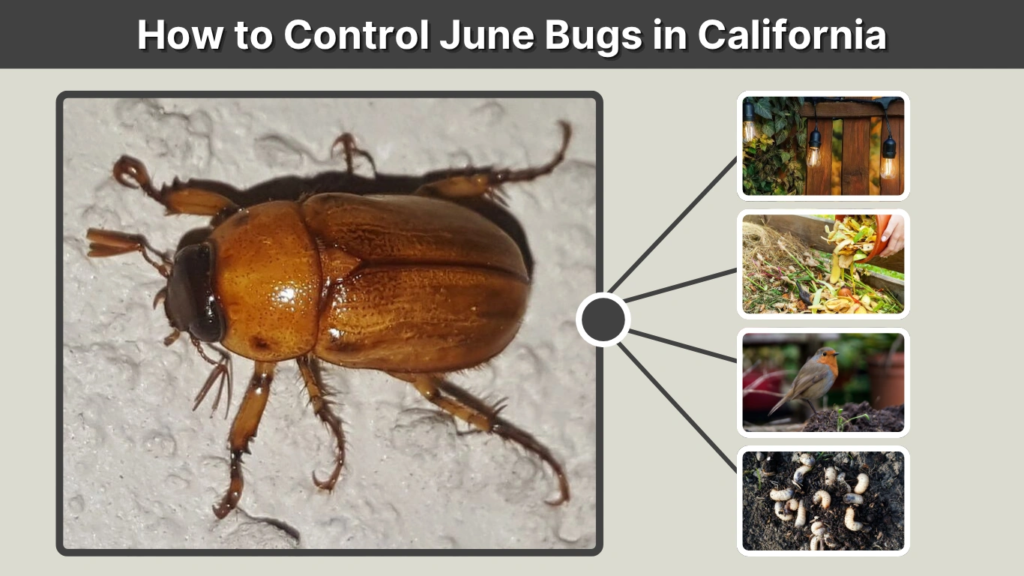
- Reduce outdoor lighting during June and July, or switch to yellow “bug lights.”
- Clean up fallen fruit and compost regularly to discourage green June bugs.
- Encourage predators such as bats, birds, and lizards, which help keep populations low.
- Till soil in fall to expose grubs to birds and sunlight.
Grub Management
To address underground larvae:
- Apply beneficial nematodes to your soil — microscopic worms that parasitize grubs.
- Use milky spore powder, a natural bacterium that targets June bug larvae.
- Avoid overwatering lawns; damp soil attracts egg-laying females.
- Maintain healthy turf through regular aeration and moderate fertilization.
When to Use Chemical Control
If natural methods fail, targeted insecticides can help. Products containing chlorantraniliprole or imidacloprid are effective against grubs when applied in spring or early summer. Always follow state-approved guidelines and consult the University of California Cooperative Extension for region-specific recommendations.
Common Misidentifications
In California, June bugs are often mistaken for other beetles.
- Japanese beetles are smaller and have copper-green coloration.
- Bess beetles are larger, shiny black, and found in forested areas.
- Cicadas, though similar in sound, are not beetles but winged insects from a different family.
Green June bugs are also misidentified as wasps because of their loud buzzing flight, but they’re completely harmless.
Interesting Facts About California June Bugs
- The green June bug (Cotinis mutabilis) is native to California and helps recycle decaying fruit.
- Their buzzing is caused by vibrations of their wing covers (elytra) rather than vocal sounds.
- Some June bug larvae can survive up to three winters underground before emerging.
- In hot, dry summers, populations decrease, while rainy springs often trigger population booms.
- The brown June bug can detect soil vibrations, helping it avoid predators while burrowing.
FAQs
Are June bugs common in California?
Yes, they are widespread throughout the state, especially in Southern and Central California where the warm, dry climate suits them best.
When do June bugs appear in California?
They begin emerging in May or early June, peaking during the summer months. In warmer areas like Los Angeles or San Diego, they may appear as early as April.
Do June bugs bite or sting?
No. June bugs are harmless and cannot bite or sting humans or pets.
Why are there so many June bugs some years?
Populations spike after wet winters and mild springs, which allow more larvae to survive underground.
How can I control June bugs naturally?
Reduce light exposure, remove decaying fruit, and apply beneficial nematodes to your lawn to eliminate larvae.
