

The red paper wasp (Polistes carolina) is one of the most striking and easily recognizable wasps in North America. Known for its deep reddish-brown color and distinctive papery nests, this species plays an important role in controlling pests and pollinating plants. However, its painful sting and tendency to build nests near human homes make it both beneficial and feared. Understanding its habits, identification, and management is key to coexisting safely with these wasps.
Understanding the Red Paper Wasp

What Is a Red Paper Wasp?
The red paper wasp belongs to the Vespidae family and the Polistes genus, a group commonly referred to as paper wasps. These social insects are named for the papery nests they build from chewed wood fibers mixed with saliva. Unlike hornets, which construct enclosed ball-shaped hives, paper wasps create open nests with visible hexagonal cells.
The red paper wasp, also known as the Carolina paper wasp, is particularly noted for its reddish coloration and moderate temperament. It’s a valuable insect in gardens and farms because it helps control caterpillars and other pests. Despite its ecological importance, this wasp can become a nuisance when it nests on porches, attics, or other human structures.
Scientific Classification
- Kingdom: Animalia
- Phylum: Arthropoda
- Class: Insecta
- Order: Hymenoptera
- Family: Vespidae
- Genus: Polistes
- Species: Polistes carolina
- Common Name: Red Paper Wasp
This species is closely related to the Polistes rubiginosus (mahogany wasp) and the Polistes perplexus (fine-backed red paper wasp), both of which share similar appearances and nesting habits.
Identification and Physical Characteristics

Appearance
The red paper wasp is easily identifiable by its reddish-brown or mahogany body, long legs, and narrow waist. Its wings are typically dark brown or black, and the body may have slight black markings near the tips. Adults usually measure 0.8 to 1.2 inches long, with the queens being the largest in the colony.
Key features include:
- Smooth, elongated body with visible segmentation
- Slender legs that dangle during flight
- Folded wings when at rest
- Glossy exoskeleton that reflects light
Some regional variations, such as the fine-backed red paper wasp, have slightly lighter thoraxes, while the coarse-backed species have textured or ridged backs.
Male vs Female
Male and female red paper wasps differ slightly in anatomy and behavior:
- Females (Queens/Workers): Have stingers and are larger; capable of reproduction.
- Males: Smaller, harmless, and lack stingers. Their antennae curve at the tips, a key feature for identification.
Comparison With Other Wasps
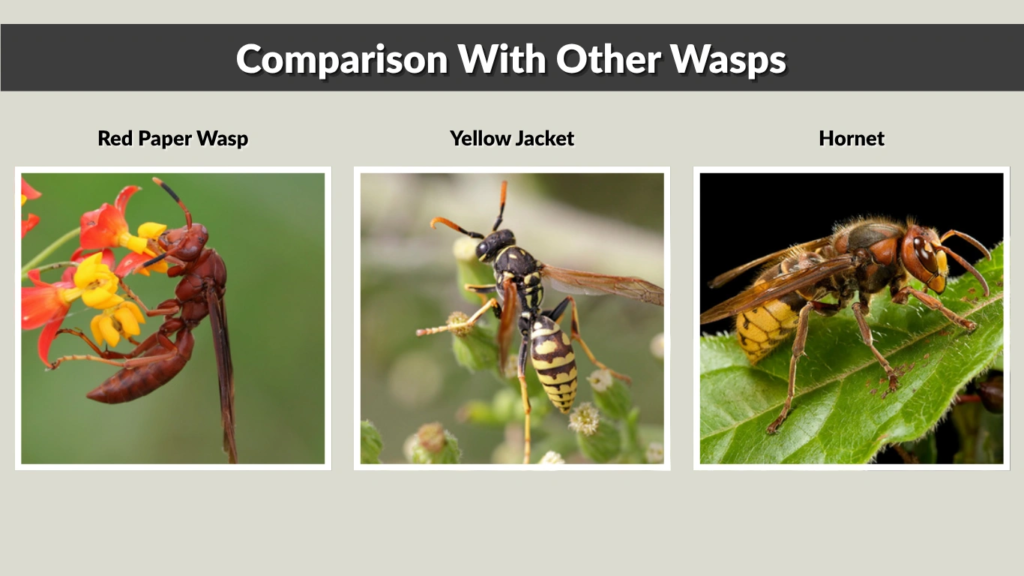
| Feature | Red Paper Wasp | Yellow Jacket | Hornet |
| Body Color | Reddish-brown | Bright yellow and black | Brown and black |
| Nest Type | Open and papery | Enclosed underground | Enclosed spherical |
| Aggression Level | Moderate | High | High |
| Stinger | Smooth (can sting multiple times) | Barbed | Smooth |
The red paper wasp is less aggressive than hornets and yellow jackets but will still defend its colony if disturbed.
Distribution and Habitat

Where Are Red Paper Wasps Found?
Red paper wasps are native to the southern and central United States, with large populations in:
- Texas and Florida – Most common regions, where they thrive in warm climates.
- Georgia, Alabama, and Tennessee – Often seen nesting around homes and barns.
- Missouri, Ohio, and Colorado – Smaller but stable populations.
- Occasionally spotted in California and Michigan, especially during warmer months.
Their range extends across both urban and rural areas, wherever there is sufficient shelter and access to nectar-producing plants.
Preferred Habitats
Red paper wasps prefer quiet, sheltered locations protected from direct rain and sunlight. Common nesting sites include:
- Roof eaves, porch ceilings, and attics
- Tree branches and hollow logs
- Abandoned sheds or barns
- Wooden fences and outdoor furniture
Because these areas mimic natural tree shelters, they are ideal for nest construction. When undisturbed, colonies can thrive from spring to early fall before dying off in winter.
Life Cycle of the Red Paper Wasp
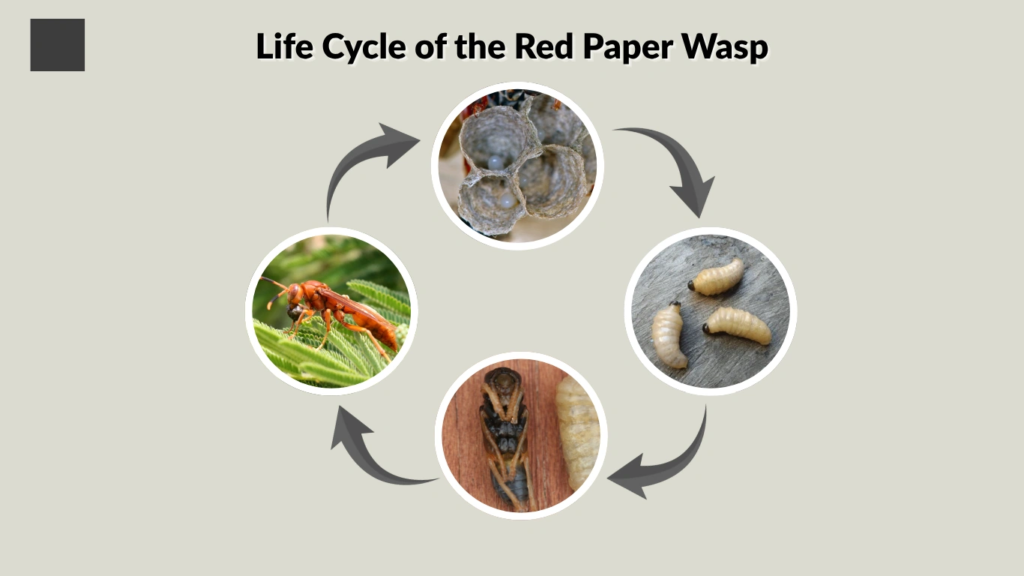
Colony Structure
The red paper wasp colony is organized around a queen, female workers, and males. The queen is the founder and primary egg-layer, while the female workers assist in nest building, feeding larvae, and defending the colony. Males emerge later in the season for mating purposes.
Life Cycle Stages
- Spring (Colony Founding): The overwintered queen emerges from hibernation, searches for a suitable nesting site, and begins building a small papery nest.
- Early Summer: The queen lays eggs in the nest cells. Larvae hatch and are fed chewed-up insects by the queen until the first workers mature.
- Mid-Summer: Workers take over foraging and nest expansion duties, while the queen focuses solely on reproduction.
- Late Summer to Fall: New queens and males are produced. After mating, males die, and fertilized queens seek sheltered locations to overwinter.
- Winter: The old colony dies off, leaving only the fertilized queens to start new nests the following spring.
This annual life cycle ensures that populations remain consistent year after year, especially in warm climates.
Red Paper Wasp Lifespan
- Workers: Live 4–6 weeks.
- Queens: Can survive up to a year.
- Males: Live only a few weeks after mating.
Nesting Behavior

Nest Appearance
The red paper wasp’s nest is one of its most distinctive features. It resembles an umbrella-shaped paper structure made from thin layers of gray or brown pulp. Each nest consists of multiple hexagonal cells used for eggs and larvae. The nest is attached to surfaces by a single thin stalk known as a pedicel, which helps deter ants and other predators.
Typical locations include:
- House eaves and beams
- Porch lights or ceiling corners
- Barn rafters or tree limbs
If left undisturbed, nests can expand up to 6 inches in diameter and contain over 100 cells.
Red Paper Wasp Queen
The queen plays a vital role in every colony. She:
- Begins nest construction after emerging from hibernation.
- Lays the first batch of eggs and cares for the larvae alone.
- Directs worker activity once the first generation matures.
- Produces male wasps and new queens in late summer.
If the queen dies early, another dominant female will assume her role.
Diet and Ecological Importance
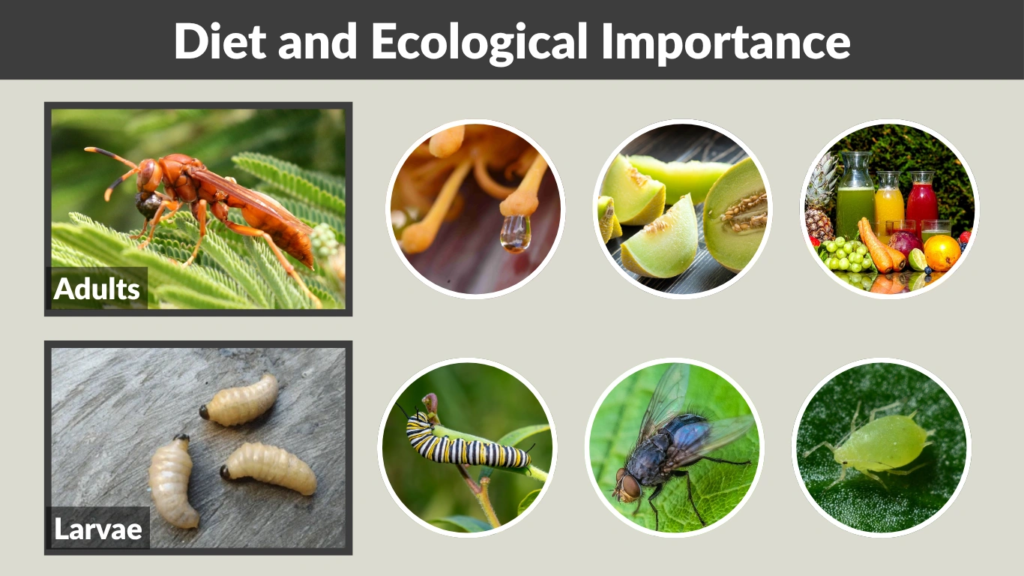
What Do Red Paper Wasps Eat?
Red paper wasps have a diet that benefits both their colonies and the environment.
- Adults: Feed mainly on nectar, honeydew, and sweet fruit juices. This makes them valuable pollinators for many plants and flowers.
- Larvae: Fed with chewed-up caterpillars, flies, and soft-bodied insects captured by adult wasps.
By hunting agricultural pests, red paper wasps serve as natural pest controllers in gardens and farmlands.
Predators
Although they possess strong defenses, red paper wasps are preyed upon by:
- Birds such as sparrows and flycatchers
- Frogs and small reptiles
- Praying mantises and orb-weaver spiders
Humans are their primary threat due to habitat destruction and pest control practices.
Behavior and Temperament
Are Red Paper Wasps Aggressive?
Red paper wasps are generally not aggressive unless they feel threatened. They become defensive if their nest is disturbed, releasing pheromones to alert other wasps to attack. Their colonies are more protective during late summer, when new queens and males are developing.
Are They Dangerous?
While their sting is painful, red paper wasps are not deadly under normal circumstances. However, multiple stings or allergic reactions can pose medical risks. Their venom contains enzymes and histamines that trigger swelling and pain but usually subside within a few hours.
Defensive Behavior
- Hover near the nest to guard the colony.
- Attack intruders that approach too closely.
- Chase perceived threats for a short distance before retreating.
When left alone, they rarely pose danger to humans.
Red Paper Wasp Sting

Pain and Symptoms
A red paper wasp sting delivers sharp, burning pain that can last from several minutes to an hour. On the Schmidt Pain Index, it rates between 2.0 and 2.5, comparable to a yellow jacket’s sting but less intense than a hornet’s.
Typical symptoms include:
- Redness and swelling
- Localized heat and tenderness
- Mild itching or irritation
- A small raised welt at the sting site
Allergic Reactions
For people allergic to wasp venom, stings can cause anaphylaxis, a serious condition that requires immediate medical care. Warning signs include:
- Difficulty breathing or swallowing
- Dizziness, hives, or facial swelling
- Rapid heartbeat or nausea
If these occur, use an epinephrine auto-injector (EpiPen) and seek emergency assistance right away.
First Aid and Treatment

Treating a red paper wasp sting quickly reduces pain and swelling.
- Clean the area with soap and water to remove surface venom.
- Apply ice or a cold compress for 10–15 minutes.
- Take an oral antihistamine (like Benadryl) for swelling or itching.
- Apply hydrocortisone cream to reduce redness.
- Avoid scratching to prevent infection.
Home Remedies
Natural remedies that provide relief include:
- Baking Soda Paste: Neutralizes venom and eases burning.
- Aloe Vera Gel: Soothes and cools irritated skin.
- Honey: Acts as a natural anti-inflammatory.
- Vinegar or Lemon Juice: Reduces itching and pain.
If symptoms persist for more than 48 hours, consult a healthcare provider.
Controlling and Preventing Red Paper Wasps
How to Get Rid of Red Paper Wasps
Early prevention is the best strategy.
- Inspect eaves, attics, and sheds during spring, when queens start building nests.
- Remove small nests before the colony expands.
- Use commercial wasp sprays at night when wasps are inactive.
- Wait 24 hours before knocking down the nest with a long pole or broom handle.
- Dispose of nests safely and wear protective clothing.
If nests are large or located in hard-to-reach areas, call a professional pest control service.
Natural Deterrents
- Peppermint Oil: Mix with water and spray around entryways; the strong scent repels wasps.
- Vinegar Spray: Acts as a natural repellent.
- Fake Nests: Hanging decoy nests discourages wasps from settling nearby.
- Regular Maintenance: Seal cracks and holes around windows, doors, and rooflines to block nesting opportunities.
Red Paper Wasp Traps
- DIY traps using sugar water or soda attract wasps effectively.
- Place traps 15–20 feet away from living areas to lure them away safely.
- Replace bait every few days for best results.
Ecological Benefits vs Risks
Benefits
- Pollination: Helps fertilize flowers and fruiting plants.
- Pest Control: Consumes caterpillars, flies, and crop pests.
- Ecosystem Balance: Supports biodiversity by feeding other predators.
Risks
- Painful stings if provoked.
- Allergic reactions in sensitive individuals.
- Nests built near homes may cause safety concerns for pets and children.
Despite these risks, red paper wasps are vital for maintaining healthy ecosystems.
Interesting Facts
- Red paper wasps can recognize individual faces—both of other wasps and humans.
- They rarely reuse old nests, though other wasp species might.
- A single colony can catch hundreds of caterpillars per week during summer.
- Their red coloration acts as a warning signal to predators, known as aposematism.
- They communicate using pheromones to signal danger or food sources.
FAQs
Do red paper wasps sting humans?
Yes. They sting when they feel threatened, especially if you get too close to their nest.
How painful is a red paper wasp sting?
It’s sharp and burning but usually fades within an hour. The pain ranks around 2.5 on the Schmidt Pain Index.
Are red paper wasps aggressive?
No, they are generally calm unless their nest is disturbed. They only attack to defend their colony.
How can I keep red paper wasps away?
Seal entry points, remove old nests, and use peppermint or vinegar-based repellents to discourage nesting.
Are red paper wasps beneficial?
Absolutely. They pollinate plants and control pests, making them valuable contributors to natural ecosystems.
