

Water bugs are fascinating aquatic insects that play vital roles in freshwater ecosystems. Found in ponds, lakes, and streams, these insects exhibit diverse adaptations for swimming, hunting, and surviving underwater. From fierce predators like the Giant Water Bug to tiny decomposers like the Water Flea, each species contributes uniquely to the balance of aquatic life while showcasing nature’s incredible variety and complexity.
1. Giant Water Bug

The Giant Water Bug is one of the largest aquatic insects found in freshwater habitats worldwide. Known for its powerful bite and predatory behavior, this insect is a skilled hunter that feeds on fish, tadpoles, and even small amphibians. Despite its fearsome nature, it plays an essential role in controlling aquatic populations.
Identification
- Size: Typically ranges from 1.5 to 2.5 inches in length
- Color: Brown or dark tan for camouflage in muddy waters
- Body: Flattened oval body with strong front legs adapted for grasping prey
- Wings: Fully developed, allowing short-distance flight
- Distinctive Feature: A breathing tube extending from the abdomen for air intake
Habitat
Giant Water Bugs are commonly found in ponds, lakes, and slow-moving streams with abundant vegetation. They prefer shallow waters where they can stay hidden under debris or mud, waiting to ambush their prey.
Behaviors
These bugs are ambush predators, lying motionless until prey comes close. They grab their target with their raptorial front legs and inject digestive saliva to liquefy the prey’s insides before sucking it out. They are also known to fly at night toward lights.
Diet
Their diet mainly consists of fish, tadpoles, and aquatic insects. They use their sharp beak to pierce and feed on the body fluids of their prey, making them effective natural pest controllers in aquatic environments.
Lifecycle
The Giant Water Bug undergoes incomplete metamorphosis with three stages: egg, nymph, and adult. Females lay eggs on aquatic vegetation or even on the male’s back. Nymphs resemble smaller adults and mature over several molts before becoming fully grown.
2. Water Strider

The Water Strider is a fascinating insect known for its ability to walk and glide effortlessly on the surface of the water. Its long, slender legs and water-repellent hairs allow it to stay afloat while hunting for small insects trapped on the surface tension.
Identification
- Size: Around 0.25 to 0.75 inches long
- Color: Usually dark brown or black with a metallic sheen
- Legs: Long, thin legs that distribute weight evenly on the water surface
- Body Shape: Streamlined and elongated for swift gliding
- Special Feature: Fine, water-repelling hairs on legs that prevent sinking
Habitat
Water Striders are commonly found in ponds, lakes, streams, and marshes. They prefer calm or slow-moving waters where the surface remains undisturbed, making it easier to hunt for prey that falls onto the water.
Behaviors
They use their middle legs to row and their hind legs to steer across the water. Water Striders are agile hunters that rely on vibrations and ripples to detect prey, often forming small colonies in suitable habitats.
Diet
Their diet mainly consists of small insects and larvae that fall onto the water’s surface. They pierce their prey with a needle-like mouthpart and suck out the internal fluids, feeding efficiently without submerging themselves.
Lifecycle
Water Striders undergo incomplete metamorphosis with egg, nymph, and adult stages. Eggs are laid on submerged plants or floating debris, and nymphs grow through multiple molts before reaching maturity, maintaining the same habitat throughout their development.
3. Backswimmer

The Backswimmer is an aquatic insect easily recognized by its habit of swimming upside down. Its light-colored back and dark underside help it blend in with the water surface, protecting it from predators while hunting smaller aquatic creatures.
Identification
- Size: About 0.4 to 0.6 inches long
- Color: Creamy or light brown back with a darker underside
- Body Shape: Boat-shaped and streamlined for swimming
- Legs: Long hind legs covered with hairs, used like oars
- Special Feature: Air bubble carried under the wings for breathing
Habitat
Backswimmers are found in ponds, ditches, and slow-moving streams. They prefer shallow waters with dense vegetation, which provide ideal conditions for ambushing prey and laying eggs.
Behaviors
They swim upside down just below the surface and use their strong hind legs for propulsion. Backswimmers are active hunters and can deliver a painful bite if handled, earning them the nickname “water wasps.”
Diet
Their diet includes mosquito larvae, small insects, and even tiny fish. They pierce their prey with a sharp beak, inject digestive fluids, and suck out the liquefied tissues, playing a crucial role in maintaining ecological balance.
Lifecycle
The lifecycle includes egg, nymph, and adult stages. Eggs are laid on aquatic plants, and the nymphs resemble smaller adults. As they mature through several molts, they develop wings and become capable swimmers and hunters.
4. Water Boatman

The Water Boatman is a small but active aquatic insect known for its unique swimming style and harmless nature. Unlike most aquatic bugs, it swims right side up and feeds mainly on algae and detritus instead of live prey.
Identification
- Size: Typically 0.2 to 0.5 inches long
- Color: Olive-brown with fine body markings
- Body Shape: Flattened and oval with a pointed head
- Legs: Long, oar-like hind legs covered with hairs for swimming
- Unique Trait: Silvery air layer beneath the body for breathing underwater
Habitat
Water Boatmen inhabit ponds, lakes, and slow streams with abundant plant material. They thrive in both still and slightly moving waters where algae and organic debris are plentiful.
Behaviors
They are strong swimmers, moving gracefully through water using their oar-like legs. Water Boatmen can also fly between water bodies and are often attracted to lights at night.
Diet
Their diet consists mainly of algae, plant matter, and organic debris. Some species may feed on small aquatic organisms, but most act as scavengers, helping to keep the water clean.
Lifecycle
The lifecycle includes egg, nymph, and adult stages. Females lay eggs on submerged plants or objects. Nymphs grow gradually through several molts, developing their swimming legs and breathing adaptations as they mature.
5. Water Scorpion

The Water Scorpion is a long, slender aquatic insect named for its scorpion-like appearance. Though it looks intimidating, its “stinger” is actually a breathing tube. This stealthy predator uses its powerful front legs to capture unsuspecting prey in still or slow-moving waters.
Identification
- Size: Around 1 to 2 inches long
- Color: Dark brown or gray for camouflage
- Body Shape: Long and stick-like or leaf-shaped, depending on the species
- Legs: Front legs adapted for grasping prey
- Distinctive Feature: Long tail-like breathing tube for air intake
Habitat
Water Scorpions live in ponds, marshes, and slow streams with thick vegetation. They often cling to submerged plants near the surface, extending their breathing tube above the water to access air.
Behaviors
They are ambush predators that remain motionless, waiting for prey to approach. Water Scorpions use their strong forelegs to snatch small insects and larvae. Despite their fierce look, they move slowly and rely on stealth rather than speed.
Diet
Their diet mainly includes aquatic insects, small fish, and tadpoles. They pierce their prey with a sharp rostrum, injecting digestive fluids before sucking out the liquefied tissue.
Lifecycle
The Water Scorpion undergoes incomplete metamorphosis with egg, nymph, and adult stages. Females lay eggs on aquatic plants, and the nymphs grow through several molts before developing wings and breathing tubes.
6. Whirligig Beetle

The Whirligig Beetle is a small, fast-moving insect easily recognized by its spinning movements on the water surface. It has divided eyes that allow it to see both above and below the water at the same time, giving it excellent awareness of predators and prey.
Identification
- Size: About 0.25 to 0.5 inches long
- Color: Shiny black or dark metallic gray
- Body Shape: Oval and streamlined for fast movement
- Eyes: Divided into two parts—upper for air view, lower for underwater vision
- Unique Feature: Short, paddle-like legs for rapid swimming
Habitat
Whirligig Beetles are found in ponds, lakes, and slow-moving streams. They prefer calm surfaces where they can whirl in groups, often near the edges or around floating debris.
Behaviors
They swim in quick, circular motions, creating a whirling effect that confuses predators. Whirligig Beetles often form large swarms and can dive underwater when threatened. Their divided eyes make them highly alert and responsive.
Diet
These beetles feed on small insects trapped on the water surface or decaying organic matter. They use their strong jaws to chew rather than pierce, helping break down floating debris in their habitat.
Lifecycle
Their lifecycle includes egg, larval, pupal, and adult stages—unlike most true bugs. Eggs are laid on submerged vegetation, and larvae are predatory before transforming into pupae, eventually emerging as adults capable of both swimming and flying.
7. Water Mite

The Water Mite is a tiny, brightly colored aquatic arachnid found in nearly all freshwater habitats. Despite its small size, it plays an important role in aquatic ecosystems by preying on insect larvae and serving as food for fish and other predators.
Identification
- Size: Usually less than 0.08 inches in diameter
- Color: Bright red, orange, or yellow
- Body Shape: Round and compact with eight short legs
- Movement: Crawls or swims with jerky, pulsing motions
- Distinctive Feature: No clear separation between body and head region
Habitat
Water Mites thrive in ponds, lakes, and streams with abundant vegetation. They are most commonly found clinging to plants, rocks, or debris, where they hunt for small aquatic invertebrates.
Behaviors
They are active hunters and scavengers, using their strong mouthparts to pierce and suck fluids from their prey. Some species are parasitic during their larval stage, attaching to aquatic insects to feed.
Diet
Their diet includes small aquatic insects, larvae, and organic matter. As predators and decomposers, they contribute significantly to nutrient cycling in freshwater ecosystems.
Lifecycle
Water Mites undergo a complex lifecycle with several stages: egg, larva, protonymph, deutonymph, tritonymph, and adult. The larval stage often parasitizes other insects before maturing into free-living predators.
8. Water Measurer

The Water Measurer, also known as a Water Treader, is a slender, stick-like insect that glides gracefully on the surface of calm waters. Its long body and delicate legs make it look like a walking thread, perfectly adapted for life on the water’s surface.
Identification
- Size: Around 0.3 to 0.5 inches long
- Color: Pale brown or grayish
- Body Shape: Very slender and elongated, resembling a stick
- Legs: Extremely long and thin, adapted for surface walking
- Special Feature: Hydrophobic leg hairs that prevent sinking
Habitat
Water Measurers inhabit quiet ponds, marshes, and slow-moving streams. They prefer shallow areas with floating vegetation, where they can easily detect surface vibrations caused by prey.
Behaviors
They move slowly across the water surface, using their long legs to distribute their weight. Water Measurers are gentle predators that rely on stealth rather than speed to capture small insects or larvae trapped in surface tension.
Diet
Their diet includes mosquito larvae, small aquatic insects, and dead organisms on the water’s surface. They use piercing mouthparts to extract fluids from their prey.
Lifecycle
The lifecycle includes egg, nymph, and adult stages. Females lay eggs on floating vegetation or submerged objects, and the young nymphs gradually develop into adults through several molts.
9. Predaceous Diving Beetle
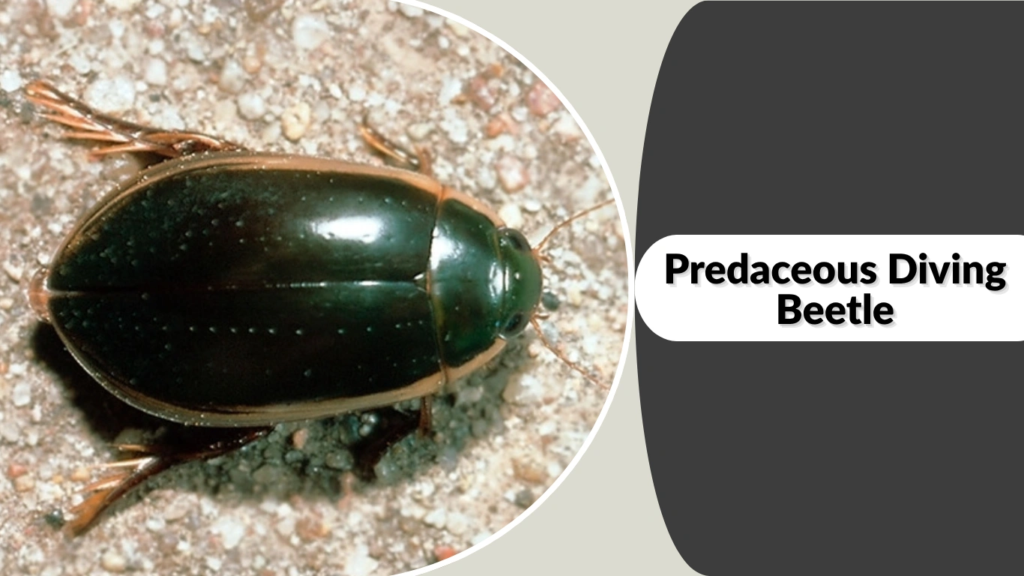
The Predaceous Diving Beetle is a powerful aquatic hunter that thrives in ponds and lakes. Sleek, fast, and well-adapted for swimming, this beetle is both a fierce predator and an agile diver, capable of catching prey much larger than itself.
Identification
- Size: Typically 0.5 to 1.5 inches long
- Color: Shiny black or dark brown with smooth, oval bodies
- Legs: Hind legs are flattened and fringed with hairs for swimming
- Body Shape: Streamlined and adapted for diving
- Distinctive Feature: Carries an air bubble beneath its wings for underwater breathing
Habitat
Predaceous Diving Beetles inhabit ponds, marshes, and slow-moving streams. They prefer still waters rich in vegetation, which provide cover and hunting grounds for both adults and larvae.
Behaviors
They are strong swimmers that use their hind legs like paddles. When disturbed, they can quickly dive and cling to underwater plants. These beetles also fly between water bodies, often attracted to lights at night.
Diet
Their diet includes fish fry, tadpoles, and aquatic insects. Both adults and larvae are voracious predators, injecting digestive enzymes into prey and sucking out the liquefied tissues.
Lifecycle
The lifecycle includes egg, larva, pupa, and adult stages. Females lay eggs on aquatic vegetation. Larvae, known as “water tigers,” are aggressive hunters before pupating in moist soil and emerging as adults.
10. Water Flea

The Water Flea, a minute crustacean also called Daphnia, is a key component of freshwater ecosystems. Though tiny, these creatures play a vital role as primary consumers, feeding on algae and serving as food for fish and aquatic insects.
Identification
- Size: Around 0.02 to 0.2 inches long
- Color: Transparent or slightly pinkish
- Body Shape: Oval and enclosed in a clear shell
- Movement: Jumps through the water using antennae, resembling a “flea”
- Unique Feature: Visible beating heart under magnification
Habitat
Water Fleas inhabit lakes, ponds, and reservoirs with abundant plankton. They thrive in nutrient-rich waters where algae are plentiful, often forming large populations in summer.
Behaviors
They move in short, jerky hops using their antennae. Water Fleas are highly sensitive to light and can adjust their depth in the water column to avoid predators.
Diet
Their diet mainly consists of algae, bacteria, and detritus. By filtering tiny food particles from the water, they help maintain ecological balance and water clarity.
Lifecycle
The lifecycle includes both sexual and asexual reproduction. Under favorable conditions, females produce clones, but when stressed, they lay resting eggs that survive harsh environments.
11. Springtail

The Springtail is a tiny, moisture-loving insect-like creature that thrives near water bodies. Despite its small size, it plays an important role in breaking down organic matter and maintaining soil and aquatic health. Its jumping ability gives it the name “Springtail.”
Identification
- Size: Typically 0.04 to 0.1 inches long
- Color: White, gray, or brown; some species are iridescent
- Body Shape: Soft, elongated, or globular with a forked tail-like appendage (furcula)
- Legs: Short, adapted for quick jumping
- Unique Feature: Uses its furcula to spring into the air for escape
Habitat
Springtails are found in damp soil, near ponds, under decaying leaves, and on the water’s surface. They thrive in moist environments where they can feed on fungi and decaying vegetation.
Behaviors
They are highly active and jump quickly when disturbed. Springtails are social insects often found in large clusters, moving together on moist soil or water film surfaces.
Diet
Their diet includes fungi, algae, decaying plant material, and bacteria. They play a key role in decomposing organic matter, contributing to nutrient recycling in ecosystems.
Lifecycle
Springtails undergo a simple metamorphosis: egg, nymph, and adult. They grow gradually, molting several times throughout their life, which may last only a few weeks to months depending on humidity and temperature.
12. Water Cricket

The Water Cricket is a small, semi-aquatic insect related to true crickets but adapted to life near the edges of ponds and marshes. It is known for its quick movements and chirping-like sounds produced by body vibrations rather than wings.
Identification
- Size: Around 0.3 to 0.5 inches long
- Color: Dark brown or black
- Body Shape: Slender and elongated with long legs
- Legs: Hind legs adapted for jumping and swimming
- Special Feature: Smooth body surface that resists wetting
Habitat
Water Crickets are found along the edges of ponds, swamps, and wet meadows. They prefer moist environments with shallow water or mud where they can move freely and hunt small insects.
Behaviors
They are agile and can both run on wet surfaces and swim underwater. Water Crickets are nocturnal and rely on vibrations and ripples to detect prey or danger.
Diet
Their diet consists of small insects, larvae, and organic debris found near the water’s edge. They use piercing mouthparts to feed efficiently on soft-bodied prey.
Lifecycle
The lifecycle includes egg, nymph, and adult stages. Eggs are laid in moist soil near water, and nymphs grow gradually, shedding their exoskeletons before reaching adulthood.
Here’s the thirteenth and final species, written in the same Spider 1 style with a serial number:
13. Water Lacewing
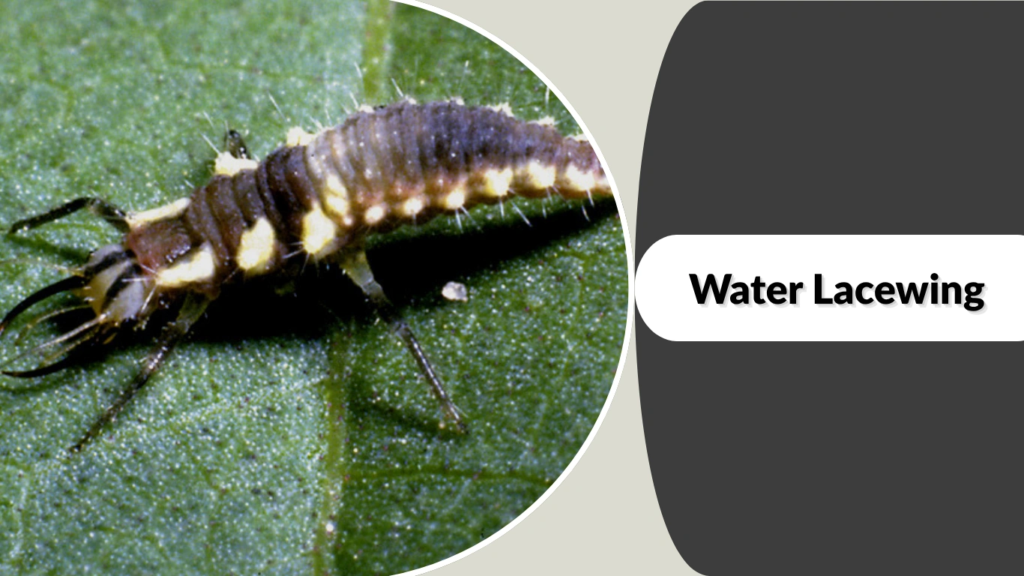
The Water Lacewing is a delicate aquatic insect known for its transparent wings and graceful appearance. Though less common than other water bugs, it plays an important ecological role by controlling mosquito larvae and other small aquatic pests in freshwater habitats.
Identification
- Size: About 0.3 to 0.5 inches long
- Color: Pale green or light brown
- Wings: Transparent, lace-like, and held roof-shaped over the body
- Body Shape: Slender with long antennae and soft body
- Unique Feature: Aquatic larvae with gills and strong jaws for hunting
Habitat
Water Lacewings are found in ponds, lakes, and slow streams surrounded by vegetation. They prefer clean, oxygen-rich water where their larvae can thrive and find abundant prey.
Behaviors
Adult Water Lacewings are gentle flyers, often staying near the water surface or vegetation. The larvae are highly active underwater predators, ambushing small invertebrates with their sharp jaws.
Diet
Adults feed on nectar and pollen, while larvae prey on mosquito larvae, water fleas, and tiny aquatic insects. This dual feeding habit makes them beneficial for both aquatic balance and pest control.
Lifecycle
Their lifecycle includes egg, larva, pupa, and adult stages. Eggs are laid on aquatic plants, and the larvae live underwater until pupation. After metamorphosis, adults emerge as winged insects that continue the reproductive cycle near water.
