

Tiny red bugs outside are a frequent sight on patios, driveways, or walls during warm months. These minuscule pests can appear harmless, but some species—like chiggers—bite and cause itchy red welts. Others, such as clover mites and red velvet mites, don’t bite but can become a nuisance when they gather in large numbers. Learning to identify and control them is key to keeping your outdoor areas comfortable and clean.
Identification

Common Types of Tiny Red Bugs Found Outdoors
Clover Mites:
These are the most common tiny red bugs seen crawling on concrete, walls, and house siding. They’re oval, bright red, and about the size of a pinhead. Clover mites feed on plant sap but do not bite humans or pets. When squashed, they leave reddish stains on surfaces.
Chiggers (Trombiculid Mites):
Chiggers are microscopic red-orange mites found in tall grass, weeds, and wooded areas. Unlike clover mites, chiggers bite humans, injecting saliva that causes itchy red welts. They’re most active in spring and summer, especially in humid climates.
Red Velvet Mites:
These fuzzy, bright red arachnids are larger than clover mites and appear after rainfall. They don’t bite or damage plants; instead, they feed on insect eggs and are actually beneficial for gardens.
Spider Mites:
Tiny reddish mites that infest outdoor plants and shrubs. They create fine webbing on leaves and cause foliage to turn yellow or brown. Severe infestations can weaken or kill plants.
Biting Midges (No-see-ums):
Tiny flying red or orange insects that bite humans and animals, leaving painful, itchy bumps. They thrive near standing water and are especially active during dawn and dusk.
Physical Characteristics
Tiny red bugs outside are very small—typically 0.2 to 1 millimeter long—making them difficult to notice individually. Common features include:
- Color: Bright red to orange-red.
- Shape: Oval, round, or fuzzy-bodied with eight legs (if mites).
- Behavior: Often gather in clusters on concrete, walls, or plants.
- Movement: Quick crawlers; some may appear to jump or swarm.
Using a magnifying glass or taking a close-up photo can help you distinguish between harmless mites and biting species like chiggers.
Where They Are Found
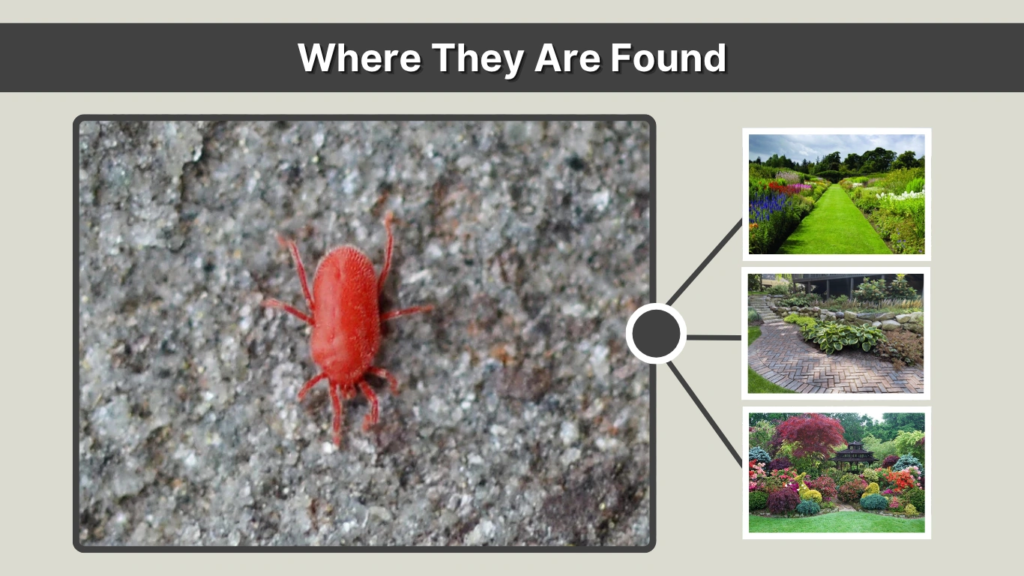
Common Outdoor Locations
Tiny red bugs prefer warm, sunny environments. You’ll often find them in:
- Lawns and gardens: Clover mites and spider mites thrive in grassy or vegetated areas.
- Patios and driveways: Clover mites crawl over concrete and walls seeking warmth.
- Plants and shrubs: Spider mites hide under leaves and along stems.
- Moist soil and mulch: Chiggers and velvet mites live in damp, shaded ground.
- Pool and patio edges: Biting midges gather near water or lights during the evening.
They can appear in large groups during certain seasons, especially after rainfall or during dry, warm spells.
Seasonal Appearance
- Spring and fall: Peak activity for clover mites and chiggers.
- After rainfall: Red velvet mites emerge from soil.
- Summer evenings: Flying midges and gnats become more active near water.
Warm weather and moisture are the main triggers for population booms. When temperatures drop, most species hide in soil or vegetation until conditions improve.
Behavior and Habits

Feeding and Lifestyle
Different red bugs have different habits:
- Clover mites: Feed on plant sap and grass but do not harm humans.
- Chiggers: Bite and feed on skin tissue, causing itching and irritation.
- Red velvet mites: Feed on insect eggs, helping control pests.
- Spider mites: Extract sap from plants, causing leaf damage.
They are most active during the day in sunny areas or around midday when surfaces are warm. Clover mites may climb house walls in search of cooler spots, while chiggers and velvet mites stay low to the ground.
Movement and Infestation Patterns
These pests often migrate in large clusters, creating visible red swarms on sidewalks or walls. While they rarely infest indoors, clover mites can accidentally enter homes through cracks near windows or foundations. Chiggers, meanwhile, latch onto clothing or skin during outdoor activity but do not live indoors.
Are They Harmful?
Not all tiny red bugs outside pose a threat, but knowing which do is important:
- Clover mites and red velvet mites: Harmless to humans but can stain surfaces when crushed.
- Spider mites: Harmful to plants, causing yellowing leaves and reduced growth.
- Chiggers and biting midges: Cause itchy red bites and skin irritation.
Although these bugs don’t transmit diseases, their bites can cause discomfort or allergic reactions. It’s best to wear protective clothing and apply insect repellent when spending time outdoors in infested areas.
How to Get Rid of Tiny Red Bugs Outside

Eliminating tiny red bugs from your outdoor areas involves reducing their habitats, removing food sources, and applying targeted treatments. Since these pests thrive in warm, vegetated spaces, a clean and well-maintained yard is the best long-term defense.
Natural Control Methods
1. Hose Down Surfaces:
For clover mites and red velvet mites, use a strong stream of water to wash them off walls, patios, and outdoor furniture. This helps dislodge large clusters and temporarily reduces their population.
2. Trim Grass and Vegetation:
Keep your lawn short and well-maintained. Avoid letting grass touch the foundation or siding of your house. Mites often migrate from overgrown grass to sunny concrete or walls.
3. Create a Vegetation-Free Zone:
Leave a 2-foot strip of bare soil, gravel, or mulch around your home’s foundation. This dry zone acts as a barrier that prevents mites from crossing into patios or house walls.
4. Use Diatomaceous Earth:
Sprinkle food-grade diatomaceous earth along foundations, patios, and plant bases. This natural powder dehydrates and kills mites without using chemicals, making it safe for humans and pets.
5. Encourage Beneficial Insects:
Ladybugs and predatory mites feed on spider mites and clover mites. Introducing these beneficial species can help keep pest populations under control naturally.
Chemical Control Methods
If natural remedies don’t provide full control, selective insecticides may be necessary.
- Apply residual insecticides containing bifenthrin, permethrin, or cyfluthrin around windows, foundations, and walls.
- Treat grassy lawns with mite control sprays during heavy infestations.
- For spider mites on plants, use horticultural oils or miticides labeled safe for foliage.
Always follow the manufacturer’s directions and avoid spraying during windy or rainy conditions to prevent runoff into water sources.
Long-Term Prevention
Once the visible bugs are gone, focus on keeping them from returning. Prevention is the most effective way to maintain a bug-free outdoor space.
- Keep grass and weeds trimmed short around your home.
- Avoid overfertilizing lawns, which encourages clover mite populations.
- Seal cracks and crevices near windows, doors, and foundations.
- Maintain good drainage to prevent standing water that attracts midges.
- Store outdoor furniture clean and dry after use.
- Sweep and rinse patios regularly to remove debris and algae buildup.
By combining maintenance and preventive treatments, you can significantly reduce infestations and keep your outdoor areas pest-free year-round.
FAQs
What are the tiny red bugs outside on concrete?
These are usually clover mites, harmless plant-feeding insects that crawl on concrete or siding. They often appear in large groups during spring and fall and leave reddish smears if crushed.
Do tiny red bugs outside bite humans?
Some do. Chiggers and biting midges can bite and cause itchy welts, while clover mites and red velvet mites are non-biting and harmless.
How can I get rid of tiny red bugs outside naturally?
Spray down affected areas with water, apply diatomaceous earth, and trim grass or plants touching your house. For biting species, use repellents and avoid sitting on the ground in infested areas.
Why are tiny red bugs all over my patio?
When temperatures rise, clover mites migrate from grass to sunny surfaces like patios and walls. They gather in large clusters, especially on light-colored concrete.
Are tiny red bugs dangerous to pets or plants?
Most are harmless, but spider mites can damage plants by sucking sap. Regular rinsing and insecticidal soap applications keep plants healthy and pest-free. Pets are rarely affected unless they roll in infested grass, where chiggers may cause mild irritation
