

Water bugs are large aquatic insects that often startle swimmers, anglers, and homeowners when found near ponds or pools. Though they resemble cockroaches, they’re true water-dwelling predators known for their powerful bite. While most species are harmless, giant water bugs—often called “toe-biters”—can inflict painful bites if provoked. Understanding how to identify these insects and what to do if bitten will help you stay safe around water habitats.
Identification

What Are Water Bugs?
Water bugs belong to the Belostomatidae family and are commonly found in ponds, lakes, streams, and even swimming pools. They’re expert swimmers with strong front legs used for grabbing prey, which can include fish, tadpoles, or other insects. Despite their intimidating appearance, they typically avoid humans and only bite when threatened or accidentally handled.
Common Species of Water Bugs
Giant Water Bug (Lethocerus americanus):
Known as the toe-biter, this species is the largest water bug, growing up to 4 inches long. It delivers one of the most painful non-venomous bites in the insect world.
Creeping Water Bug:
A smaller version found in shallow ponds and wetlands. These bugs rarely bite and pose little threat to humans.
Water Boatman:
Often mistaken for biting water bugs, these gentle insects feed on algae and are harmless to people.
Physical Characteristics
Water bugs have flattened, oval-shaped bodies and strong hind legs adapted for swimming. Their color ranges from brown to dark tan, helping them blend into muddy water. They also have wings and can fly short distances, especially at night when attracted to lights near water sources.
Typical features include:
- Size: 1.5 to 4 inches long
- Color: Brownish or tan with dark patterns
- Body: Hard, flat shell with long legs
- Habitat: Freshwater bodies, ponds, pools, and wetlands
Do Water Bugs Bite?

Yes—But Only in Self-Defense
Water bugs are not aggressive toward humans. However, if touched, cornered, or stepped on, they defend themselves by injecting digestive saliva through their beak-like mouthpart. This saliva is designed to paralyze prey, but in humans, it causes a sharp, burning pain similar to a bee sting.
When and Why They Bite
- When accidentally handled or trapped in shallow water.
- During mating season, when they’re more active and defensive.
- When drawn to lights at night and accidentally come into contact with humans.
The bite is rare but memorable—it’s why the giant water bug is nicknamed the “toe-biter.”
Are Water Bug Bites Dangerous?
Although the bite is extremely painful, it’s not venomous or deadly. The pain may last from a few minutes to several hours, followed by mild swelling or redness. Most people recover without medical attention.
However, in rare cases, individuals with sensitive skin or allergies may experience:
- Extended swelling
- Red, blister-like welts
- Minor numbness or tenderness
If these symptoms persist for more than 48 hours or signs of infection appear, medical evaluation is recommended.
Symptoms of a Water Bug Bite
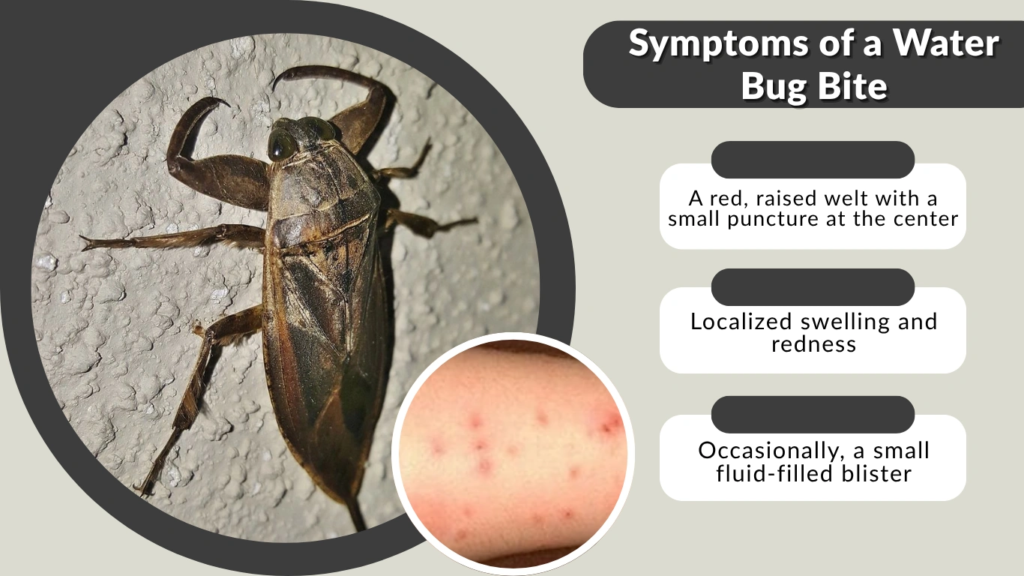
What a Bite Looks Like
A water bug bite typically appears as:
- A red, raised welt with a small puncture at the center
- Localized swelling and redness
- Occasionally, a small fluid-filled blister
- A feeling of warmth or tenderness around the bite site
Because the saliva is enzymatic, the skin may become irritated or inflamed during healing.
Pain Level
The giant water bug’s bite ranks among the most painful insect bites not caused by venom. Victims often describe it as a sharp, electric-like sting that throbs for several minutes. On the pain scale, it’s comparable to or even worse than a wasp sting but without long-lasting damage.
Common Reactions
- Immediate burning sensation at the bite site
- Swelling that peaks within an hour
- Mild itching or soreness afterward
- In rare cases, temporary numbness or stiffness near the wound
Treatment for Water Bug Bites

Most water bug bites heal on their own within a few days, but proper care can ease pain and prevent infection. Since the bite is caused by the insect’s strong piercing mouthparts, it’s important to clean and soothe the area immediately.
First Aid Steps
1. Clean the Bite:
Wash the area thoroughly with soap and warm water to remove any bacteria or dirt. Avoid using harsh chemicals that can irritate the skin.
2. Apply a Cold Compress:
Place a cold pack or damp cloth over the bite for 10–15 minutes to reduce swelling and numb the pain. Repeat several times throughout the day.
3. Use Antiseptic Cream:
Apply an over-the-counter antiseptic or antibiotic ointment to prevent infection and speed up healing.
4. Reduce Itching and Pain:
- Apply hydrocortisone cream or calamine lotion to relieve itching.
- Take an antihistamine (like Benadryl) if redness or swelling increases.
- Avoid scratching the bite—it can introduce bacteria and cause scarring.
5. Natural Remedies:
For those who prefer home solutions:
- Baking soda and water paste: Neutralizes the skin’s pH and reduces itching.
- Aloe vera gel: Soothes inflammation and helps cool the bite area.
- Honey: Natural antibacterial properties aid in faster healing.
Most symptoms fade within 24 to 48 hours, though minor tenderness can linger slightly longer.
When to See a Doctor
Seek medical attention if:
- The swelling spreads significantly or becomes painful to touch.
- You notice pus or redness indicating infection.
- You experience allergic symptoms like dizziness, hives, or breathing difficulty.
Though rare, severe reactions can occur in people with heightened insect bite sensitivity.
Prevention
Water bugs generally avoid humans, so preventing bites is mostly about minimizing contact.
Around Lakes and Ponds
- Wear water shoes when wading or swimming in natural bodies of water.
- Avoid picking up large bugs or disturbing them with nets or hands.
- Use a flashlight cautiously at night—light attracts flying adults.
- Maintain clean ponds and pools, removing leaves or debris that harbor insects.
Around the Home
- Seal cracks, windows, and door gaps to keep flying water bugs from entering.
- Reduce outdoor lighting at night or use yellow “bug lights” that are less attractive to insects.
- Keep gutters, pools, and birdbaths clean to prevent stagnation where bugs may breed.
- Avoid leaving wet towels or clothes outside overnight.
By maintaining clean and dry surroundings, you can significantly reduce encounters with water bugs and other aquatic pests.
FAQs
Do water bugs bite humans?
Yes, particularly the giant water bug (toe-biter). However, they only bite in self-defense when handled or stepped on. Their bite is painful but not poisonous or dangerous.
What does a water bug bite look like?
It usually appears as a red, raised bump or welt with a small puncture in the center. Some bites may develop mild swelling or a clear fluid-filled blister.
Are water bug bites poisonous?
No. The bite is painful but non-venomous. Symptoms like redness or itching are due to a localized skin reaction, not toxins.
How do I treat a water bug bite at home?
Clean the area with soap and water, apply a cold compress, and use hydrocortisone cream or calamine lotion. For faster relief, try a baking soda paste or aloe vera gel.
How can I prevent water bug bites?
Avoid handling bugs in ponds or pools, wear protective footwear, and keep water areas clean. Reducing lights at night and maintaining pool hygiene helps prevent them from gathering near your home.
