

Stink bugs reproduce rapidly during warm months, laying hundreds of eggs that hatch into plant-damaging nymphs. Understanding what stink bug eggs look like, where they’re laid, and how to remove them is essential for preventing infestations in homes and gardens. Although the eggs themselves are harmless, they can quickly turn into a major pest problem if left unnoticed.
Overview of Stink Bug Reproduction
The life cycle of a stink bug includes three stages — egg, nymph, and adult. Female stink bugs lay eggs in clusters on plant surfaces, allowing the young to feed immediately after hatching. Depending on the climate, these insects can produce up to two or three generations each year. Early detection of their eggs is the key to controlling populations before they reach maturity and start feeding on crops and fruits.
What Do Stink Bug Eggs Look Like?

Stink bug eggs are small, round, and barrel-shaped, measuring about 1 millimeter long. They are typically laid in clusters of 20–30, neatly arranged in rows.
Their color can vary depending on the species and the age of the eggs:
- Freshly laid eggs – light green or pale yellow.
- Older eggs – turn white, beige, or gray as they mature.
- Ready-to-hatch eggs – often have dark or reddish spots inside, showing the developing nymphs.
These eggs have a smooth surface and a slightly translucent look. Because they are tiny and blend with leaf colors, they can be difficult to spot without close inspection. Gardeners often describe them as tiny pearls or beads attached to leaves.
Brown Marmorated Stink Bug Eggs
The brown marmorated stink bug (BMSB), one of the most invasive species, lays pale green or light blue eggs in tight clusters on the underside of leaves. The eggs are usually found on fruit trees, vegetable plants, or ornamental shrubs.
A single female can lay up to 400 eggs during her lifetime. The eggs hatch within four to seven days, depending on temperature and humidity. After hatching, the newly emerged nymphs remain near the egg cluster for several hours before dispersing to feed on nearby plants.
Green and Southern Green Stink Bug Eggs

Green stink bugs (Nezara viridula) and southern green stink bugs are another common group that lay distinct eggs. These eggs are:
- Round, greenish, and smooth in texture.
- Found on crops such as soybeans, cotton, corn, and tomatoes.
- Sometimes laid on ornamental or wild plants near gardens.
Their color gradually changes from green to yellow and then to a creamy white just before hatching. Female green stink bugs can lay several hundred eggs in their lifetime, contributing to rapid infestations during warm seasons.
Where Do Stink Bugs Lay Their Eggs?

Stink bugs prefer outdoor environments with plenty of vegetation. They commonly lay eggs on:
- The undersides of leaves, where they’re hidden from predators.
- Plant stems, particularly near new growth.
- Fruit surfaces, such as tomatoes, beans, raspberries, and corn.
While there are myths that stink bugs lay eggs inside homes, this is not true. Indoor environments lack the necessary humidity and plant matter for egg-laying. When stink bugs enter houses, they are simply seeking warmth and shelter for overwintering, not reproduction.
Do Stink Bugs Lay Eggs in the House?
No, stink bugs do not lay eggs indoors. They may enter homes through cracks, open windows, or vents in the fall, but they don’t reproduce inside. These insects require living plants for egg development, something most homes do not provide.
If you notice clusters of small, round objects on your window screens or walls, they’re more likely other insect eggs or debris, not from stink bugs. True stink bug eggs are almost always found outdoors on living vegetation.
When Do Stink Bugs Lay Eggs?

Stink bugs typically begin laying eggs in late spring and early summer, when temperatures are warm and plants are abundant. The egg-laying season continues through late summer in most regions.
Each female lays eggs in batches every few days, attaching them securely to leaf surfaces. Depending on climate, some areas may see two full generations per year — especially in warmer regions where food sources remain available longer.
How Many Eggs Do Stink Bugs Lay?
A single female can lay anywhere between 100 and 400 eggs throughout her lifetime. Each cluster contains 20–30 eggs arranged neatly in rows. Within a week, the eggs hatch into small, bright-colored nymphs that immediately start feeding. This rapid reproduction explains why infestations can spread so quickly in agricultural fields and gardens.
How Long Do Stink Bug Eggs Take to Hatch?
Once laid, stink bug eggs hatch within 4 to 7 days, depending on weather conditions. Warmer temperatures accelerate hatching, while cool or rainy climates may slow development. The eggs darken as they near hatching, and tiny red or black dots—baby nymphs—become visible through the shell. When the young emerge, they stay close to the empty eggs for several hours before spreading to nearby leaves for feeding.
Stink Bug Egg Clusters and Hatching Behavior
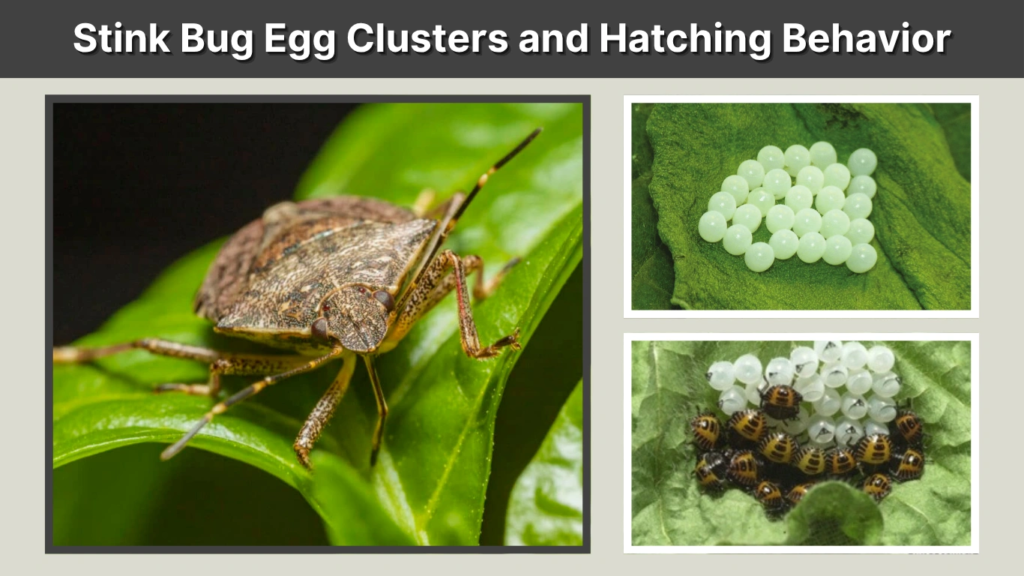
Stink bug eggs are usually found in tight clusters of 20–30 on the undersides of leaves. When hatching begins, the small nymphs push through the soft egg caps and remain in groups for protection. They are initially brightly colored—orange, red, or black—and have rounded bodies. Within a few hours, they begin their first molt and start searching for soft plant tissue to feed on.
In the case of the brown marmorated stink bug, the first instar nymphs stay near their eggs before moving onto host plants. This early clustering makes it easier to detect newly hatched bugs and take action before they spread.
How to Identify and Remove Stink Bug Eggs
If you regularly inspect your garden or indoor plants, look for tiny clusters of barrel-shaped eggs on leaves or stems. The most effective ways to remove them include:
- Scraping eggs into soapy water: This kills the embryos quickly.
- Using duct tape: Gently press the sticky side over the cluster to lift them off without damaging leaves.
- Cutting off infested leaves: If the infestation is heavy, remove the entire leaf or branch.
- Avoid crushing them: Doing so can attract predators or release unpleasant smells.
Regularly checking plant undersides, especially during spring and summer, can prevent large-scale infestations later in the year.
How to Prevent Stink Bug Egg-Laying
The best control method is prevention before eggs appear. Use the following strategies:
- Apply neem oil or insecticidal soap: These natural treatments repel adult stink bugs from laying eggs.
- Keep vegetation trimmed: Remove weeds, grass, and debris where adults hide.
- Install garden nets or fine mesh: Prevent females from reaching crops.
- Attract natural predators: Encourage ladybugs, lacewings, and praying mantises that feed on eggs and nymphs.
- Check window screens and sills: While stink bugs don’t lay eggs indoors, outdoor screens and plants near windows can attract them.
Consistent maintenance helps stop the reproductive cycle and reduces the chance of reinfestation.
Are Stink Bug Eggs Dangerous?
Stink bug eggs are completely harmless to humans and pets. They don’t contain toxins or pose health risks. The real concern begins when the eggs hatch, as nymphs immediately feed on nearby plants. If left unchecked, large populations can damage fruits, vegetables, and ornamental plants. Handling the eggs with gloves and washing hands afterward is sufficient for safety.
Natural Predators of Stink Bug Eggs
Several beneficial insects help control stink bug populations by preying on their eggs:
- Samurai wasp (Trissolcus japonicus) – a tiny parasitic wasp that lays its eggs inside stink bug eggs, killing them before they hatch.
- Ladybugs and lacewings – eat both eggs and young nymphs.
- Spiders and beetles – consume eggs found on lower plant surfaces.
Encouraging these natural predators in your garden through companion planting or reduced pesticide use provides long-term pest balance.
Other Places Stink Bug Eggs Might Appear
Though rare, stink bug eggs can sometimes be found in unexpected locations such as:
- Window screens and sills near outdoor plants.
- Clothes or fabrics hung outside for drying.
- Outdoor furniture or plant pots.
These cases occur when females mistake these surfaces for leaves. Removing eggs promptly prevents hatching and migration into the home.
FAQs
What do stink bug eggs look like on leaves or windows?
They appear as small, round clusters of green or white barrels, usually arranged neatly in rows. Outdoors, they’re commonly found on the underside of leaves, while on windows they may stick near outdoor plants.
Can stink bugs lay eggs inside your house or on fabric?
No, stink bugs do not reproduce indoors. They may rest on fabrics or screens, but egg-laying requires living plants, moisture, and sunlight.
How long do stink bug eggs take to hatch?
Under warm conditions, eggs hatch in about 4–7 days. Cooler climates or shaded areas may extend this period slightly.
How can I get rid of stink bug eggs naturally?
Scrape them into soapy water, use duct tape to lift them, or spray neem oil on leaves. Introducing predators like ladybugs also keeps populations under control.
Are stink bug eggs harmful or poisonous?
No, they are not poisonous and pose no danger to humans or pets. The risk lies only in the damage caused by the nymphs after hatching.
