

Black and white bumble bees are fascinating pollinators that stand out for their striking contrast in color and calm temperament. While most people associate bumble bees with bright yellow and black stripes, some species naturally display white markings on their tails, faces, or heads. These unique bees are not only vital for ecosystems but also admired for their beauty and symbolism.
What Are Black and White Bumble Bees?
Bumble bees are a diverse group of insects belonging to the genus Bombus. Most are characterized by fuzzy bodies covered in black and yellow hair, but certain species appear black and white due to genetic variation and environmental adaptation. The white coloring can appear on the face, head, or tail depending on the species.
This coloration helps them survive in cooler regions by reflecting sunlight and regulating body temperature. Black and white bumble bees are often found in temperate climates such as northern Europe, parts of North America, and even some regions of South Africa. Despite their appearance, these bees are just as efficient at pollination as their more colorful relatives.
Common Species of Black and White Bumble Bees

There are several bumble bee species that naturally display black and white coloring. Each has distinctive features that make identification easier:
- White-Tailed Bumble Bee (Bombus lucorum): Found across Europe, this species has a dark body with a bright white tail. It’s one of the most recognized black and white bees and often mistaken for others due to similar markings.
- White-Faced Bumble Bee (Bombus bifarius): Native to North America, this bee features a pale face patch and black thorax. It’s known for its gentle nature and strong pollination ability.
- White-Headed Bumble Bee (Bombus occidentalis): Once abundant in western North America, its population has declined but remains important to local ecosystems.
- White-Bottomed Bumble Bee: This term is often used to describe various species with pale tail hairs, commonly seen in gardens during late spring and summer.
These species demonstrate how diverse bumble bees can be in both color and behavior, making them an essential part of biodiversity.
How to Identify Black and White Bumble Bees

Black and white bumble bees share many physical traits with other bumble bees, but a few key identifiers make them easier to recognize:
- Body Shape: Round, robust, and densely covered in hair.
- Color Pattern: Alternating black and white bands or patches, often with a white tail or face.
- Size: Larger than honey bees, with slower, more deliberate flight.
- Sound: Deep buzzing noise produced by rapid wing movement.
When compared to wasps or hornets, black and white bumble bees appear much fuzzier and softer. This hair not only defines their look but also helps them collect and transfer pollen efficiently.
The Role of White-Tailed and White-Faced Bumble Bees in Nature
Both white-tailed and white-faced bumble bees are crucial pollinators for wildflowers and crops. Their fuzzy bodies trap pollen easily, allowing them to spread it between flowers more effectively than many other insects.
They play an especially important role in buzz pollination, a process where bees vibrate their bodies to shake pollen loose from flowers such as tomatoes, peppers, and blueberries. This method ensures that plants with tightly closed anthers receive adequate pollination, something honey bees often cannot achieve.
Additionally, their dense fur allows them to work in colder temperatures, making them early-season pollinators. They are often seen flying when honey bees remain in their hives, ensuring pollination begins early in spring.
Do White-Faced Bumble Bees Sting?

Like all bumble bees, white-faced varieties are generally gentle. They do not seek to attack or sting humans unless provoked. Only female workers and queens possess stingers, and they can sting multiple times because their stingers do not detach. Male bees lack stingers entirely.
In most cases, these bees are too busy gathering nectar and pollen to pose a threat. They are non-aggressive around gardens and play a vital role in maintaining plant diversity. Observing them closely can help people overcome the fear of bees, understanding that stings are rare and usually a last resort for self-defense.
Behavior and Nesting Habits
Colony Size
Black and white bumble bee species tend to live in small colonies, typically numbering between 50 and 400 individuals. These colonies are seasonal, lasting only from spring to early autumn. At the end of the season, only the newly mated queens survive the winter, emerging in spring to establish new nests.
Nesting Sites
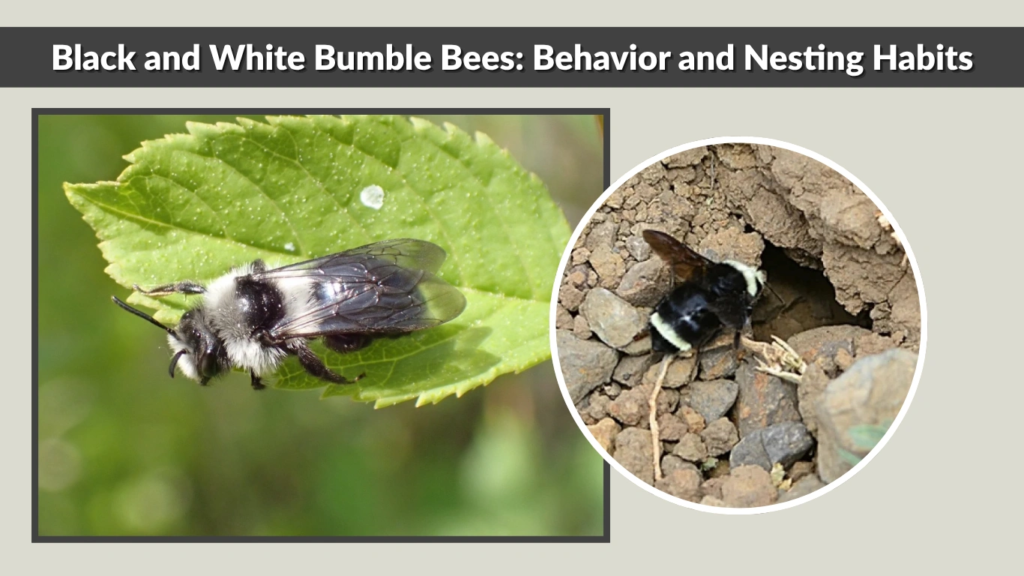
Most black and white bumble bees prefer underground nesting locations. They often occupy old rodent burrows, grassy mounds, or compost piles. These sites offer warmth and protection, ideal for raising young larvae. Some species also nest above ground in abandoned bird boxes or thick vegetation.
This nesting behavior helps ensure the safety of the colony while maintaining close proximity to flowering plants, allowing easy access to nectar and pollen.
Black and White Bumble Bee Symbolism
Black and white bumble bees carry deep symbolic meaning in many cultures. The contrasting colors of black and white often represent balance, harmony, and resilience. The black signifies determination, focus, and strength, while the white symbolizes clarity, purity, and peace. Together, they embody the perfect balance between hard work and tranquility.
In spiritual symbolism, these bees also represent transformation and community. Just as they tirelessly pollinate flowers to sustain ecosystems, they remind us of the importance of persistence and cooperation in achieving growth and balance in life. Seeing a black and white bumble bee can be viewed as a sign to stay focused while maintaining calm and positive energy.
FAQs
Are black and white bumble bees rare?
Not necessarily. They are more common in cooler regions, where the coloration helps regulate body temperature. Species like the white-tailed and white-faced bumble bees are frequently spotted during spring and summer.
Do white-faced bumble bees sting humans?
Yes, but only female bees can sting, and they do so rarely. White-faced bumble bees are gentle creatures focused on foraging and pollination, making stings extremely uncommon unless they feel threatened.
What is the difference between white-tailed and white-faced bumble bees?
White-tailed bumble bees have a bright white tail and dark body, while white-faced bumble bees feature pale facial markings. Both species play similar roles in pollination but live in different regions.
Why do some bumble bees have white markings?
Their coloration comes from genetics and environmental adaptation. White markings can reflect heat, helping bees stay cool in warmer conditions while still maintaining their fuzzy insulation for colder climates.
What does a black and white bumble bee tattoo mean?
It often symbolizes hard work, balance, and transformation. The black color represents strength and endurance, while the white signifies peace and purity—making the design a reflection of inner harmony and resilience.
