

Carpenter bees are among the most misunderstood insects when it comes to their connection with honey. Many people assume that since they look similar to honey bees and collect nectar, they must also make honey—but that’s not true. Carpenter bees don’t produce honey or live in colonies like honey bees do. Instead, they lead solitary lives, nesting in wood and relying on nectar and pollen for food. Understanding their behavior and habits helps clear up the myths surrounding carpenter bee honey.
Understanding Carpenter Bees
Carpenter bees belong to the genus Xylocopa and are large, robust insects with shiny, smooth abdomens. They’re often mistaken for bumblebees but can be identified by their less hairy bodies and more solitary nature. These bees are common in warm climates and are frequently seen hovering around wooden structures such as decks, fences, or eaves.
Unlike social bees, carpenter bees don’t form colonies or hives. Each female builds her own nest by drilling a round, smooth hole into wood. Inside the tunnel, she lays eggs in separate chambers, sealing each with pollen and nectar for the larvae to feed on once they hatch. This solitary nesting behavior is one of the main reasons carpenter bees don’t produce honey—there’s simply no communal hive to store it.
Do Carpenter Bees Make Honey?

The short and clear answer is no, carpenter bees do not make honey. They gather nectar from flowers to feed themselves and their young, but they don’t convert it into honey. Honey production requires a complex process of enzyme secretion, evaporation, and storage, which only happens in social colonies like those of honey bees.
Carpenter bees collect nectar for immediate energy and to prepare a pollen-nectar mixture for their larvae. Once the eggs are laid, the adult bee seals each chamber, leaving the developing larvae to feed on this stored provision. Since they don’t live in large groups or have designated storage chambers, carpenter bees have no need to make or preserve honey.
Why Carpenter Bees Don’t Produce Honey

There are several biological and behavioral reasons why carpenter bees don’t produce honey:
- Solitary Lifestyle – Carpenter bees live and work alone. Without a colony, there’s no collective food storage system.
- No Wax Comb Structure – Honey production requires wax combs for storage, which carpenter bees don’t build.
- Limited Nectar Collection – Carpenter bees gather just enough nectar for personal consumption and larvae feeding.
- Short Life Cycle – Their lifespan doesn’t require the long-term preservation of food that honey bees need for overwintering.
Essentially, honey production is a communal process designed to sustain an entire hive during non-flowering seasons. Carpenter bees, being solitary and seasonal, simply don’t have the biological or social structures for this behavior.
What Carpenter Bees Eat
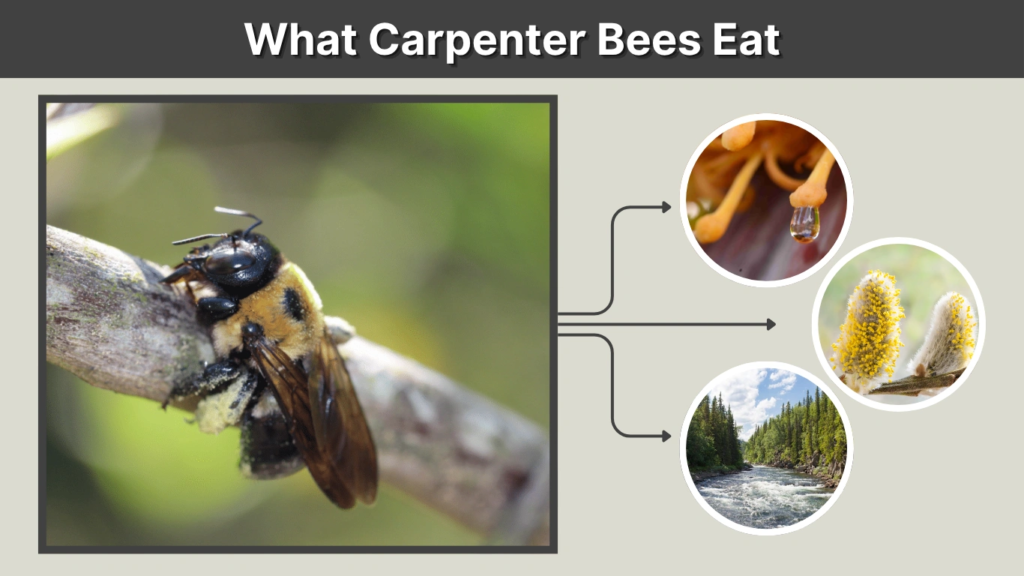
Carpenter bees feed on nectar and pollen, both essential for their survival. They use their long tongues to extract nectar from flowers, often cutting small holes at the base of petals to access it quickly. This feeding technique, called nectar robbing, allows them to get nectar without fully pollinating the flower.
Their diet includes:
- Nectar for energy
- Pollen for protein, especially for larvae
- Water occasionally, for hydration in dry weather
During the spring and summer, carpenter bees are active pollinators. They visit a wide variety of plants, including fruit trees, garden flowers, and wild blossoms. Though they don’t make honey, their pollination activity helps plants thrive, making them ecologically valuable.
Are Carpenter Bees Attracted to Honey?

Yes, carpenter bees are sometimes attracted to honey, but not for the reasons many think. They don’t seek it as food; instead, the sweet scent and sugary residue can draw their attention. Open honey jars, spilled syrup, or sugary drinks outdoors can temporarily attract carpenter bees because they interpret the smell as a nectar source.
However, once they discover it’s not from flowers, they usually lose interest. Their primary focus remains natural nectar and pollen, which contain the nutrients they require. Keeping honey or sweet foods covered outdoors can help prevent bees from hovering nearby.
Do Carpenter Bees Eat Honey?
No, carpenter bees do not eat honey. Their digestive systems are designed to process unprocessed nectar rather than the thick, concentrated sugars found in honey. Even if they encounter honey in traps or open containers, they don’t consume it the way honey bees do.
In some cases, carpenter bees may explore honey bee hives or traps that contain honey, but this behavior is driven by curiosity or the search for nectar-like scents—not by an appetite for honey. They rely entirely on fresh nectar and pollen collected directly from flowers.
Do Carpenter Bees Like Honey or Sweet Smells?
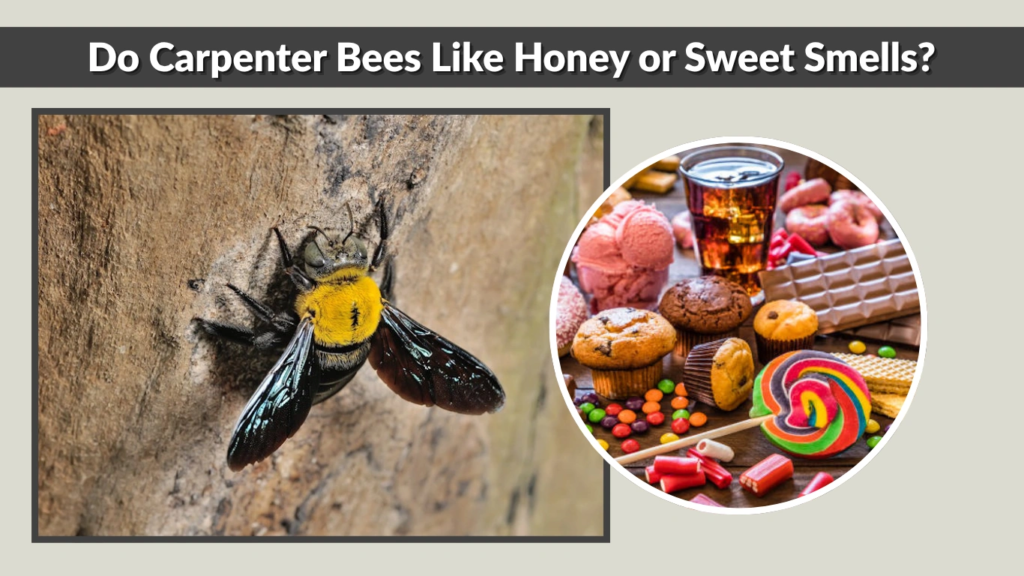
Carpenter bees are drawn to floral and sweet scents, which help them locate nectar sources. This means fragrances that mimic flower nectar—like perfumes, sugary drinks, or honey—can attract them. However, they quickly move on if the source doesn’t provide real nectar.
For homeowners, this means:
- Avoid leaving uncovered sweets or honey outdoors.
- Store honey jars tightly sealed.
- Keep outdoor eating areas clean to minimize attraction.
While they might briefly investigate sweet smells, carpenter bees are not aggressive and rarely sting unless provoked, so there’s no need for alarm if one flies near.
Carpenter Bees and Honey Bee Hives
Carpenter bees sometimes appear near honey bee hives, leading people to believe they’re trying to steal honey. In reality, they’re usually attracted to the wooden hive boxes rather than the honey inside. Female carpenter bees may bore small, round holes into wooden hives to build tunnels for nesting. This can cause structural damage over time but does not mean they’re interested in the honey itself.
If you keep beehives, regularly inspect for small holes or sawdust. To protect wooden hive boxes, paint or varnish them, since treated surfaces are less appealing to carpenter bees. Remember, carpenter bees don’t pose a major threat to honey bees—they rarely compete directly for food or attack colonies.
Blue Carpenter Bee and the ‘Honey’ Myth
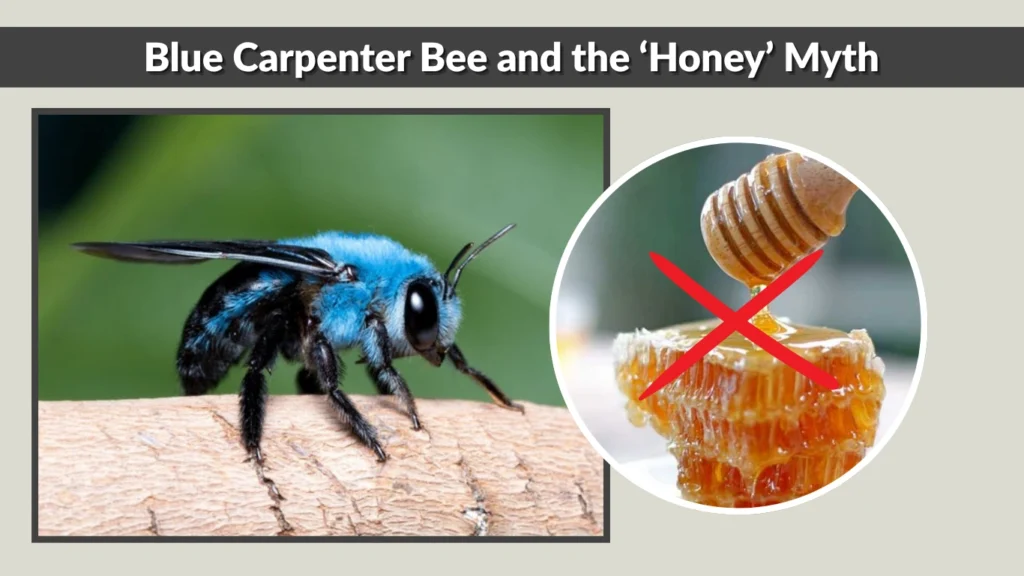
One of the most common online misconceptions involves the blue carpenter bee (Xylocopa violacea), often called the violet or black-blue carpenter bee. Many people claim that this species produces a rare “blue honey.” In truth, no carpenter bee species produces honey. The myth likely comes from the bee’s shimmering blue-black color and its habit of collecting nectar from vividly colored flowers.
Blue carpenter bees do collect nectar and pollen like other species, but they consume it directly or use it to feed larvae. They don’t have the social behavior, wax-producing glands, or communal hives needed for honey creation. The “blue honey” stories found online are not scientifically verified—they’re often based on misinterpretation or folklore.
Can You Get Honey from Carpenter Bees?
It’s impossible to harvest honey from carpenter bees because they never store or process nectar the way honey bees do. While they are efficient pollinators, they lack the mechanisms to convert nectar into honey through enzymatic reactions and dehydration. Every drop of nectar they collect is consumed shortly after gathering or sealed with eggs for larval feeding.
Some sellers online claim to offer “carpenter bee honey” or “blue bee honey,” but these products usually come from traditional honey bees, not carpenter bees. Authentic carpenter bee honey does not exist. Consumers should always verify sources before buying to avoid misleading or mislabeled products.
Preventing Carpenter Bees Around Sweet Substances
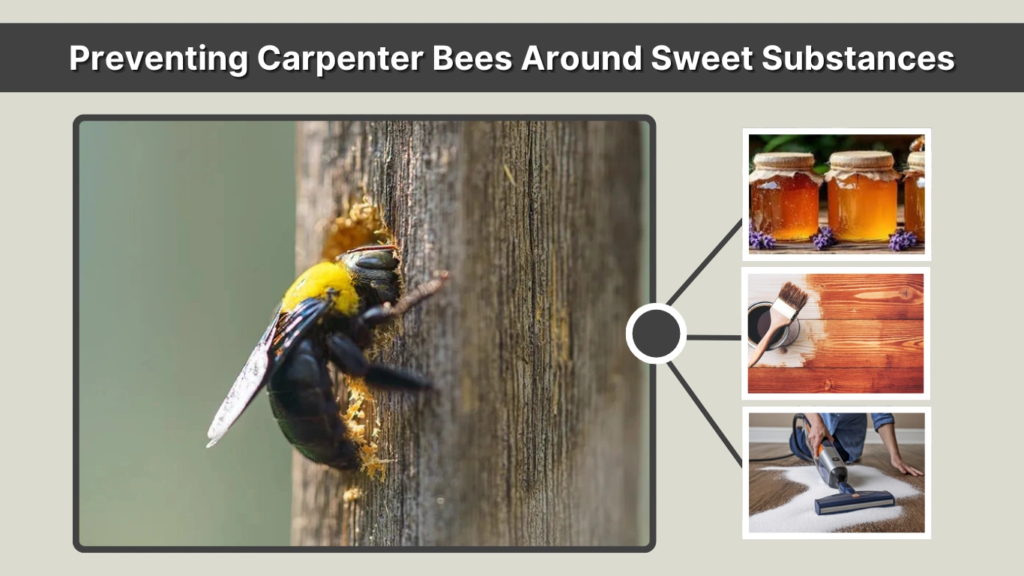
Keeping carpenter bees away from honey or sugary items requires some simple preventive habits. Since they’re mainly drawn by sweet smells and exposed wood, controlling both factors helps minimize unwanted visits.
Here are a few effective prevention tips:
- Store honey securely: Always keep honey jars or syrups tightly closed indoors or in covered containers.
- Treat exposed wood: Paint, stain, or varnish decks, fences, and hive boxes to make them unattractive for nesting.
- Clean outdoor areas: Wipe away spills or sugary residues promptly.
- Use natural repellents: Essential oils like citrus, almond, or peppermint work as gentle deterrents.
- Hang decoys: Fake wasp nests or paper bag decoys discourage carpenter bees from nesting nearby.
By managing scents and surfaces, you can coexist with carpenter bees without attracting them to your honey or home.
Facts About Honey and Nesting
Carpenter bees have unique nesting habits that distinguish them from all honey-producing species.
Key facts include:
- Carpenter bees nest in wood, not hives or soil.
- They don’t make or eat honey but rely on nectar and pollen.
- Females bore holes into wood to create chambers for their eggs.
- Males guard the entrance but don’t sting.
- They are beneficial pollinators, especially for open-faced flowers like morning glories and sunflowers.
While they may appear near honey sources, their goal is never honey theft—it’s wood shelter and floral nectar collection.
FAQs
Do carpenter bees make honey like other bees?
No. Carpenter bees collect nectar but never convert it into honey. They use nectar immediately for energy or to prepare pollen provisions for their larvae instead of storing it long-term.
Why are carpenter bees sometimes found near honey?
They’re attracted to the scent of honey, mistaking it for floral nectar. Once they realize it’s not from a flower, they quickly lose interest and move on.
Can carpenter bees damage honey bee hives?
Yes, but only the wooden structure. They may drill into hive boxes for nesting, though they rarely disturb honey bees or consume their honey.
Is blue carpenter bee honey real?
No. Despite online claims, blue carpenter bees do not produce honey. The term “blue honey” is a myth with no scientific evidence to support it.
How can I keep carpenter bees away from honey or sweet food outdoors?
Seal honey containers, clean spills, and treat wood surfaces. Natural deterrents like citrus oil or fake wasp nests can also help prevent them from hovering nearby.
