

The blue striped bee (Amegilla species) is one of the most striking and beautiful insects in the bee world. Unlike the familiar honeybee, these bees stand out with their shimmering blue and black stripes, making them instantly recognizable. Found in various parts of the world, especially in Australia and Southeast Asia, blue striped bees are solitary pollinators that play an essential role in supporting both wild plants and food crops. Their unique behavior, appearance, and ecological importance make them a fascinating subject for nature enthusiasts and gardeners alike.
Physical Characteristics

Size
Blue striped bees are medium-sized compared to other common bees. They typically measure 10 to 12 millimeters in length, though some species within the Amegilla genus can be slightly smaller or larger. Females are usually a bit bigger and more robust, as they are responsible for nest-building and carrying pollen. Males, on the other hand, are slimmer and can often be spotted hovering near flowers or sleeping in groups on stems at night.
Color & Markings
The most distinctive feature of the blue striped bee is its vibrant blue stripes that alternate with black bands across the abdomen. These iridescent stripes make them stand out clearly against the background of flowers. Their thorax is covered in short, fuzzy hairs, usually gray or brownish in color, which help them collect pollen. Their wings are transparent with a slight sheen, and their overall body structure is compact but agile, built for fast, darting flight.
Habitat & Distribution
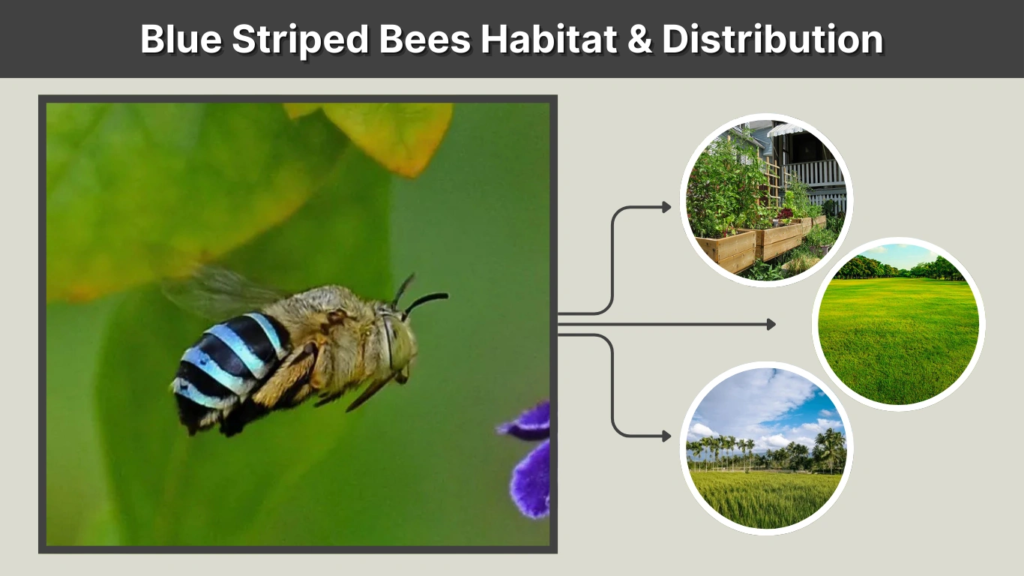
Blue striped bees are primarily found in Australia, where they are often referred to as “blue-banded bees.” However, their range extends to Southeast Asia, Papua New Guinea, and Pacific Islands, with some species found in parts of South Asia as well.
Preferred Habitats
These bees adapt well to a variety of environments, including:
- Gardens and urban backyards.
- Open fields and grasslands.
- Forest edges and agricultural lands.
Unlike honeybees, they do not live in hives or colonies. Instead, they are solitary nesters, often creating burrows in sandy soils, clay banks, or even soft mortar in walls. Each female builds her own nest and provisions it with pollen and nectar for her offspring.
Behavior & Diet

Solitary Lifestyle
One of the most unique aspects of the blue striped bee is its solitary nature. Unlike honeybees that form colonies with thousands of members, blue striped bees live independently. Each female takes care of her own nest and offspring. Males do not build nests but instead spend much of their time seeking mates and resting in clusters on twigs or plant stems overnight.
Foraging & Buzz Pollination
Blue striped bees are highly effective pollinators thanks to their ability to perform buzz pollination. By vibrating their bodies at a high frequency while inside a flower, they shake loose pollen that other insects cannot easily access. This makes them particularly valuable for crops such as tomatoes, eggplants, and blueberries, which rely heavily on buzz-pollinating insects.
Their diet primarily consists of nectar, which fuels their energy for flight, and pollen, which they collect and store in their nests to feed their larvae.
Flight Patterns
These bees are known for their rapid, darting flight style. They hover quickly between flowers and often remain airborne while feeding. This agility makes them difficult for predators to catch and also contributes to their efficiency as pollinators.
Sting & Defense
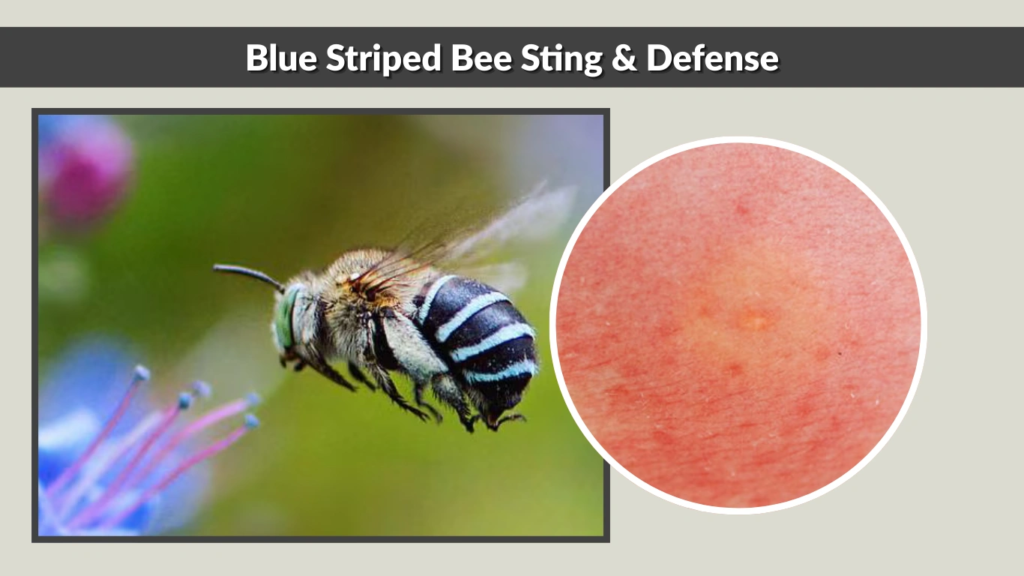
Blue striped bees, like most bees, are capable of stinging. However, they are not aggressive and rarely sting unless provoked or handled.
- Pain Level: Their sting is considered less painful than that of honeybees or wasps, though it can still cause mild discomfort, redness, and swelling.
- Defensive Behavior: Since they are solitary, they do not defend nests in large groups, which reduces the likelihood of multiple stings.
- Risk to Humans: For most people, their sting is harmless, but those with bee sting allergies should exercise caution.
Their generally calm nature and preference for flowers over confrontation mean they can often be safely observed in gardens without posing significant risk.
Identification Tips
Recognizing a blue striped bee is straightforward once you know what to look for. Their metallic blue bands across the abdomen are the clearest feature that sets them apart from honeybees and carpenter bees. Unlike honeybees, they lack a hive and do not swarm. Their fast, darting flight and habit of hovering at flowers make them easy to distinguish in gardens. During the evening, males can often be spotted clinging to stems in small groups, a behavior not seen in many other bees.
Ecological Importance
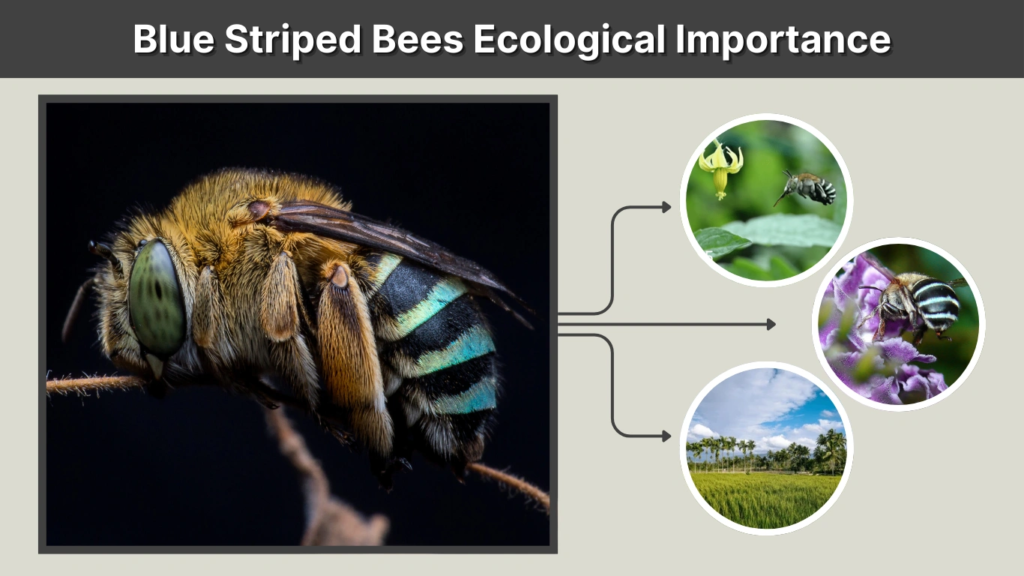
Blue striped bees play a vital role in ecosystems and agriculture:
- Buzz Pollination: They are one of the few bees capable of buzz pollination, which is crucial for crops like tomatoes, eggplants, and blueberries.
- Supporting Biodiversity: By visiting a wide range of native flowers, they help maintain plant diversity in both wild and urban environments.
- Agricultural Value: Farmers benefit greatly from their pollination services, especially for crops that honeybees cannot efficiently pollinate.
Their work goes unnoticed by many but is essential to maintaining balanced ecosystems and food supplies.
Conservation & Threats
Despite their importance, blue striped bees face several challenges:
- Habitat Loss: Expanding cities and farmland reduce natural nesting areas.
- Pesticide Use: Chemicals harm bees directly and reduce the flowers they depend on.
- Climate Change: Shifts in temperature and rainfall affect flowering cycles, disrupting food availability.
Conservation Tips
People can support blue striped bees by:
- Planting bee-friendly native flowers such as lavender and salvia.
- Reducing pesticide use in gardens.
- Providing sandy patches or soft soil for nesting.
- Leaving wild areas undisturbed to protect their natural habitats.
Fun Facts
- Blue striped bees are often called “blue-banded bees” in Australia.
- Males exhibit a quirky habit of sleeping while gripping stems with their jaws.
- Their buzzing during pollination creates a distinctive sound, often audible when they visit tomato flowers.
- Unlike honeybees, they do not produce honey but still contribute heavily to pollination.
- They can fly incredibly fast and change direction abruptly, making them tricky for predators to catch.
FAQs
What is the average size of a blue striped bee?
Blue striped bees typically grow to about 10–12 millimeters in length. Females are usually a bit larger and more robust than males.
Do blue striped bees sting humans?
Yes, they can sting, but they are not aggressive and usually only sting if handled or threatened.
Where can I find blue striped bees?
They are most commonly found in Australia, Southeast Asia, and the Pacific Islands, often nesting in soil burrows, sandy banks, or clay walls.
How do blue striped bees differ from honeybees?
Unlike honeybees, they are solitary pollinators and do not produce honey. Their blue stripes and buzzing pollination technique set them apart.
Why are blue striped bees important for farming?
They perform buzz pollination, which is vital for crops like tomatoes, eggplants, and blueberries that honeybees cannot pollinate effectively.
