
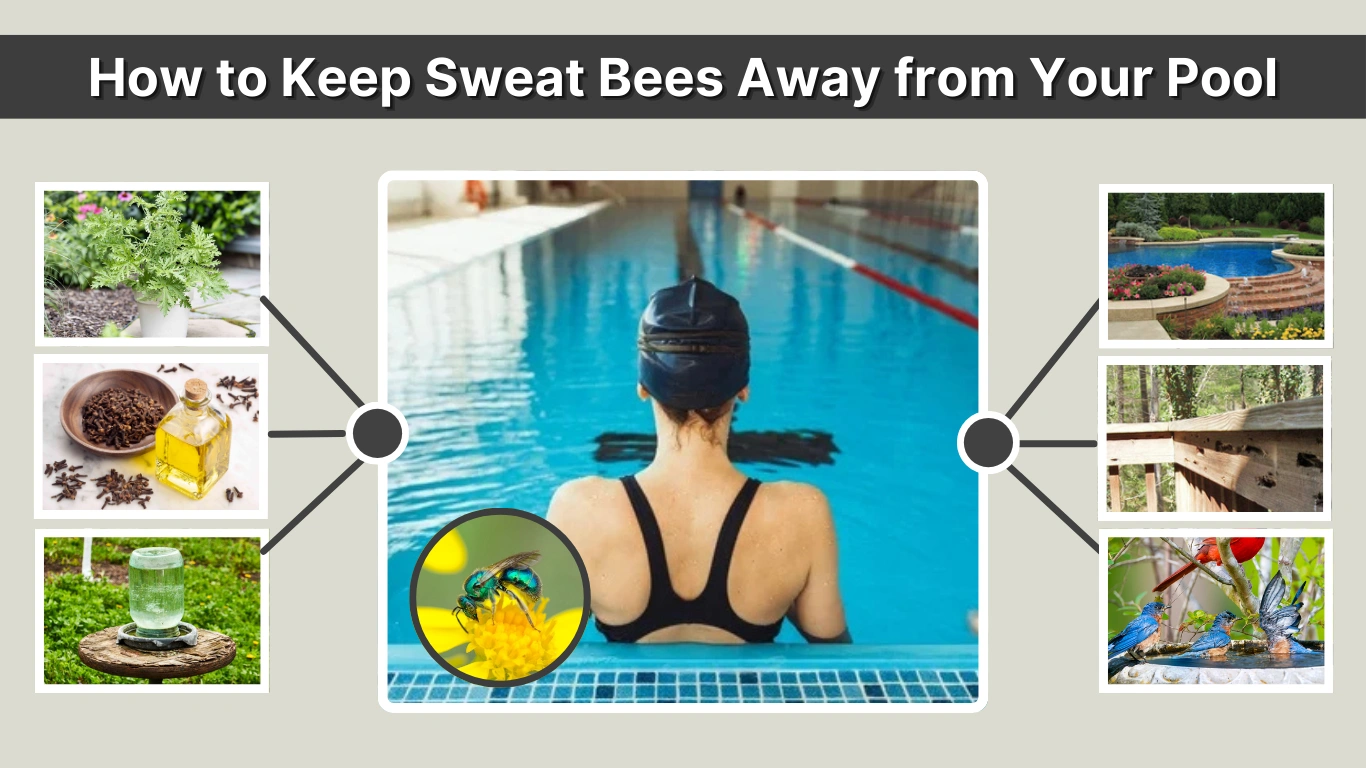
Pools are meant for fun, relaxation, and summer enjoyment. But for many homeowners, unwanted visitors like sweat bees can quickly disrupt that peace. These small insects are attracted to water, bright colors, and even human sweat. While generally harmless, their constant buzzing near the pool can be irritating, and in rare cases, they may sting if handled roughly. Understanding why sweat bees show up and how to keep them away will help you maintain a more enjoyable, bee-free swimming environment.
Why Sweat Bees Gather Around Pools
Sweat bees don’t appear around pools randomly. Their attraction to water and environmental factors explains why they’re so common in backyards during warm months.
Attraction to Water and Sweat
Pools often act as artificial water sources for bees. Sweat bees, in particular, are drawn to the moisture around pool decks and sometimes even land on the water’s surface. They may also be lured by salts in human sweat, which they use as a mineral source. This is why you’ll sometimes find them circling swimmers.
Bright Colors and Flowers
Sweat bees are also guided by visual cues. Bright-colored swimsuits, especially yellows and floral prints, mimic the colors of flowers. If your poolside is decorated with blooming plants, these can further attract bees to the area, bringing them closer to the water.
Seasonal Factors
The problem often worsens in the peak of summer, when heat drives bees to seek hydration. This coincides with high human activity in pools, increasing the chance of encounters.
Identifying Sweat Bees in Your Pool Area
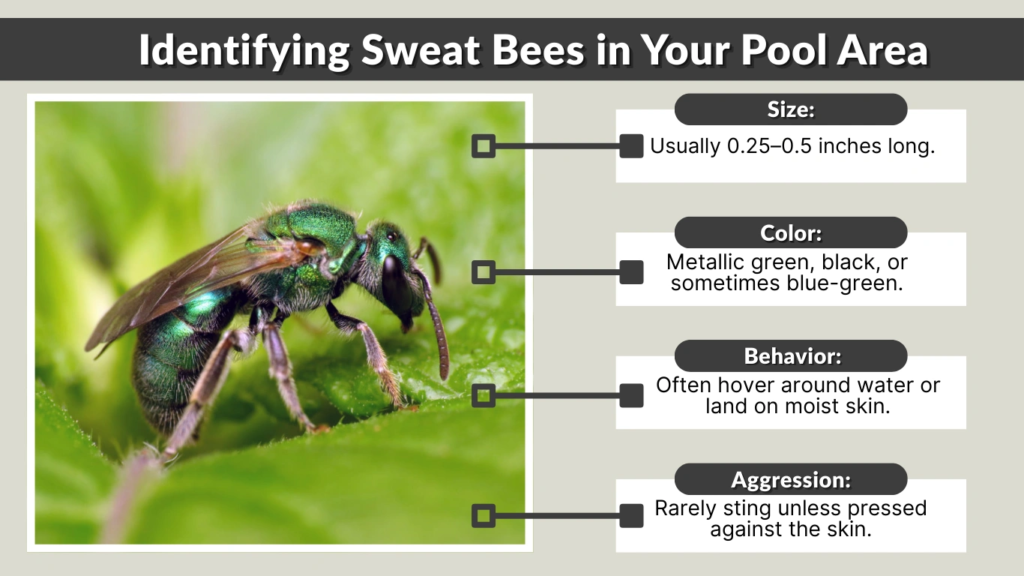
Not every insect near your pool is a sweat bee. Correct identification helps you take the right action without harming beneficial pollinators.
Signs you’re dealing with sweat bees (List format):
- Size: Small and slender, usually 0.25–0.5 inches long.
- Color: Metallic green, black, or sometimes blue-green.
- Behavior: Often hover around water or land on moist skin.
- Aggression: Rarely sting unless pressed against the skin.
- Confusion factor: Frequently mistaken for wasps due to hovering behavior.
Knowing these traits can prevent unnecessary worry and ensure you use safe methods to manage them.
Immediate Ways to Keep Sweat Bees Away
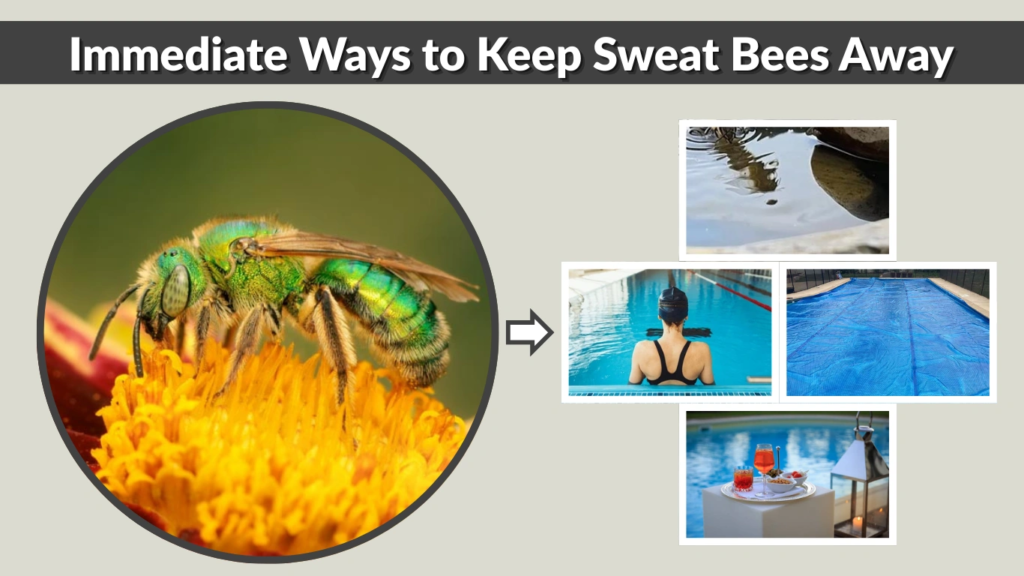
The fastest way to reduce sweat bee activity near your pool is by making the environment less attractive to them. These steps are simple, effective, and pool-safe.
Quick deterrent strategies (List format):
- Eliminate Standing Water
Sweat bees don’t just use the pool itself—they may also gather around puddles, leaky hoses, or pet bowls. Dry up excess water sources to reduce attraction. - Use Pool Covers
A pool cover keeps bees from accessing water when the pool is not in use. This method also prevents leaves and debris, offering a double benefit. - Keep Food and Drinks Away
Sugary beverages, fruits, or snacks left near the pool can attract sweat bees. Establish a separate eating area away from the swimming zone. - Choose Neutral Swimwear
Avoid bright yellows, oranges, and floral patterns. Sweat bees are drawn to vibrant colors because they resemble flowers. Neutral tones like white, gray, or beige are less likely to lure them. - Limit Flowering Plants Near the Pool
While flowers are great for pollinators, placing them directly next to your pool encourages bees to linger. Relocating them farther away keeps pollinators in your yard but not in your swim zone.
By adopting these changes, you’ll reduce the immediate appeal of your pool area to sweat bees without harming them or disrupting the ecosystem.
Natural Repellents and Deterrents
Scents and Oils That Repel Sweat Bees
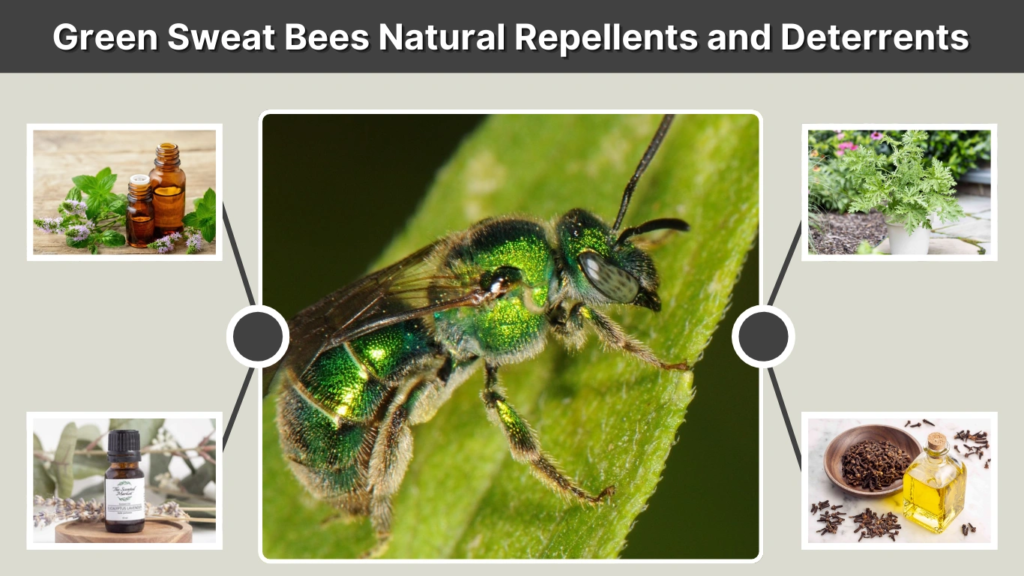
Sweat bees are sensitive to strong scents, making natural oils an effective way to discourage them. Many of these repellents can be diluted with water and sprayed lightly around pool areas.
Effective natural deterrents (List format):
- Peppermint oil – sharp scent overwhelms bees’ navigation.
- Eucalyptus oil – fresh smell discourages bee activity.
- Citronella – commonly used against mosquitoes, also effective for bees.
- Clove oil – potent aroma keeps sweat bees at bay.
When applied around the pool deck, these oils create a protective barrier without harming the water quality or the bees themselves.
Commercial Pool-Safe Repellents
If you prefer ready-made solutions, several bee-safe sprays are available that won’t harm humans or pets. Always ensure labels specify non-toxic and pool-safe to avoid water contamination.
Long-Term Prevention Strategies
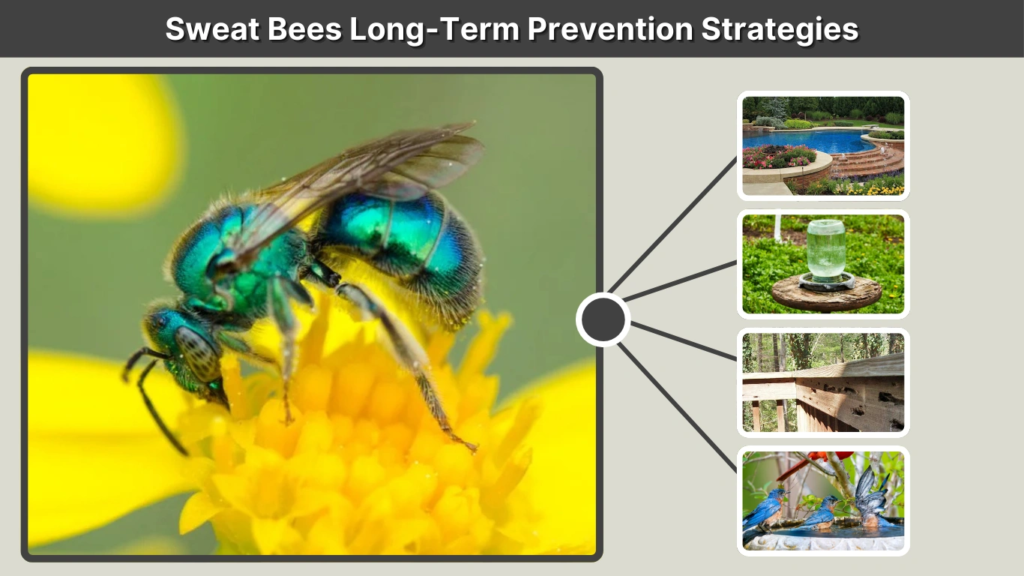
Managing sweat bees around your pool isn’t only about immediate fixes. For a lasting solution, consider environmental adjustments that discourage bees naturally.
Long-term strategies include:
- Landscaping changes: Move flowering plants at least 15–20 feet away from the pool.
- Alternative water sources: Place a shallow bird bath or bee watering station away from the pool to divert bees.
- Sealing crevices: Fill cracks in decking or nearby soil where bees might attempt to nest.
- Encourage natural predators: Birds and dragonflies help control sweat bee activity.
These measures balance comfort with ecological responsibility, keeping your pool peaceful while allowing bees to thrive elsewhere in your yard.
Colors and Materials That Repel Sweat Bees
Sweat bees respond strongly to color. What you wear and how your pool is decorated can affect how many bees show up.
Color and material effects (Table format):
| Colors/Materials | Effect on Sweat Bees | Recommendation |
| Bright Yellow/Orange | Highly attractive | Avoid in swimwear & pool décor |
| White & Neutral Tones | Less attractive | Best choice for swimsuits & towels |
| Light Blue | Moderately attractive | Use sparingly in pool accessories |
| Reflective Surfaces | Confuse/repel bees | Good for poolside décor or covers |
By choosing the right colors for swimsuits, umbrellas, and chairs, you can significantly reduce bee interest in your pool.
Safe Removal vs. Extermination
While sweat bees may be bothersome, it’s important to treat them with care. They are vital pollinators, and killing them with pesticides should be a last resort.
Safe handling options (List format):
- Pool skimmer scoop: Gently lift bees out of the water without harm.
- Relocate nests: If you spot a nest near your pool, consider safe relocation with professional help.
- Avoid pesticides: Chemicals may contaminate water and harm beneficial insects.
- Professional assistance: Call a licensed pest control expert if bee populations become overwhelming.
The goal is to manage bees while protecting their essential role in the ecosystem.
FAQs
Why are sweat bees attracted to pools?
Sweat bees are drawn to pools because they need water and salts for hydration. The moisture around decks and the minerals in sweat make pools attractive. Bright swimwear and nearby flowers can also lure them closer, increasing their presence during summer.
How can I keep sweat bees away from my pool naturally?
Natural repellents like peppermint, eucalyptus, citronella, and clove oils work well around pools. Pair these with practical steps like using pool covers, wearing neutral-colored swimwear, and relocating flowers away from the pool area. These eco-friendly measures discourage bees without harming them.
Do sweat bees sting swimmers?
Sweat bees are not aggressive and usually sting only if pressed against the skin or trapped. Their sting is mild compared to wasps or honeybees. Most encounters involve bees hovering or landing briefly to sip sweat, rather than stinging swimmers.
What colors repel sweat bees near pools?
Sweat bees are most attracted to bright yellows, oranges, and floral patterns. Neutral shades such as white, gray, and beige are less appealing. Reflective surfaces like metallic décor can also confuse or deter bees, making them a smart choice for poolside settings.
Are sweat bees dangerous to have around pools?
No, sweat bees are generally harmless. They may seem bothersome but play an important role in pollination. Their stings are rare and mild. Instead of exterminating them, using deterrents and simple prevention strategies will keep your pool comfortable while protecting these beneficial insects.
