

Green sweat bees are small, dazzling pollinators known for their metallic green or blue-green shimmer. Belonging to the large family of sweat bees (Halictidae), they are often spotted in gardens, fields, and wildflower meadows. Their name comes from their curious attraction to human sweat, where they seek salts for nutrition. Though sometimes misunderstood, these bees are harmless, beneficial, and vital to pollination.
What is a Green Sweat Bee?
Scientific Name and Classification
Green sweat bees are not a single species but a group of metallic-colored bees within the Halictidae family. Some well-known types include:
- Agapostemon (often striped males and pure green females).
- Augochloropsis metallica (metallic green sweat bee).
- Augochlora pura (pure green sweat bee).
These species are commonly grouped together because of their shimmering green bodies and shared behavior of visiting flowers and sometimes human sweat.
General Description
Unlike larger honeybees or bumblebees, sweat bees are small to medium-sized insects with bright metallic colors. Many are solid green, while others may have striped abdomens. This vibrant appearance makes them one of the most recognizable bees in North America and beyond.
Physical Characteristics of Green Sweat Bees

Green sweat bees stand out due to their iridescent beauty and subtle differences across species.
Key physical traits (List format):
- Size: Typically 0.25–0.5 inches long, smaller than honeybees.
- Color: Metallic green, blue-green, or gold-green tones.
- Gender differences:
- Females often appear completely green.
- Males may have striped abdomens with green heads.
- Females often appear completely green.
- Variants: Includes ultra-green, silky, shiny, and iridescent sweat bees.
Their reflective bodies sparkle in sunlight, making them attractive to insect photographers and gardeners alike.
Habitat and Range

Geographic Distribution
Green sweat bees are widely distributed and can adapt to various environments. They are especially common in North America, with populations across:
- Southern U.S.: Florida, Texas, California.
- Midwest & North: Colorado, Ohio, Michigan, New York, Maine, Wisconsin.
- Canada: Ontario.
- Other regions: Found in parts of India and tropical areas.
Nesting Locations
Most green sweat bees are ground nesters. They dig burrows in sandy or loose soil, often creating small mounds at the surface. Some species prefer gardens, meadows, and lawns where the soil is undisturbed.
Preferred Flowers
These bees are versatile pollinators and thrive in areas with abundant blooms.
Flowers that attract green sweat bees (List format):
- White blossoms
- Green-toned flowers
- Salvia species
- Phacelia plants
- A variety of wildflowers and garden flowers
Their wide floral preference ensures they contribute significantly to both natural and cultivated ecosystems.
Diet and Behavior

Feeding Habits
Green sweat bees have a diverse diet that supports both their survival and their ecological role.
Diet summary (Table format):
| Food Source | Description | Importance |
| Nectar | Main carbohydrate energy source | Pollination role |
| Pollen | Protein-rich food for larvae | Reproduction |
| Human Sweat | Consumed for salts and minerals | Harmless behavior |
| Wildflowers & Crops | Provide ongoing sustenance | Ecosystem support |
Unique Behaviors
One of their most notable behaviors is “sweat licking”, where bees land on humans to sip sweat. While this may alarm some, it is harmless and rarely leads to stings. Additionally, green sweat bees are highly effective pollinators, transferring pollen across flowers and crops, ensuring biodiversity and food supply.
Stings and Safety Concerns

Although their attraction to sweat can make people uneasy, green sweat bees are generally harmless. They rarely sting unless provoked.
Key safety notes (List format):
- Do green sweat bees sting? Yes, but only if handled or trapped.
- Do they bite? No, they lack biting mouthparts.
- Danger to humans? Minimal—stings are mild compared to honeybees.
- Gender difference: Only females can sting; males are stingless.
For most people, their sting feels like a minor prick, far less painful than that of wasps or hornets.
Types and Variations of Green Sweat Bees

The term “green sweat bee” covers multiple species and color variations. Their names often reflect their shimmering shades.
Main variations (List format):
- Metallic green sweat bee (Augochloropsis metallica).
- Ultra-green sweat bee: noted for its brighter, intense coloration.
- Gold-and-green sweat bee: combines shimmering yellow-gold tones with green.
- Blue-green sweat bee: slightly cooler, iridescent appearance.
- Silky or shiny green sweat bee: delicate, reflective sheen.
- Pure green sweat bee (Augochlora pura): consistently vibrant green.
These types may vary by region and season, but all share the same ecological importance.
Regional Focus
Green Sweat Bees in the U.S.
Green sweat bees are widely distributed across America, adapting to different climates:
- Florida: “little green sweat bees” thrive in warm, humid environments.
- California & Texas: home to diverse populations due to mild winters.
- Colorado & Midwest states: species remain active during spring and summer.
- Northeastern U.S. (Maine, New York, Michigan, Ohio, Wisconsin): bees emerge in warmer months, nesting in soil.
International Presence
Beyond North America, some green sweat bee species are found in India and tropical regions, where they contribute to pollination of local crops and wild plants.
Life Cycle and Nesting Behavior
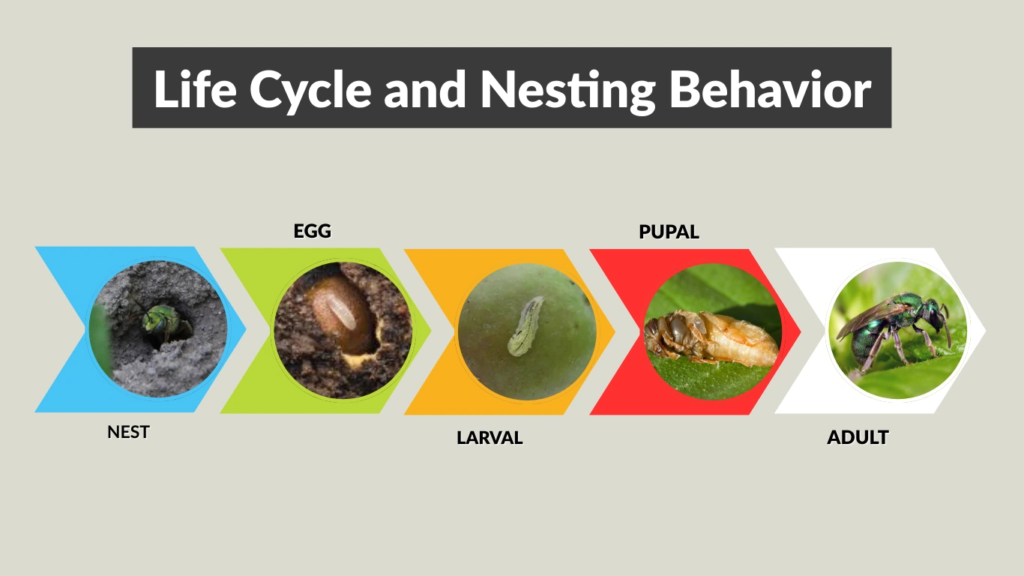
The life cycle of green sweat bees is simple but fascinating, with much of their effort devoted to nesting and brood care.
Life cycle stages (List format):
- Nest construction: Females dig underground tunnels in sandy or loose soil.
- Egg laying: Each tunnel chamber is provisioned with pollen and nectar.
- Larval stage: Offspring consume stored pollen before pupating.
- Adult emergence: New bees appear in spring or summer, continuing the cycle.
These bees often form loose colonies, with multiple females nesting close together, though each cares for her own brood.
Interaction with Humans
Why They Approach People
Green sweat bees occasionally land on humans to sip sweat for salts and minerals. While this may be uncomfortable, it poses no real threat.
Getting Rid of Green Sweat Bees
For those who find their presence bothersome:
- Avoid leaving damp clothing or gear outdoors.
- Use gentle deterrents like planting flowers further from seating areas.
- Refrain from chemical extermination, as these bees are important pollinators.
Encouraging their presence benefits gardens and ecosystems.
Fun and Fascinating Facts
Green sweat bees may be small, but they have earned admiration among naturalists and photographers.
Interesting facts (List format):
- Their metallic sheen reflects sunlight, giving them a jewel-like appearance.
- Often described as “cute bees” in macro photography.
- Essential pollinators for wildflowers, crops, and backyard gardens.
- More likely to flee than sting, making them non-aggressive neighbors.
These traits make them both beautiful and beneficial.
Conclusion
Green sweat bees are much more than curious, sweat-attracted insects. With their shimmering green bodies, gentle nature, and essential role in pollination, they are a vital part of ecosystems across North America and beyond. Far from being pests, these bees are quiet garden allies that enrich biodiversity and support food security.
FAQs
What is the scientific name of the green sweat bee?
Green sweat bees belong to several genera, including Agapostemon, Augochloropsis metallica, and Augochlora pura. These names cover the most common metallic green species.
Do green sweat bees sting humans?
Yes, females can sting if provoked, but their sting is mild and far less painful than that of wasps or honeybees. Males cannot sting.
Where can green sweat bees be found?
They are widespread across the U.S. (Florida, California, Texas, Colorado, Ohio, Michigan, Maine, New York, Wisconsin), Canada (Ontario), and in parts of India and tropical regions.
What do green sweat bees eat?
They feed on nectar, pollen, and occasionally human sweat for salts. Nectar provides energy, while pollen supports larval growth.
Are green sweat bees dangerous or beneficial?
They are beneficial pollinators and rarely aggressive. Their sting is mild, and their role in supporting gardens, crops, and wildflowers makes them valuable to ecosystems.
