

The western honey bee (Apis mellifera) is one of the most well-known and important insects on Earth. Recognized globally for its role in pollination and honey production, it has become a cornerstone species in agriculture and ecosystems. These bees are social insects that live in large colonies, working together to collect nectar, produce honey, and ensure the survival of their hive. Beyond honey, they contribute significantly to biodiversity by pollinating countless flowering plants.
Taxonomy and Classification
The western honey bee belongs to the genus Apis within the family Apidae. It is part of the order Hymenoptera, which also includes wasps and ants, and the class Insecta. Its scientific name, Apis mellifera, translates to “honey-bearing bee.” This species is native to Europe, Africa, and parts of Asia but has spread worldwide due to its usefulness in agriculture. Compared to the eastern honey bee (Apis cerana), which is native to Asia, the western honey bee is larger, more widely domesticated, and produces greater quantities of honey.
Physical Characteristics

Western honey bees are relatively small insects, with workers averaging about 12–15 mm in length. Their bodies are divided into three main parts: the head, thorax, and abdomen. They display distinctive golden-yellow bands with dark brown or black stripes, giving them their iconic bee-like appearance.
- Queen bees are the largest, measuring up to 20 mm. They are easily distinguished by their longer abdomen.
- Worker bees are smaller females responsible for almost every hive duty, from foraging to cleaning.
- Drones, the males, are larger than workers but shorter than queens, with big eyes to help them locate queens during mating flights.
Life Cycle

Like other bees, western honey bees undergo complete metamorphosis. The life cycle includes four stages: egg, larva, pupa, and adult.
- Egg: The queen lays eggs in hexagonal cells within the hive.
- Larva: After three days, eggs hatch into larvae that are fed royal jelly and later a mixture of pollen and honey.
- Pupa: The larvae spin cocoons, and metamorphosis takes place.
- Adult: Depending on caste, bees emerge as workers, drones, or queens.
Lifespan varies dramatically: queens can live several years, workers live only weeks to months depending on the season, and drones usually survive a few weeks until they mate.
Castes and Roles
Queen Bee
The queen is the heart of the colony. Her primary role is reproduction—laying up to 2,000 eggs a day during peak season. She also produces pheromones that regulate the hive’s social structure, ensuring harmony among workers. When a queen grows old or weak, workers may raise a new queen by feeding selected larvae only royal jelly.
Worker Bees
Workers are sterile females and the most numerous members of the colony. Their responsibilities are vast and change with age. Young workers clean cells and feed larvae, while older workers guard the hive and forage for nectar and pollen. Workers are also the only bees equipped with stingers, which they use to defend the hive. Once they sting a mammal, the stinger remains embedded, causing the worker to die soon after.
Male Bees (Drones)
Drones exist solely for reproduction. They mate with virgin queens during nuptial flights but die immediately afterward. Unlike workers, drones do not have stingers, and they rely on workers to feed them. As winter approaches, drones are often expelled from the hive since they do not contribute to survival tasks.
Behavior and Characteristics
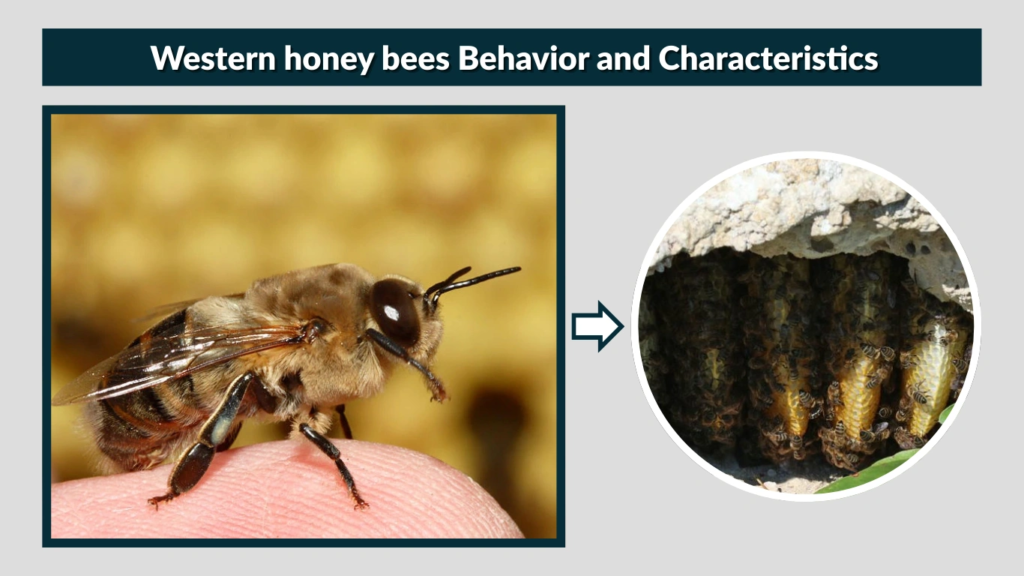
Western honey bees are remarkable for their highly organized social structure. Each bee understands its role within the colony, and tasks are divided efficiently to ensure survival.
One of the most fascinating behaviors is the waggle dance, a unique form of communication performed by foragers. Through specific movements, bees can indicate the direction and distance of nectar or pollen sources to others in the hive.
Habitat and Range
The western honey bee originated in Europe, Africa, and parts of the Middle East, but today it can be found across nearly every continent except Antarctica. Humans have introduced them worldwide due to their role in agriculture and honey production. They thrive in diverse environments—forests, meadows, farmlands, and even urban gardens. Colonies prefer sheltered nesting sites such as tree hollows, rock crevices, or artificial beehives managed by beekeepers.
Diet

Western honey bees are herbivorous, feeding mainly on nectar and pollen from flowering plants. Nectar provides carbohydrates, which are converted into honey for long-term storage, while pollen is rich in proteins, essential for larvae development. Worker bees also produce “bee bread” (a mix of pollen and honey) for feeding young. Queens and developing larvae receive royal jelly, a nutrient-rich secretion from worker bees’ glands.
Hive and Nest
The hive is the center of colony life. In the wild, western honey bees construct combs of wax in hollow trees or caves, while domesticated bees live in wooden hives designed by beekeepers. The comb consists of hexagonal cells used for storing honey, pollen, and brood (developing young).
Man-made hives allow easy honey harvesting and colony management, but the structure of wild and domestic nests is nearly identical. A healthy hive can house tens of thousands of bees during peak seasons.
Sting and Defense

Only worker bees possess stingers. Their barbed stingers lodge into the skin of mammals, releasing venom that causes pain and swelling. This self-defense mechanism also proves fatal for the worker, as she dies after stinging. Drones cannot sting, and queens rarely sting except during fights with rival queens.
Although painful, a western honey bee sting is generally not life-threatening unless the person is allergic or stung multiple times. The stinger also emits alarm pheromones, which may trigger more bees to attack.
Predators and Threats
Western honey bees face a wide range of natural predators, including birds like bee-eaters, mammals such as bears, and insects like wasps and hornets. However, their greatest challenges often come from parasites and diseases.
- Varroa mites: External parasites that weaken bees and spread viruses.
- Nosema: A fungal infection affecting digestion.
- Colony Collapse Disorder (CCD): A mysterious phenomenon where workers abandon the hive, threatening colony survival.
Human activities pose additional dangers. Pesticide use, climate change, and habitat loss have contributed to declines in bee populations worldwide.
Conservation and Status
Although the western honey bee is not officially listed as endangered, scientists remain concerned about declining numbers. Colony Collapse Disorder, parasites, and modern agricultural practices are major contributors. Conservation efforts focus on sustainable beekeeping, reduced pesticide usage, and planting pollinator-friendly crops. Many countries are now promoting bee conservation awareness to protect both wild and managed populations.
Western Honey Bee vs Eastern Honey Bee
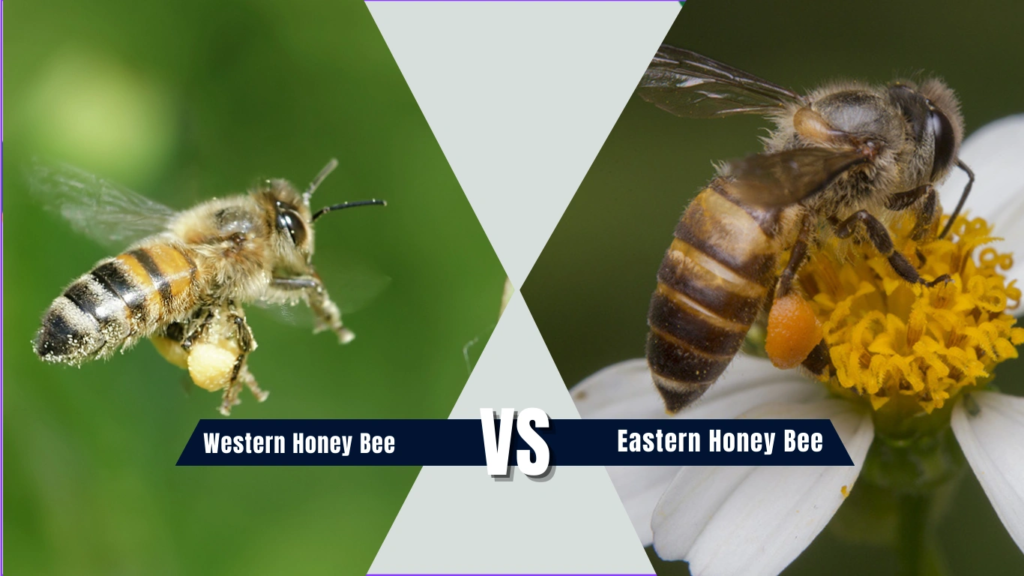
The western honey bee (Apis mellifera) differs significantly from the eastern honey bee (Apis cerana). Western species are larger, more adaptable to various climates, and produce greater quantities of honey. Eastern honey bees, however, are better at resisting parasites such as Varroa mites. While eastern honey bees are mostly restricted to Asia, western honey bees have spread globally due to their economic value.
Fun and Interesting Facts
- A single bee colony may contain 50,000–60,000 bees at its peak.
- Bees can recognize human faces and remember them.
- The waggle dance is one of the most complex communication methods in the animal kingdom.
- A worker bee produces only about 1/12th of a teaspoon of honey in her lifetime.
- Beeswax, propolis, and royal jelly have been used by humans for thousands of years.
Human Interaction
Western honey bees have been domesticated for centuries. Beekeeping, also called apiculture, is practiced worldwide for honey, beeswax, and pollination services. They play a crucial role in agriculture by pollinating fruits, vegetables, and crops. Without them, global food production would decline significantly.
In countries like Australia, where the species was introduced, western honey bees are essential for pollination but can sometimes compete with native bees. Commercially, bees and hives are bred and sold to farmers to boost crop yields, making them one of the most economically valuable insects on Earth.
FAQs
What is the scientific name of the western honey bee?
The scientific name is Apis mellifera, which means “honey-bearing bee.”
How long do western honey bees live?
Queens can live for several years, workers for a few weeks to months, and drones typically only a few weeks.
Where do western honey bees live?
They are native to Europe, Africa, and the Middle East but are now found worldwide, living in forests, farmlands, and even urban gardens.
Do all western honey bees sting?
Only female workers sting. Drones lack stingers, and queens rarely sting except during fights with rivals.
Are western honey bees endangered?
They are not officially endangered, but populations are declining due to threats like habitat loss, parasites, and pesticides.
