

The word “wasp” has multiple meanings depending on the context in which it is used. Biologically, it refers to an insect belonging to the order Hymenoptera, closely related to bees and ants. Culturally, the wasp has been seen as both a symbol of power and a nuisance, while in language and acronyms it may stand for very different things, such as WASP (White Anglo-Saxon Protestant) or technical terms in science and technology. Understanding what “wasp” means requires looking at it from nature, culture, religion, and language.
Biological Meaning of Wasp

Definition in Zoology
In the scientific sense, a wasp is a stinging insect that belongs to the order Hymenoptera and the suborder Apocrita. Unlike bees, wasps are usually less hairy, more slender, and can sting multiple times without losing their stinger. They are incredibly diverse, with over 100,000 species worldwide, ranging from social wasps like hornets and yellowjackets to solitary hunters like mud daubers.
Types of Wasps
- Social Wasps: These include species such as yellowjackets (Vespula) and paper wasps (Polistes). They live in colonies with a caste system of queens, workers, and males.
- Solitary Wasps: These wasps, such as digger wasps or spider wasps, live alone. Females build nests for their young and hunt prey to feed their larvae.
This diversity makes “wasp” a very broad term in biology, covering everything from garden pollinators to highly aggressive stingers.
Role in Nature
Wasps have significant ecological roles:
- Pollinators: Many species feed on nectar and transfer pollen between flowers.
- Pest Controllers: They hunt caterpillars, flies, spiders, and other insects, keeping pest populations in check.
- Prey: Wasps themselves are food for birds, amphibians, and larger insects.
In short, the biological meaning of wasp connects to an insect that is both feared and beneficial.
Symbolic and Cultural Meaning of Wasp

Symbolism in Different Cultures
Throughout history, wasps have carried strong symbolic meanings.
- In Greek mythology, wasps were linked to warriors and aggression, symbolizing protection and strength.
- In some Native American traditions, the wasp symbolized order and construction, since they build intricate nests.
- In Asian cultures, wasps were seen as messengers of warning or caution.
Modern Interpretations
In modern culture, the wasp often symbolizes:
- Aggressiveness and defense, due to its painful sting.
- Resilience and hard work, reflecting its tireless nest building and hunting.
- Warning and transformation, since they are feared yet respected in nature.
Wasps are also frequently used as metaphors in literature and film to represent threats, challenges, or survival instincts.
Positive vs Negative Associations
- Positive: Wasps symbolize strength, courage, protection of family, and fertility in some traditions.
- Negative: They are often seen as symbols of irritation, danger, or hostility because of their aggressive behavior when threatened.
The cultural meaning of wasps is a fascinating contrast—at once respected and feared.
Acronym Meaning of WASP

White Anglo-Saxon Protestant
Beyond its biological meaning, “WASP” is also a sociocultural acronym used primarily in the United States. It stands for White Anglo-Saxon Protestant, referring to a historically dominant social group of European descent who were influential in American politics, business, and society.
- Historical Context: The term gained popularity in the 20th century to describe elite groups with wealth and cultural influence.
- Cultural Implications: It often carries connotations of privilege, tradition, and social authority.
- Modern Use: Today, it is used both neutrally and critically when discussing power structures and cultural history.
Other Acronym Uses of WASP
The word WASP also appears in several other modern contexts:
- Technology: Wireless Access Service Point – linked to internet networks.
- Military/Science: Acronyms such as Wide Angle Search Platform or Weaponized Air Surveillance Program.
- Business & Research: Used as shorthand for specialized programs, projects, or devices.
Thus, the acronym WASP can mean different things depending on the field of discussion.
Religious and Mythological References
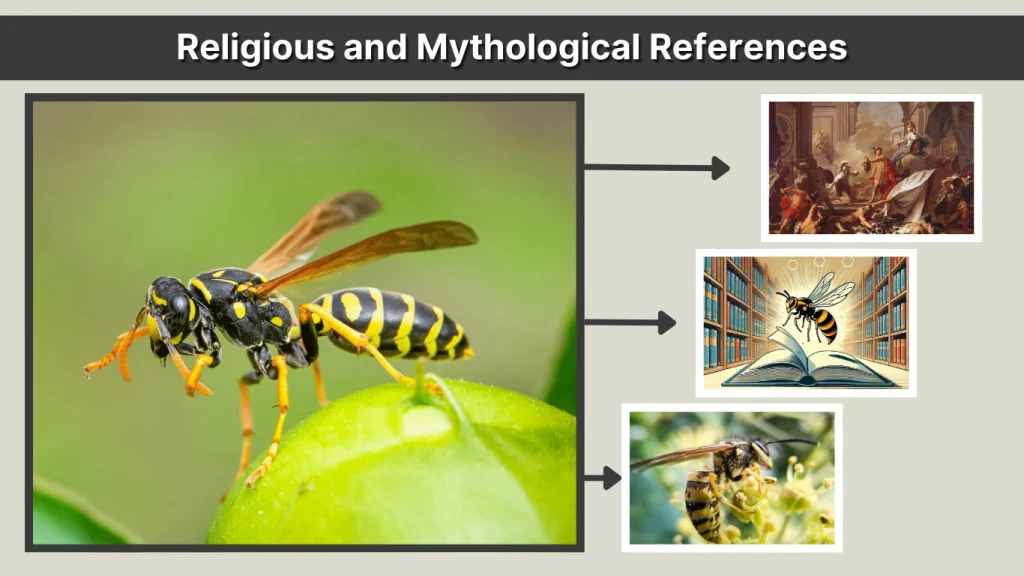
Wasps have been part of mythology and religion for centuries:
- Greek and Roman Mythology: Seen as symbols of warriors because of their aggressive and protective behavior.
- Biblical References: In the Old Testament, God is said to send “hornets” or wasps as a form of punishment to drive enemies away (Exodus 23:28).
- Spiritual Symbolism: In some traditions, wasps represent discipline, order, and the consequences of wrongdoing.
Religious texts and myths often used wasps as metaphors for divine punishment, warning, or protection.
Linguistic and Everyday Meaning
In Common Speech
The term “wasp” is also found in idioms and everyday sayings:
- “A wasp’s nest” – refers to a dangerous or complicated situation.
- “Stirring up a wasp’s nest” – means provoking trouble or conflict.
- “As angry as a wasp” – used to describe someone in a furious mood.
These idioms show how strongly the wasp’s aggressive nature has influenced language.
Regional Variations
Different languages and regions interpret wasps in unique ways:
- In Japanese culture, giant hornets (often called wasps) are feared but respected as powerful insects.
- In European folklore, wasps were often viewed as bad omens, unlike bees which symbolized prosperity.
- In African traditions, wasps were linked to fertility and creation myths.
The word “wasp” carries both literal and figurative weight, making it a rich term in language.
Comparing Meanings Across Contexts
The meaning of “wasp” can be understood on three levels:
- Biological – an insect in the order Hymenoptera.
- Cultural/Symbolic – a metaphor for strength, aggression, or warning.
- Acronym – White Anglo-Saxon Protestant or technical terms in science.
This variety shows how one simple word can carry multiple layers of meaning depending on where and how it is used.
FAQs
What does wasp mean in biology?
In biology, a wasp is an insect of the order Hymenoptera, closely related to bees and ants, known for its stinger and role in ecosystems.
What does WASP stand for in society?
It commonly stands for White Anglo-Saxon Protestant, a term used to describe a historically influential group in American society.
Is a wasp a symbol of good luck?
In some cultures, wasps symbolize fertility, order, and protection, which can be interpreted as good luck. In others, they are viewed negatively.
What does “a wasp nest” mean in idioms?
It refers to a dangerous or troublesome situation, much like the risk of disturbing a real wasp nest.
Does WASP have meanings in technology?
Yes. In tech, it can stand for Wireless Access Service Point, and in military/scientific use it has several meanings, such as Wide Angle Search Platform.
