
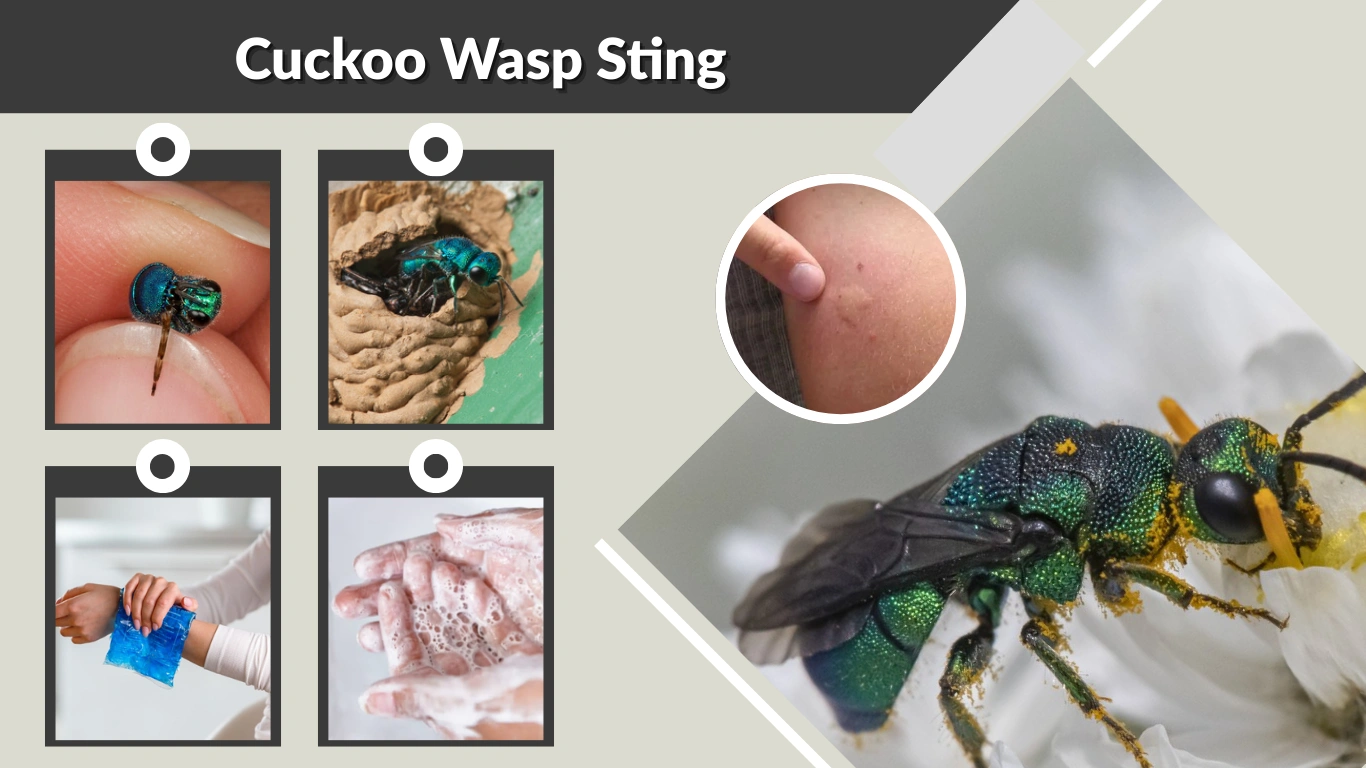
Bright metallic green or blue, shimmering like gemstones under the sun—cuckoo wasps are among the most striking insects you’ll ever see. Despite their dazzling appearance, many people wonder if these wasps are dangerous, whether their sting is painful, or if they can harm humans at all. In reality, cuckoo wasps live fascinating lives as parasitic wasps and rarely pose any threat to people. Still, understanding their sting, behavior, and role in nature can clear up many misconceptions.
Are Cuckoo Wasps Dangerous?
Cuckoo wasps are not considered dangerous to humans. Unlike yellowjackets, hornets, or paper wasps, they do not aggressively defend nests or swarm around people. Their bright coloration often suggests danger, but this is mostly a form of “warning mimicry” that discourages predators from attacking them.
The real danger of a cuckoo wasp lies in its parasitic relationship with other insects, not with humans. Females lay their eggs in the nests of solitary bees or wasps. Once the cuckoo wasp larva hatches, it feeds on the host egg, larva, or stored food. For their hosts, this can be fatal, but for humans, there’s virtually no risk.
Do Cuckoo Wasps Sting?
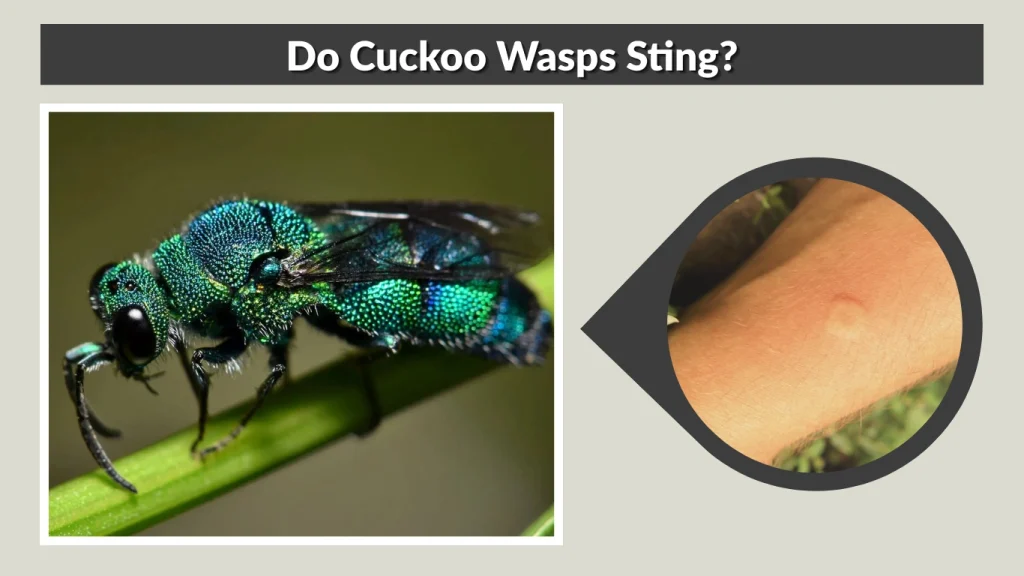
Yes, cuckoo wasps do have the ability to sting. However, they rarely use it against humans. Instead of stinging when threatened, their usual defense mechanism is to curl into a hard, ball-like shape, protecting themselves with their tough, ridged exoskeleton.
When a sting does occur, it’s typically mild. Most people will feel a short prick, similar to a tiny bee sting. Unlike social wasps, they don’t sting repeatedly or attack in groups, which makes encounters with them almost harmless.
Cuckoo Wasp Sting Symptoms
For the rare times a cuckoo wasp stings, symptoms are usually minor:
- Mild pain or prickling sensation at the sting site
- Redness or slight swelling in sensitive skin
- Short-lived irritation that fades within hours
In very rare cases, people with insect sting allergies may experience a stronger reaction. However, there are no recorded cases of cuckoo wasp stings causing serious medical emergencies.
Cuckoo Wasp Sting on Humans

A sting from a cuckoo wasp on humans is uncommon because these insects are not aggressive. Most people only get stung if they accidentally grab or press against one. Even then, the sting is brief and less painful than that of a hornet or yellowjacket.
Some entomologists even note that cuckoo wasps often fail to penetrate human skin effectively with their stingers due to their small size. This makes the sting more of an irritation than a health threat.
Cuckoo Wasp Bite – Is It Different?
Sometimes people confuse “bite” and “sting” when it comes to wasps. Cuckoo wasps technically do not bite humans. They have mandibles for feeding and handling prey, but those are not designed to break human skin.
If you hear the term “cuckoo wasp bite,” it usually refers to their sting. The difference is important because while a sting delivers venom, a bite does not. In this case, humans need not worry about either—neither their sting nor bite is harmful.
Are Cuckoo Wasps Aggressive?
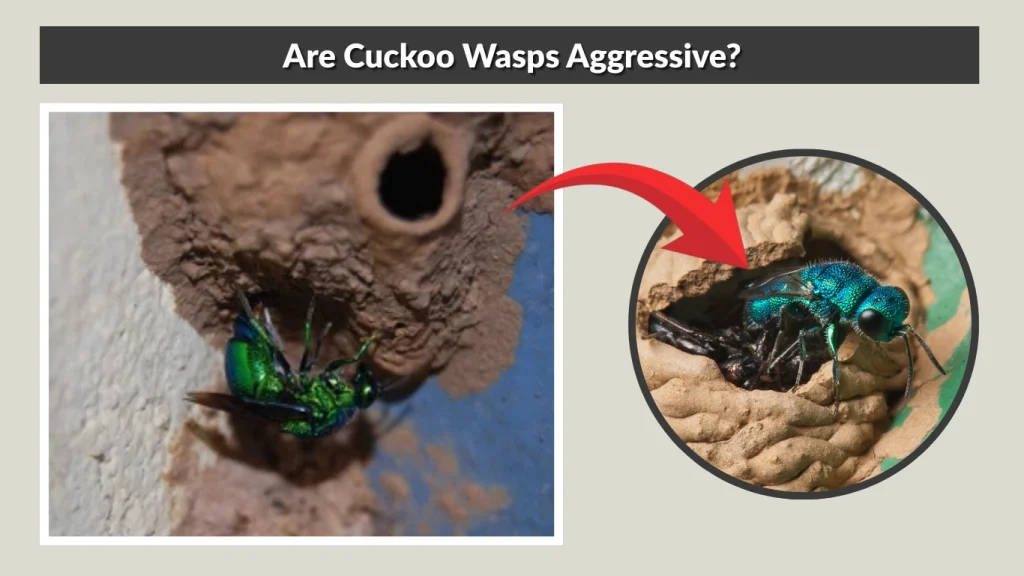
Cuckoo wasps are solitary, non-aggressive creatures. They spend their lives searching for host nests, feeding on nectar, or hiding in cracks and crevices. They don’t patrol territories or defend colonies like hornets or yellowjackets do.
This means you can observe them closely without fear of being chased or attacked. Their defensive strategy is avoidance—curling into a protective ball and relying on their metallic body armor to discourage predators.
Are Cuckoo Wasps Poisonous?
Cuckoo wasps are not poisonous to humans. The confusion comes from the fact that they do have venom, but this venom is specialized for their parasitic lifestyle. It’s used to paralyze or subdue the host’s larvae or eggs, ensuring their own offspring have food to survive.
When it comes to humans, this venom has no serious effect. At worst, it may cause a little redness or itching around the sting site. Unlike poisonous creatures that harm when touched or eaten, cuckoo wasps don’t release toxins externally—they must sting to deliver venom, and they rarely do so.
Can a Cuckoo Wasp Kill You?
The short answer is no. There are no cases of cuckoo wasp stings leading to death or severe medical complications. They are tiny compared to larger wasps like hornets or tarantula hawks, and their venom is far too weak to cause serious problems in humans.
At most, a sting may be uncomfortable for a few minutes, similar to a mild bee sting. For anyone allergic to insect stings, monitoring the reaction is wise, but cuckoo wasps cannot deliver enough venom to be life-threatening.
Cuckoo Wasp Nest
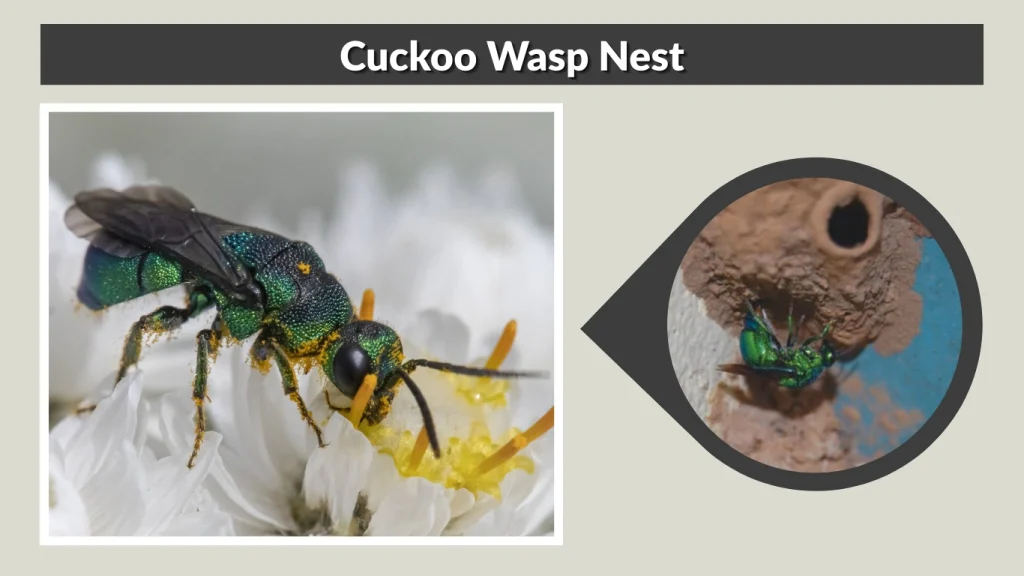
Unlike social wasps that build elaborate colonies, cuckoo wasps don’t construct their own nests. Instead, they rely on the nests of solitary bees and wasps.
When a female finds a suitable host nest, she sneaks inside and lays her egg alongside or directly into the host’s brood chamber. The host continues its work, unaware of the intruder. Once the cuckoo wasp egg hatches, the larva consumes either the host’s egg, larva, or stored pollen and nectar. This sneaky behavior is how they earned the name “cuckoo” wasp, much like the bird that lays eggs in other birds’ nests.
Cuckoo Wasp Larvae
The larvae of cuckoo wasps lead a hidden but brutal life. After hatching, the young larva begins feeding:
- On host eggs or larvae – eliminating competition early.
- On stored food provisions – stealing resources meant for the host offspring.
This parasitic strategy ensures the cuckoo wasp larva develops quickly and safely, while the original host never survives. It’s a fascinating but ruthless survival mechanism that has allowed cuckoo wasps to thrive across the world.
Cuckoo Wasp Diet
Adult cuckoo wasps mainly feed on nectar from flowers, making them occasional pollinators. While their parasitic nature gets the most attention, their role in ecosystems includes helping with plant pollination as they move between blooms.
For larvae, the diet is far more carnivorous—they consume the host insect’s brood or stored food. This dual lifestyle highlights the complexity of cuckoo wasps: part pollinator, part parasite.
Reaction and Treatment of Cuckoo Wasp Sting
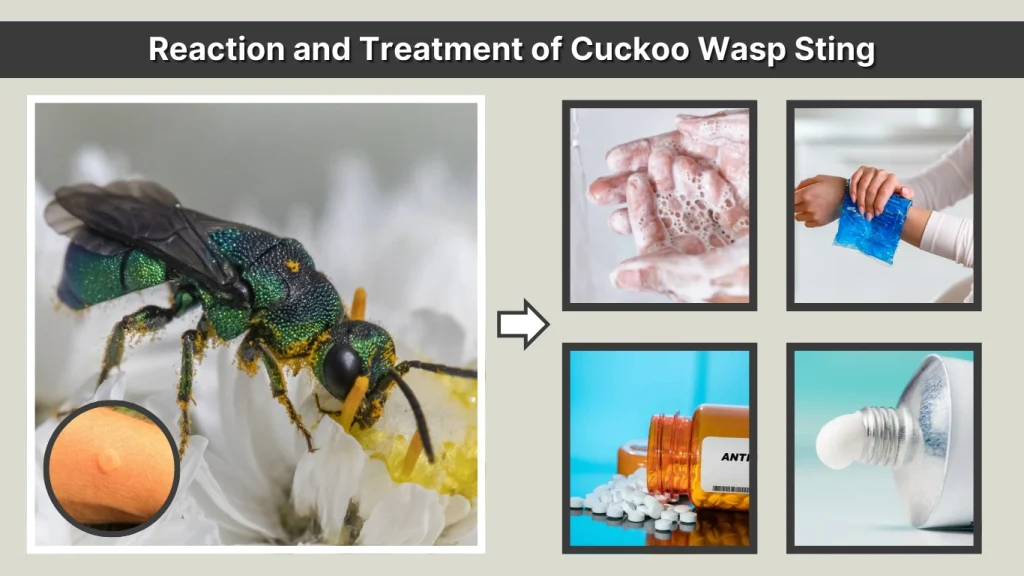
For the rare occasions when a cuckoo wasp sting does occur, the reaction is usually mild and temporary. Still, basic first aid can help reduce discomfort:
- Clean the sting site – Wash with soap and water to avoid infection.
- Apply a cold compress – Helps reduce pain and swelling.
- Use antihistamine cream – If itching or redness persists.
- Take mild pain relief – Over-the-counter medication can ease irritation if needed.
When to Seek Medical Help
- If the sting area becomes very swollen or painful.
- If you experience dizziness, difficulty breathing, or other allergy symptoms.
- For people with known insect sting allergies, always carry prescribed medication like an epinephrine auto-injector.
Fortunately, most people recover within hours without any lasting issues.
FAQs
Can cuckoo wasps sting humans?
Yes, but it’s very rare. They usually curl into a ball instead of stinging, and when they do sting, it’s mild.
What happens if a cuckoo wasp stings you?
You may feel a small prick, followed by slight redness or swelling. Symptoms typically fade within a few hours.
Are cuckoo wasps aggressive towards people?
No, they are solitary and non-aggressive. They do not defend nests or swarm like hornets or yellowjackets.
Are cuckoo wasps venomous or poisonous?
They are venomous to their insect hosts but harmless to humans. Their venom is too weak to cause real harm.
Can a cuckoo wasp kill a person?
No, cuckoo wasps cannot kill humans. Their sting is far too mild and not medically dangerous.
