

When you see a large, rust-colored wasp hovering close to the ground or searching around bushes, chances are it could be the rusty spider wasp (Tachypompilus ferrugineus). These striking insects are known for their bold color, long legs, and fascinating hunting behavior. While many people fear wasps for their sting, rusty spider wasps actually play a very important role in the ecosystem by helping to control spider populations.
Found across much of the United States, especially in states like Texas, Florida, and Colorado, these wasps raise a lot of curiosity — and sometimes concern — when spotted near homes or gardens.
Identification of Rusty Spider Wasp
Physical Appearance
Rusty spider wasps are instantly recognizable due to their deep rusty-red body and metallic highlights. They are part of the Pompilidae family, also known as spider wasps. Their bodies are long and slender, with narrow waists and smoky or dark wings. Unlike bees, they have little visible hair, giving them a sleek appearance.
Their antennae are long and slightly curled, especially in males. Females usually have a more robust build because they need extra strength for hunting spiders and dragging them back to their nests.
Size
The average size of a rusty spider wasp is around 18–25 mm (0.7–1 inch) in length. Females tend to be larger than males, which is common in spider wasps. Their intimidating size, combined with their bold coloration, often makes them appear more dangerous than they really are.
Habitat and Distribution
Where They Are Found
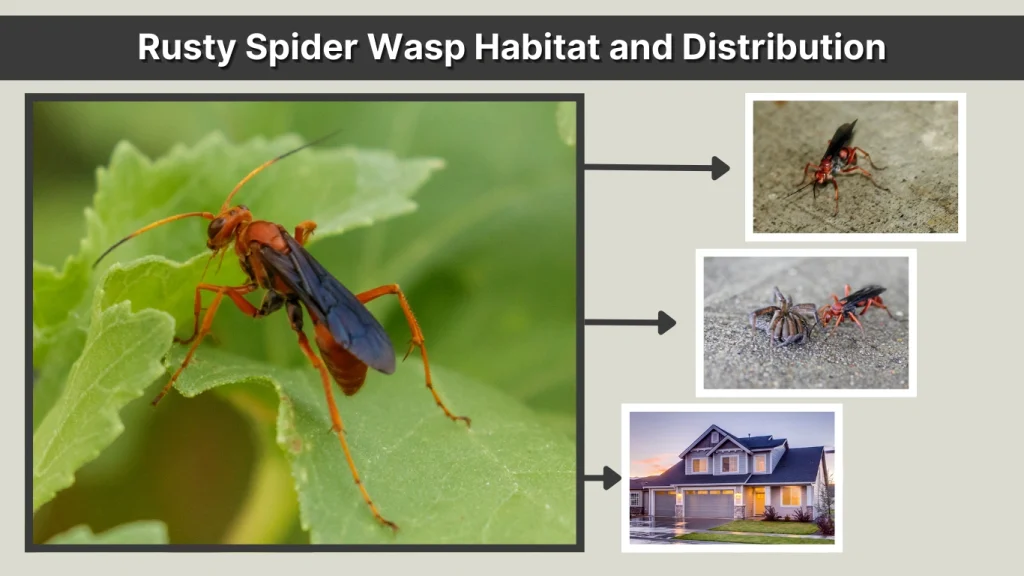
Rusty spider wasps are widespread across North America, with higher concentrations in warm regions. They are especially noted in Texas, Florida, and Colorado, where conditions are ideal for their hunting and nesting habits.
They prefer open habitats like fields, grasslands, woodland edges, and gardens. You will often notice them flying low to the ground, searching for spiders to paralyze and carry away.
Rusty Spider Wasps in Houses
Occasionally, rusty spider wasps wander indoors. This can happen when they are following prey or searching for nesting sites. While their presence inside homes can alarm people, it is important to note that they are not aggressive indoors and usually just want to find their way back outside. Unlike social wasps such as yellowjackets, they do not form colonies in human structures, so finding one in your house does not mean you have an infestation.
Nesting Behavior
Nest Structure
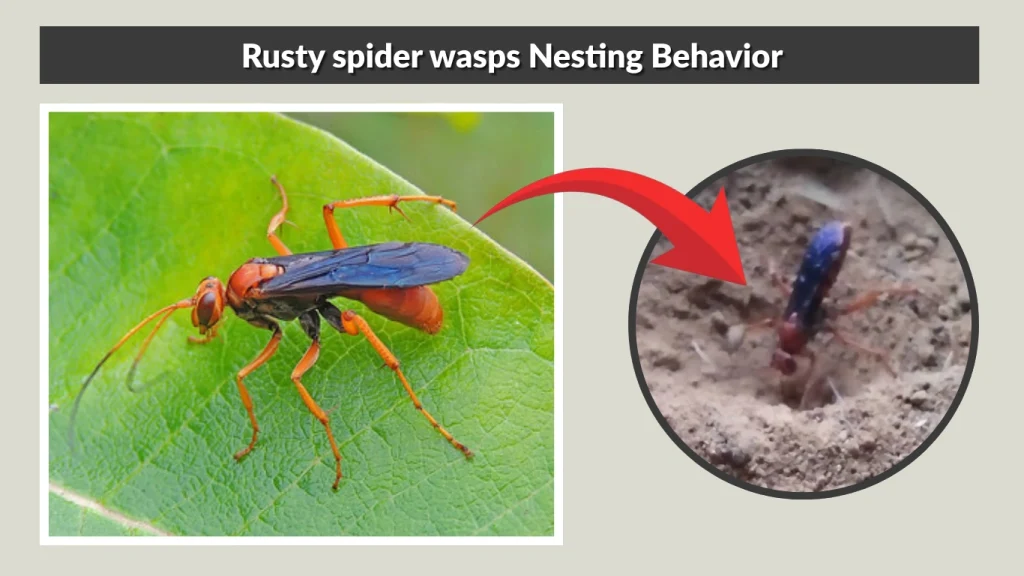
Rusty spider wasps are solitary nesters. They do not build large communal nests like paper wasps or hornets. Instead, each female creates her own nest, often in soft soil, under leaf litter, or in pre-existing cavities. Some may even use cracks in wood or other sheltered places.
Egg Laying
The hunting behavior of rusty spider wasps is what makes them truly fascinating. The female will actively search for spiders, sting them to inject a paralyzing venom, and then drag the immobilized prey back to her nest. She lays a single egg on the spider’s body before sealing the nest.
When the larva hatches, it feeds on the still-living spider, consuming it gradually to keep the meat fresh until it completes development. This unique method of reproduction ensures the wasp larva has a high-protein meal that cannot escape.
Sting of the Rusty Spider Wasp
How the Sting Works
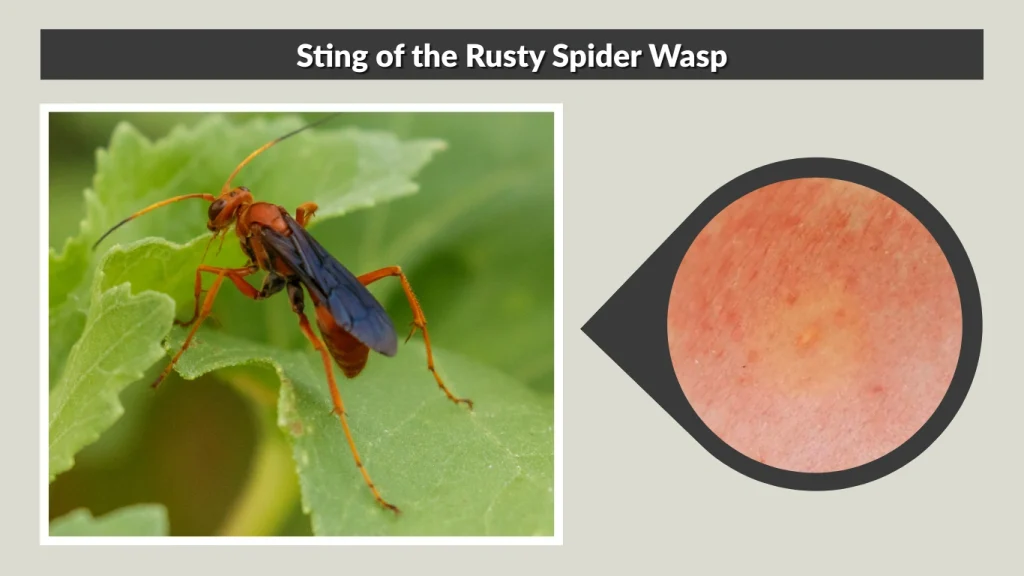
The sting of the rusty spider wasp has a dual purpose. It is primarily used as a hunting tool, allowing the female to immobilize spiders. However, like most wasps, they can also sting in self-defense if handled or threatened.
Rusty Spider Wasp Sting on Humans
While not as notorious as the tarantula hawk wasp, the sting of a rusty spider wasp can still cause sharp pain, swelling, and redness. For most people, it is comparable to a bee sting and subsides within a few hours to a day. Unlike aggressive wasps such as yellowjackets, rusty spider wasps are generally calm and will not sting unless directly provoked.
Sting Pain Index
On the Schmidt Pain Index, which ranks insect stings by intensity, the rusty spider wasp does not rank as high as the tarantula hawk but still delivers a noticeable jolt of pain. Entomologists describe it as sharp, brief, and localized, rather than excruciating or long-lasting.
For people who are allergic to insect stings, however, even a single sting can trigger more severe reactions. This is why, despite their non-aggressive nature, caution is advised if one lands on you or becomes trapped indoors.
Are Rusty Spider Wasps Dangerous?
To Humans
Despite their intimidating size and fiery color, rusty spider wasps are not considered dangerous to humans. They are solitary and non-aggressive, unlike yellowjackets or hornets that fiercely defend their colonies. A rusty spider wasp will usually ignore people unless it feels trapped or directly handled.
If stung, most people experience temporary pain, mild swelling, and redness. These symptoms usually fade within a few hours. However, those with allergies to wasp venom may have stronger reactions and should seek medical attention if breathing problems, dizziness, or widespread swelling occur.
To Spiders
For spiders, on the other hand, the rusty spider wasp is a true nightmare. It targets a variety of ground-dwelling spiders, immobilizing them with venom before dragging them back to its burrow. The spider remains alive but paralyzed, becoming food for the developing wasp larva. This predator-prey relationship keeps local spider populations in check.
Rusty Spider Wasp vs Tarantula Hawk
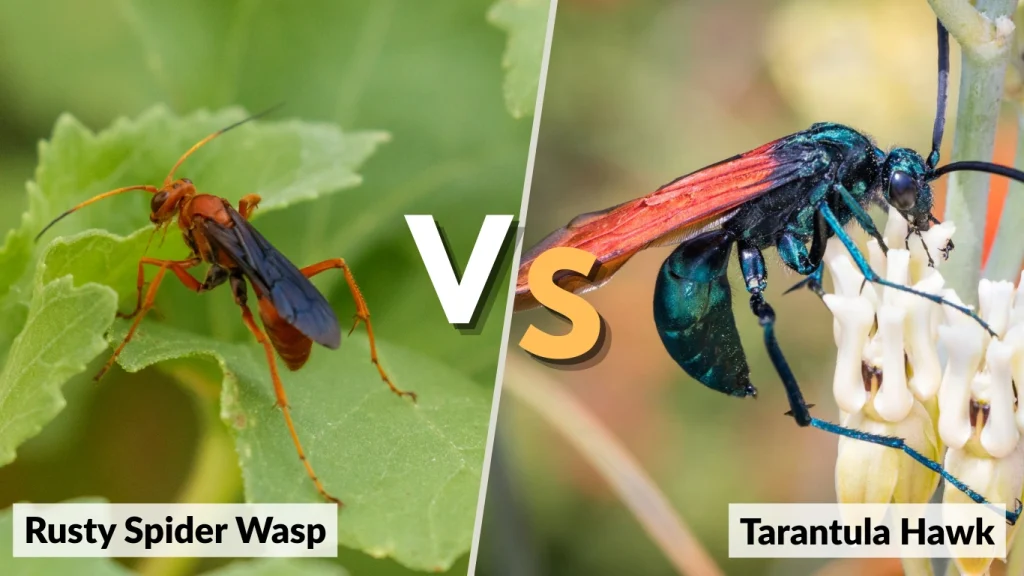
The rusty spider wasp is often compared to the tarantula hawk wasp, another giant member of the Pompilidae family. While they share similarities, there are key differences worth noting:
Size and Appearance
- Rusty spider wasp: 18–25 mm long, rusty-red coloration, slimmer body.
- Tarantula hawk wasp: Can reach 50 mm (2 inches), black-blue metallic body with bright orange wings.
Sting Pain Index
- Rusty spider wasp: Painful but short-lived, similar to a strong bee sting.
- Tarantula hawk wasp: Among the most painful stings in the world, described as “blinding and electrifying,” though still short in duration.
Preferred Prey
- Rusty spider wasp: Hunts smaller spiders, including wolf spiders and orb-weavers.
- Tarantula hawk wasp: Specializes in massive tarantulas.
Overall, the rusty spider wasp is less fearsome than the tarantula hawk, but both play critical roles in controlling spider populations.
Role in Ecosystem
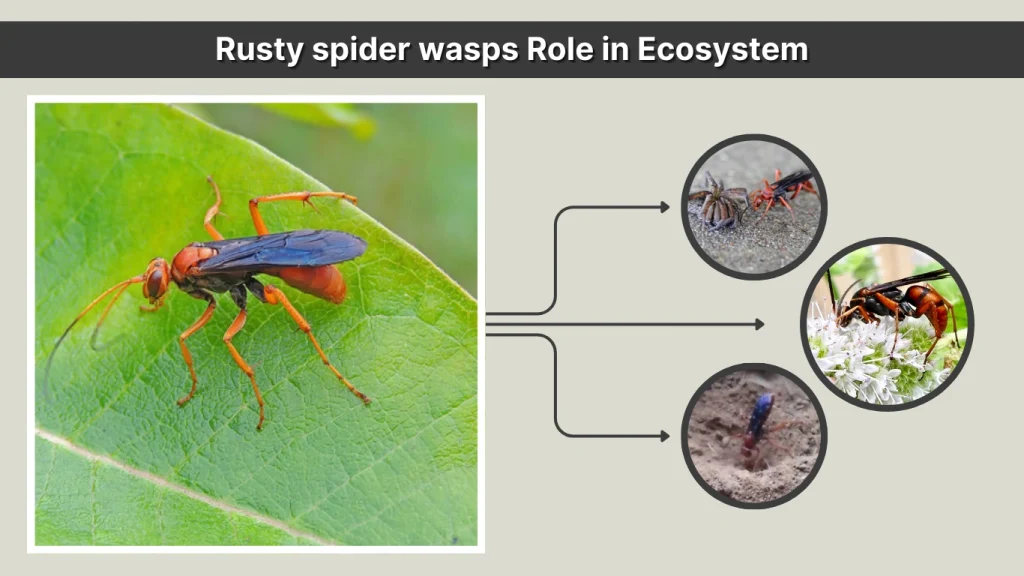
Rusty spider wasps contribute significantly to the natural balance of ecosystems:
- Spider Population Control – By targeting and paralyzing spiders, they prevent overpopulation of certain spider species.
- Pollination – Adults feed on nectar, visiting flowers and helping with pollination while searching for food.
- Soil Health – Their burrowing and nesting activity helps aerate soil, contributing to ecological cycles.
Although some people find them intimidating, they are actually beneficial allies in gardens and natural landscapes.
Rusty Spider Wasp in Different States
Texas
Texas is a hotspot for rusty spider wasps due to its warm climate and abundance of spiders. They are frequently seen in gardens, parks, and open fields. Because of their size, they are often mistaken for tarantula hawks, but their rusty coloration sets them apart.
Florida
In Florida, rusty spider wasps thrive in subtropical conditions. They remain active nearly year-round, often spotted searching for prey in residential areas. While they may alarm homeowners when entering porches or sheds, they pose little danger.
Colorado
Colorado provides a slightly different environment, with wasps more active during warmer months. They can be found at lower elevations, especially in grassy fields and woodland edges where spiders are plentiful.
Rusty Spider Wasp: Good or Bad?
From a human perspective, the rusty spider wasp can be seen as both good and slightly bad, depending on the situation:
- Good: They control spider numbers, assist in pollination, and rarely sting people. Gardeners often benefit from their presence.
- Bad: Their sting, though uncommon, is painful. Indoor encounters can cause fear, especially for those unfamiliar with them.
Overall, the positives outweigh the negatives, making them an important part of natural pest control systems.
FAQs
Are rusty spider wasps dangerous to humans?
No, rusty spider wasps are not aggressive and generally leave humans alone. Their sting can hurt but is usually no worse than a bee sting, unless you have an allergy.
What happens if a rusty spider wasp stings you?
You may feel sharp pain, swelling, and redness at the sting site. The discomfort usually fades within hours, though allergic individuals may experience more severe reactions.
Do rusty spider wasps make nests in houses?
No, they do not build nests inside homes. If one enters your house, it likely wandered in by accident while searching for food or prey.
How big do rusty spider wasps get?
They typically grow between 18–25 mm (0.7–1 inch) long, with females being slightly larger than males.
Rusty spider wasp vs tarantula hawk — which sting is worse?
The tarantula hawk’s sting is far more painful and is ranked near the top of the Schmidt Pain Index. The rusty spider wasp’s sting is painful but much less severe.
