

Nature often presents us with rivalries that are as fascinating as they are brutal, and one such battle is between the spider wasp and the spider. While spiders are respected hunters in their own right, spider wasps are specialized predators that turn these eight-legged creatures into unwilling hosts for their young. This predator-prey interaction highlights not only the survival strategies of both species but also the delicate balance within ecosystems.
Understanding the Spider Wasp
Scientific Classification and Overview
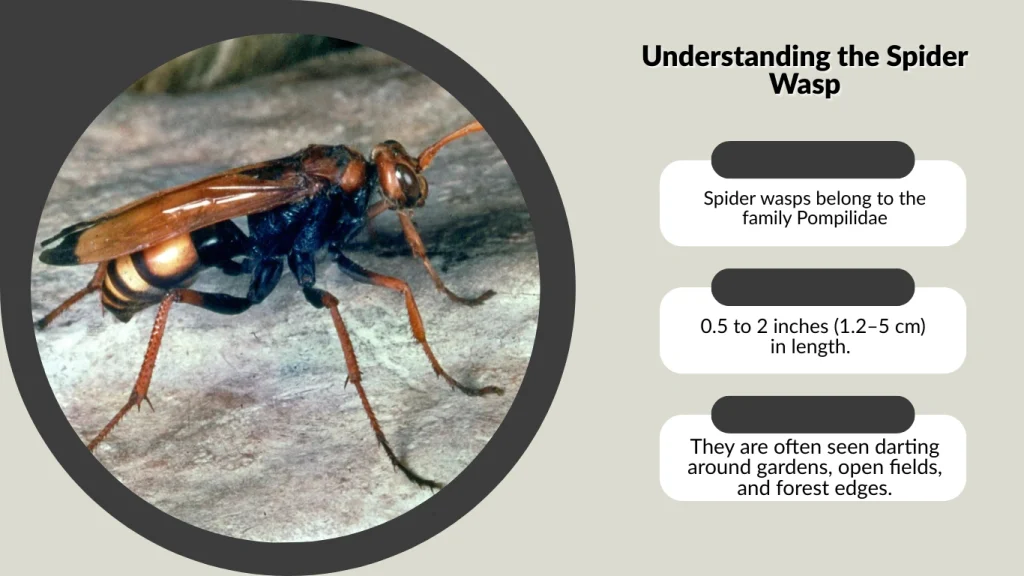
Spider wasps belong to the family Pompilidae, a group of wasps known for their parasitic relationship with spiders. Unlike social wasps that live in colonies, most spider wasps are solitary hunters. Their reputation is built on a unique ability: paralyzing spiders with a venomous sting, then using them as a living food source for their larvae.
Physical Appearance and Size
Spider wasps vary in size depending on the species, but they typically measure between 0.5 to 2 inches (1.2–5 cm) in length. Many species are striking in appearance, with glossy black, metallic blue, or even orange-colored bodies. Their long spindly legs, hooked claws, and twitchy antennae make them easily recognizable. Compared to most spiders, their bodies are slender but built for speed and agility, perfect for hunting.
Distribution and Habitat
These wasps thrive in warm climates and are found worldwide, from the United States to Australia and Asia. They are often seen darting around gardens, open fields, and forest edges, where spiders are abundant. Their nests are usually simple burrows in soil, cracks, or hidden crevices where they store their paralyzed prey.
Understanding the Spider
Scientific Classification and Diversity
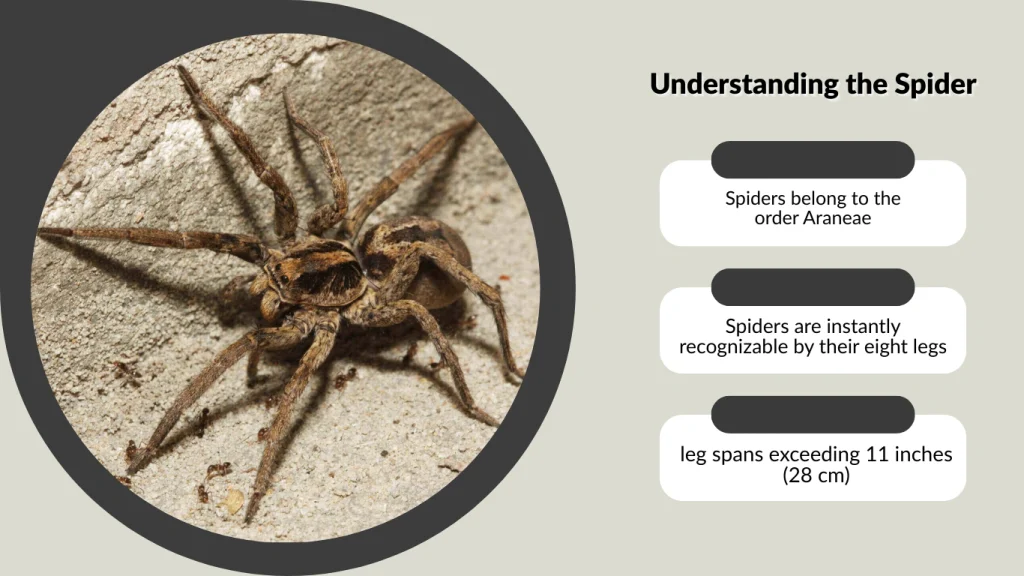
Spiders belong to the order Araneae, a massive group with over 50,000 identified species worldwide. Unlike spider wasps, spiders themselves are apex hunters within the invertebrate world, using venom, silk, and stealth to subdue their prey.
Physical Traits
Spiders are instantly recognizable by their eight legs, multiple eyes, and silk-spinning organs called spinnerets. Their size ranges from a millimeter-long jumping spider to massive tarantulas with leg spans exceeding 11 inches (28 cm). Unlike wasps, their bodies are divided into two main sections—the cephalothorax and abdomen—giving them a distinctive shape.
Habitat and Behavior
Spiders can be found in nearly every habitat, from deep forests to human homes. Some spin intricate webs to trap insects, while others, like wolf spiders, rely on speed and ambush tactics. Their hunting strategies are as diverse as their species, but one thing remains constant: they play an essential role in controlling insect populations.
Spider Wasp vs Spider: Key Differences
Hunting vs Defense
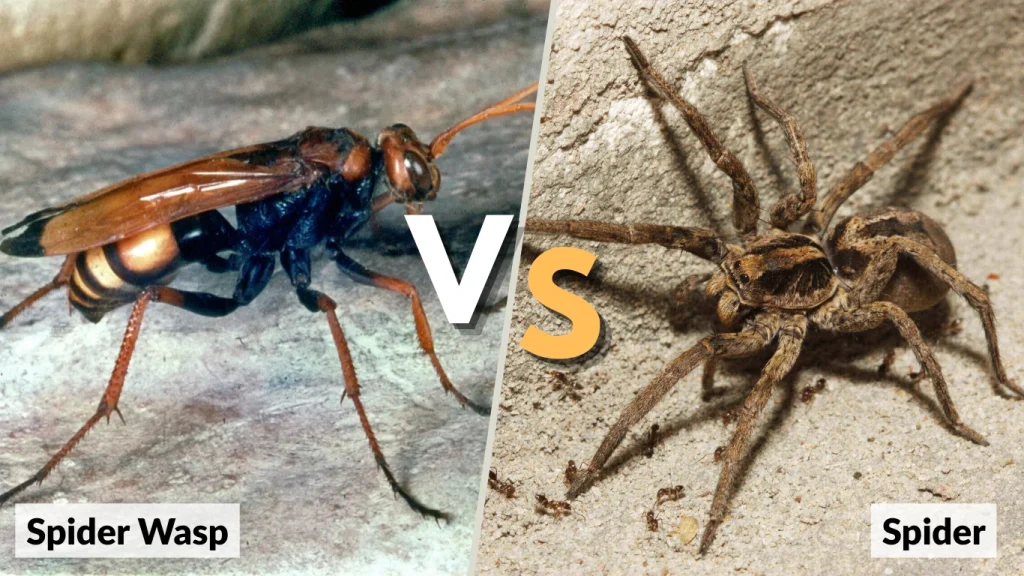
The spider wasp is a predator designed for a very specific mission—hunting spiders. It relies on speed, agility, and a venomous sting to immobilize its prey. Spiders, on the other hand, rely on defense and escape strategies. Some fight back with venomous bites, while others retreat to webs or burrows. Despite their predatory nature, most spiders are vulnerable when targeted by a spider wasp.
Sting vs Bite
The weaponry of these two creatures differs dramatically. A spider wasp’s sting delivers venom that paralyzes without killing. This keeps the spider’s body fresh as a food source. Spiders, however, deliver venom through their fangs, which can kill or immobilize insects for consumption. While spiders’ venom is used mainly for feeding, wasps’ venom is used for reproduction—a major behavioral difference.
Reproduction and Survival Strategy
Perhaps the most chilling difference is in their reproduction. Female spider wasps lay a single egg on the paralyzed spider’s abdomen. When the larva hatches, it slowly feeds on the still-living spider, avoiding vital organs until the last stage of development. Spiders reproduce by creating egg sacs containing hundreds of spiderlings, often guarded or hidden in silk retreats. Their offspring’s survival depends on numbers and protection, rather than a parasitic host.
The Battle: What Happens When They Meet?
Hunting Process of the Spider Wasp
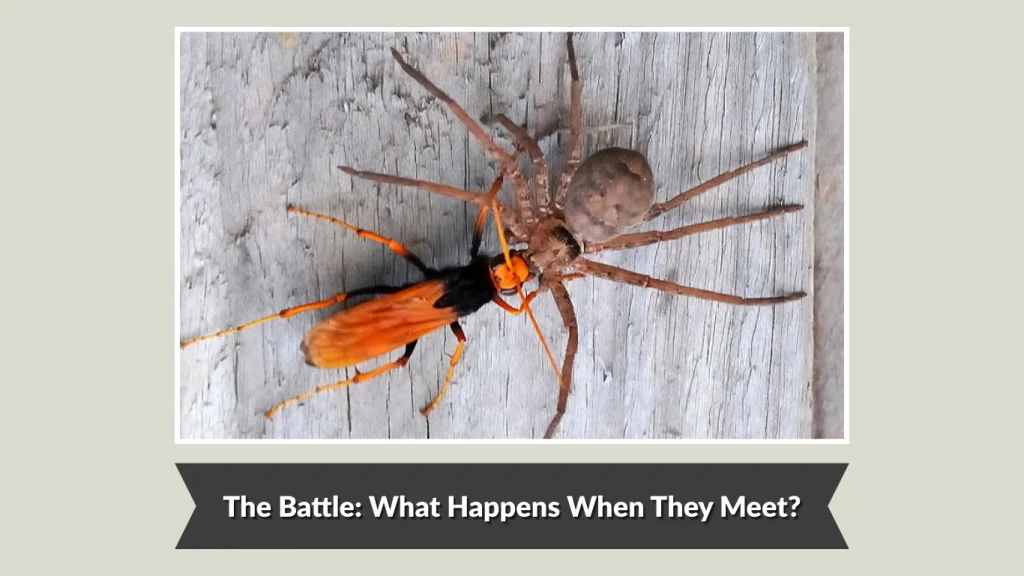
The confrontation begins with the wasp locating a spider. Once spotted, the wasp approaches with calculated movements, waiting for the right moment. It strikes quickly, delivering a precise sting to the spider’s nervous system. Within moments, the spider becomes paralyzed but remains alive. The wasp then drags the immobilized body—sometimes much larger than itself—into a burrow or nest chamber.
Spider’s Defense Mechanisms
Despite being excellent hunters themselves, spiders often find themselves at a disadvantage. Some species attempt to bite the wasp, while orb-weavers may use their webbing as a shield. Jumping spiders rely on agility to escape. Yet, because spider wasps are specialized predators, these defenses are often not enough.
Outcome of Encounters
In most cases, the spider wasp emerges victorious. Their hunting method has been fine-tuned through evolution, making them one of the most effective predators of spiders. The sting ensures that the spider is alive but unable to move, preserving it as a fresh meal for the developing larva.
However, nature does allow for exceptions. Larger or more aggressive spiders, such as tarantulas, sometimes manage to injure or even kill a wasp before being stung. But these victories are rare. The agility and precision of the wasp usually give it the upper hand.
Importance in Ecosystem
Role of Spider Wasps
Spider wasps play a vital role in controlling spider populations. While this may seem harsh, it maintains balance in ecosystems where spiders could otherwise become overly dominant. Their predation also influences the natural selection of spiders, making them adapt to new defensive behaviors over time.
Role of Spiders
Spiders are equally important to ecological balance. They consume vast numbers of insects such as flies, mosquitoes, and crop pests. In some ecosystems, spiders are among the top insect regulators, preventing agricultural damage and reducing the spread of disease. Some even assist in pollination when they feed on nectar between hunts.
Together, these two creatures—though locked in conflict—ensure the stability of insect populations and biodiversity.
Human Interaction
Are Spider Wasps Dangerous to Humans?
Spider wasps are not aggressive toward humans, but their sting is notoriously painful. In fact, the sting of the tarantula hawk (a species of spider wasp) is often ranked among the most excruciating insect stings in the world. The pain, however, is temporary and rarely dangerous, unless someone has an allergic reaction.
Are Spiders Dangerous to Humans?
Spiders carry a reputation for fear, but the reality is that most are harmless. Only a handful of species, such as the black widow or brown recluse, are medically significant. Even then, fatalities are extremely rare thanks to medical treatment. Most spiders bite only in self-defense, preferring to avoid humans entirely.
Spider Wasp vs Spider: Comparison Table
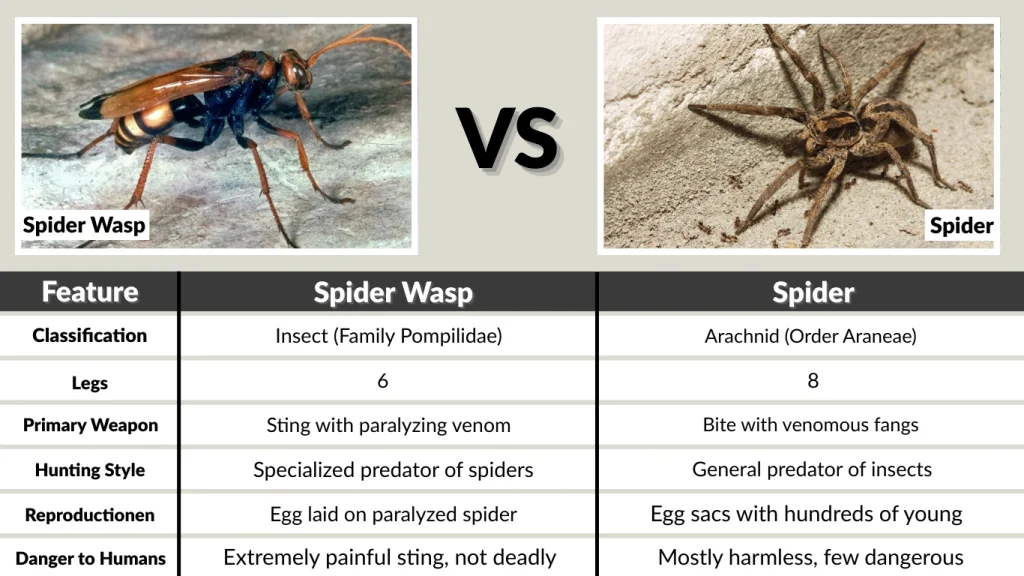
| Feature | Spider Wasp | Spider |
| Classification | Insect (Family Pompilidae) | Arachnid (Order Araneae) |
| Legs | 6 | 8 |
| Primary Weapon | Sting with paralyzing venom | Bite with venomous fangs |
| Hunting Style | Specialized predator of spiders | General predator of insects |
| Reproduction | Egg laid on paralyzed spider | Egg sacs with hundreds of young |
| Danger to Humans | Extremely painful sting, not deadly | Mostly harmless, few dangerous |
| Ecological Role | Regulates spider populations | Controls insect populations |
This side-by-side view makes it clear: although both are predators, their survival strategies and ecological functions are very different.
Conclusion
The rivalry between the spider wasp and the spider is one of nature’s most fascinating struggles. On one side, spiders are skilled hunters that dominate their ecosystems with silk, stealth, and venom. On the other, spider wasps have evolved into highly specialized predators that can paralyze these eight-legged hunters and turn them into vessels for new life.
While spiders may win on rare occasions, the spider wasp’s efficiency usually ensures victory. Yet both creatures remain crucial to the balance of life: spiders regulating insect populations, and wasps regulating spiders. This ongoing battle reminds us of the complexity of nature, where even predators can become prey.
FAQs
Can a spider kill a spider wasp?
Yes, but it’s rare. Larger or faster spiders sometimes manage to injure or kill the wasp before being stung. However, spider wasps are built for these encounters and usually dominate.
Why do spider wasps paralyze spiders instead of killing them?
They paralyze spiders to keep the prey fresh. The living but immobilized spider serves as a food source for the wasp’s larvae, ensuring it doesn’t rot before the young complete development.
Which is more dangerous to humans: spider wasp or spider?
Spider wasps cause extreme but short-lived pain with their sting. Spiders, on the other hand, include species that can cause medical emergencies. Overall, spiders pose a higher potential health risk.
Do spider wasps attack all types of spiders?
Not all, but many species of spider wasps target specific groups. Some specialize in orb-weavers, while others focus on tarantulas or ground-dwelling spiders.
Who plays a bigger role in pest control: spider or spider wasp?
Both are important. Spiders keep insect populations under control, while spider wasps prevent spider overpopulation. Together, they form a natural balance within ecosystems.
