
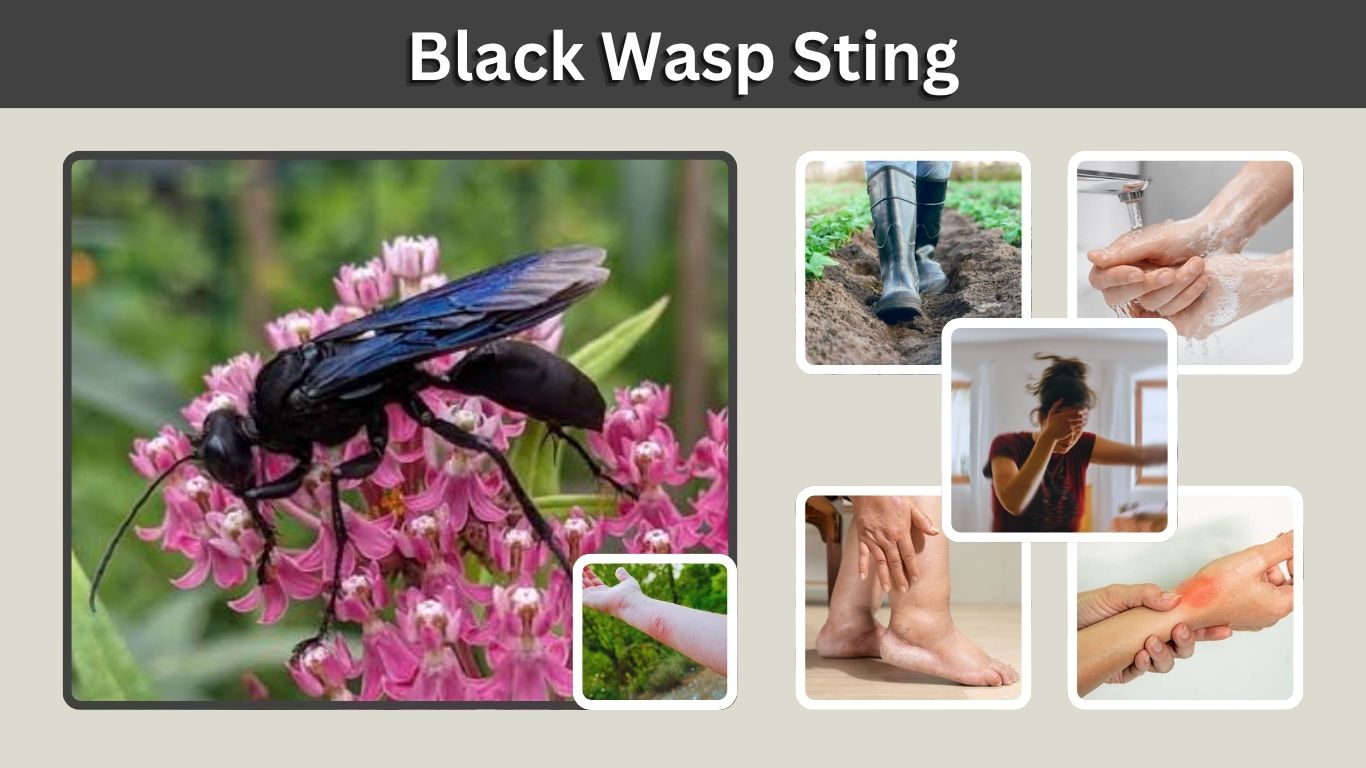
A black wasp sting can cause immediate pain, redness, swelling, itching, and tenderness around the affected area. Several dark-colored wasps may be described as black wasps, including great black wasps, mud daubers, spider wasps, and some paper or mason wasps. Most single stings cause only a localized reaction, but severe allergic reactions can occur in sensitive individuals. Knowing the common symptoms, proper treatment, expected pain, and warning signs can help you respond appropriately after being stung.
What Is a Black Wasp Sting?
A black wasp sting occurs when a female wasp uses its stinger defensively. The term “black wasp” can describe several species rather than one specific insect. Their behavior varies considerably. Solitary species such as the great black wasp usually sting only when threatened, while some social wasps may become defensive around their nests.
Do Black Wasps Sting?
Yes, many female black wasps are capable of stinging. Their stinger evolved primarily for defense or subduing prey, depending on the species.
A black wasp flying around flowers normally has little reason to sting a person. Stings are more likely if the insect becomes trapped against the skin, is handled, stepped on, swatted, or feels that its nesting area is threatened.
Great Black Wasp Sting
The great black wasp, Sphex pensylvanicus, is a large solitary digger wasp. Its dark body and impressive size can make it appear threatening.
Females can sting, but they are generally less defensive toward people than colony-forming wasps. Because they do not have a large social nest to protect, encounters usually occur when a wasp is accidentally disturbed or handled.
Black Wasp Sting Symptoms
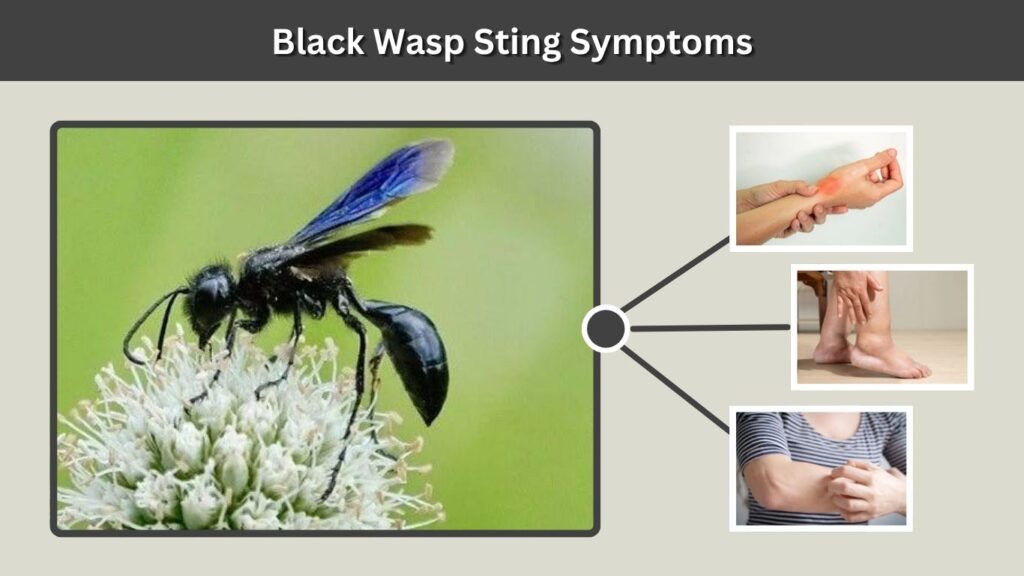
Symptoms can vary according to the amount of venom delivered and an individual’s sensitivity. Most people develop a small local reaction that improves with time. Others experience substantial swelling around the sting site. A severe allergic reaction is less common but requires immediate emergency medical attention.
Common Symptoms
A typical black wasp sting may cause:
- Sudden sharp or burning pain
- Redness around the sting site
- A raised welt or bump
- Mild to moderate swelling
- Itching
- Warmth around the skin
- Tenderness or soreness
- A small central puncture mark
Local discomfort may begin immediately and gradually decrease over several hours.
Black Wasp Sting Swelling
Swelling is a common reaction to wasp venom. It may remain limited to a small area or spread farther around the sting site.
For example, a sting on a finger may cause noticeable swelling of the hand, while a sting near an ankle may produce swelling extending farther along the foot. Larger local reactions can continue increasing for a period before gradually improving.
Black Spot After a Wasp Sting
Some people notice a small dark dot at the center of the sting area. This can represent a tiny puncture, dried blood, scabbing, or local skin irritation.
Wasps generally do not leave their stingers behind after stinging. Therefore, a black dot should not automatically be assumed to be a retained stinger.
Black Wasp Sting Pain and Reaction
Pain from a sting varies considerably. Species, sting location, individual sensitivity, and the circumstances of the sting all influence how painful the experience feels. A large wasp does not necessarily produce a proportionately more dangerous sting, although any venomous sting can cause significant discomfort.
How Painful Is a Black Wasp Sting?
A black wasp sting commonly produces a quick, sharp, burning sensation followed by soreness or tenderness.
The exact intensity cannot be predicted from the wasp’s color or size alone. A person may describe one sting as mildly irritating while another person experiences strong pain from a similar encounter.
Pain usually becomes less intense as the immediate reaction settles.
Great Black Wasp Sting Pain
Great black wasps are capable of delivering a painful defensive sting, but they normally do not seek out people to attack.
Their large appearance sometimes leads people to assume the sting must be exceptionally dangerous. Size alone, however, is not a reliable measure of medical risk. Allergic sensitivity is generally more important than the physical size of the wasp.
Allergic Reaction to a Black Wasp Sting
An allergic response can affect parts of the body away from the sting site. Symptoms may develop rapidly.
Anyone with a known severe insect-sting allergy should follow the emergency plan provided by their healthcare professional and use prescribed emergency medication exactly as instructed.
Black Wasp Sting Treatment
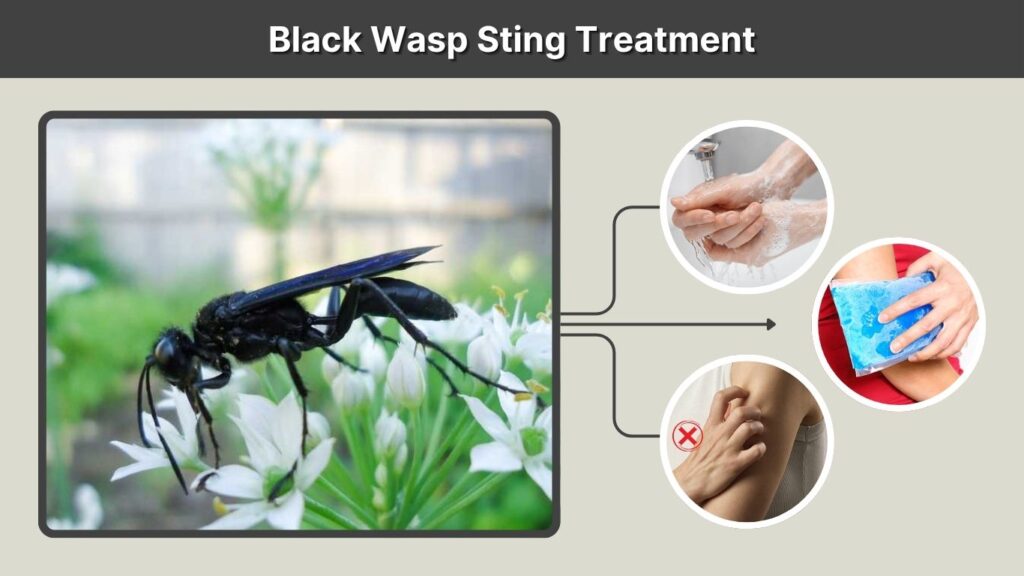
Most mild black wasp stings can be managed with basic first aid. The goal is to clean the area, reduce discomfort and swelling, and monitor symptoms. Treatment at home is appropriate only when symptoms remain localized and the person does not develop signs of a severe allergic or systemic reaction.
How to Treat a Black Wasp Sting
For a mild sting:
- Move away from the wasp or nesting area.
- Wash the affected skin with soap and water.
- Apply a cold pack wrapped in cloth for short periods.
- Elevate the affected limb when practical.
- Avoid scratching the sting.
- Monitor swelling and other symptoms.
- Follow appropriate over-the-counter medication directions if needed.
Cooling the area can help ease swelling and discomfort.
Black Wasp Sting Remedy for Itching
Itching sometimes develops after the initial pain decreases. A cool compress can provide temporary relief.
Depending on individual circumstances, over-the-counter antihistamines, calamine lotion, or hydrocortisone products may help with itching. Follow product instructions carefully and consult a pharmacist or healthcare professional if you take other medicines, have underlying medical conditions, or are unsure which treatment is appropriate.
How Long Does a Reaction Last?
A minor localized reaction may improve substantially within hours, although tenderness, redness, or swelling can persist for a few days.
A larger local reaction can take longer to resolve. Symptoms that continue worsening rather than gradually improving should be medically evaluated, especially when accompanied by fever, drainage, severe pain, or spreading skin changes.
Black Wasp Stinger and Long-Stinger Wasps
Some black wasps appear to have an unusually long stinger. However, what looks like a stinger is not always a defensive weapon. Female ichneumon wasps, for example, may have a prominent ovipositor used for depositing eggs rather than attacking people.
Does a Black Wasp Leave Its Stinger?
Most wasps can withdraw their stinger after an attack. This allows many species to sting more than once.
This differs from a honey bee worker, whose barbed stinger can become embedded in human skin.
If you do not see a stinger after being attacked by a black wasp, that is generally expected.
Black Wasp With a Long Stinger
A black wasp with what appears to be an extremely long stinger may be an ichneumon wasp or another parasitoid species.
The long structure can be an ovipositor used to place eggs in or near a host. It should not automatically be interpreted as evidence that the insect can deliver an unusually deep or dangerous sting.
When Is a Black Wasp Sting Dangerous?
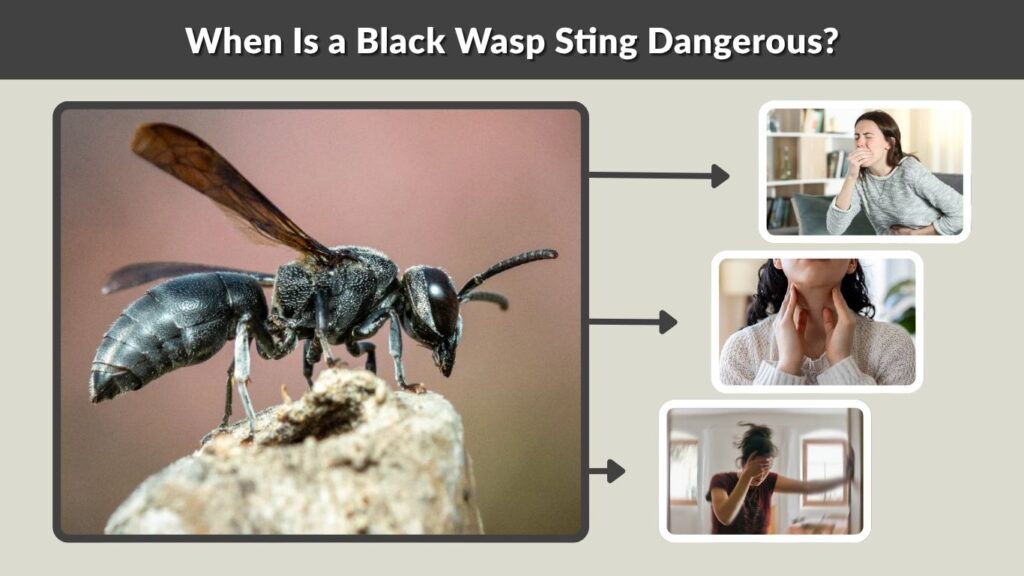
Most black wasp stings produce localized symptoms, but serious reactions are possible. Anaphylaxis is the most important immediate concern. Multiple stings can also increase the amount of venom received and may require medical evaluation, especially in children, older adults, or people experiencing significant symptoms.
Emergency Warning Signs
Seek emergency medical help for:
- Difficulty breathing or wheezing
- Swelling of the tongue or throat
- Difficulty swallowing
- Widespread hives
- Severe dizziness
- Fainting
- Weak or rapid pulse
- Repeated vomiting
- Confusion
- Loss of consciousness
These symptoms can indicate anaphylaxis and should not be treated as an ordinary local sting reaction.
Multiple Black Wasp Stings
Multiple stings expose the body to more venom than a single sting. The risk increases if numerous wasps attack at once.
Move away from the area immediately rather than attempting to fight or swat the insects. Anyone who experiences many stings or develops significant symptoms should seek medical advice promptly.
How to Prevent Black Wasp Stings
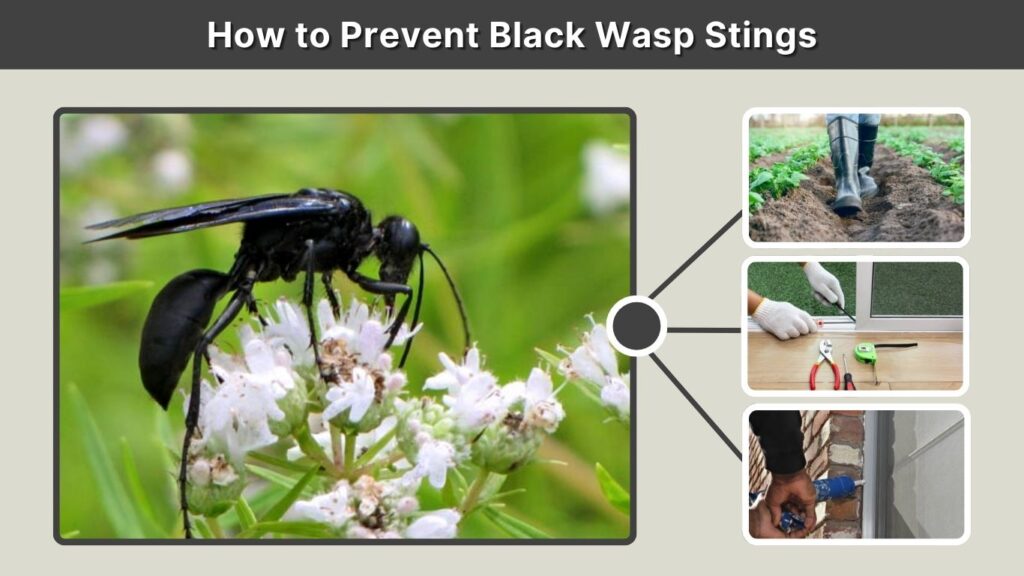
Preventing stings mainly involves reducing accidental contact with wasps and avoiding active nests. Solitary black wasps encountered around flowers are usually less concerning than social wasps repeatedly entering the same nest. Identifying the insect and understanding its behavior can help determine the appropriate response.
Around Your Home and Yard
To reduce encounters:
- Avoid grabbing or swatting at wasps.
- Wear shoes when walking through lawns and gardens.
- Inspect areas before gardening or trimming vegetation.
- Keep outdoor drinks covered.
- Repair damaged window and door screens.
- Seal appropriate gaps that allow insects indoors.
- Avoid disturbing unidentified nests.
- Keep children and pets away from active wasp nests.
When You Find a Black Wasp Nest
Do not immediately approach or disturb an unfamiliar nest. First determine whether the wasps are solitary or social.
A solitary ground-nesting wasp may pose little risk when its nest is away from heavily used areas. A defensive colony beside an entrance, walkway, deck, or children’s play area deserves more caution and may require professional identification and control.
FAQs
1. Does a black wasp sting?
Yes. Female black wasps of many species can sting. Solitary species generally sting when trapped, handled, or threatened rather than attacking people without provocation.
2. What are common black wasp sting symptoms?
Common symptoms include sharp pain, redness, itching, warmth, tenderness, and swelling around the sting site. More serious allergic reactions can affect breathing, circulation, and areas of the body beyond the sting.
3. How do you treat a black wasp sting?
Wash the affected area, apply a wrapped cold pack, avoid scratching, and monitor symptoms. Appropriate over-the-counter treatments may help with pain or itching when used according to their instructions.
4. Are black wasp stings dangerous?
Most single stings cause only localized symptoms. However, severe allergies, anaphylaxis, or numerous simultaneous stings can become dangerous and require urgent medical treatment.
5. Do great black wasps sting humans?
Female great black wasps can sting humans, but they are solitary and generally not highly defensive toward people. Stings are more likely when the insect is trapped, stepped on, handled, or otherwise threatened.
