
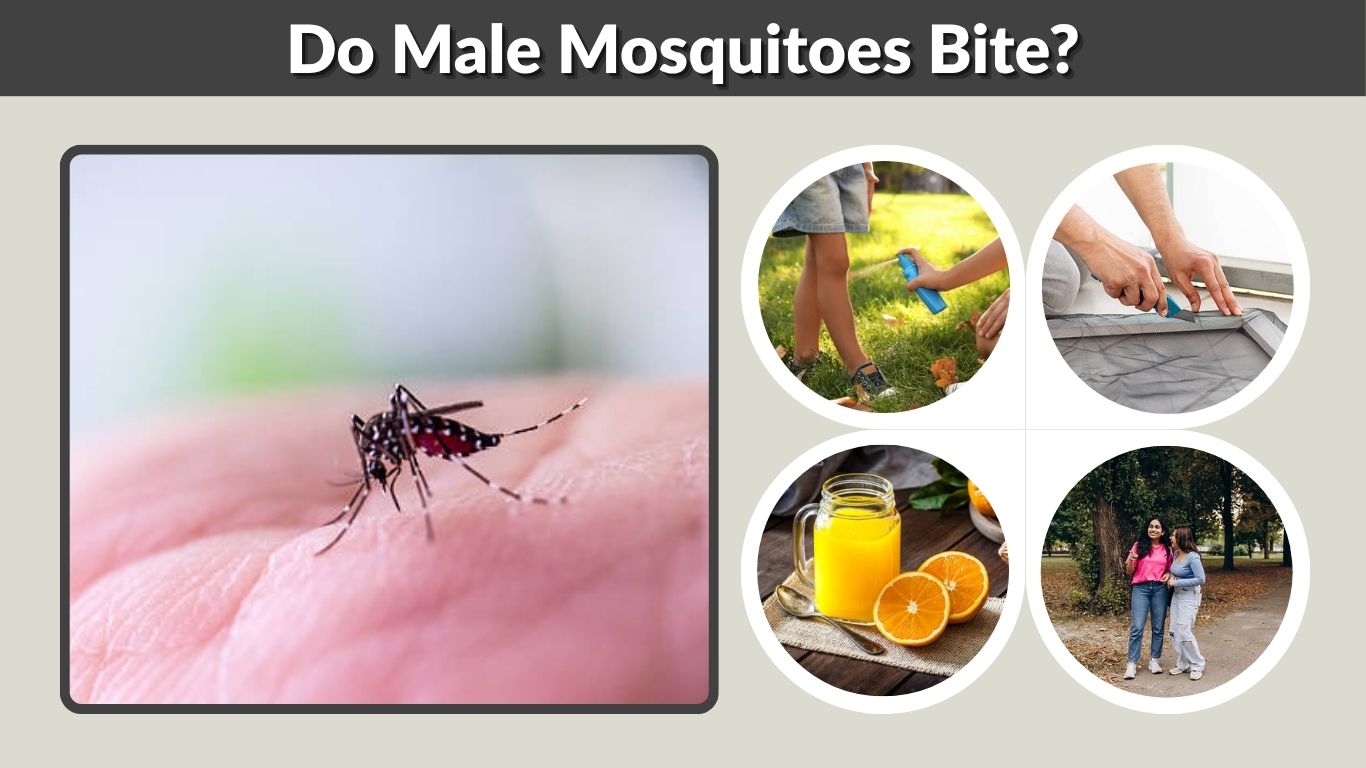
Do male mosquitoes bite humans? The short answer is no—male mosquitoes do not normally bite people or drink blood. Instead, they feed mainly on nectar and other plant sugars. Female mosquitoes are responsible for nearly all mosquito bites because they need nutrients from blood to help develop their eggs. This biological difference explains why mosquitoes can have completely different feeding habits depending on sex. Below, you’ll learn why males do not bite, what they eat, how they survive, and how to tell male and female mosquitoes apart.
Do Male Mosquitoes Bite Humans?
Male mosquitoes do not normally bite humans, people, pets, or other animals for blood. Their mouthparts are designed mainly for feeding on plant sugars rather than piercing skin and taking a blood meal. Female mosquitoes are the ones responsible for the itchy bites people commonly experience during warm weather.
Do Male Mosquitoes Drink Blood?
Male mosquitoes do not depend on blood for food. Their primary sources of energy include:
- Flower nectar
- Plant sap and sugary fluids
- Honeydew produced by insects
- Other natural plant sugars
These carbohydrate-rich foods provide enough energy for males to fly, mate, and survive.
Female mosquitoes also consume nectar and plant sugars. Blood is generally taken for reproductive purposes rather than as their main everyday energy source.
Do Male Mosquitoes Bite People?
A male mosquito may land on human skin, making it look as though it is preparing to bite. However, males lack the same specialized skin-piercing feeding structures used effectively by females.
A mosquito hovering near you is therefore not automatically a biting female. Males can also gather around people or nearby vegetation while searching for mates or sources of plant sugar.
Why Do Male Mosquitoes Not Bite?
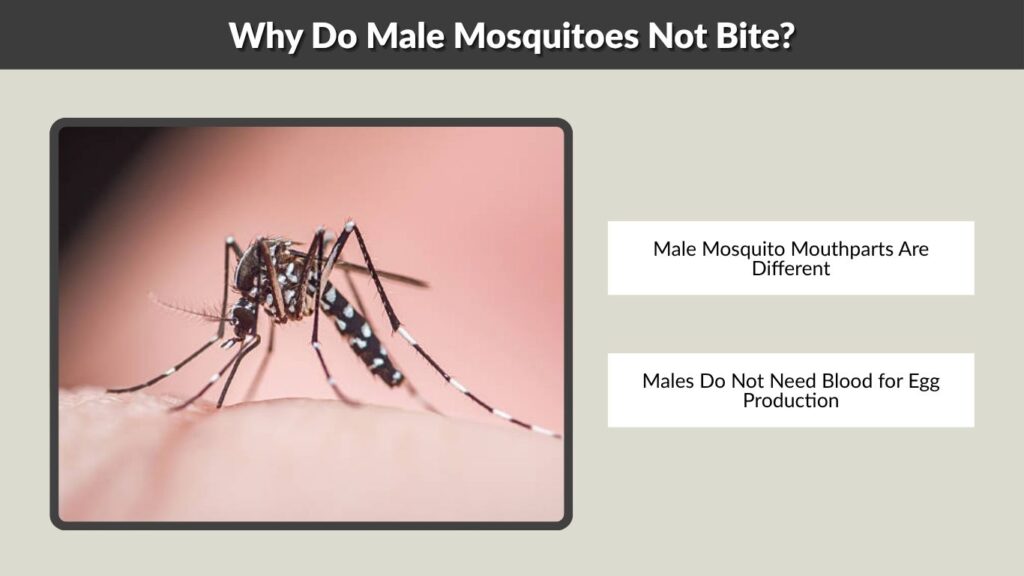
Male and female mosquitoes have different biological roles. Both require sugar for energy, but females of most mosquito species require additional nutrients to develop eggs. Their mouthparts and feeding behavior reflect these different needs. Male mosquitoes have no reproductive need for a blood meal, so natural selection has favored a sugar-feeding lifestyle.
Male Mosquito Mouthparts Are Different
Female mosquitoes have a specialized proboscis containing structures capable of piercing skin and reaching small blood vessels.
Male mouthparts are less suited for this job. Instead of piercing animal skin, males use their proboscis mainly to obtain liquids from flowers and plants.
Males Do Not Need Blood for Egg Production
Blood contains proteins and nutrients that help females produce eggs after mating.
Male mosquitoes never produce eggs, so they have no reproductive reason to obtain those nutrients from humans or animals.
This is one of the simplest explanations for why male mosquitoes do not bite.
Do Male or Female Mosquitoes Bite?
When people ask, “Do male or female mosquitoes bite?” the answer is generally female mosquitoes. Females of many species take blood meals, while males primarily feed on sugar. However, both sexes depend heavily on nectar and other carbohydrate sources for everyday energy.
Main Differences Between Male and Female Mosquitoes
Some important differences include:
- Blood feeding: Females of many species take blood; males generally do not.
- Plant feeding: Both males and females feed on nectar.
- Egg production: Only females produce eggs.
- Antennae: Males usually have bushier, more feathery antennae.
- Body size: Females are often slightly larger than males.
- Lifespan: Females frequently live longer than males.
These features help explain why most mosquito-control efforts focus on female biting behavior.
Do Both Male and Female Mosquitoes Bite?
No. In the mosquito species that commonly interact with humans, blood-feeding behavior is associated with females.
A male mosquito may fly around a person, but that does not mean it is trying to obtain blood. Males are often attracted to locations where females gather because finding a mate is one of their main adult activities.
What Do Male Mosquitoes Eat?
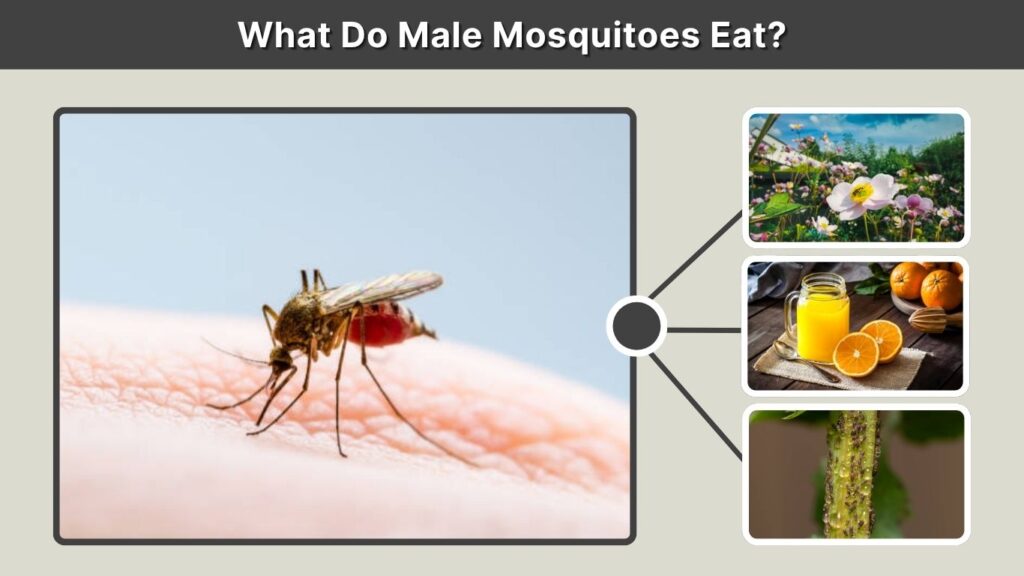
Because male mosquitoes do not bite people for blood, they must obtain energy elsewhere. Their diet consists primarily of carbohydrates from plants. Sugar is particularly important because flying and searching for mates require considerable energy for such a small insect.
Common Foods for Male Mosquitoes
Male mosquitoes may obtain sugar from:
- Flower nectar
- Fruit juices
- Plant secretions
- Tree and plant sap
- Aphid honeydew
- Other naturally occurring sugary liquids
These sources provide carbohydrates that can quickly be converted into energy.
How Do Male Mosquitoes Survive Without Blood?
Mosquitoes do not require blood simply to stay alive.
Even female mosquitoes rely heavily on nectar and plant sugars for basic energy. Blood mainly supplies nutrients involved in egg development.
Because males do not produce eggs, their sugar-rich plant diet provides what they need for normal survival and mating activities.
Male vs Female Mosquito Feeding Behavior
Feeding behavior is one of the most noticeable biological differences between male and female mosquitoes. Females combine sugar feeding with blood feeding when necessary for reproduction, while males rely almost entirely on plant-derived carbohydrates. Understanding this difference also helps explain why mosquito bites are associated specifically with female mosquitoes.
Why Female Mosquitoes Bite
Female mosquitoes bite because blood contains proteins, amino acids, iron, and other nutrients needed for egg development.
After mating, a female may locate a host using several signals, including carbon dioxide from breathing, body heat, odors, and other chemical cues.
She then uses her specialized mouthparts to pierce the skin and obtain blood.
Do All Female Mosquitoes Bite Humans?
Not every female mosquito prefers humans.
Depending on the species, females may obtain blood from:
- Humans
- Birds
- Mammals
- Reptiles
- Amphibians
- Other vertebrate animals
Some mosquito species strongly prefer human hosts, while others feed primarily on animals. Host preference plays an important role in determining which mosquitoes are most likely to bother people or transmit particular pathogens.
Do Male Mosquitoes Buzz but Not Bite?
Male mosquitoes can fly near people and produce a buzzing sound even though they are not looking for blood. The sound comes mainly from the rapid movement of their wings. Female mosquitoes also produce wingbeat sounds, although the frequencies can differ between males and females.
Why Male Mosquitoes Fly Around People
Male mosquitoes may appear nearby because they are:
- Searching for female mosquitoes
- Resting near vegetation
- Feeding on nearby flowers
- Gathering in mating swarms
- Moving through an area where humans happen to be
A mosquito’s presence near your face or body therefore does not necessarily mean it intends to bite.
Can You Identify a Male Mosquito by Appearance?
One of the easiest visible differences is the antennae.
Male mosquitoes usually have large, feathery antennae covered with numerous fine hairs. These structures help males detect the wingbeat sounds of females.
Female antennae generally appear thinner and less bushy.
Because mosquitoes are small, however, distinguishing them without magnification can be difficult.
Do Male Mosquitoes Die After They Bite?
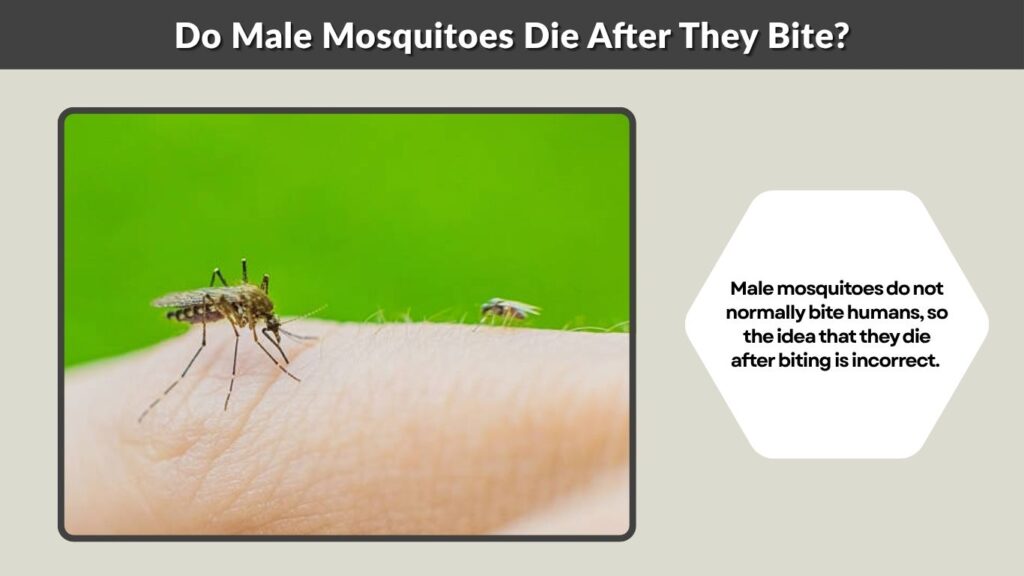
Male mosquitoes do not normally bite humans, so the idea that they die after biting is incorrect. Mosquitoes are sometimes confused with honeybees, which can die after leaving a barbed stinger in mammalian skin. Mosquito feeding works completely differently.
What Happens After a Female Mosquito Bites?
Female mosquitoes generally survive after taking a blood meal.
They can potentially feed multiple times during their lives, depending on the species, environmental conditions, and reproductive cycle. After obtaining sufficient nutrients, a female typically rests while digesting the meal and developing eggs before seeking suitable water or another moist environment in which to lay them.
Why Knowing Which Mosquito Bites Matters
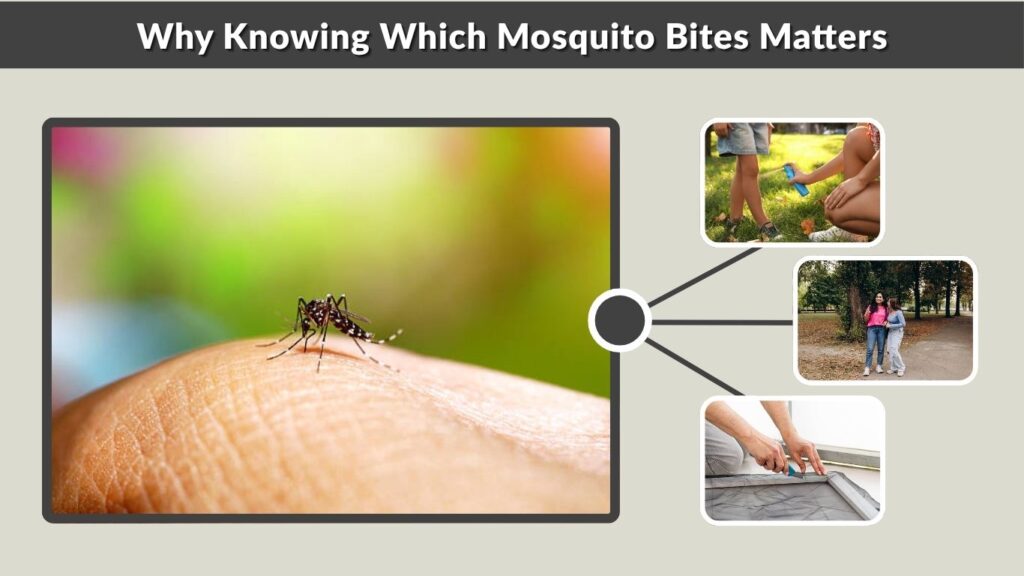
Understanding that females are responsible for biting is more than an interesting biological fact. Female mosquito behavior is central to the transmission of several mosquito-borne diseases because pathogens may pass between an infected host and another host during blood feeding.
Ways to Reduce Mosquito Bites
Basic prevention measures include:
- Use an appropriate insect repellent when mosquitoes are active.
- Wear long sleeves and long pants when practical.
- Repair damaged window and door screens.
- Empty containers that collect standing water.
- Keep gutters and drainage areas clear.
- Use mosquito netting where exposure is high.
Removing standing water is particularly important because mosquito larvae develop in water.
Male Mosquitoes Can Still Matter
Although males do not bite, they remain essential to mosquito reproduction because they mate with females.
For this reason, some modern mosquito-control strategies target reproduction by releasing modified or specially treated males that reduce the production of viable offspring. The males themselves pose no biting risk to people.
FAQs
1. Do male mosquitoes bite humans?
No. Male mosquitoes normally feed on nectar and other plant sugars rather than human or animal blood. Female mosquitoes are responsible for the mosquito bites people commonly experience.
2. Why do male mosquitoes not bite?
Male mosquitoes do not need the proteins found in blood for egg development because they do not produce eggs. Their feeding structures and behavior are adapted primarily for consuming plant sugars.
3. Do both male and female mosquitoes bite?
No. Female mosquitoes of many species take blood meals, while males generally rely on nectar and other sugary plant fluids. Both sexes can feed on plant sugars for energy.
4. If male mosquitoes do not bite, what do they eat?
Male mosquitoes eat nectar, plant sap, fruit sugars, honeydew, and other sugary liquids. These foods provide carbohydrates needed for flying, mating, and survival.
5. Do male mosquitoes die after they bite you?
No. Male mosquitoes do not normally bite humans in the first place. Female mosquitoes that take blood also do not normally die after biting and may take multiple blood meals during their lifetime.
