
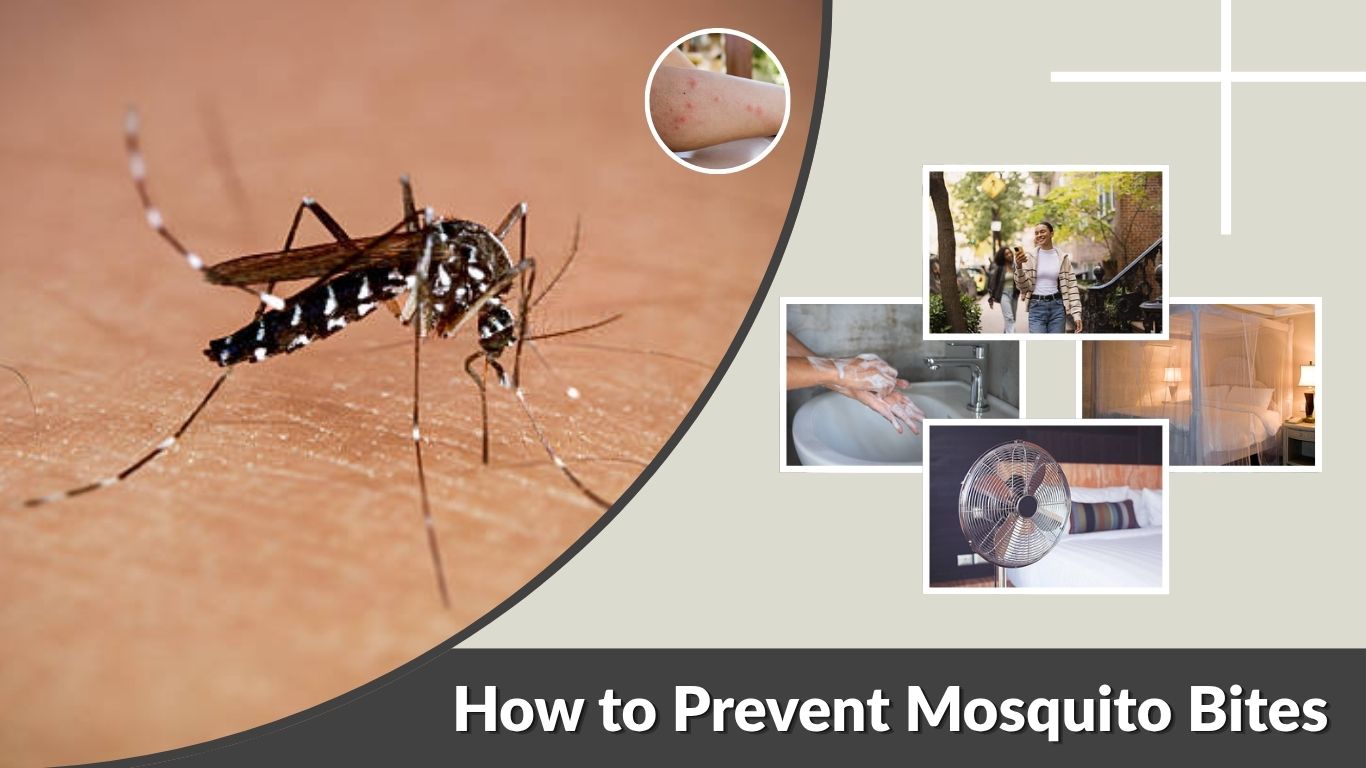
Mosquito bites are more than an itchy annoyance. In some regions, mosquitoes can spread illnesses such as dengue, malaria, West Nile virus, and Zika. Learning how to prevent mosquito bites means combining an effective repellent with protective clothing, mosquito-proof sleeping areas, and simple changes around your home or campsite. Whether you are sleeping, hiking, camping, traveling, or relaxing in your backyard, the right prevention methods can significantly reduce bites. This guide covers practical protection for adults, children, pets, and outdoor activities.
How to Prevent Mosquito Bites Effectively
The most reliable mosquito protection uses several methods at the same time. Repellent protects exposed skin, clothing creates a physical barrier, and mosquito control reduces the number of insects around you. Mosquitoes can bite during both the day and night, so protection should not be limited to evening hours. EPA-registered repellents are among the most dependable options when used according to their labels.
Use a Proven Mosquito Repellent
Choose an EPA-registered repellent with an active ingredient proven to repel mosquitoes. Common options include:
- DEET: Provides dependable and often long-lasting protection.
- Picaridin: Effective and usually has little odor.
- IR3535: Used in various personal insect repellents.
- Oil of lemon eucalyptus (OLE): A plant-derived registered repellent.
- PMD: A synthesized repellent related to OLE.
- 2-undecanone: Another plant-derived active ingredient used in registered products.
Higher concentrations of some active ingredients generally provide longer protection rather than necessarily stronger protection. Always follow the label for reapplication. If you are also using sunscreen, apply sunscreen first and repellent afterward.
Cover Exposed Skin
Loose-fitting long sleeves, long pants, socks, and closed shoes reduce the amount of skin mosquitoes can reach. Light, breathable clothing can make this approach comfortable even during warm weather.
For stronger outdoor protection, clothing, boots, socks, tents, and other gear may be treated with 0.5% permethrin or purchased pretreated. Permethrin is intended for clothing and gear rather than direct application to skin.
How to Prevent Mosquito Bites While Camping
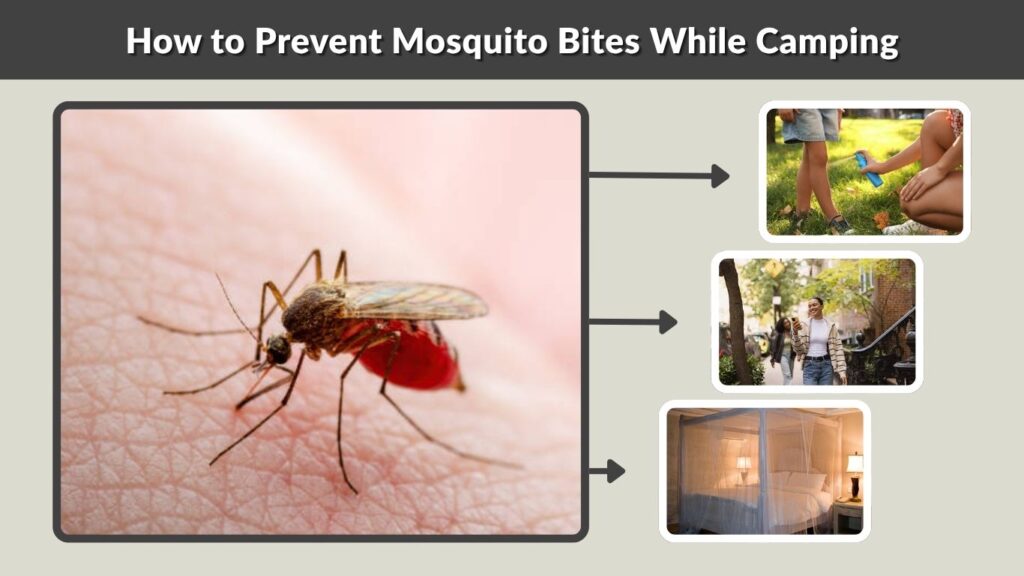
Camping places you directly in mosquito habitat, particularly around woods, wetlands, standing water, and shaded vegetation. Protection is most effective when you prepare before reaching the campsite instead of waiting until mosquitoes appear. Combining repellent, treated clothing, mosquito netting, and a carefully selected campsite can reduce bites while hiking, cooking, sitting outdoors, and sleeping.
Mosquito Protection Checklist for Camping
For better protection outdoors:
- Apply repellent before hiking or spending time around camp.
- Wear long sleeves, pants, and socks when mosquito activity is high.
- Use permethrin-treated clothing and camping equipment.
- Keep tent doors and screens completely closed.
- Repair holes in mosquito netting or tent screens.
- Avoid leaving buckets or containers filled with standing water.
- Use a mosquito net when sleeping in open or poorly screened areas.
- Reapply repellent according to the product label.
Treating items such as tents, pants, socks, and boots with permethrin can add an important layer of protection during extended outdoor trips.
Prevent Bites While Hiking and in the Wild
When hiking, pay special attention to ankles, wrists, neck, and other exposed areas. Mosquitoes can reach surprisingly small gaps between clothing and skin.
A hat combined with a mosquito head net can be useful in areas with extremely high mosquito activity. Returning to camp before insects become overwhelming will not always solve the problem because different mosquito species may bite during daylight, evening, or nighttime hours.
How to Prevent Mosquito Bites While Sleeping
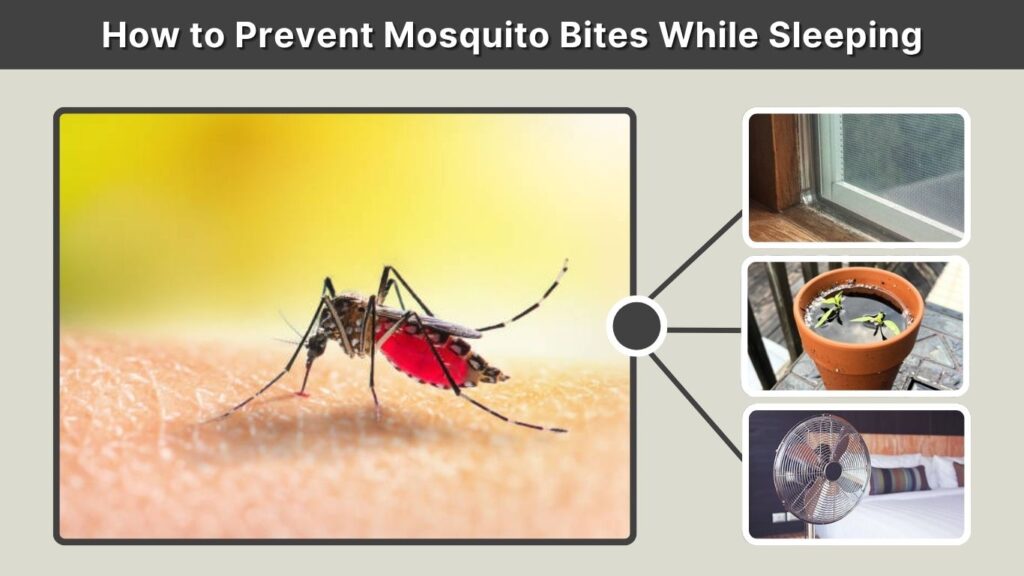
Waking up covered in mosquito bites usually means mosquitoes are entering the bedroom or already living indoors. Repellent can help, but environmental control is often more important for nighttime protection. A combination of window screens, bed nets, air conditioning or fans, and eliminating standing water can make a bedroom much less accessible and comfortable for mosquitoes.
Make Your Bedroom Mosquito-Proof
Improve nighttime protection by:
- Install or repair screens on windows and doors.
- Keep doors closed whenever possible.
- Sleep under a mosquito net where screens are unavailable.
- Tuck the mosquito net securely around the sleeping area.
- Remove standing water near windows, balconies, and bedrooms.
- Use air conditioning where available.
- Use a fan to create airflow around the bed.
- Apply an appropriate repellent before sleeping if mosquitoes remain present.
Bed nets are especially important when sleeping outdoors or in rooms exposed to the outside.
Prevent Mosquito Bites Without Bug Spray
Physical barriers are the most reliable alternative when you prefer not to use topical spray. Covering exposed skin, installing screens, sleeping under nets, using fans, and removing breeding sites can substantially reduce mosquito contact.
Be cautious with claims surrounding vitamin B1, apple cider vinegar, garlic, or unregistered essential-oil mixtures. CDC notes that the effectiveness of non-EPA-registered repellents, including some products described as natural, is not established.
Prevent Mosquito Bites on Babies, Pregnancy, and Pets
Babies, pregnant women, and pets require extra care because not every mosquito-control product is appropriate for every individual. Physical barriers are particularly valuable for infants, while pregnant and breastfeeding women can use EPA-registered repellents as directed. Pets should be protected with environmental mosquito control and products specifically considered appropriate for their species rather than automatically using human repellents.
Protection for Babies and During Pregnancy
Keep these precautions in mind:
- Cover a baby’s arms and legs with suitable clothing.
- Use mosquito netting over strollers and baby carriers.
- Follow the repellent label carefully when treating children.
- Do not apply repellent around a child’s eyes, mouth, or irritated skin.
- Adults should apply repellent to their hands before putting it on a child’s face.
- Avoid OLE or PMD products on children under 3 unless the specific product label permits use at that age.
- Pregnant and breastfeeding women can use EPA-registered repellents according to label instructions.
CDC and EPA consider registered repellents effective when properly used, including during pregnancy and breastfeeding.
How to Prevent Mosquito Bites on Dogs and Cats
Keep pets indoors when mosquito activity is heavy, maintain window and door screens, and eliminate standing water around yards and pet areas. Mosquitoes can reproduce in surprisingly small water-filled containers.
Do not assume a human mosquito repellent is appropriate for a dog or cat. Ask a veterinarian about suitable mosquito and parasite protection, particularly because some mosquito-borne parasites can affect pets.
How to Prevent Mosquito Bites From Itching and Scarring
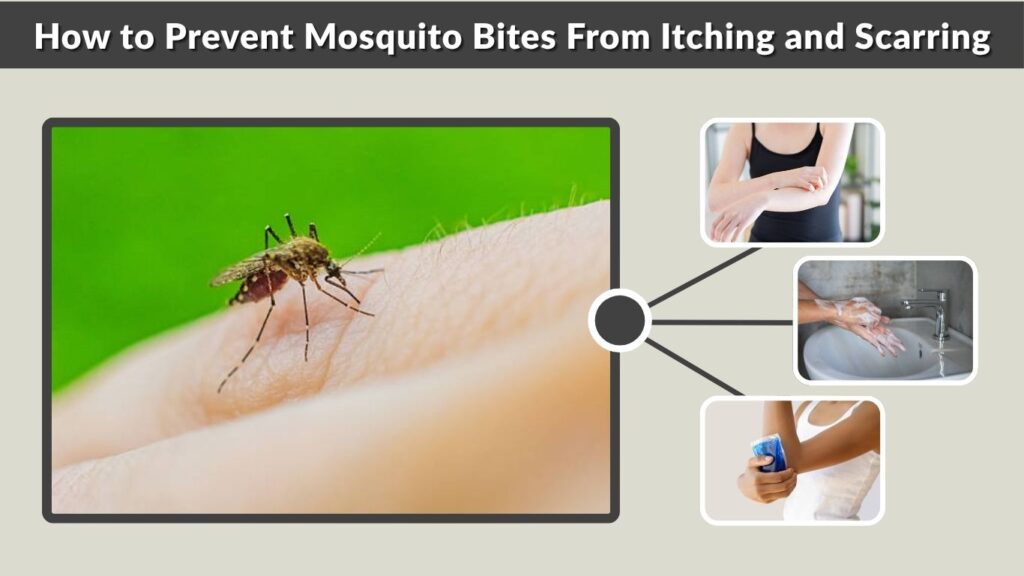
Even careful prevention cannot guarantee that you will never be bitten. Once a bite occurs, reducing itching and preventing repeated scratching can lower the chance of skin damage. Most mosquito bites improve without treatment, but severe swelling, breathing difficulty, widespread hives, fever, or other unusual symptoms deserve medical attention, particularly after travel in areas with mosquito-borne diseases.
Reduce Itching After a Mosquito Bite
Wash the bite gently and avoid scratching it. A cool compress can help reduce discomfort and swelling. Calamine lotion or an appropriate over-the-counter hydrocortisone product may also relieve itching. CDC travel guidance recommends avoiding scratching and lists hydrocortisone cream or calamine lotion as options for reducing itch.
Reduce the Risk of Dark Spots and Scars
To protect healing bites:
- Avoid scratching or picking the skin.
- Keep fingernails short, especially for children.
- Keep damaged skin clean.
- Use a cold compress when itching encourages scratching.
- Protect healing marks from excessive sun exposure.
- Seek medical advice if a bite becomes increasingly painful, warm, swollen, or produces pus.
Preventing repeated skin injury is especially important for people who tend to develop dark marks after inflammation.
FAQs
1. What Is the Best Way to Prevent Mosquito Bites?
Use an EPA-registered mosquito repellent, wear loose long sleeves and pants, and reduce mosquito access to your home. Treated clothing and mosquito nets provide additional protection when exposure is high.
2. How Can I Prevent Mosquito Bites Naturally?
Physical methods are the most dependable non-chemical options. Wear covering clothing, use window screens and bed nets, run a fan, and remove standing water. Do not rely exclusively on unregistered essential oils or home remedies when mosquito-borne disease is a concern.
3. How Do I Prevent Mosquito Bites at Night?
Close windows or use intact screens, sleep under a mosquito net where necessary, use airflow from a fan, and apply an appropriate repellent to exposed skin. Remember that mosquitoes can bite during both daytime and nighttime.
4. Can Vitamin B Prevent Mosquito Bites?
Vitamin B or vitamin B1 supplements should not replace proven mosquito-prevention methods. For predictable protection, rely on registered repellents, covering clothing, nets, screens, and environmental mosquito control.
5. How Can I Prevent Mosquito Bites While Traveling?
Pack an effective repellent, long clothing, and mosquito netting if accommodation may not be screened. Consider permethrin-treated gear and check destination-specific mosquito-borne disease guidance before traveling. These precautions are particularly important in areas where malaria, dengue, Zika, or other mosquito-borne illnesses occur.
