
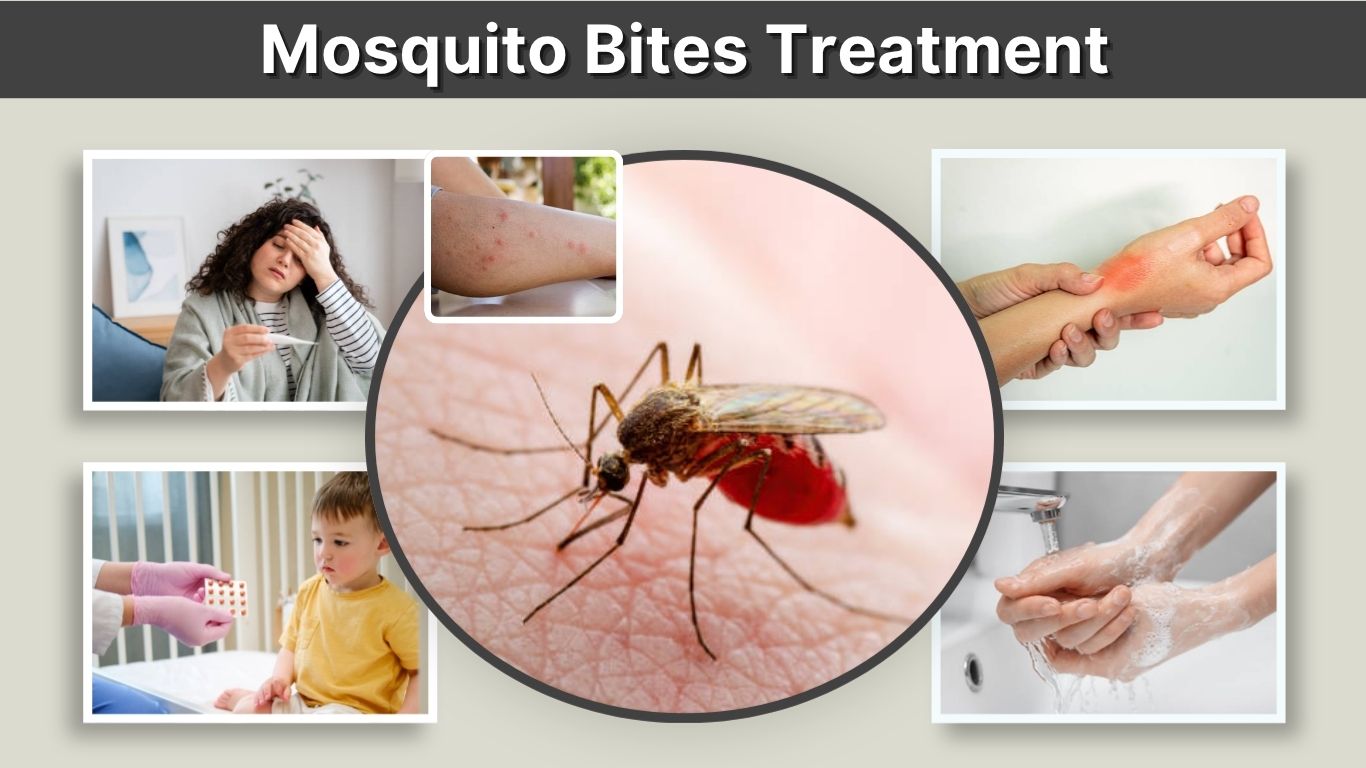
Mosquito bites usually cause itching, redness, and mild swelling because the immune system reacts to proteins in mosquito saliva. Fortunately, most bites improve on their own within a few days and can be managed with simple home care. Effective mosquito bites treatment focuses on calming inflammation, stopping the itch, protecting damaged skin, and recognizing unusual reactions. From cold compresses and anti-itch creams to antihistamines and treatment for severe swelling, knowing what works can make mosquito bites far easier to manage safely.
Best Mosquito Bites Treatment for Fast Relief
For an ordinary mosquito bite, treatment can begin as soon as itching or swelling appears. The main goals are to clean the skin, cool the affected area, reduce inflammation, and avoid scratching. Most mild reactions do not require medical treatment and gradually disappear within several days. A few simple measures can significantly improve comfort while the skin heals.
Immediate Treatment Steps
- Wash the bite gently with soap and water.
- Apply a cold pack wrapped in cloth for about 10–20 minutes.
- Keep a swollen arm or leg elevated when practical.
- Apply an appropriate anti-itch lotion or cream.
- Avoid scratching, squeezing, or breaking any blisters.
- Keep fingernails short if repeated scratching is difficult to control.
Cold treatment helps reduce both itching and swelling, while washing the skin lowers the risk of infection if scratching has already irritated the area.
Why Mosquito Bites Itch and Swell
When a female mosquito feeds, it introduces saliva into the skin. The immune system reacts to substances in that saliva, creating the familiar itchy bump. Some people develop only a tiny raised spot, while others experience larger areas of redness, warmth, soreness, or swelling.
The reaction can also become more noticeable hours after the original bite. This does not automatically mean the bite is infected.
Best Treatment for Itchy Mosquito Bites
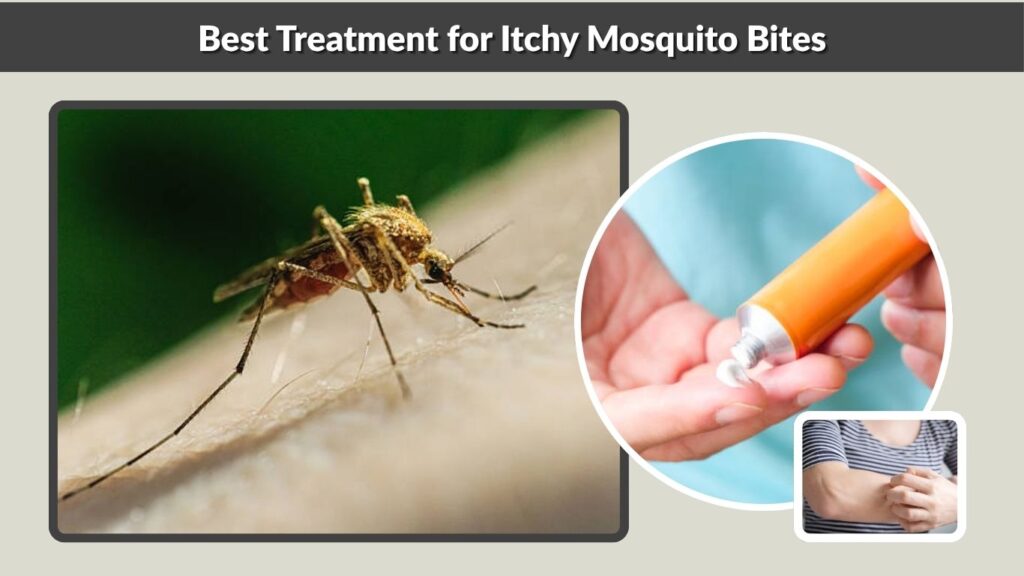
Persistent itching is often the most uncomfortable part of a mosquito bite. Scratching may provide temporary relief but can damage the skin and increase the chance of bacterial infection. Topical anti-inflammatory treatments and, when appropriate, oral antihistamines can provide better relief without repeatedly irritating the bite. Product directions should always be followed carefully.
Topical Treatment for Mosquito Bites
Common options include:
- Hydrocortisone cream: A mild corticosteroid such as 0.5% or 1% hydrocortisone can reduce inflammation, itching, and swelling.
- Calamine lotion: Helps soothe itchy, irritated skin.
- Cold compress: Can temporarily reduce inflammation and the urge to scratch.
- Other OTC anti-itch products: Some products are formulated specifically for insect bites.
Hydrocortisone is commonly used for reactions to insect bites, but it should be used according to the label and should not be applied to unsuitable areas such as broken skin unless advised by a healthcare professional.
Oral Antihistamines for Stronger Itching
For a stronger local reaction, a nonprescription oral antihistamine may reduce itching. Mayo Clinic lists nonsedating options such as cetirizine or loratadine among treatments that may help with more significant reactions.
People taking other medicines, pregnant individuals, and parents treating young children should check the label and ask a pharmacist or healthcare professional when unsure about suitability or dosing.
Home Treatment for Mosquito Bites and Swelling
Home treatment is usually sufficient when swelling remains localized around the bite and there are no signs of serious allergy or infection. Cooling the skin is one of the most consistently recommended approaches. Large local reactions deserve closer observation because they can sometimes resemble an infection, especially when the area becomes noticeably red and swollen.
How to Reduce Mosquito Bite Swelling
- Apply a wrapped ice pack or cold damp cloth for 10–20 minutes.
- Repeat cold treatment when needed.
- Elevate the affected arm or leg if swelling is significant.
- Use hydrocortisone or another appropriate anti-inflammatory treatment as directed.
- Avoid tight clothing or repeated rubbing over swollen bites.
- Do not scratch, as broken skin can lead to infection.
Cold treatment is useful for both ordinary mosquito bites and larger local reactions.
Natural and DIY Treatments
The CDC includes a baking-soda-and-water paste among possible itch-relief measures, while NHS guidance for insect bites recommends avoiding bicarbonate-based home remedies and emphasizes cold treatment, antihistamines, and hydrocortisone instead.
Because recommendations differ, simple measures such as washing, cooling, and using established OTC treatments are more predictable choices. Toothpaste, harsh chemicals, essential oils, and other irritating substances can worsen already inflamed skin.
Allergic, Severe, and Infected Mosquito Bites
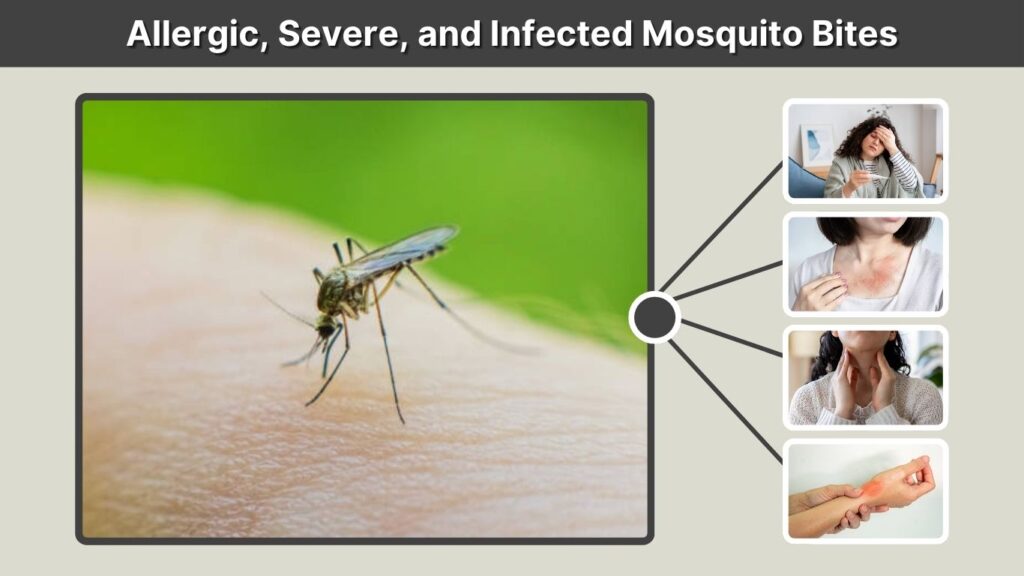
Most mosquito bites are minor, but some people experience unusually strong immune reactions. Scratched bites can also become infected. Understanding the difference between ordinary swelling, a large allergic-type reaction, and infection is important because treatment can differ. Symptoms affecting breathing, the throat, or consciousness require emergency care rather than home treatment.
Warning Signs to Watch For
Seek medical advice when you notice:
- Redness or swelling that continues to worsen
- Increasing pain, warmth, or tenderness
- Pus or fluid draining from the bite
- Red streaks spreading away from the area
- Fever, swollen glands, or feeling generally unwell
- Extensive hives or unusually large swelling
- Symptoms that fail to improve as expected
Scratching is a common reason mosquito bites become secondarily infected.
Skeeter Syndrome and Large Reactions
Some people develop a pronounced local allergic reaction sometimes called skeeter syndrome. It may involve substantial swelling, redness, warmth, soreness, and itching around the bite. Children can be particularly prone to stronger mosquito-bite reactions.
Because severe local swelling can resemble a bacterial infection, medical assessment may be appropriate when the reaction is unusually large, painful, worsening, or accompanied by other symptoms.
When Is a Mosquito Bite an Emergency?
Get emergency medical help immediately for difficulty breathing, sudden swelling of the lips, tongue, mouth, or throat, severe dizziness, fainting, confusion, or other signs of a serious allergic reaction.
Also seek medical evaluation if mosquito exposure is followed by significant fever or other unexplained systemic illness, because mosquitoes can transmit infections in some regions.
Mosquito Bite Treatment for Children and Sensitive Areas
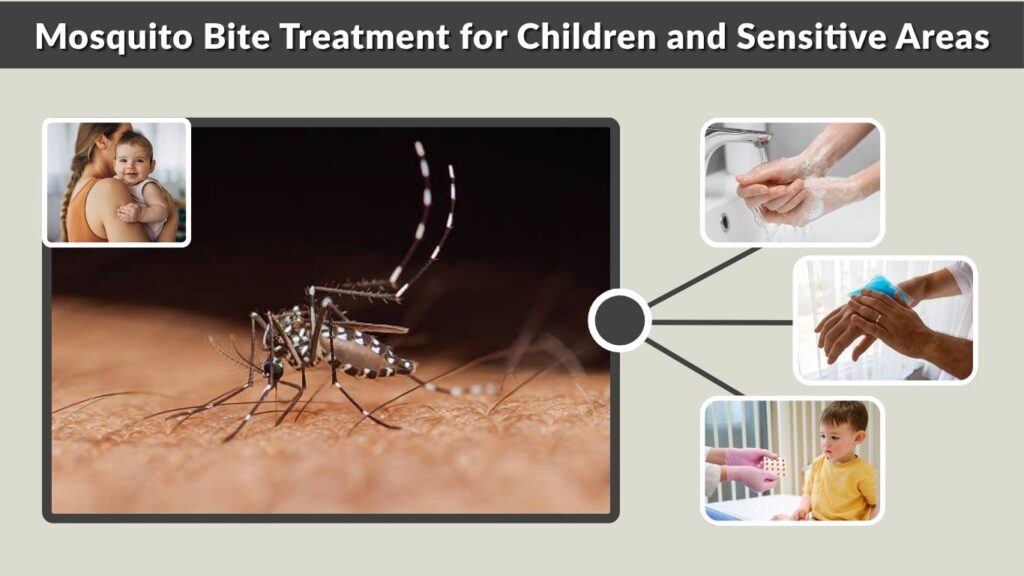
Children may develop larger reactions than adults, and bites around the face or eyelids can appear especially dramatic because those tissues swell easily. Treatment should remain gentle, with careful attention to product age restrictions. Sensitive locations also require more caution with creams because products that are appropriate for an arm or leg may not be suitable near the eyes.
Toddler and Child Mosquito Bite Treatment
Wash the area gently and use a cool compress to reduce itching and swelling. Preventing scratching is particularly important because children can easily damage irritated skin.
Before using hydrocortisone, oral antihistamines, or other medicines in babies or young children, check the product’s age restrictions and obtain advice from a pharmacist or healthcare professional when necessary. Do not guess a child’s medication dose based on an adult dose.
Bites on the Face, Eyelid, Feet, or Legs
Cold compresses can help mosquito bites on the face, legs, and feet. Bites near the eye require extra caution; avoid putting ordinary anti-itch creams directly into or too close to the eye.
Seek medical attention for severe eyelid swelling, eye pain, vision changes, spreading redness, or symptoms affecting the eye itself.
FAQs
Most uncomplicated bites require only symptom relief while the immune reaction settles. The questions below cover common concerns about duration, itching, swelling, creams, and infected bites. When symptoms are unusually severe or do not follow the typical course of a mosquito bite, professional medical assessment is more appropriate than repeatedly trying different home remedies.
1. What Is the Best Treatment for Mosquito Bites?
For most mild bites, wash the skin, apply a cold compress, and avoid scratching. Calamine or an appropriate hydrocortisone cream can help with itching and inflammation. An oral antihistamine may help when itching or swelling is stronger.
2. How Long Do Mosquito Bites Take to Heal?
Most uncomplicated mosquito bites improve naturally within several days. Larger allergic-type reactions can remain noticeable longer. Persistent worsening, increasing pain, warmth, drainage, or other unusual symptoms should be evaluated.
3. What Stops Mosquito Bites From Itching Quickly?
A cold compress can provide fast temporary relief. Calamine lotion or hydrocortisone can provide longer-lasting itch control. The most important step is avoiding scratching because scratching can prolong irritation and damage the skin.
4. What Is the Best Treatment for Swollen Mosquito Bites?
Use a wrapped cold pack for 10–20 minutes and elevate the affected limb when possible. Hydrocortisone or an oral antihistamine may help appropriate patients. Seek medical advice if swelling becomes extensive, painful, increasingly red, or continues worsening.
5. How Do You Treat an Infected Mosquito Bite?
Do not attempt to treat a clearly infected bite only with anti-itch products. Increasing warmth, pain, spreading redness, pus, or red streaks can indicate infection and should be assessed by a healthcare professional, who can determine whether additional treatment is needed.
