

The Apache paper wasp (Polistes apachus) is a striking and widely recognized wasp species found across the western United States and parts of Mexico. Known for its golden-brown coloration, umbrella-shaped nests, and potent sting, this insect plays an important role in controlling pest populations and pollinating plants. While generally not aggressive when foraging, the Apache paper wasp will fiercely defend its nest if threatened.
In this detailed guide, we’ll explore everything about the Apache paper wasp — from its sting pain and nesting habits to its range, behavior, and role in the ecosystem — helping you understand both its benefits and the precautions to take when encountering it.
Scientific Classification and Common Names
The Apache paper wasp belongs to the family Vespidae, which includes paper wasps, hornets, and yellowjackets. Its scientific name is Polistes apachus, and it is often referred to as the golden paper wasp due to its warm brown-and-yellow coloration. This species is part of the larger Polistes genus, known for building exposed, umbrella-shaped nests and having slender, elongated bodies. While “Apache paper wasp” is the most recognized name, its common and scientific names are frequently used interchangeably in both entomology references and everyday conversation.
Size and Physical Description
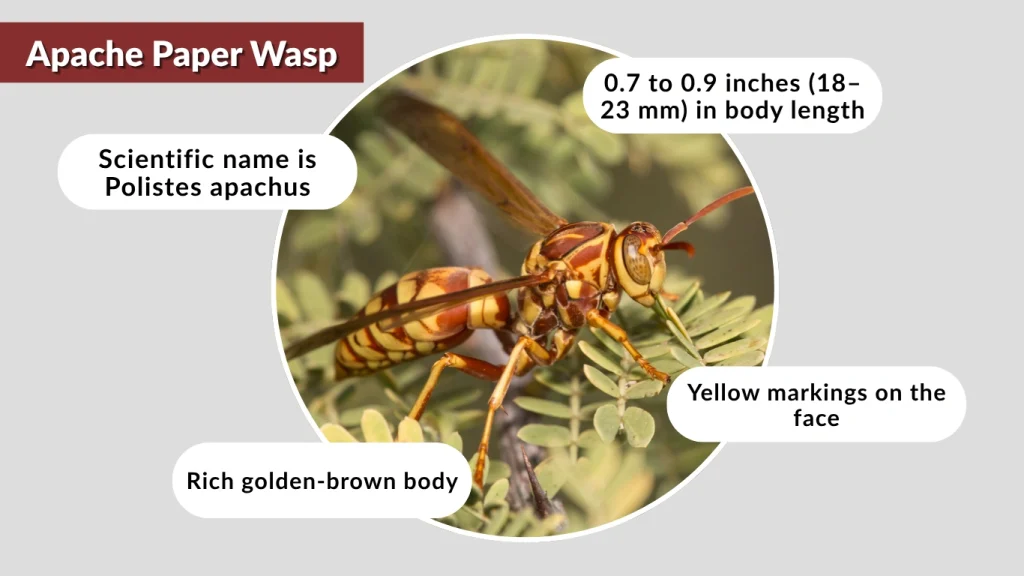
Apache paper wasps are medium-to-large compared to other paper wasp species. Adults typically measure 0.7 to 0.9 inches (18–23 mm) in body length, with queens slightly larger than workers. Their bodies are slender with a narrow waist, long dangling legs during flight, and an elongated abdomen. Wings are folded lengthwise when at rest, a trait common to all paper wasps. Slightly longer antennae with hooked tips often distinguish males, while females have straight antennae.
Color and Markings
These wasps have a rich golden-brown body accented with yellow markings on the face, thorax, and abdomen. The contrast between the darker brown and lighter yellow gives them a distinctive appearance, making identification easier compared to darker Polistes species. Their wings are translucent with an amber tint, and in bright sunlight, the golden hues on their body become more vivid. Males may display slightly brighter yellow patterns, especially on the head and antenna bases.
Range and Habitat
Geographic Distribution
The Apache paper wasp is native to the western United States, with its range extending through California, Nevada, Arizona, New Mexico, Utah, Oregon, Washington, and parts of Texas. It is also found in northern Mexico and has been observed in select regions where the climate supports its nesting and feeding habits.
Preferred Habitats
These wasps thrive in open, sunny environments such as meadows, grasslands, agricultural fields, orchards, and suburban gardens. They prefer areas with abundant flowering plants for nectar and nearby structures or vegetation for nesting. In urban settings, they commonly choose roof eaves, sheds, pergolas, and other sheltered man-made structures.
Adaptability to Human Environments
Apache paper wasps adapt well to areas where humans live, often nesting close to homes due to the availability of sheltered spaces. However, their proximity to people can lead to encounters, especially during the warmer months when colonies are at their peak.
Sting

How the Sting Works
The Apache paper wasp uses a smooth stinger connected to a venom sac, allowing it to sting multiple times without losing its stinger. This makes them capable of delivering repeated defensive strikes if their nest is threatened.
Venom Composition
Their venom contains a mix of proteins, peptides, and enzymes that cause immediate pain, redness, and localized swelling. In some cases, the venom can trigger allergic reactions, including hives or, in severe cases, anaphylaxis.
Sting Reactions in Humans
Most stings cause sharp, burning pain followed by swelling and redness lasting several hours to a day. For those allergic to wasp venom, symptoms may escalate to dizziness, breathing difficulty, or swelling of the throat, requiring urgent medical attention.
Defensive Behavior
Apache paper wasps rarely sting unprovoked when away from their nest. However, they become highly defensive if they perceive a threat to the colony, especially during the late summer months when nest populations are at their highest.
Sting Pain Level
Position on the Schmidt Sting Pain Index
The Apache paper wasp sting ranks as moderately high on the Schmidt Sting Pain Index, often rated around 2 to 3 out of 4. This places it above the sting of a typical honeybee but below the extreme pain of species like the tarantula hawk or executioner wasp.
Pain Description
Victims describe the sting as a sharp, burning sensation that can radiate from the sting site. The pain is intense for the first few minutes, then gradually subsides to a throbbing ache.
Duration
Pain usually lasts 5 to 15 minutes, though swelling and tenderness can remain for several hours. In sensitive individuals, discomfort may last for a day or longer.
Are Apache Paper Wasps Dangerous?

General Aggression Level
Apache paper wasps are not inherently aggressive while foraging or away from their nest. They often ignore human presence unless provoked.
Situations of Risk
The main danger occurs when someone disturbs their nest, intentionally or accidentally. This can trigger multiple wasps to defend their colony aggressively.
Health Risks
For most people, stings result in short-term pain and swelling. However, those with wasp venom allergies can experience life-threatening anaphylactic reactions. Multiple stings can also be dangerous, particularly for children, elderly individuals, or pets.
Apache Paper Wasp vs Executioner Wasp
Size and Appearance
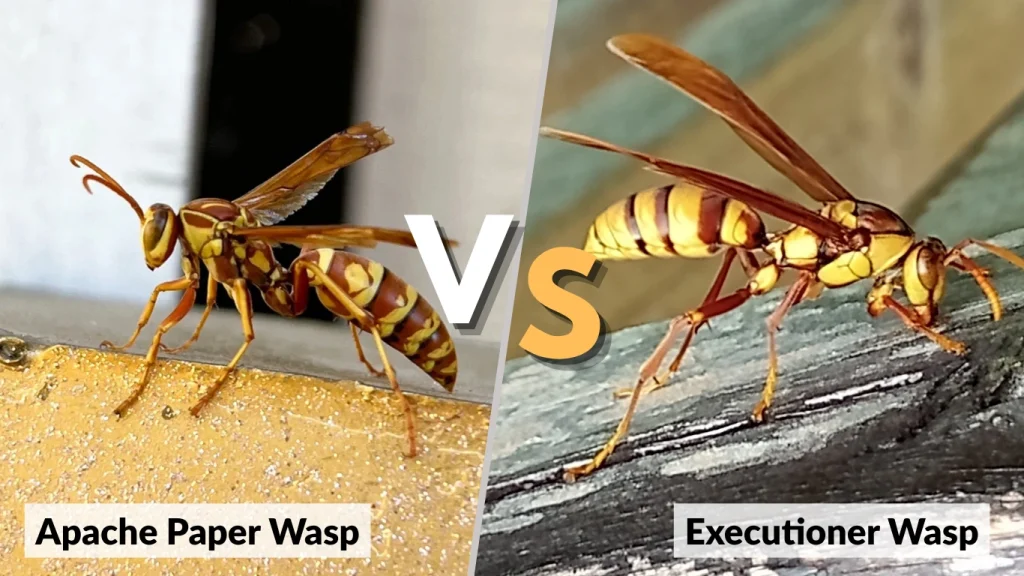
- Apache Paper Wasp: 0.7–0.9 inches, golden-brown with yellow markings.
- Executioner Wasp: Around 1.2 inches, yellow-and-brown with more robust body structure.
Sting Pain Comparison
The executioner wasp is widely considered to have one of the most painful stings in the insect world, surpassing the Apache paper wasp in both intensity and duration.
Behavioral Differences
Apache paper wasps are generally less aggressive and more tolerant of nearby activity compared to executioner wasps, which can be highly defensive.
Habitat Overlap
While both species inhabit warm climates, the executioner wasp is primarily found in Central and South America, making direct encounters between the two species rare.
Nest Structure and Location
Nest Appearance
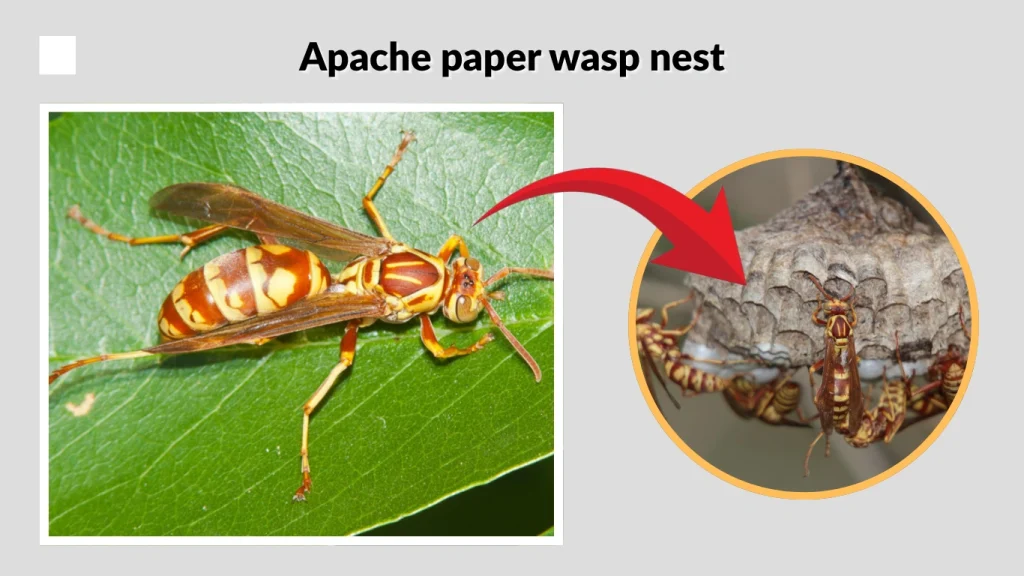
Apache paper wasp nests are umbrella-shaped with exposed hexagonal cells. They are made from chewed plant fibers mixed with saliva, creating a sturdy, papery texture. The nests typically measure 3–6 inches in diameter but can grow larger as the colony expands.
Common Nesting Spots
They prefer sheltered, elevated locations such as under roof eaves, porch ceilings, in barns, sheds, and tree branches. In the wild, they may build on shrubs, fence posts, or rocky overhangs.
Seasonal Nesting Cycle
Nest construction begins in spring, led by a fertilized queen. The nest grows through summer as workers add cells and care for larvae, reaching peak size in late summer. Colonies die off in late fall, leaving only new queens to overwinter.
Aggressive Behavior

Defensive Reactions
Apache paper wasps are defensive, not inherently aggressive. They only attack if they perceive a threat to the nest. Disturbances, vibrations, or sudden movements close to the colony can provoke a stinging response.
Foraging Tolerance
When foraging for nectar or hunting insects, they typically ignore humans and pets. This makes encounters away from nests far less risky.
Colony Defense Strategy
Once alarmed, multiple wasps may emerge from the nest and pursue the threat for several feet, delivering repeated stings if necessary.
Deadly or Not?
Normal Risk Level
For healthy individuals, a single Apache paper wasp sting is painful but not deadly. The primary danger lies in allergic reactions or multiple stings.
Potentially Fatal Situations
Severe allergic reactions (anaphylaxis) can cause swelling of the throat, difficulty breathing, rapid heartbeat, and in rare cases, death without prompt treatment. Multiple stings can also lead to systemic toxicity, especially in vulnerable individuals.
Medical Considerations
Anyone who experiences symptoms beyond normal pain and swelling after a sting should seek immediate medical attention, particularly if they have a known allergy to wasp venom.
12. Cousins and Related Species
Other Polistes Wasps in North America
The Apache paper wasp is part of the Polistes genus, which includes numerous other species across North America. Some close relatives include the Northern paper wasp (Polistes fuscatus), Red paper wasp (Polistes carolina), and Golden paper wasp (Polistes aurifer).
Physical Similarities and Differences
While all Polistes species share a slender body, narrow waist, and exposed nests, their coloration and markings vary. Apache paper wasps are distinct for their golden-brown tones, while others, like P. carolina, have a deep reddish hue.
Behavioral Overlap
Most Polistes wasps display similar nesting habits, diets, and seasonal life cycles, but aggression levels can vary slightly between species.
Lifecycle
Egg Stage
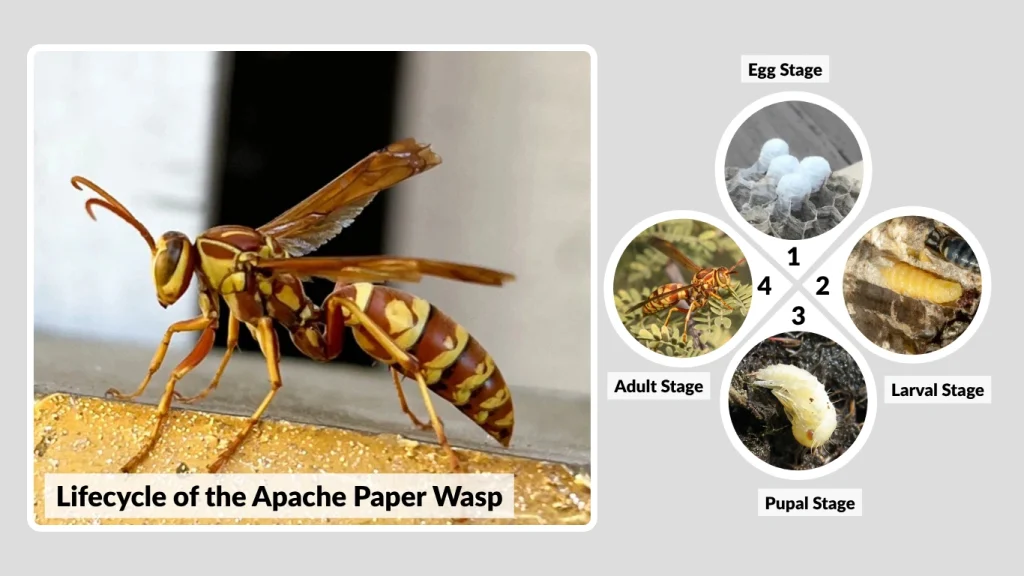
In spring, the queen begins laying eggs in the initial cells of the nest. Each cell receives one egg, which hatches in a few days.
Larva Stage
Larvae are fed chewed-up insects by worker wasps. This stage lasts about 10–14 days, during which the larvae grow rapidly.
Pupa Stage
When mature, larvae spin silk caps over their cells and transform into pupae. This stage lasts roughly 10–12 days as they develop wings, legs, and adult features.
Adult Stage
Adults emerge as either queens, workers, or males. Workers continue expanding the nest and feeding young, while males focus on mating later in the season. The entire colony typically lasts one season, except for mated queens that overwinter.
Diet and Feeding Habits

Adult Diet
Apache paper wasps feed on nectar, fruit juices, and honeydew, gaining energy from sugary substances.
Larval Diet
Larvae are carnivorous, consuming chewed-up caterpillars, flies, and beetle larvae provided by workers.
Foraging Behavior
They forage during daylight hours, often visiting flowering plants and hunting in gardens, fields, and orchards. Their pest-hunting habits make them beneficial to farmers and gardeners.
Risks to Humans and Pets
Human Risks
While the Apache paper wasp is not typically aggressive, its sting can cause intense pain, redness, swelling, and itching. For those allergic to wasp venom, even a single sting can trigger anaphylaxis, a life-threatening condition requiring immediate medical care.
Pet Risks
Dogs and cats that get too close to a nest risk multiple stings, which can cause swelling of the face, difficulty breathing, and lethargy. Small pets, such as rabbits or birds, are more vulnerable to venom effects due to their size.
Multiple Stings
If a nest is disturbed, several wasps may attack at once. Multiple stings can cause systemic reactions, muscle weakness, nausea, or, in rare cases, more serious complications.
FAQs
How painful is an Apache paper wasp sting compared to other wasps?
Their sting is more painful than that of most yellowjackets but less intense than an executioner wasp. The pain is sharp, burning, and lasts several minutes, followed by swelling and tenderness for several hours.
Can Apache paper wasps kill a human?
While rare, fatalities can occur in people with severe allergic reactions or after multiple stings. For healthy individuals, stings are typically non-lethal but extremely painful.
Do they attack without warning?
No. They are generally non-aggressive while foraging but will aggressively defend their nest if they sense danger.
How do I safely remove a nest?
The safest option is to call pest control. If removing it yourself, wear protective clothing, work at night, and use a long-range wasp spray.
Are they beneficial for gardens?
Yes. They help control caterpillar and insect pest populations and contribute to pollination, making them valuable to home gardens and farms.
