

The Northern paper wasp (Polistes fuscatus) is one of the most common and widely recognized paper wasp species in North America. Known for its slender body, distinct coloration, and umbrella-shaped nests, this insect plays a dual role in the environment — acting as both a natural pest controller and a pollinator. While generally less aggressive than some wasp species, it will defend its nest if threatened.
In this guide, we’ll explore everything about the Northern paper wasp, including its appearance, sting, nesting behavior, habitat, lifecycle, and ways to manage encounters safely.
Scientific Classification and Common Names
The Northern paper wasp belongs to the family Vespidae, which includes various social wasps and hornets. Its scientific name is Polistes fuscatus, though it’s commonly referred to as the Northern paper wasp or simply the common paper wasp in certain regions. This species is well-studied due to its wide range and distinct physical and behavioral traits. It is a key representative of paper wasps in temperate areas, making it an important subject in both ecological research and pest management discussions.
Size and Physical Description

Northern paper wasps are medium-sized insects, with adults typically measuring 0.6 to 0.8 inches (15–20 mm) in body length. Females, especially queens, tend to be slightly larger and more robust than males. Their bodies are slender, with a narrow waist connecting the thorax and abdomen, giving them a wasp’s signature streamlined shape. The wings are long and fold lengthwise when at rest, while their legs dangle noticeably during flight. This combination of size, posture, and movement makes them fairly easy to recognize in the field.
Color and Markings
Northern paper wasps typically have a dark brown to black body with contrasting yellow bands and markings on the abdomen, thorax, and face. In some individuals, especially in certain regions, reddish or orange highlights may be present on the head or legs. Their wings are translucent with a smoky or amber tint, adding to their distinctive look. This color pattern helps differentiate them from yellowjackets, which have brighter and more vivid yellow striping.
Identification Guide
Physical Features
- Slender body with a distinct narrow waist
- Long legs that dangle during flight
- Folded wings when resting
- Antennae with orange or brownish tips
Behavioral Traits
Northern paper wasps fly in a slow, steady manner and often hover near flowers while feeding on nectar. They are less aggressive away from their nests but will chase and sting if they feel their colony is threatened.
Sting and Aggression

The sting of a Northern paper wasp is sharp and painful, producing localized redness, swelling, and burning sensations. While generally less aggressive than hornets or yellowjackets, they become defensive when their nest is disturbed. Their venom contains toxins that can cause allergic reactions in sensitive individuals, including hives, difficulty breathing, or, in severe cases, anaphylaxis. Unlike bees, they can sting multiple times without losing their stinger.
Nesting Habits
Nest Structure
Northern paper wasps build umbrella-shaped nests made from chewed plant fibers mixed with saliva, giving them a papery texture. The nests have exposed hexagonal cells where eggs are laid and larvae develop.
Common Nesting Locations
They prefer sheltered, elevated spots such as under roof eaves, porch ceilings, tree branches, sheds, and attic beams.
Seasonal Nesting Cycle
Queens start nests in spring, workers expand them through summer, and colonies typically die out in late fall, leaving only new queens to overwinter.
Habitat and Distribution
The Northern paper wasp is found throughout most of North America, from southern Canada to the southern United States. It thrives in temperate climates and adapts well to rural, suburban, and urban environments. They are often spotted in gardens, fields, and forest edges, as well as near human structures where food and nesting sites are available.
Lifecycle
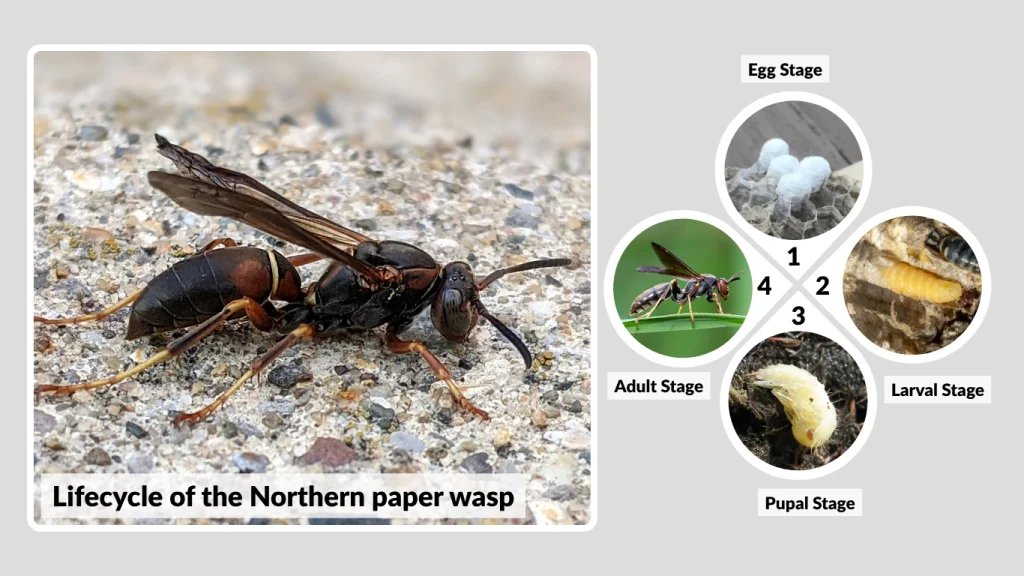
Egg Stage
The queen lays eggs in individual open cells.
Larva Stage
Larvae hatch and are fed soft-bodied insects like caterpillars, chewed into a pulp by worker wasps.
Pupa Stage
Larvae spin silk caps over their cells and develop into adults.
Adult Stage
The colony consists of a queen, workers, and males, with the total lifecycle from egg to adult averaging 3–4 weeks. Colonies last for one season, except for mated queens that overwinter.
9. Diet and Feeding Behavior

Adult Northern paper wasps primarily feed on nectar, plant sap, and sugary liquids, which provide them with energy. They also scavenge for ripe fruits and occasionally sip honeydew from aphids. For their larvae, workers hunt caterpillars, flies, and other soft-bodied insects, chewing them into a paste before feeding. This dual diet makes them both beneficial pollinators and natural pest controllers in gardens and agricultural areas.
Role in the Ecosystem
Northern paper wasps are important in maintaining ecological balance. By hunting caterpillars, beetle larvae, and other plant-eating pests, they help protect crops and ornamental plants from damage. While visiting flowers for nectar, they inadvertently transfer pollen, aiding in plant reproduction. They also serve as prey for birds, spiders, and larger insects, making them an integral link in the food chain.
Risks to Humans and Pets
While not overly aggressive, Northern paper wasps can pose risks if their nest is disturbed. Their sting can cause pain, swelling, and redness in humans and animals. Pets that investigate nests may receive multiple stings, which can be dangerous, especially for smaller animals. For people or pets with allergies, even a single sting can be a medical emergency, requiring immediate attention.
Prevention and Control
Preventing Nest Formation
Seal cracks, gaps, and openings in walls, eaves, and rooflines to reduce potential nesting sites. Regularly inspect outdoor structures in early spring to remove small starter nests before colonies grow.
Safe Removal
For large or high-traffic area nests, hire professional pest control. DIY removal should be done at night when wasps are less active, wearing protective clothing and using proper sprays.
Long-Term Deterrents
Maintain clean outdoor areas, cover trash bins, and reduce food sources like exposed sugary drinks to discourage wasp activity around homes.
Interesting Facts
- Northern paper wasps can recognize the faces of individual colony members, a rare trait in insects.
- Queens can live up to a year, while workers usually survive only a few months.
- They can reuse fibers from abandoned nests to build new ones.
- Their flight speed can reach around 7 mph.
- Despite their defensive nature near nests, they are generally docile when foraging.
Myths and Misconceptions
Many people confuse Northern paper wasps with hornets or yellowjackets due to similar colors, but paper wasps are leaner and less aggressive. Some believe they reuse nests annually, but this is false — each year’s colony starts fresh. Another myth is that they attack unprovoked; in reality, they only defend when threatened.
FAQs
1. How can I tell a Northern paper wasp from a yellowjacket?
Northern paper wasps have a slimmer body, longer legs that dangle during flight, and build open, umbrella-shaped nests. Yellowjackets are stockier, have brighter yellow markings, and build enclosed nests, often underground or hidden in cavities.
2. Are Northern paper wasps beneficial for gardens?
Yes. They help control pest populations by hunting caterpillars and other insects that damage plants. Their nectar feeding also contributes to pollination, making them valuable allies for maintaining healthy gardens and natural ecosystems.
3. How long do Northern paper wasps live?
Workers live for several weeks to a few months, while males live only a few weeks after mating. Queens have the longest lifespan, surviving up to a year, which includes overwintering to start a new colony in spring.
4. Do they reuse nests each year?
No. Each spring, a mated queen begins building a new nest from scratch. Old nests are abandoned at the end of the season, though occasionally, fibers from old nests are reused as construction material.
5. What’s the safest way to remove a nest?
The safest method is hiring professional pest control, especially for large or high nests. If attempting removal yourself, do it at night when wasps are less active, wear full protective clothing, and use a proper wasp control spray from a safe distance.
