
Working with bees requires protective clothing that balances sting resistance, visibility, comfort, and ventilation. A dependable beekeeping jacket protects the upper body and face while allowing enough movement for hive inspections, feeding, and honey harvesting. In this guide, we review five of the best protective beekeeping jackets, including lightweight and three-layer ventilated designs supplied with veils and gloves. Whether you are a beginner, backyard beekeeper, or experienced apiarist, these options can help you work around colonies with greater comfort, confidence, and coverage during quick checks and longer seasonal management tasks.
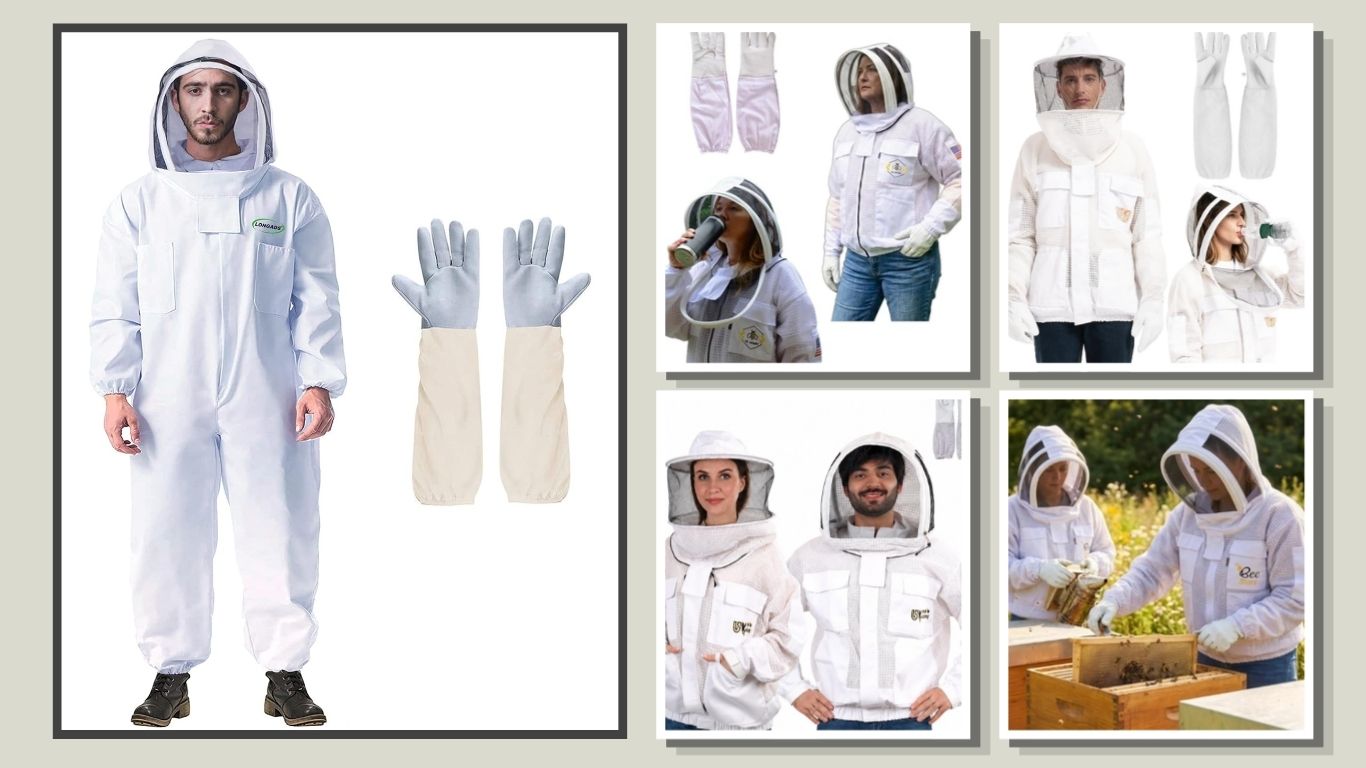
1. LONGADS Professional Beekeeping Suit with Gloves and Round Veil
The LONGADS Professional Beekeeping Suit provides more coverage than a standard waist-length jacket because it protects the upper and lower body. It combines a protective fabric shell with a ventilated round veil and extended gloves. This complete design is useful for new beekeepers, backyard hive owners, and anyone who wants fewer exposed areas while inspecting a colony.
Key Features
- Full-body beekeeping suit design
- Protective round veil for facial coverage
- Goatskin gloves with extended cuffs
- Front zipper for convenient dressing
- Elasticated closures around vulnerable areas
- Multiple pockets for carrying hive tools
- Unisex design for men and women
- Suitable for apiary and backyard work
Why It’s Best For
This LONGADS model is best for beginners who feel more confident with full-body protection. A jacket leaves the legs dependent on separate clothing, whereas this suit creates a more complete defensive layer from the neck to the ankles.
The round veil offers visibility in several directions while helping keep mesh away from the face. The included gloves also mean users do not need to purchase basic hand protection separately. Selecting the correct size remains essential because a tight suit can hold the fabric against the skin.
Performance and Durability
The fabric appears substantial enough for routine inspections while retaining the flexibility needed for lifting boxes and handling frames. Reinforced closures, elasticated openings, and covered entry points help reduce opportunities for bees to enter.
Durability will depend on proper maintenance. Propolis and wax should be removed carefully, while the garment should be washed according to its label. Inspect the veil, zipper, seams, elastic, and gloves before every hive visit.
Pros, Cons, and Overall Verdict
Pros: It offers full-body coverage, includes a veil and gloves, and provides convenient storage pockets. The complete outfit may increase confidence during early hive inspections.
Cons: It may feel warmer and bulkier than a ventilated jacket. A full suit also takes longer to put on and remove.
Overall verdict: The LONGADS Professional Beekeeping Suit is a strong choice for beginners and cautious beekeepers who value comprehensive coverage over the lighter feel of a jacket.
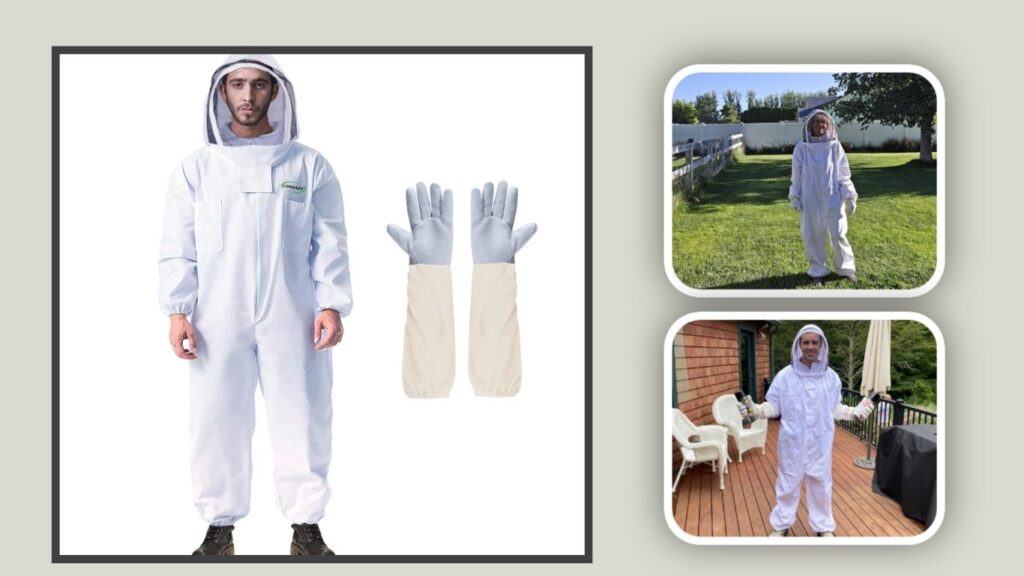
2. US APIARY Protective Ventilated Beekeeping Jacket
The US APIARY Protective Beekeeping Jacket uses a three-layer ventilated construction intended to balance airflow and sting resistance. It includes a fencing veil and gloves, creating a practical starter package for upper-body protection. The jacket format is particularly convenient for routine hive checks when full-body coveralls would feel unnecessarily heavy or restrictive.
Key Features
- Three-layer ventilated mesh construction
- Fencing-style protective veil
- One pair of beekeeping gloves
- Upper-body coverage for hive inspections
- Breathable design for warm conditions
- Elasticated wrist and waist openings
- Front zipper for easier dressing
- Unisex design for different beekeepers
Why It’s Best For
This jacket is best for backyard beekeepers working in warm or humid conditions. Its layered mesh is designed to create space between the outer fabric and the wearer’s skin while allowing air to pass through. This can make longer inspections more manageable than working in a solid cotton jacket.
The fencing veil provides generous forward and downward visibility when examining brood frames. Because the package includes gloves, it also supplies the major protective components needed for the upper body, head, hands, and lower arms.
Performance and Durability
Three-layer mesh can provide a useful combination of structure and ventilation, but it performs correctly only when the jacket fits loosely enough to preserve the space between its layers. Beekeepers should consult the manufacturer’s size chart rather than relying only on their normal clothing size.
The zipper, veil connection, cuff elastic, and waist closure should be checked regularly. These areas receive the most movement and are the most likely places for gaps to develop.
Pros, Cons, and Overall Verdict
Pros: The three-layer mesh improves airflow, while the fencing veil and included gloves create a well-rounded package. A jacket is also faster to wear than a full suit.
Cons: It does not protect the legs, so heavy pants and closed footwear are still necessary. Layered mesh may feel bulky despite its ventilation.
Overall verdict: The US APIARY jacket is a practical warm-weather option for beekeepers who want ventilated upper-body protection with essential accessories included.
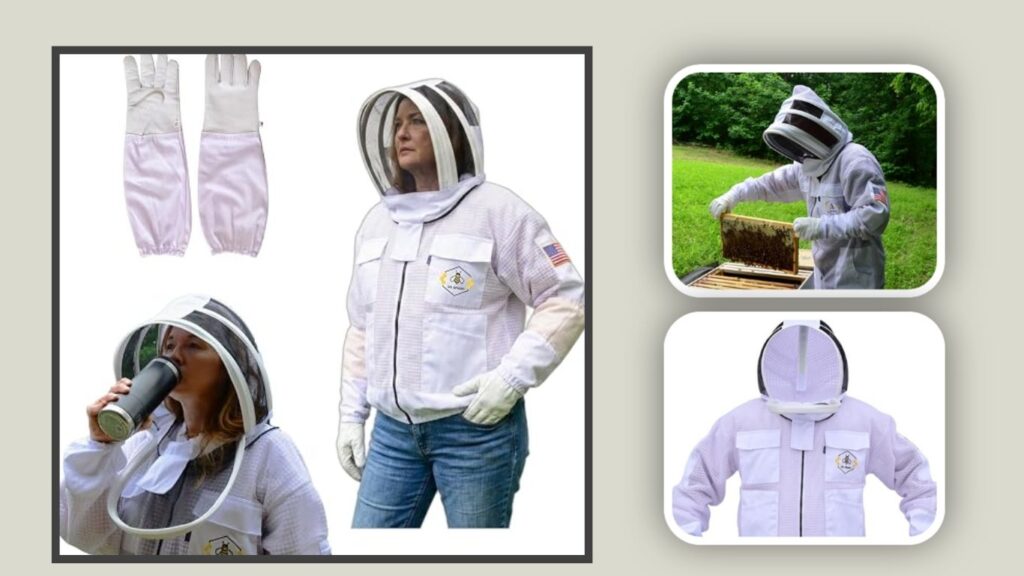
3. USKEEPERS Three-Layer Ventilated Beekeeping Jacket
The USKEEPERS Three-Layer Ventilated Beekeeping Jacket is a feature-rich option combining poly-cotton mesh, two detachable veil styles, goatskin gloves, and multiple tool pockets. Its layered construction holds the outer surface away from the skin while allowing heat and perspiration to escape. This design makes it suitable for frequent inspections during warm beekeeping seasons.
Key Features
- Three-layer ventilated poly-cotton mesh
- Detachable fencing and round veils
- Goatskin gloves with ventilated cuffs
- Heavy-duty YKK brass front zipper
- Multiple deep tool pockets
- Elasticated waist for a secure fit
- Adjustable wrist closures
- Thumb loops that hold sleeves in position
- Unisex design for men and women
Why It’s Best For
This USKEEPERS jacket is best for beekeepers who want the flexibility to choose between two veil styles. The fencing veil provides clear forward visibility and convenient access, while the round veil supplies a broad viewing area around the head.
The deep pockets accommodate commonly used equipment such as a hive tool, notebook, or small inspection accessories. Thumb loops prevent the sleeves from riding upward when gloves are added, helping maintain coverage around the wrists.
Performance and Durability
The intersecting mesh layers create ventilation channels while maintaining distance between bees and the wearer’s skin. This construction should make the jacket more comfortable during extended inspections than a dense, non-ventilated alternative.
YKK brass zippers provide a substantial closure, while hook-and-loop covers help secure vulnerable joining points. Long-term performance will depend on keeping propolis away from the zipper and inspecting the mesh for compression, tears, or separated seams.
Pros, Cons, and Overall Verdict
Pros: Two detachable veils, quality zippers, gloves, secure cuffs, thumb loops, and generous pockets create an especially complete design. The three-layer mesh supports airflow in hot weather.
Cons: The jacket may feel heavier than a single-layer option. It protects only the upper body and requires suitable pants.
Overall verdict: The USKEEPERS jacket is the most versatile option in this selection for regular beekeepers who value ventilation, accessory choice, and practical storage.
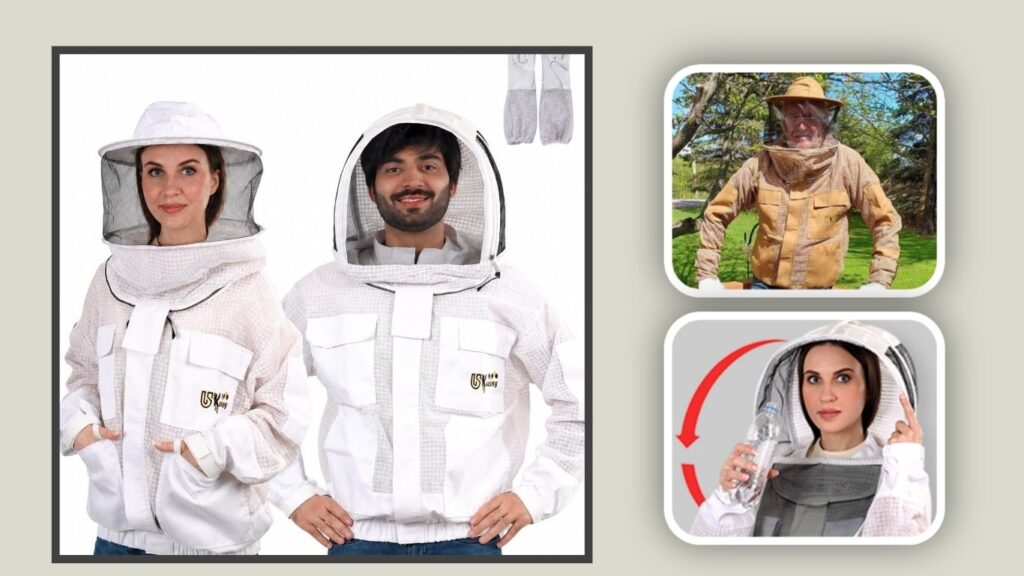
4. GAIACOLMEIA Three-Layer Vented Beekeeping Jacket
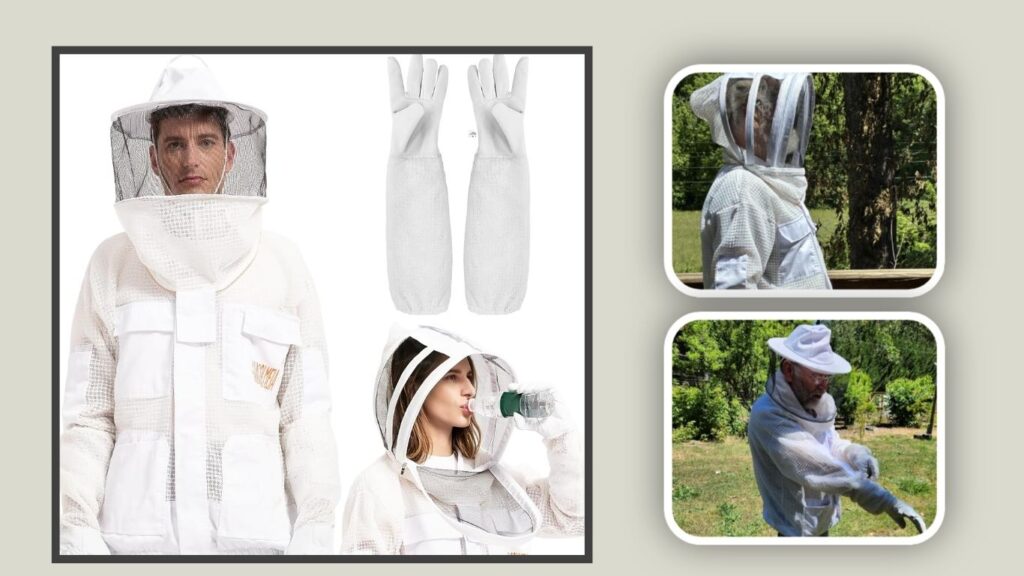
The GAIACOLMEIA Beekeeping Jacket is designed around a three-layer ventilated mesh that encourages airflow while creating a protective buffer from stingers. It includes two veil choices and gloves, giving beekeepers flexibility when preparing for different hive-management tasks. Its tear-resistant positioning also makes it appealing for regular backyard or apiary use.
Key Features
- Three-layer ventilated mesh construction
- Designed to maintain space from the skin
- Two interchangeable beekeeping veils
- Protective gloves included
- Heavy-duty, tear-resistant material
- Secure wrist and waist closures
- Suitable for bees, wasps, and hornets
- Useful for backyard and apiary inspections
Why It’s Best For
This jacket is best for beekeepers who want strong ventilation without sacrificing a structured protective layer. The two-veils package lets the wearer select the style that provides the most comfortable visibility for a particular task.
The included gloves extend protection beyond the jacket cuffs and make the package more convenient for someone assembling a beekeeping outfit. It may be especially useful in warmer regions where solid protective fabrics can become uncomfortable during prolonged inspections.
Performance and Durability
The three-layer material provides its best performance when it remains raised rather than compressed tightly against the body. Choosing a slightly relaxed fit allows the mesh to maintain its protective spacing and gives the wearer more freedom when reaching across hive boxes.
The tear-resistant design should cope well with normal movements around wooden equipment. Nevertheless, sharp frame corners and protruding nails may still damage the mesh. Users should examine the jacket after each demanding session and repair any hole before wearing it again.
Pros, Cons, and Overall Verdict
Pros: The jacket includes two veils and gloves while providing breathable, layered coverage. Its durable mesh and secure openings are useful for repeated inspections.
Cons: Three-layer construction can feel bulkier than lightweight cloth. The jacket does not cover the legs, and the correct size is necessary to maintain protective spacing.
Overall verdict: The GAIACOLMEIA jacket is a capable option for warm-weather beekeeping, particularly for users who want multiple veil choices and a complete upper-body protective package.
5. Bee Stars Three-Layer Ventilated Beekeeping Jacket
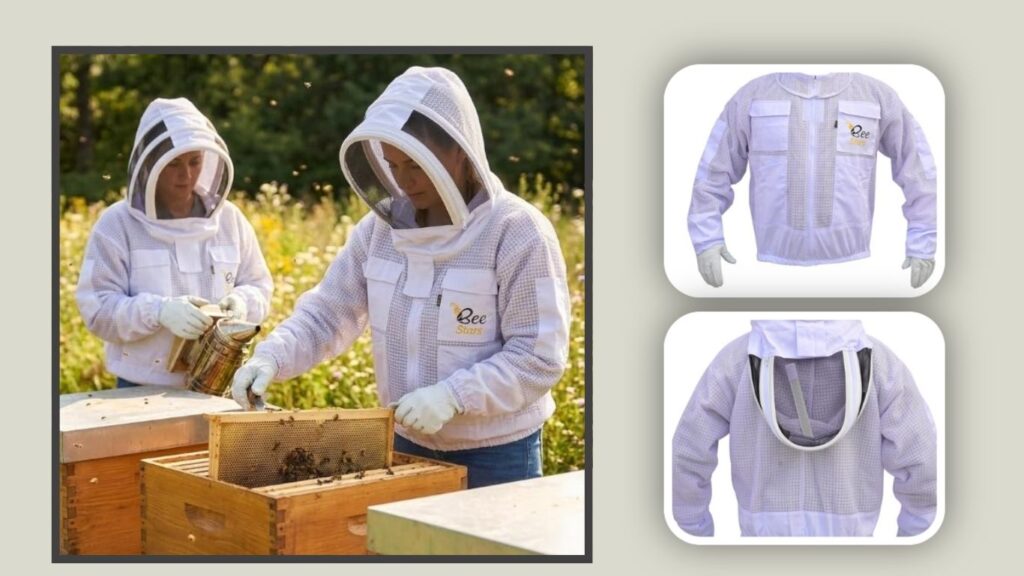
The Bee Stars Three-Layer Beekeeping Jacket combines ventilated mesh with a fencing veil and protective gloves. It is intended to cover the head, neck, torso, and arms while allowing airflow during hive inspections. Cotton storage pockets add practical space for essential equipment, making the jacket suitable for beginners and experienced backyard beekeepers.
Key Features
- Three-layer breathable mesh fabric
- Fencing-style protective veil
- One pair of beekeeping gloves
- Cotton pockets for hive tools
- Lightweight ventilated construction
- Upper-body, neck, and facial coverage
- Secure cuffs and waist
- Unisex design for beekeepers
- Suitable for routine hive management
Why It’s Best For
This jacket is best for beekeepers who prefer a straightforward protective package without paying for accessories they may not use. The fencing veil maintains open space around the face and supplies clear forward visibility while examining frames.
Its cotton pockets provide easy access to frequently used tools, reducing the need to carry a separate pouch during a quick inspection. The included gloves complete the main upper-body protection system and can help beginners feel more prepared when opening a colony.
Performance and Durability
The layered mesh promotes airflow while creating enough thickness to make it harder for a stinger to reach the skin. Its relatively lightweight construction should support comfortable bending, lifting, and reaching around hive boxes.
As with any beekeeping garment, reliable performance depends on a loose fit and completely closed openings. The veil zipper, cuffs, waistband, seams, and glove overlaps should be checked before every inspection. Air drying after washing can help protect mesh structure and elastic components.
Pros, Cons, and Overall Verdict
Pros: Breathable three-layer construction, a practical fencing veil, gloves, and tool pockets create a convenient all-in-one jacket. Its lightweight positioning supports warm-weather use.
Cons: Only one veil style is supplied, and the legs remain unprotected. Users between sizes may need to select the larger option to preserve space between the mesh and skin.
Overall verdict: The Bee Stars jacket is a well-balanced choice for backyard hive owners seeking ventilation, useful accessories, and uncomplicated upper-body protection.
FAQs
Selecting the right protective beekeeping jacket requires careful attention to coverage, ventilation, fit, closures, and veil design. A quality jacket can significantly reduce sting exposure, but it must be worn correctly and paired with appropriate gloves, pants, and closed footwear. These answers address common questions about choosing, using, and maintaining beekeeping jackets.
Can Bees Sting Through a Beekeeping Jacket?
Bees may sting through thin fabric or material pressed tightly against the skin. Three-layer ventilated jackets create space between the outer surface and the wearer, making it more difficult for a stinger to reach the body. However, no jacket guarantees complete protection. Choose a relaxed fit and inspect the material for holes before every use.
Should a Beekeeping Jacket Fit Tightly or Loosely?
A beekeeping jacket should fit loosely without becoming excessively baggy. Extra space helps keep the material away from the skin and allows comfortable movement while lifting boxes or inspecting frames. Use the manufacturer’s size chart and select the larger size if your measurements fall between two options. Check that the jacket covers your waist when bending.
Is a Three-Layer Ventilated Jacket Good for Hot Weather?
Yes. Three-layer mesh allows air to circulate while maintaining a protective gap between bees and the skin. This construction is generally more comfortable for warm-weather inspections than dense, solid fabric. However, beekeepers may still become hot during extended work, so taking breaks, drinking water, and avoiding extreme midday heat remain important.
Is a Fencing Veil Better Than a Round Veil?
A fencing veil usually provides excellent forward and downward visibility while keeping the mesh away from the face. A round veil offers broad, 360-degree visibility and may provide more airflow around the head. The better choice depends on personal comfort, head movement, and inspection style. Jackets supplied with both designs provide the greatest flexibility.
How Should a Beekeeping Jacket Be Washed?
Remove the veil when possible and follow the manufacturer’s care instructions. Close zippers and hook-and-loop fasteners before washing to protect the fabric. Use mild detergent and avoid strong fragrances that may disturb bees. Air drying is generally preferable because high dryer temperatures can damage mesh, elastic, and veil components. Inspect every closure after cleaning.
