
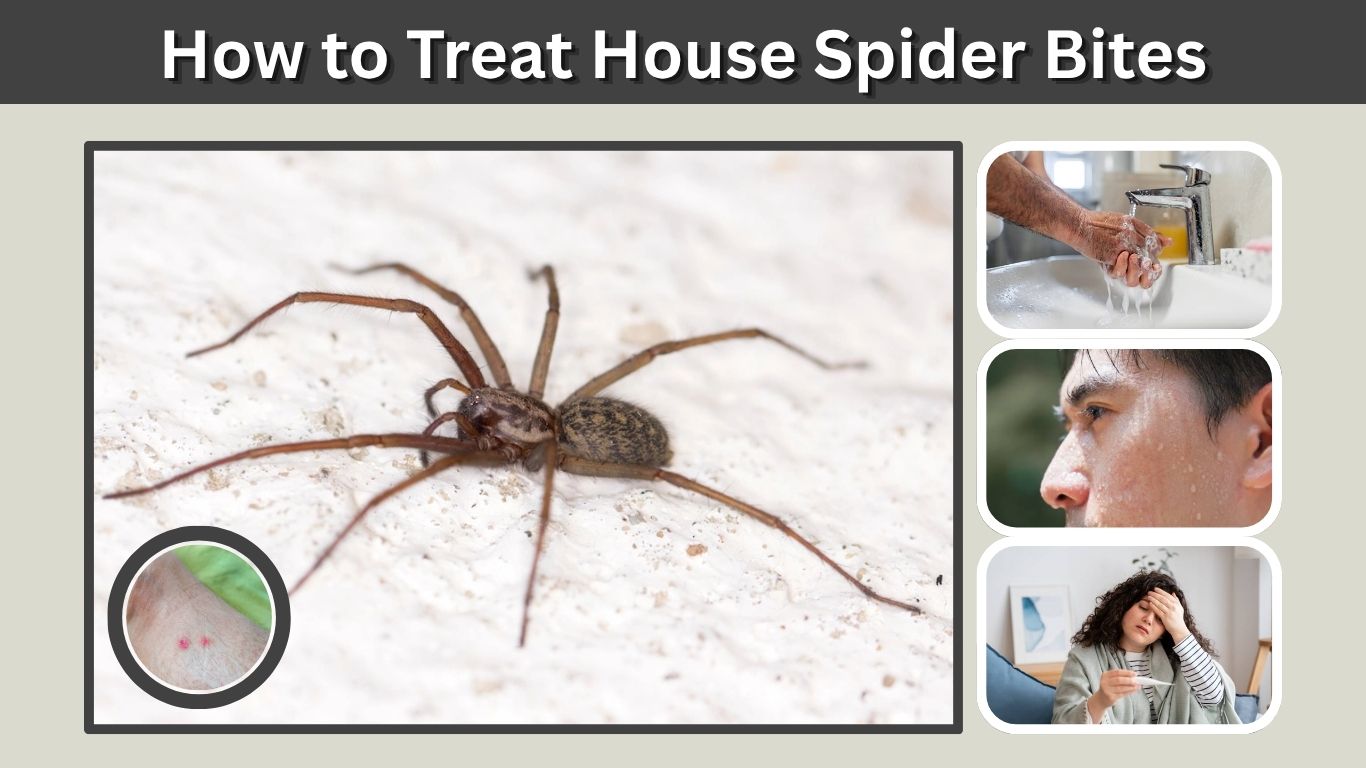
House spider bites are uncommon and usually occur when a spider becomes trapped against the skin or feels threatened. Most bites cause minor symptoms, such as redness, itching, swelling, or localized pain. You can often manage these reactions with basic first aid. However, worsening pain, spreading discoloration, breathing difficulty, or other whole-body symptoms require prompt medical attention. Correctly identifying the spider can also be difficult, so monitor any suspected bite carefully.
What Does a House Spider Bite Look Like?
A suspected house spider bite may appear as a small red or swollen bump. Some people notice itching, tenderness, burning, or two tiny puncture marks. Symptoms can develop immediately or several hours after the bite.
Common Symptoms
- Localized redness or mild discoloration
- Slight swelling around the bite
- Itching or burning
- Mild to moderate pain
- A small blister or raised bump
- Tenderness when the area is touched
These symptoms are not unique to spider bites. Mosquito bites, bacterial skin infections, allergic reactions, and irritated hair follicles can look similar. Without seeing and reliably identifying the spider, it may be impossible to confirm the cause based only on the skin lesion.
How to Treat House Spider Bites
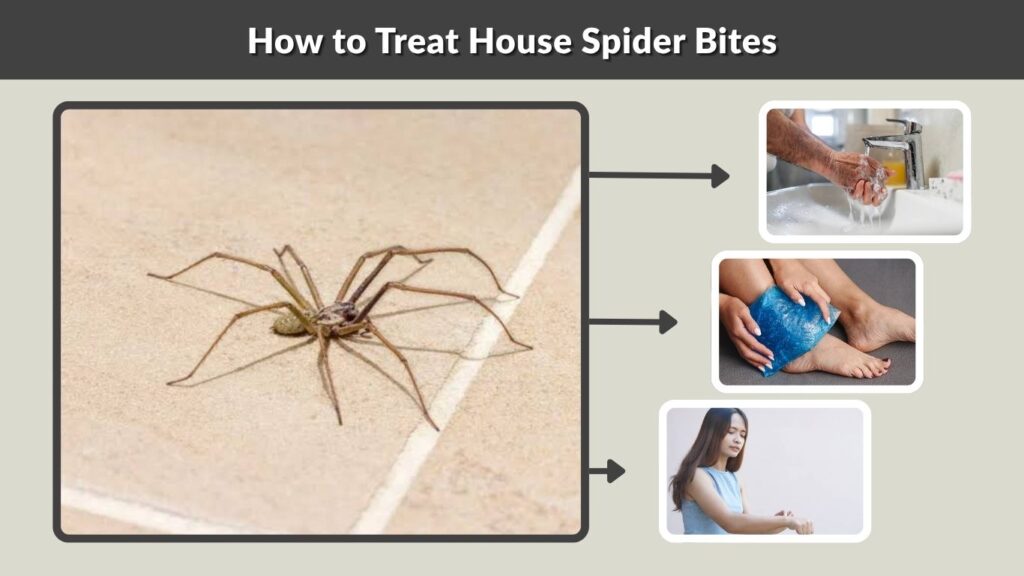
Minor bites can generally be treated at home using simple wound care. The goals are to keep the area clean, control discomfort, and watch for complications.
1. Wash the Bite
Gently clean the area with mild soap and water. Pat it dry using a clean towel. Proper cleaning reduces the chance of bacteria entering the wound, especially if scratching has damaged the skin.
2. Apply a Cold Compress
Place a cold pack or ice wrapped in a thin cloth over the bite for approximately 15 minutes. Never place ice directly on the skin. You can repeat the treatment periodically to reduce swelling and discomfort.
3. Elevate the Affected Area
If the bite is on an arm or leg, keep the limb elevated when practical. Elevation may help control swelling during the first several hours.
4. Manage Pain and Itching
An over-the-counter pain reliever may help with discomfort when used according to its label. An oral antihistamine may reduce itching, but it is best to consult a pharmacist or doctor if you have a medical condition, take other medication, are pregnant, or are treating a child.
Avoid scratching the bite because broken skin increases the risk of infection.
5. Monitor the Bite
Check the affected area several times a day. Photographing it or lightly marking the edge of the redness can help you determine whether it is spreading. Minor symptoms should gradually improve rather than become more severe.
These general measures align with first-aid recommendations from the Mayo Clinic and Better Health Channel.
How to Treat Common House Spider Bites
Common house spiders typically cause only a localized reaction when they bite. Wash the area, use a wrapped cold pack, and monitor it for changes. Mild itching, redness, and soreness may continue temporarily.
Do not cut the skin, squeeze the wound, attempt to suck out venom, or use a tight tourniquet. These methods will not remove venom and may cause tissue damage or interfere with circulation.
Seek medical advice if discomfort persists, the reaction continues expanding, or you cannot determine what caused the wound.
How to Treat a Black House Spider Bite
The name “black house spider” commonly refers to Badumna insignis, an Australian species that builds messy, funnel-like webs around windows, walls, and tree bark. Its dark appearance can cause it to be mistaken for a funnel-web spider.
A confirmed black house spider bite may cause local pain, redness, and swelling. Clean the bite and apply a cold pack for pain relief. Seek medical advice if the pain is substantial, symptoms persist, or the spider’s identity is uncertain.
Do not assume that every dark-colored spider inside a house is a black house spider. If a dangerous funnel-web or mouse spider could be present in your area, contact emergency services and follow local venomous-spider first-aid instructions. Pressure immobilization is intended for particular medically significant Australian spiders—not routine house spider bites. The Australian Museum explains these species-specific differences.
When to Seek Emergency Treatment
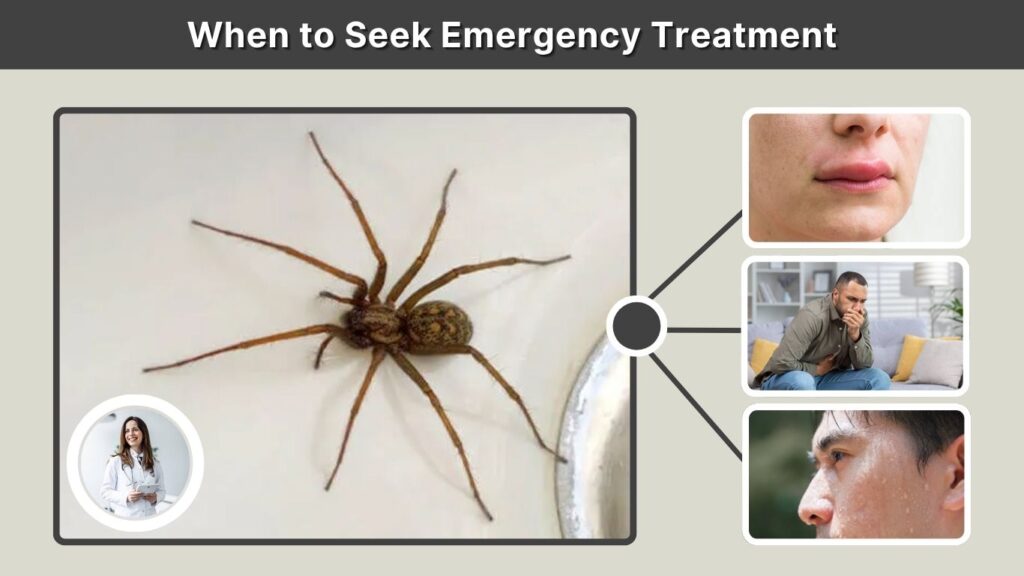
Call your local emergency number immediately if the person develops:
- Difficulty breathing or swallowing
- Swelling of the face, lips, tongue, or throat
- Fainting, severe dizziness, or confusion
- Severe or rapidly worsening pain
- Intense abdominal cramps or muscle spasms
- Repeated vomiting
- Heavy sweating or severe weakness
- A rapidly expanding wound
- Red, purple, blue, or black discoloration
- Red streaks spreading away from the bite
Children, older adults, pregnant people, and individuals with serious medical conditions may need earlier assessment. Urgent evaluation is also appropriate when a dangerous spider may have caused the bite or the spider cannot be identified confidently.
Signs That the Bite May Be Infected
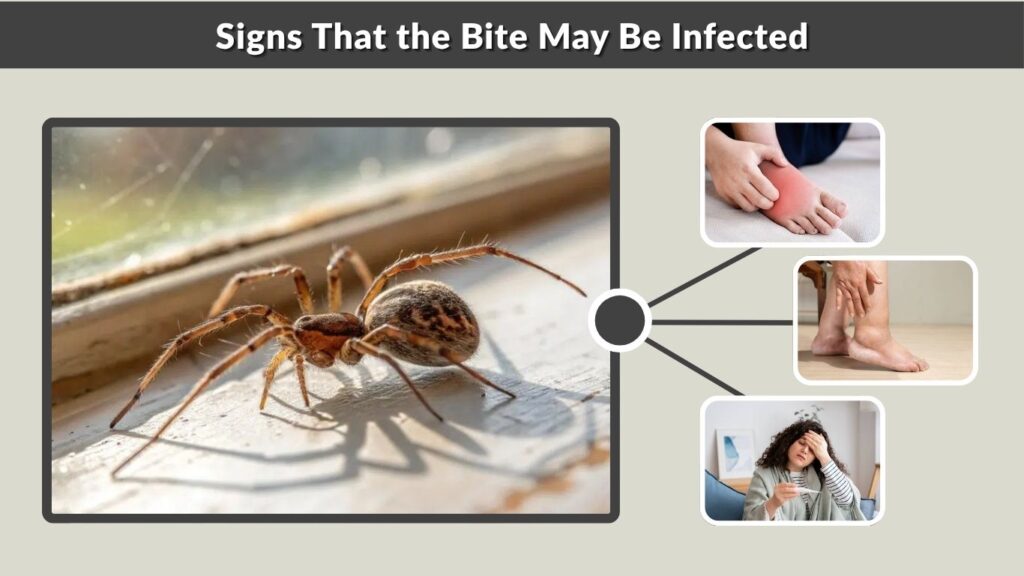
A skin infection can develop when bacteria enter through damaged skin. Contact a medical professional if you notice increasing warmth, redness, swelling, pain, pus, red streaks, fever, or chills. A wound that becomes larger, forms an ulcer, or fails to improve also needs examination.
Antibiotics do not treat spider venom and should not be taken without medical direction. A clinician may prescribe them only if there is evidence of a bacterial infection.
What Not to Do After a Spider Bite
- Do not cut or puncture the bite.
- Do not attempt to suck out venom.
- Do not apply a tight tourniquet.
- Do not place unwrapped ice directly on the skin.
- Do not scratch or squeeze the affected area.
- Do not apply harsh chemicals or unverified home remedies.
- Do not attempt to capture a dangerous spider by hand.
If it can be done safely, take a clear photograph of the spider from a distance. Do not risk another bite to catch or kill it.
FAQs
How long does a house spider bite take to heal?
A mild localized reaction should begin improving within several days. Healing time varies according to the skin reaction and whether scratching or infection has complicated the wound.
Can I treat a house spider bite at home?
Home care is generally reasonable for mild, localized symptoms. Seek professional care if pain or swelling worsens, the wound changes color, or symptoms affect other parts of the body.
Should I apply heat or ice?
Use a cold pack wrapped in cloth to reduce local pain and swelling. Apply it for about 15 minutes at a time and protect the skin from direct contact with ice.
Can a house spider bite cause an infection?
The bite or subsequent scratching can break the skin and allow bacteria to enter. Increasing warmth, pus, spreading redness, fever, and worsening pain are warning signs.
When should a child see a doctor?
Seek medical advice promptly if a child has been bitten by a potentially dangerous spider, develops worsening symptoms, or cannot clearly describe how they feel. Breathing problems, facial swelling, severe pain, vomiting, weakness, or muscle spasms require emergency assistance.
