
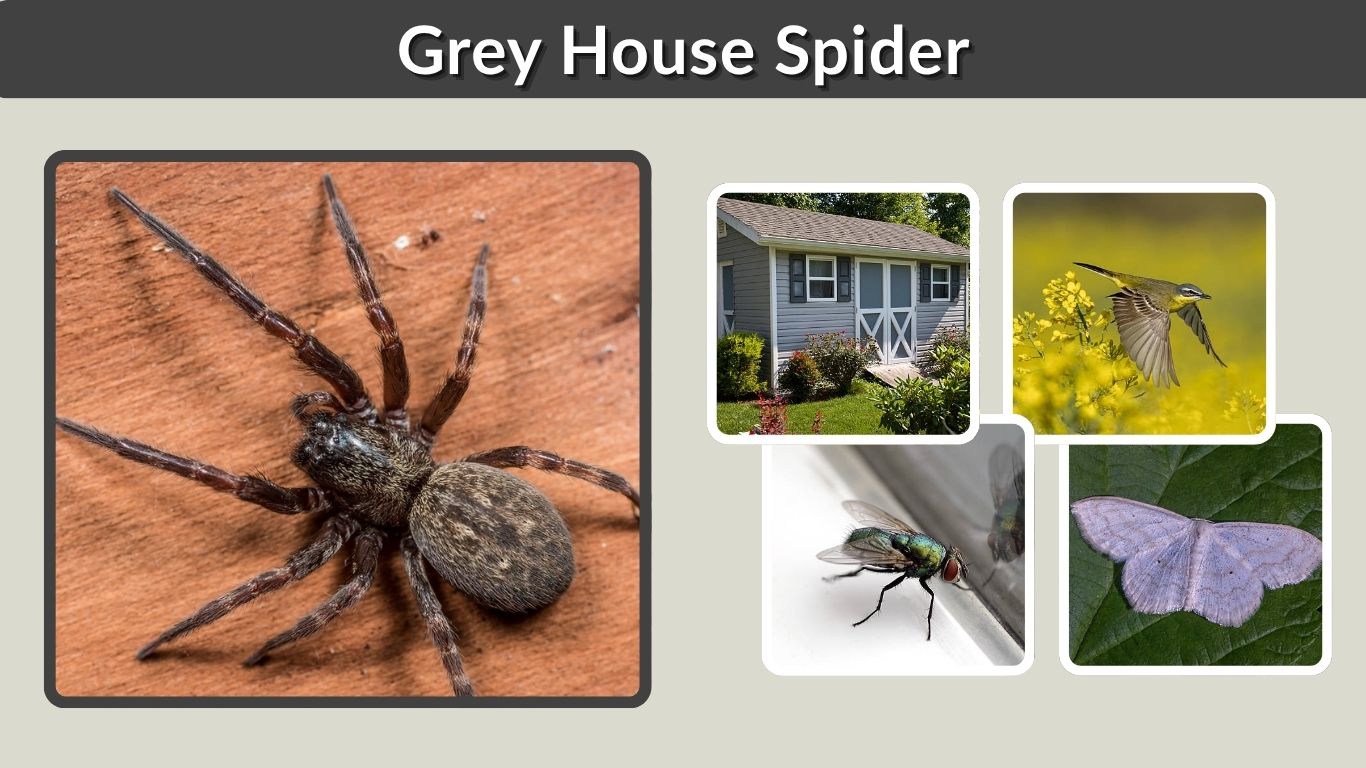
The grey house spider (Badumna longinqua) is a medium-sized web-building spider commonly found around homes, gardens, fences, window frames, and other sheltered structures. Native to Australia, it has been introduced to several other parts of the world, including New Zealand and portions of the United States. Its mottled grey-brown body and messy, lace-like web help distinguish it from many other house spiders. Although grey house spiders possess venom for capturing prey, they are secretive and usually retreat when disturbed, so bites to people are uncommon.
What Is a Grey House Spider?
The name grey house spider most commonly refers to Badumna longinqua, a member of the family Desidae. It is closely related to the black house spider, Badumna insignis.
The species originated in Australia but has successfully established populations elsewhere. The World Spider Catalog records introductions to countries including New Zealand, the United States, Mexico, Brazil, Uruguay, South Africa, Britain, the Netherlands, Germany, Korea, and Japan.
Because many unrelated spiders can appear grey, identifying a spider based only on color is unreliable.
What Does a Grey House Spider Look Like?
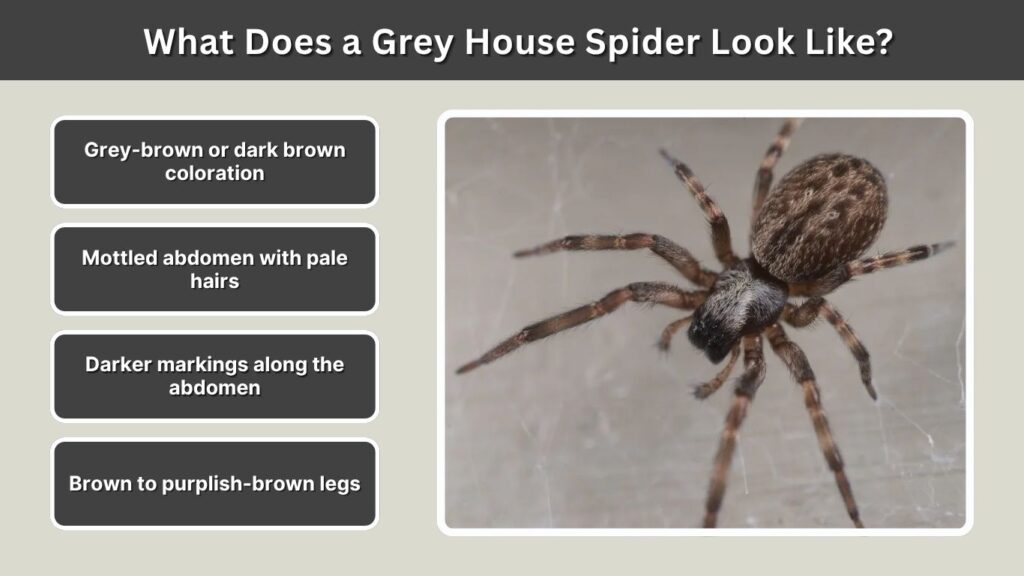
Grey house spiders usually have a mottled appearance that blends well with tree bark, wooden structures, walls, and other surfaces.
Their abdomen is generally covered with grey or whitish hairs over a darker brown background. Darker markings may form spots or irregular patterns.
Grey House Spider Identification
Common characteristics include:
- Grey-brown or dark brown coloration
- Mottled abdomen with pale hairs
- Darker markings along the abdomen
- Brown to purplish-brown legs
- Subtle banding on the legs
- Robust-looking body
- Eight small eyes
- Hair covering much of the body
- Messy or lace-like web around a retreat
They can sometimes appear almost black in dim light, which explains searches for black and grey house spiders.
Grey House Spider Size
Grey house spiders are medium-sized rather than truly giant spiders.
Published identification sources place the body length at roughly 8–15 mm, with females typically growing larger than males.
Their legs make the complete spider appear substantially larger than the body measurement alone.
A spider that looks exceptionally large and grey inside a home may therefore be another species, such as a giant house spider, huntsman spider, or large wolf spider.
Where Do Grey House Spiders Live?
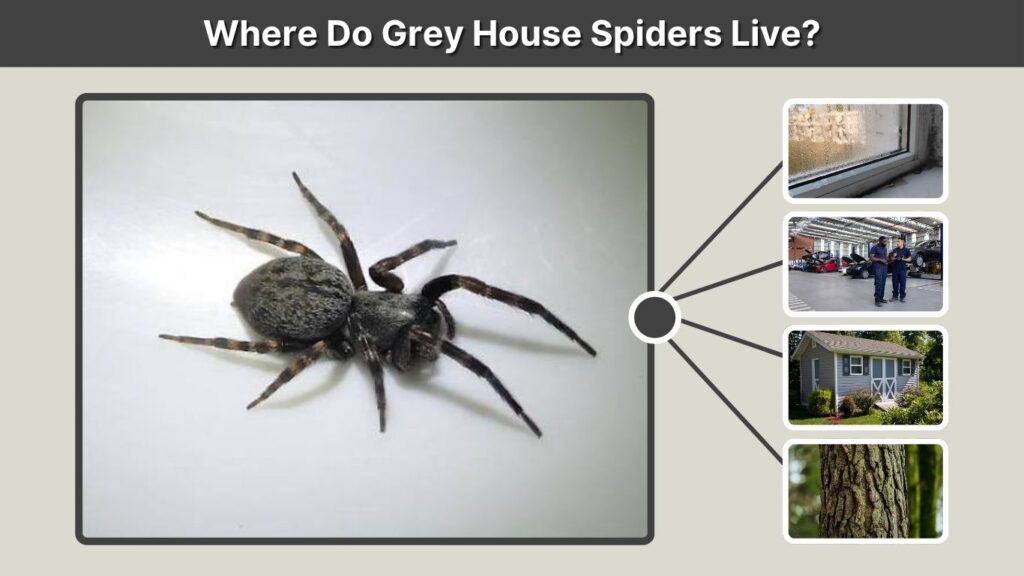
Grey house spiders frequently occupy sheltered places where their webs are protected from heavy disturbance.
Common locations include:
- Window frames
- Exterior walls
- Fences
- Doorways
- Garages
- Sheds
- Tree trunks
- Under bark
- Garden structures
- Around outdoor lighting
- Vehicle mirrors and sheltered vehicle spaces
In New Zealand, Badumna longinqua has become extremely common in homes and gardens after its introduction from Australia.
Grey House Spider in California
The species is established in North America, particularly in parts of the western United States.
Published North American spider references describe Badumna longinqua around buildings in coastal California. Records also exist farther north along parts of the Pacific Coast.
The spider’s ability to live around buildings and other human-made structures probably helped it spread beyond its native Australian range.
Grey House Spider in Australia and New Zealand
The species is native to Australia.
Interestingly, Australian sources may call it the brown house spider rather than grey house spider because the latter common name can cause confusion with other Australian spiders.
In New Zealand, however, “grey house spider” is widely used for Badumna longinqua. It has become one of the country’s most commonly encountered spiders around homes and gardens.
What Does a Grey House Spider Web Look Like?
The web is one of the best clues for identifying this spider.
Rather than producing the neat circular web associated with orb-weavers, grey house spiders create an untidy, lace-like web attached to walls, trees, window frames, or other surfaces.
Web Structure
A typical web consists of an irregular network of silk leading toward a protected retreat.
The spider hides inside this retreat during inactive periods and waits for vibrations caused by insects becoming trapped.
Te Ara describes the web as radiating outward from a circular retreat, while New Zealand’s Manaaki Whenua notes that messy webs are commonly found both inside and outside buildings.
What Do Grey House Spiders Eat?
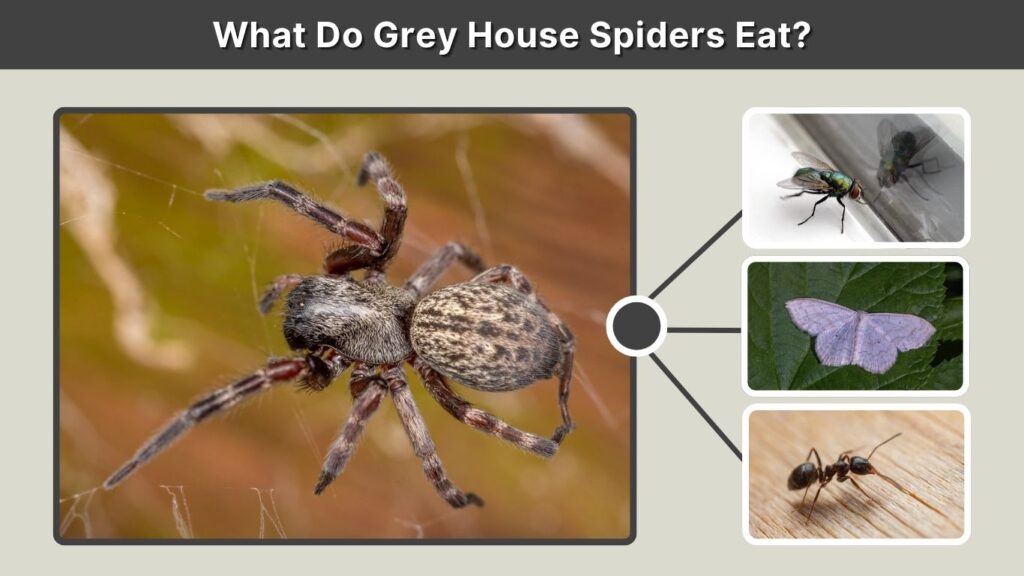
Grey house spiders are predators that help capture a range of insects around homes and gardens.
Common prey may include:
- Houseflies
- Blowflies
- Moths
- Ants
- Small flying insects
- Other insects caught in the web
The spider normally remains near its retreat until movement in the web signals that prey has become trapped. It then rushes out, bites the prey, and uses venom to immobilize it.
Flies and moths are among the prey specifically documented for this species.
Are Grey House Spiders Poisonous?
Technically, venomous is the correct term rather than poisonous.
Grey house spiders use venom to subdue their prey. However, their presence around a home should not automatically be considered dangerous.
These spiders usually retreat when disturbed rather than actively confronting people. Documented bites from Badumna house spiders are relatively uncommon.
Grey House Spider Bite
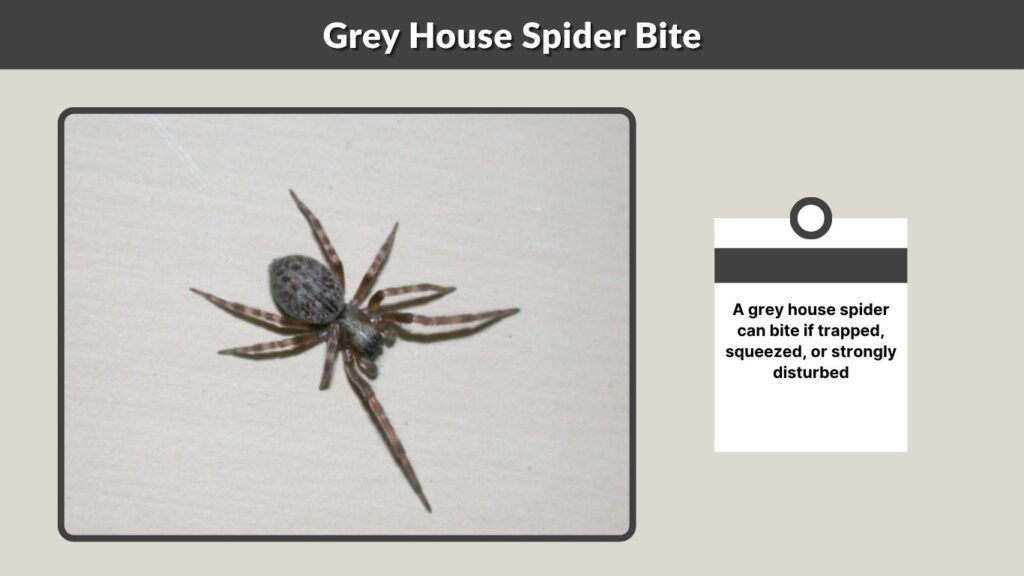
A grey house spider can bite if trapped, squeezed, or strongly disturbed, but bites are uncommon because the spider normally stays inside or close to its web retreat.
A review covering Badumna longinqua and the closely related B. insignis reported mainly localized effects, including pain, redness, occasional swelling, and itching. The spiders were described as retreating when disturbed, making human contact and bites infrequent.
What to Do After a Suspected Bite
Wash the area with soap and water and avoid repeatedly scratching it.
Seek medical care if symptoms become severe, spread significantly, or involve breathing difficulty, facial swelling, dizziness, intense pain, or other concerning reactions.
Spider identification based solely on a skin lesion is unreliable, so an unexplained bite should not automatically be blamed on a grey house spider.
Are Grey House Spiders Aggressive?
No. Grey house spiders are generally secretive web dwellers.
When threatened, they are more likely to move deeper into their retreat than chase a person. This behavior is one reason bites are relatively uncommon.
Females protecting an established web may be reluctant to abandon it, but that does not mean they actively seek human contact.
Grey House Spider Lifespan
Precise lifespan information for Badumna longinqua is less consistently documented than its identification and distribution.
Some secondary spider references estimate that females may live for around two years, sometimes remaining associated with the same web for long periods. However, lifespan can vary with temperature, food availability, sex, and environmental conditions.
Grey House Spider Predators
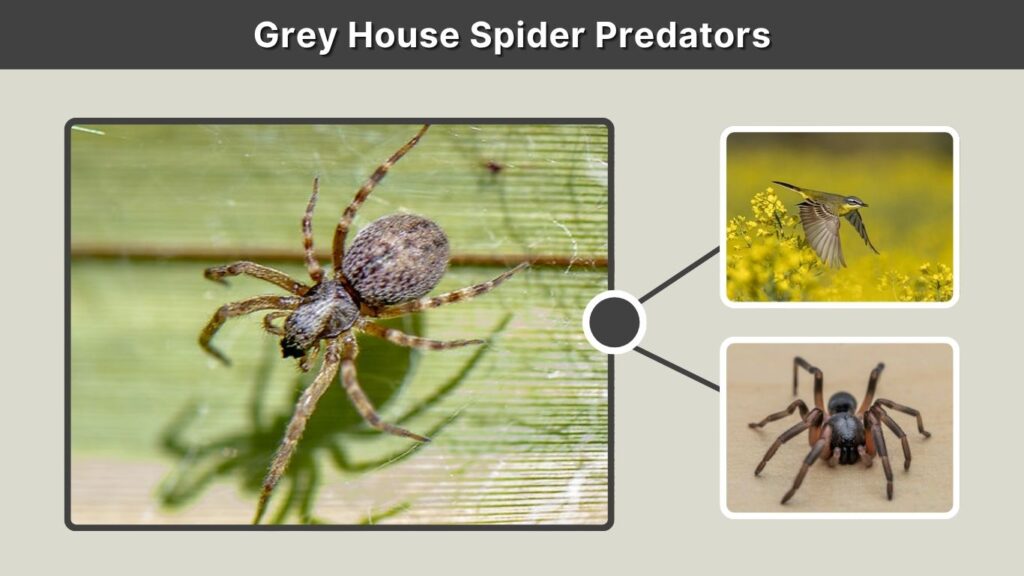
Despite being predators themselves, grey house spiders are eaten by other animals.
Potential predators include other spiders, insect-eating birds, and various small predators that can access their webs.
White-tailed spiders (Lampona species) are known to prey on house spiders, including Badumna. Cellar spiders may also capture them where both species occur around buildings.
Their protected web retreat helps reduce the risk of being caught.
Small Grey Spiders in the House
Not every small grey spider found indoors is a grey house spider.
Several common spider groups can appear grey or grey-brown, including:
- House spiders
- Wolf spiders
- Jumping spiders
- Cellar spiders
- Funnel weavers
- Juvenile spiders of larger species
Look for the characteristic messy web and protected tubular retreat before assuming the spider is Badumna longinqua.
How to Get Rid of Grey House Spiders
Because these spiders eat flies, moths, and other insects, an occasional outdoor grey house spider generally does not require control.
For unwanted indoor spiders, reducing suitable web sites and insect prey is usually more effective than repeatedly killing individual spiders.
Simple Control Methods
Remove old webs with a vacuum or brush, seal gaps around doors and windows, repair damaged screens, and reduce insects attracted to lights near entrances.
Keeping storage areas uncluttered can also eliminate protected spaces where spiders establish webs.
If possible, an individual spider can simply be captured in a container and relocated outside.
FAQs
Are grey house spiders dangerous?
They are venomous, but they are secretive and bites are uncommon. Reported Badumna bites generally produce localized symptoms rather than being regarded among the major medically important spider bites.
How big does a grey house spider get?
Body length is generally around 8–15 mm, with females typically larger than males.
Why do I have grey spiders in my house?
Homes provide sheltered web sites and insect prey. Window frames, garages, sheds, and quiet corners can be especially suitable.
Are grey house spiders found in California?
Yes. Badumna longinqua is an introduced species recorded around buildings in coastal California and other parts of the western United States.
What is the difference between a grey and black house spider?
They are closely related species. The grey house spider, Badumna longinqua, is generally smaller and lighter brown or grey, whereas the black house spider, Badumna insignis, tends to have a darker and more robust appearance.
