
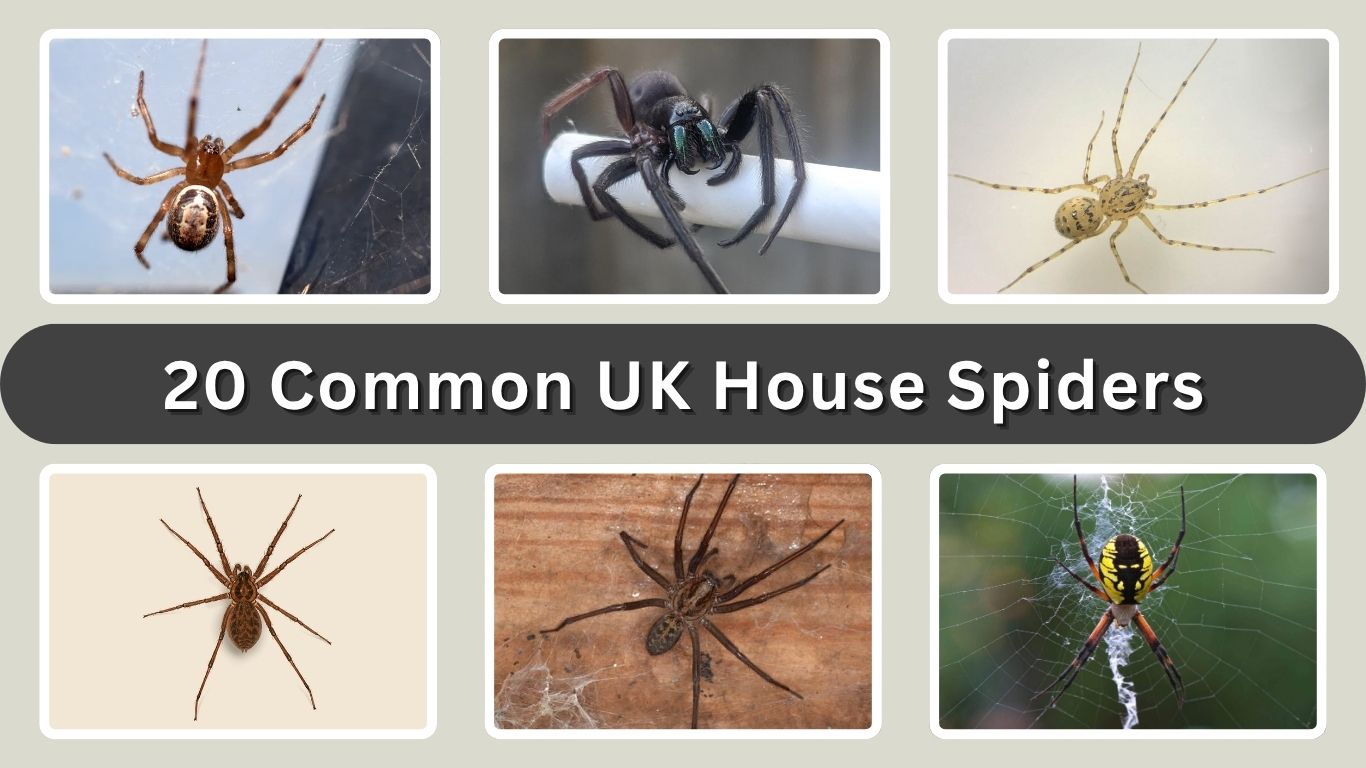
UK homes can attract many different spiders, from tiny money spiders and cellar spiders to large Giant House Spiders that appear indoors during autumn. Most house spiders in Britain are harmless and actually help control flies, moths, mosquitoes, and other insects. Their size, color, web type, body shape, and movement can help with identification. This guide covers 20 common UK house spiders, including large, black, brown, long-legged, jumping, and web-building species you may find in houses, garages, sheds, and gardens.
1. Giant House Spider
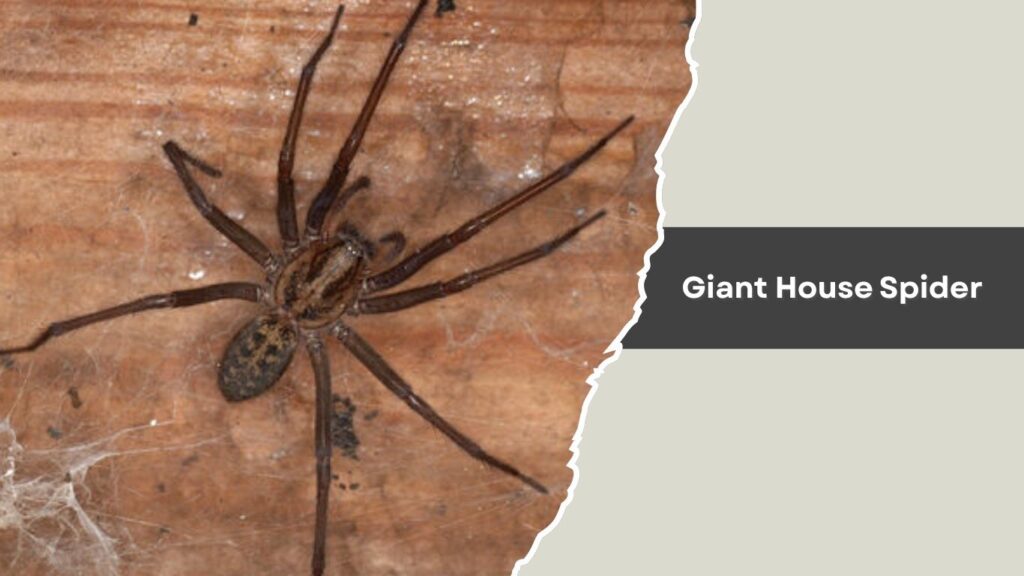
The Giant House Spider is one of the largest and most noticeable spiders found inside UK homes. It belongs to the Eratigena atrica species group and is especially visible during late summer and autumn when adult males wander indoors searching for females. Despite its intimidating size and incredible speed, this spider is generally harmless to people and prefers escaping rather than confronting humans.
Identification
- Large brown or dark brown body
- Very long, hairy legs
- Body usually around 10–18 mm long
- Leg span may reach approximately 7–8 cm
- Abdomen has brown and grayish markings
- Long spinnerets are visible at the rear
- Males have longer-looking legs and enlarged pedipalps
Habitat and Distribution
Giant House Spiders are widespread throughout the UK. They frequently occupy houses, garages, sheds, basements, lofts, and other sheltered buildings. Outdoors, they can survive beneath logs, rocks, walls, and vegetation. Indoor locations provide stable temperatures and protection from harsh weather.
Behavior and Diet
This species builds a broad sheet web ending in a funnel-shaped retreat. The spider waits inside until an insect creates vibrations across the web, then quickly rushes out to capture it. Its diet includes flies, moths, mosquitoes, beetles, and other small arthropods.
Adult males often leave their webs in autumn and can suddenly appear running across floors or walls.
Lifespan and Reproduction
Females generally live longer than males and may survive for several years under suitable conditions. Males usually mature within about a year and often die after the mating season. Females produce silk-covered egg sacs containing developing spiderlings, which later emerge as miniature versions of the adults.
2. Domestic House Spider
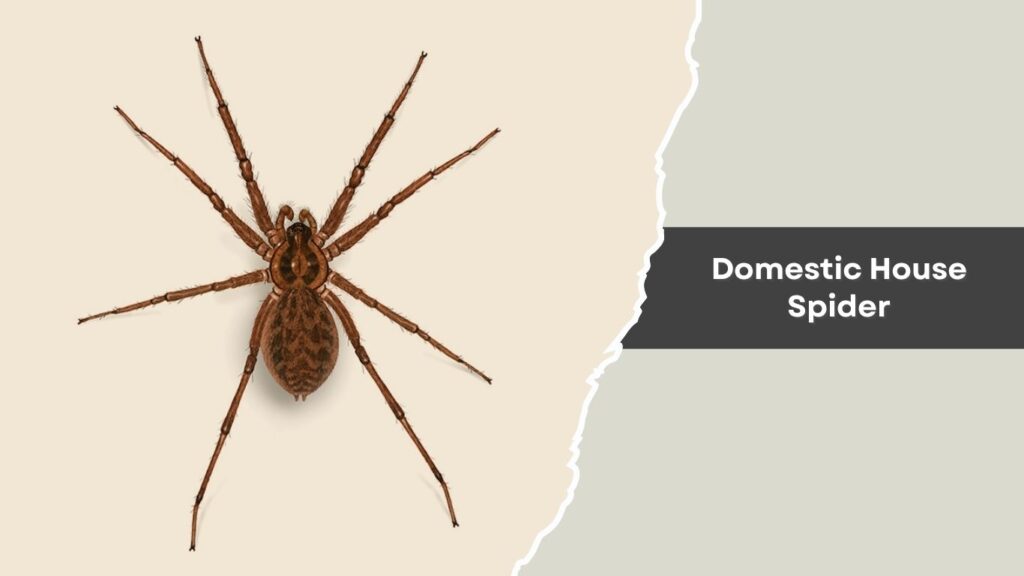
The Domestic House Spider (Tegenaria domestica) is a familiar funnel-weaving spider commonly found inside buildings across Britain. It is generally smaller than the Giant House Spider but has a similar brown coloration and long-legged appearance. This species has adapted well to human structures and often remains hidden in quiet corners where its web can stay undisturbed for long periods.
Identification
- Body is usually light to medium brown
- Abdomen has darker patterned markings
- Legs are relatively long and slender
- Fine hairs cover the body and legs
- Two visible spinnerets occur at the rear
- Usually smaller than the Giant House Spider
- Builds a flat web with a funnel-shaped retreat
Habitat and Distribution
Domestic House Spiders occur throughout the UK and many other temperate regions. They commonly live in garages, sheds, basements, lofts, barns, wall gaps, and behind stored objects. Outdoors, they can also occupy rock crevices and sheltered spaces around buildings.
Behavior and Diet
The Domestic House Spider spends much of its time near its web rather than actively wandering. When an insect lands on the sheet of silk, vibrations alert the spider, which quickly emerges from its funnel.
Its prey includes flies, small moths, mosquitoes, beetles, and other insects. It rarely shows aggressive behavior toward people.
Lifespan and Reproduction
Females may survive considerably longer than males because they remain protected around established webs. Adult males wander during the breeding season to locate females. Following mating, females create egg sacs inside or near their web retreats, where the eggs remain protected until hatching.
3. Common House Spider
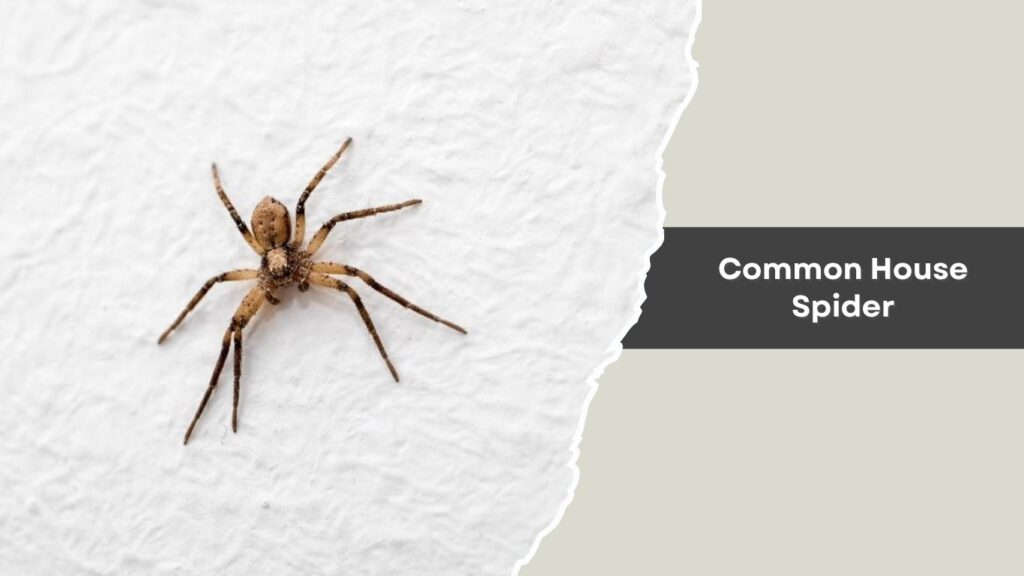
The Common House Spider (Parasteatoda tepidariorum) is a small cobweb spider that can live almost entirely inside buildings. Although more strongly associated with North America, it has a broad worldwide distribution and can occur in Britain. It creates irregular tangled webs rather than the distinctive funnel-shaped structures made by Giant and Domestic House Spiders.
Identification
- Small rounded abdomen
- Usually brown, gray, or yellowish-brown
- Dark and pale markings on the abdomen
- Thin legs with darker bands
- Females are larger than males
- Creates messy, irregular cobwebs
- Usually remains close to its web
Habitat and Distribution
Common House Spiders favor protected areas that experience little disturbance. Inside buildings, they can occupy window frames, ceiling corners, garages, sheds, basements, cupboards, and spaces behind furniture.
Their ability to live close to humans gives them access to a constant supply of small insects attracted indoors.
Behavior and Diet
These spiders remain suspended in tangled webs and wait for prey to become trapped. Once an insect struggles in the silk, the spider wraps it before feeding.
Their diet commonly includes flies, mosquitoes, small moths, ants, and other spiders. They generally remain hidden and pose little concern to household occupants.
Lifespan and Reproduction
Females produce several rounded egg sacs during their lives. Each sac may contain many eggs and remains attached to the web until spiderlings hatch. Adults can survive for a year or more depending on temperature, food availability, and indoor conditions.
4. Cardinal Spider
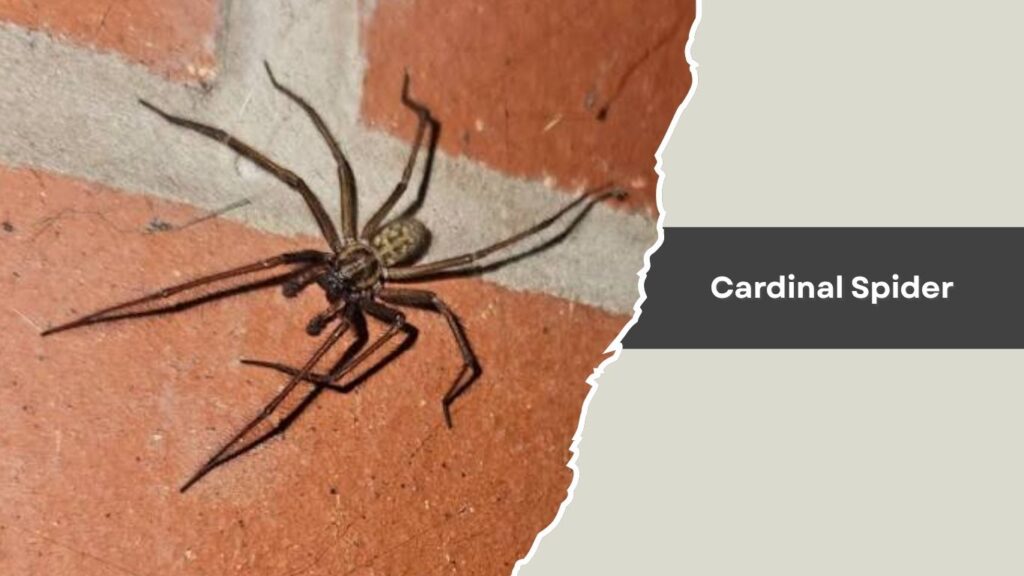
The Cardinal Spider (Tegenaria parietina) is one of the largest spiders encountered in British buildings. Its common name reportedly comes from historical sightings at Hampton Court Palace, where Cardinal Wolsey was associated with the species. Although large and somewhat intimidating, Cardinal Spiders are shy animals and are not considered dangerous to humans.
Identification
- Large brown body
- Long, hairy legs
- Legs may show subtle banding
- Abdomen has dark brown markings
- Females are generally larger-bodied
- Males appear slimmer with longer legs
- Often resembles a Giant House Spider
Habitat and Distribution
Cardinal Spiders are found in various parts of southern Britain and are particularly associated with older buildings. They may inhabit houses, castles, warehouses, sheds, barns, cellars, and wall cavities.
Warm, undisturbed structures provide ideal locations for their funnel webs and retreats.
Behavior and Diet
Like other funnel weavers, the Cardinal Spider builds a flat sheet web leading into a sheltered tube. It waits inside the retreat until prey touches the web.
Flies, moths, beetles, and other household insects make up much of its diet. It may run rapidly when disturbed but generally attempts to escape rather than bite.
Lifespan and Reproduction
Females can live for several years if food and shelter remain available. Adult males become more mobile during mating periods and search surrounding structures for females.
After mating, females produce egg sacs in protected parts of their webs. Spiderlings hatch and gradually disperse into nearby sheltered locations.
5. Cellar Spider
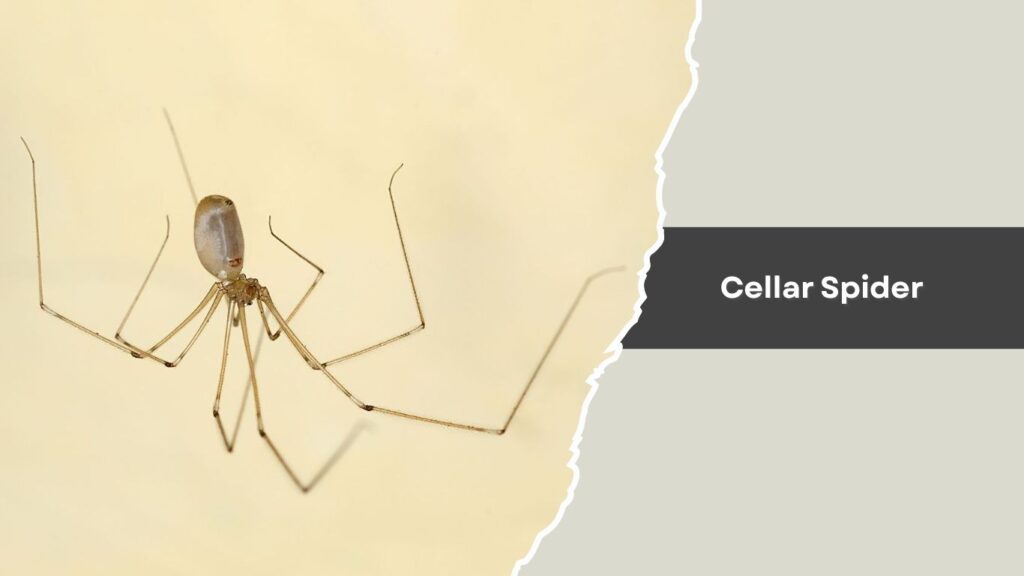
The Long-Bodied Cellar Spider (Pholcus phalangioides) is extremely common in UK houses. It is instantly recognizable by its tiny body and extraordinarily long, delicate legs. It is often found hanging upside down in loose webs on ceilings, in bathrooms, garages, cupboards, and basements.
Identification
- Very small elongated body
- Extremely long and thin legs
- Body is pale gray, tan, or brown
- Legs can be several times longer than the body
- Usually hangs upside down beneath its web
- Produces loose and irregular silk
- Vibrates rapidly when disturbed
Habitat and Distribution
Cellar Spiders are widespread in houses throughout Britain. They prefer warm, dry, sheltered indoor locations such as garages, ceilings, cupboards, sheds, and cellars.
Because they tolerate indoor conditions particularly well, generations can live and reproduce within the same building without needing to move outdoors.
Behavior and Diet
Cellar Spiders are useful indoor predators. They eat flies, mosquitoes, moths, other small insects, and even other spiders.
When threatened, they rapidly vibrate their web and body, creating a blur that can make them difficult for predators to target. Despite myths surrounding their venom, Cellar Spiders are not considered dangerous to humans.
Lifespan and Reproduction
Females carry their eggs in loose silk bundles held beneath their mouthparts rather than enclosing them within a solid egg sac. After hatching, spiderlings initially remain close to their mother before dispersing.
Adults may survive for several years inside protected buildings.
6. Noble False Widow Spider
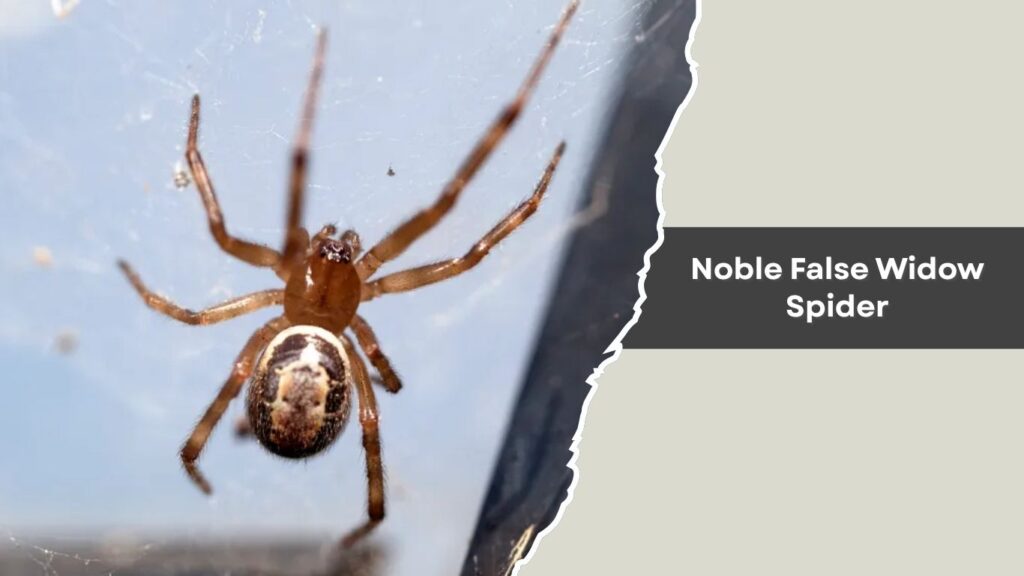
The Noble False Widow (Steatoda nobilis) is one of Britain’s most recognizable indoor spiders. Originally associated with the Canary Islands and Madeira, it has become widespread across much of southern Britain and continues expanding its range. Its rounded dark abdomen sometimes leads people to mistake it for a true black widow.
Identification
- Rounded, bulbous abdomen
- Dark brown to almost black coloration
- Cream or pale markings on the abdomen
- Pattern sometimes resembles a skull
- Legs are reddish-brown to dark brown
- Females are larger and more rounded than males
- Builds strong, irregular cobwebs
Habitat and Distribution
Noble False Widows are particularly common in southern England but have been recorded increasingly farther north. They thrive around buildings, fences, sheds, garages, window frames, conservatories, and exterior walls.
Warm urban environments provide especially favorable conditions.
Behavior and Diet
The spider builds an untidy but surprisingly strong web and feeds on many insects, including flies, moths, beetles, and wasps. It may also capture other spiders.
Noble False Widows are not naturally aggressive. Bites can occur if a spider becomes trapped against the skin, but serious reactions are uncommon.
Lifespan and Reproduction
Females can survive for several years and produce multiple egg sacs. The eggs are protected inside silk structures within the web.
Males roam more frequently while searching for mates. Spiderlings disperse after hatching and may establish webs around nearby buildings.
7. Cupboard Spider
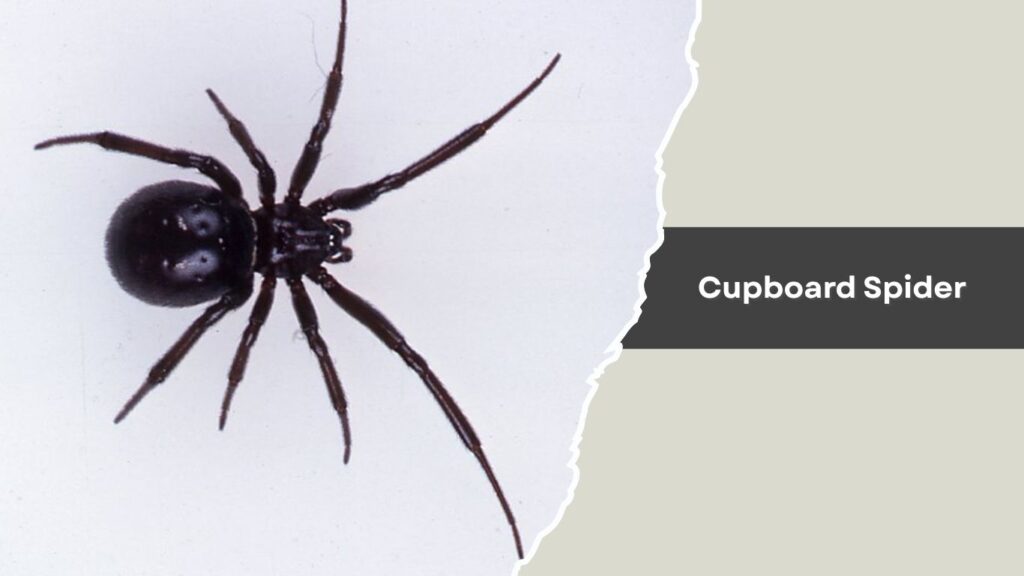
The Cupboard Spider (Steatoda grossa) is another false widow species commonly associated with houses and other buildings in Britain. It is smaller and usually less distinctly patterned than the Noble False Widow. Its preference for dark, quiet indoor spaces explains the name “Cupboard Spider.”
Identification
- Rounded dark abdomen
- Brown, purple-brown, or nearly black coloration
- Legs are usually reddish or brown
- Females have larger rounded abdomens
- Males are smaller and more slender
- Young individuals may show pale abdominal patterns
- Produces an irregular tangled web
Habitat and Distribution
Cupboard Spiders favor dark, sheltered locations around homes. Typical sites include cupboards, garages, sheds, cellars, under furniture, wall cavities, and quiet storage areas.
They occur throughout many parts of Britain and are also widely distributed internationally due to their close association with buildings.
Behavior and Diet
These spiders spend most of their time in tangled webs waiting for insects. Their strong silk allows them to capture flies, beetles, moths, and other relatively large prey.
Cupboard Spiders tend to retreat when disturbed and do not actively seek contact with humans. Their dark coloration can occasionally cause them to be mistaken for more dangerous widow spiders.
Lifespan and Reproduction
Females generally live longer than males and may survive for several years indoors. They produce pale silk egg sacs attached to protected areas of the web.
Young spiderlings emerge after development and disperse into surrounding cracks, cupboards, and other sheltered spaces where they establish their own webs.
8. Rabbit Hutch Spider
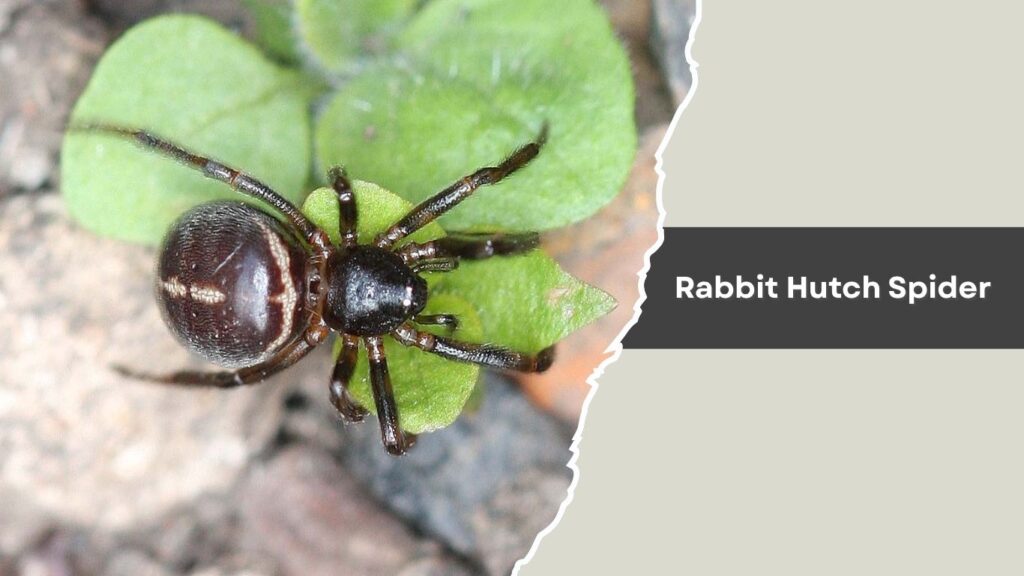
The Rabbit Hutch Spider (Steatoda bipunctata) is a small false widow commonly found around houses, sheds, garages, fences, and animal shelters in the UK. Its name comes from its frequent presence in rabbit hutches and similar wooden structures. Although related to other false widow spiders, it is generally shy and poses little threat to people.
Identification
- Small, rounded abdomen
- Usually dark brown to reddish-brown
- Pale line or markings may appear on the abdomen
- Legs are reddish-brown
- Females are larger and more rounded than males
- Builds messy, irregular cobwebs
- Often hides in cracks close to its web
Habitat and Distribution
Rabbit Hutch Spiders are widespread throughout Britain. They commonly occupy sheds, garages, fences, barns, outbuildings, window frames, and wooden garden structures. They favor dry, sheltered locations where their webs are protected from wind and rain.
Behavior and Diet
This spider spends most of its time inside an irregular web. Flies, small moths, beetles, and other insects become tangled in the silk before being subdued by the spider.
Rabbit Hutch Spiders are generally reluctant to leave their webs unless disturbed or searching for mates.
Lifespan and Reproduction
Females may live for several years under protected conditions. They produce silk egg sacs within their webs, where eggs remain protected until the spiderlings hatch.
Males become more active during the breeding season and may wander away from established webs while searching for females.
9. Black Lace-Weaver Spider
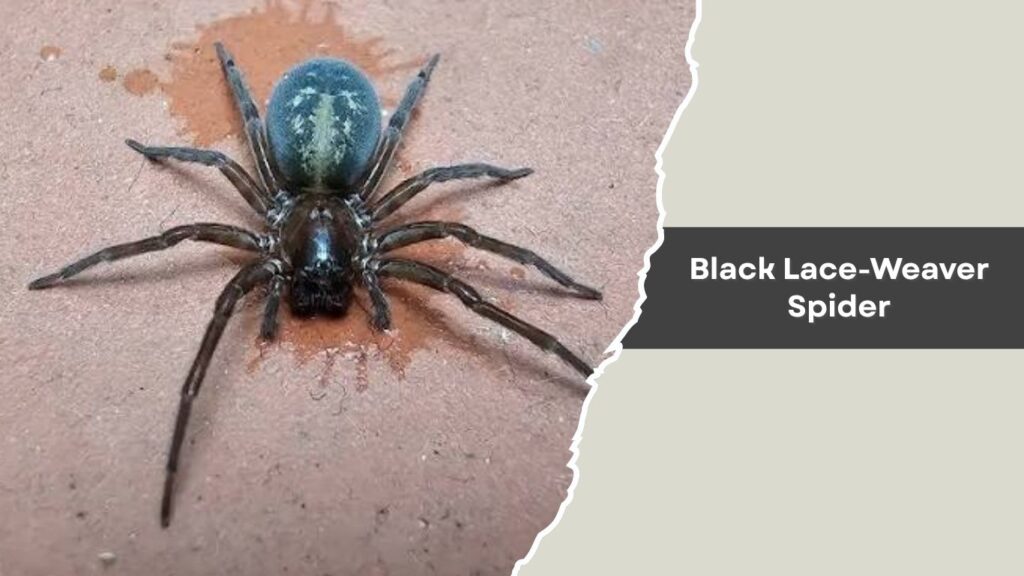
The Black Lace-Weaver (Amaurobius ferox) is a dark, robust house spider often discovered beneath stones, around walls, and inside sheds or basements. Females can appear almost black, making this species a likely explanation for some reports of big black spiders in UK houses. It gets its name from the distinctive lace-like appearance of its web.
Identification
- Body is dark brown to almost black
- Abdomen has pale cream or yellowish markings
- Legs are thick and hairy
- Females are larger and more robust than males
- Body can reach roughly 12–16 mm in females
- Produces bluish-white, lace-like silk
- Often has a broad, powerful appearance
Habitat and Distribution
Black Lace-Weavers are widespread across the UK. They live beneath rocks, logs, tree bark, walls, and garden debris and may enter houses, cellars, garages, and sheds.
They prefer dark cracks and crevices that provide both shelter and access to passing insects.
Behavior and Diet
The spider builds a dense, woolly web around the entrance to its retreat. When prey contacts the silk, the spider quickly emerges and pulls it back toward the hiding place.
Its diet includes beetles, flies, woodlice, moths, and other spiders. Despite its heavy build, it usually retreats when disturbed.
Lifespan and Reproduction
Females protect their egg sacs inside sheltered retreats. An unusual feature of this species is matriphagy: newly hatched spiderlings may eventually consume their mother after she provides them with food.
This behavior supplies the young spiders with nutrients before they disperse.
10. Lace-Webbed Spider
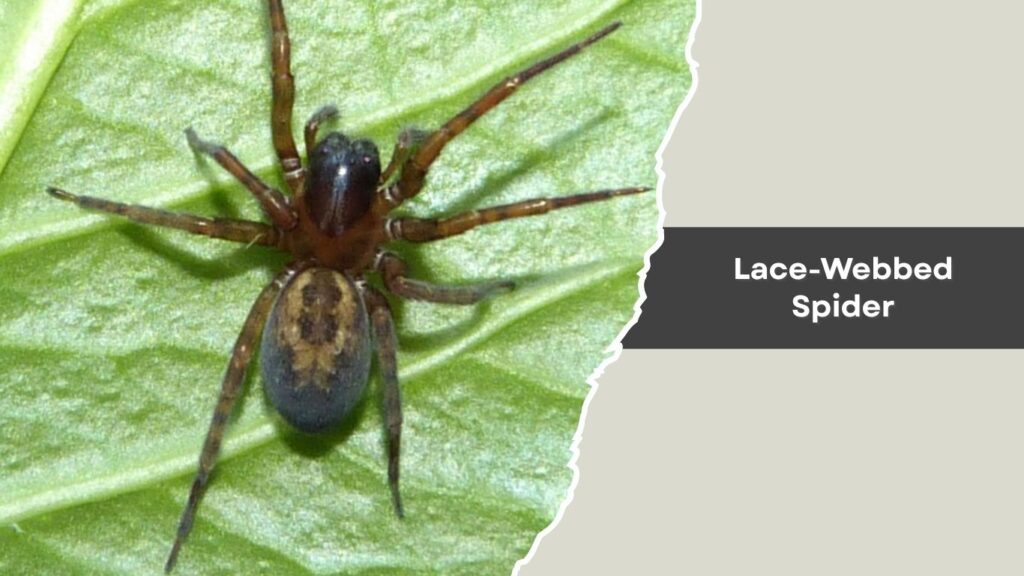
The Lace-Webbed Spider (Amaurobius similis) is a common British species frequently found around houses and gardens. It resembles the Black Lace-Weaver but is usually somewhat lighter in coloration. Its woolly silk webs often appear around brickwork, window frames, garden walls, and other sheltered cracks.
Identification
- Medium-sized brown spider
- Abdomen has pale chevron-like markings
- Legs are brown and noticeably hairy
- Body is less uniformly dark than the Black Lace-Weaver
- Females are larger than males
- Produces distinctive woolly silk
- Often hides inside a crack connected to its web
Habitat and Distribution
This species is common throughout much of the UK. It frequently establishes webs around walls, fences, sheds, window frames, garages, and beneath outdoor objects.
Older buildings with numerous cracks provide especially suitable hiding places.
Behavior and Diet
Lace-Webbed Spiders usually remain concealed during daylight and become more active after dark. Their specialized silk helps entangle insects walking across nearby surfaces.
They feed on flies, beetles, moths, and other small arthropods. They generally stay close to their retreats rather than roaming widely.
Lifespan and Reproduction
Females create protected egg sacs within their retreats. Spiderlings remain together temporarily after hatching before dispersing.
Adults may survive more than one season when they occupy sheltered areas around buildings.
11. Green-Fanged Tube-Web Spider
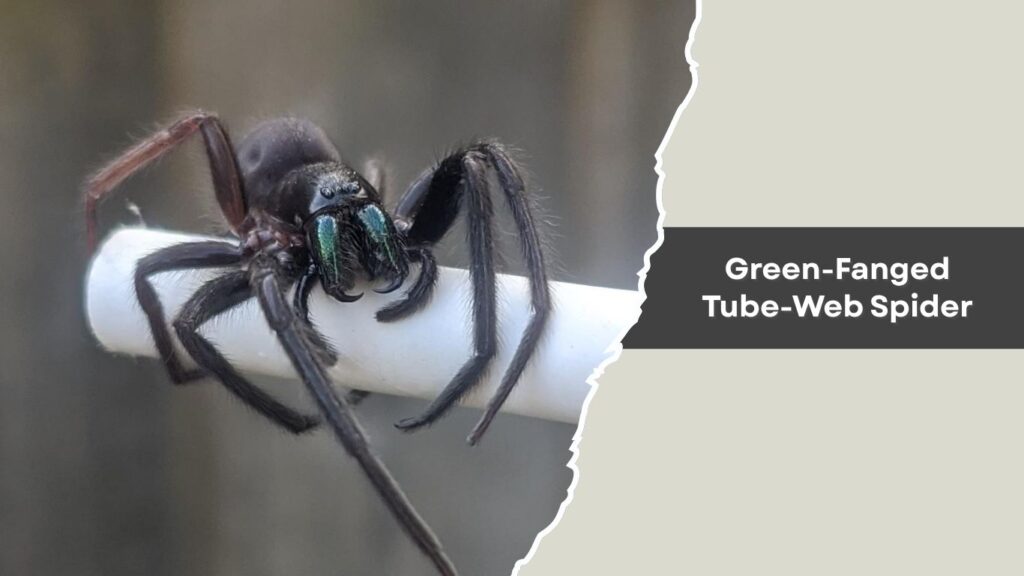
The Green-Fanged Tube-Web Spider (Segestria florentina) is one of the most distinctive large spiders found in southern Britain. Its dark body contrasts with metallic green chelicerae, or mouthparts, which are easily visible in mature individuals. It typically lives inside tubular webs built in cracks in old walls and buildings.
Identification
- Dark brown to almost black body
- Metallic green or blue-green fangs
- Robust body and strong legs
- Females can reach around 20 mm in body length
- First three pairs of legs point forward
- Builds a silk tube inside cracks
- Radiating trip lines extend from the web entrance
Habitat and Distribution
The species is especially common in southern England and urban areas with old stone or brick structures. It is often found in wall cracks, old buildings, coastal structures, and occasionally inside houses.
Its British range has expanded over time.
Behavior and Diet
The spider waits near the entrance to its tube with several legs touching radiating silk lines. When an insect crosses one of these lines, the spider quickly rushes out and captures it.
Large individuals can take beetles, moths, cockroaches, and other sizeable insects.
Lifespan and Reproduction
Females can remain in the same tube retreat for extended periods and may survive for several years. Males wander in search of females during the breeding season.
Females guard their eggs and remain close to the developing young during the early stages of their lives.
12. Mouse Spider
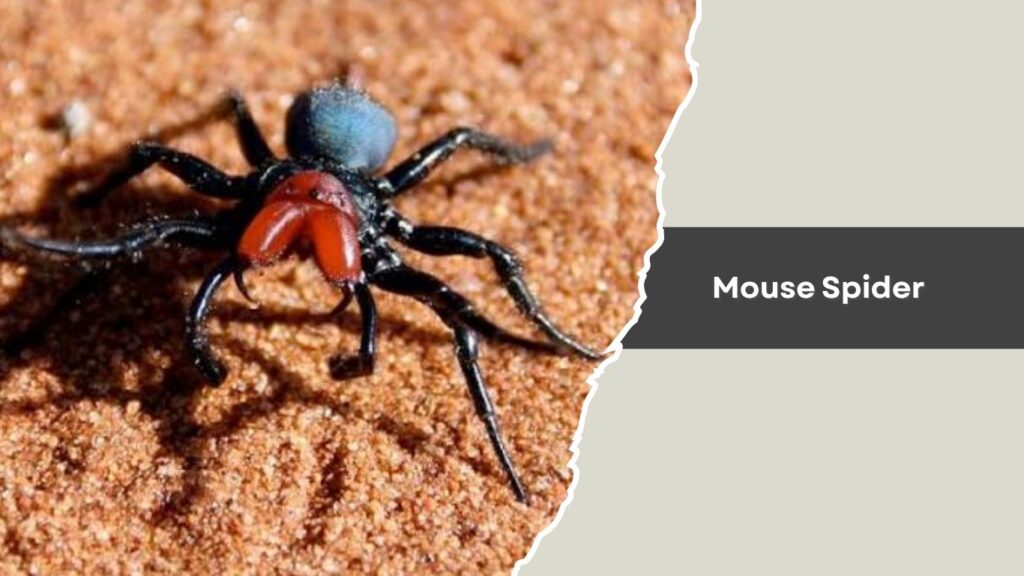
The British Mouse Spider (Scotophaeus blackwalli) is a small to medium-sized ground spider frequently found inside homes. It should not be confused with the very different and more medically significant Australian mouse spiders. The British species gets its name from the soft, velvety hairs covering its body, giving it a mouse-like appearance.
Identification
- Dark brown to grayish-brown body
- Abdomen has a soft, velvety appearance
- Legs are relatively short and strong
- Usually around 9–12 mm in body length
- Body is elongated rather than round
- Does not build a prey-catching web
- Often runs quickly across floors or walls
Habitat and Distribution
Mouse Spiders are widespread throughout the UK. They frequently enter houses and may hide behind furniture, beneath objects, in wall gaps, lofts, garages, and sheds.
Outdoors, they live beneath bark, stones, and other sheltered materials.
Behavior and Diet
This species hunts actively at night instead of waiting in a web. It searches walls and floors for insects and other spiders.
During the daytime, it usually hides inside a small silk retreat. Its prey can include flies, moths, beetles, and crawling household insects.
Lifespan and Reproduction
Females produce silk egg sacs in hidden areas and remain nearby during development. Young spiders disperse after hatching and begin hunting small prey.
Adults may survive for more than one year depending on food, temperature, and shelter.
13. Zebra Jumping Spider
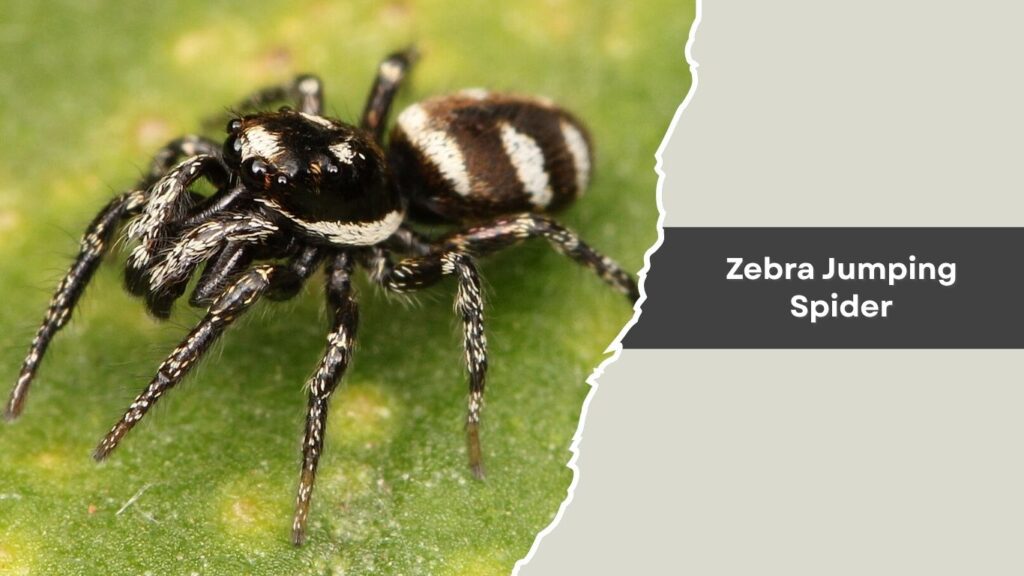
The Zebra Jumping Spider (Salticus scenicus) is one of the easiest British house spiders to recognize. Its bold black-and-white stripes resemble a zebra pattern, while its large front-facing eyes give it excellent vision. It is often seen on sunny windows, walls, fences, and exterior brickwork where it actively hunts small insects.
Identification
- Black body with bright white stripes
- Compact, stocky shape
- Usually around 5–7 mm long
- Large forward-facing eyes
- Short, powerful legs
- Moves in short bursts
- Can jump many times its own body length
Habitat and Distribution
Zebra Jumping Spiders are widespread throughout Britain. They frequently occur around houses, especially on sunny walls, window frames, fences, sheds, and garden structures.
They sometimes enter homes through open windows or doors.
Behavior and Diet
Unlike web-building house spiders, Zebra Jumping Spiders actively stalk prey. They use their excellent eyesight to judge distance before suddenly jumping onto flies, gnats, mosquitoes, and other small insects.
Before jumping, they attach a safety line of silk to the surface.
Lifespan and Reproduction
Males perform visual courtship displays involving movements of their legs and bodies. After mating, females create protected silk nests where they lay and guard their eggs.
Most individuals live for around a year, although lifespan varies with environmental conditions.
14. Missing-Sector Orb-Weaver
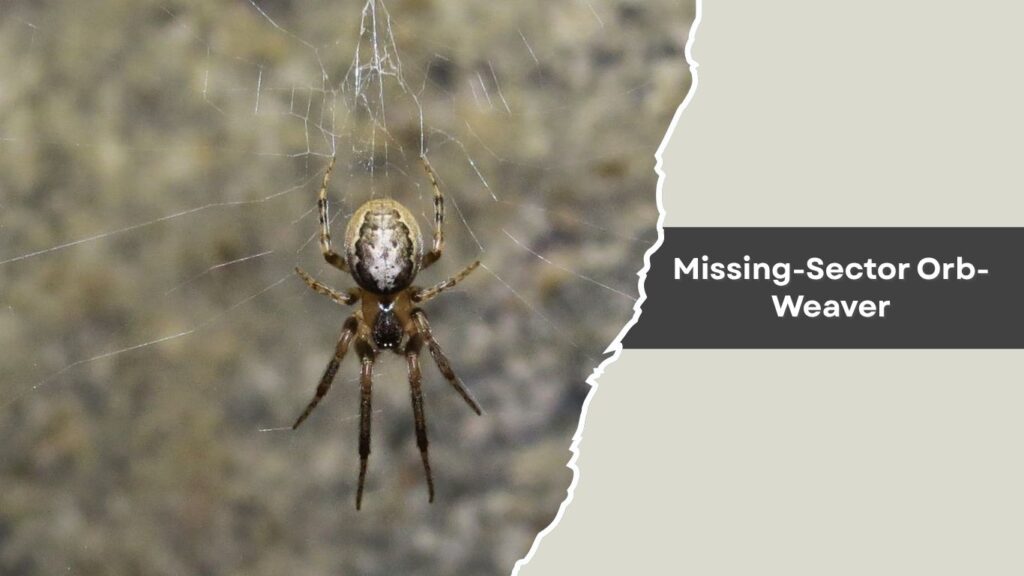
The Missing-Sector Orb-Weaver (Zygiella x-notata) is a common spider around UK houses, windows, fences, and outdoor lighting. Its unusual circular web appears to have a triangular section missing, giving the species its common name. A signal thread connects this missing area to the spider’s retreat.
Identification
- Small to medium-sized orb-weaver
- Abdomen is rounded and grayish-brown
- Pale leaf-like marking occurs on the back
- Legs are brown with darker bands
- Females are larger than males
- Builds an almost complete circular orb web
- One wedge-shaped section of the web is usually missing
Habitat and Distribution
Missing-Sector Orb-Weavers are widespread throughout the UK. They are particularly common around window frames, exterior lights, doorways, garden structures, railings, and fences.
Buildings provide ideal attachment points for their webs and frequently attract flying insects.
Behavior and Diet
The spider usually hides outside the main web and keeps one leg touching a signal thread. When an insect becomes trapped, vibrations travel along the thread and alert the spider.
Its prey consists mainly of flies, mosquitoes, midges, moths, and other flying insects attracted to buildings and lights.
Lifespan and Reproduction
Females produce egg sacs in sheltered areas close to their webs. Young spiders emerge and build increasingly larger orb webs as they grow.
Adults are especially noticeable during late summer and autumn, although individuals around heated buildings may remain active for longer periods.
15. Walnut Orb-Weaver
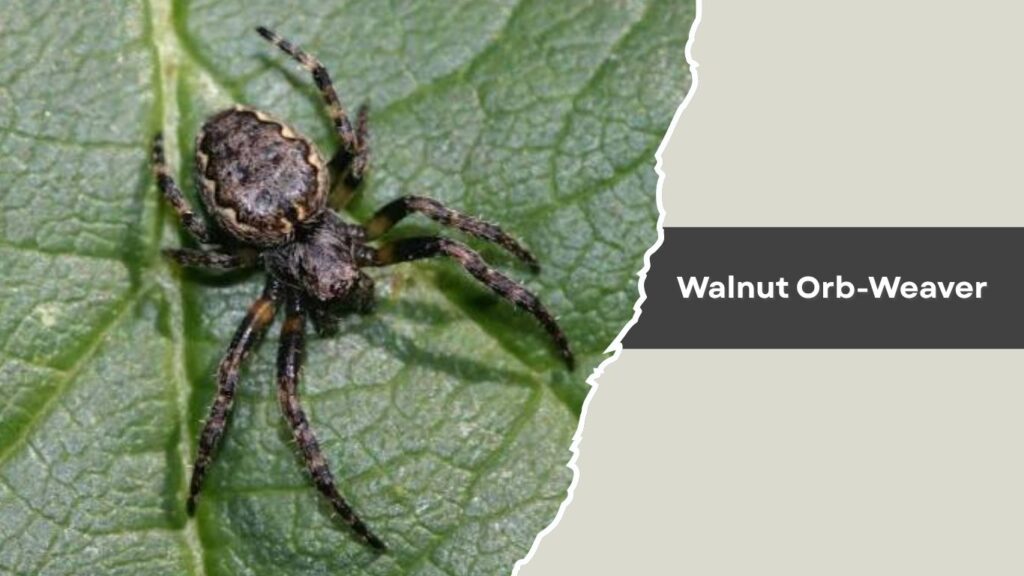
The Walnut Orb-Weaver (Nuctenea umbratica), also called the Toad Spider in Britain, is a flattened, dark-colored orb-weaver that frequently lives around fences, sheds, window frames, and tree bark. It is mainly nocturnal and spends the daytime squeezed into narrow cracks before emerging after dark to construct or occupy its circular web.
Identification
- Body is brown, reddish-brown, or almost black
- Abdomen is unusually broad and flattened
- Dark leaf-shaped marking occurs on the abdomen
- Females can reach about 14–15 mm
- Males are usually smaller, around 8–9 mm
- Legs are relatively short compared with many house spiders
- Builds a circular orb web at night
Habitat and Distribution
Walnut Orb-Weavers are widespread across Britain, although they become less common in northern Scotland. They typically hide beneath loose bark, inside fence posts, cracks in walls, sheds, and window or door frames.
Their flattened abdomen allows them to squeeze into extremely narrow spaces during daylight hours.
Behavior and Diet
These spiders are mostly active at night. After dark, they emerge from their retreat and occupy an orb web positioned near vegetation or buildings.
Flies, moths, mosquitoes, and other flying insects make up much of their diet. When daylight returns, they generally retreat back into a nearby crevice.
Lifespan and Reproduction
Adults are most frequently seen from late spring through autumn, although females can survive into winter in sheltered locations. Males search for females during the breeding season, while females later produce protected egg sacs in cracks or other secluded sites.
16. Spitting Spider
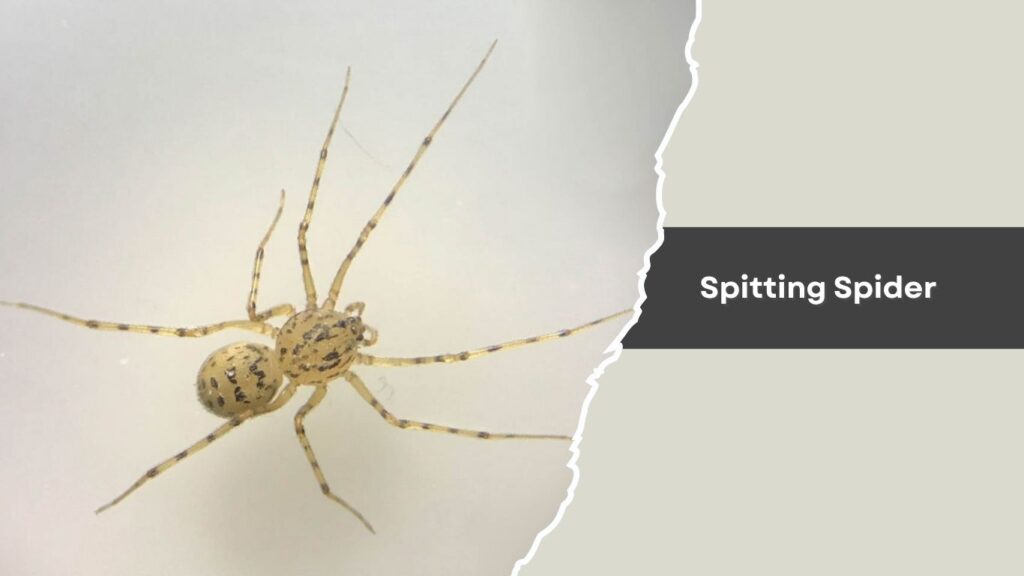
The Spitting Spider (Scytodes thoracica) is one of the UK’s most unusual indoor spiders. Rather than relying on a traditional prey-catching web, it can spray a sticky mixture from its mouthparts to pin prey against a surface before approaching and biting it. In Britain, it is strongly associated with warm houses and other heated buildings.
Identification
- Body length is usually about 4–6 mm
- Body is creamy-yellow or pinkish
- Distinct dark spots and markings cover the body
- Legs have dark bands
- Thorax appears unusually high and rounded
- Abdomen and thorax are similar in size
- Movement is generally slow
Habitat and Distribution
Spitting Spiders occur mainly in southern Britain, particularly south of a line between the Humber and Glamorgan. They are uncommon farther north and are absent from Scotland.
In Britain, they are mostly found inside heated houses and buildings, where indoor temperatures allow them to survive throughout the year.
Behavior and Diet
When approaching prey, the spider may move to within about 10 mm and spray sticky material in a zigzag pattern. This effectively glues small insects or other spiders to the surface.
Once the prey is immobilized, the spider approaches and bites it. The same sticky spray may also be used defensively against other spiders.
Lifespan and Reproduction
Development is relatively slow. Females living inside British buildings may take two or even three years to reach maturity. Adults can occur throughout the year because indoor environments protect them from severe seasonal temperature changes.
17. Money Spider
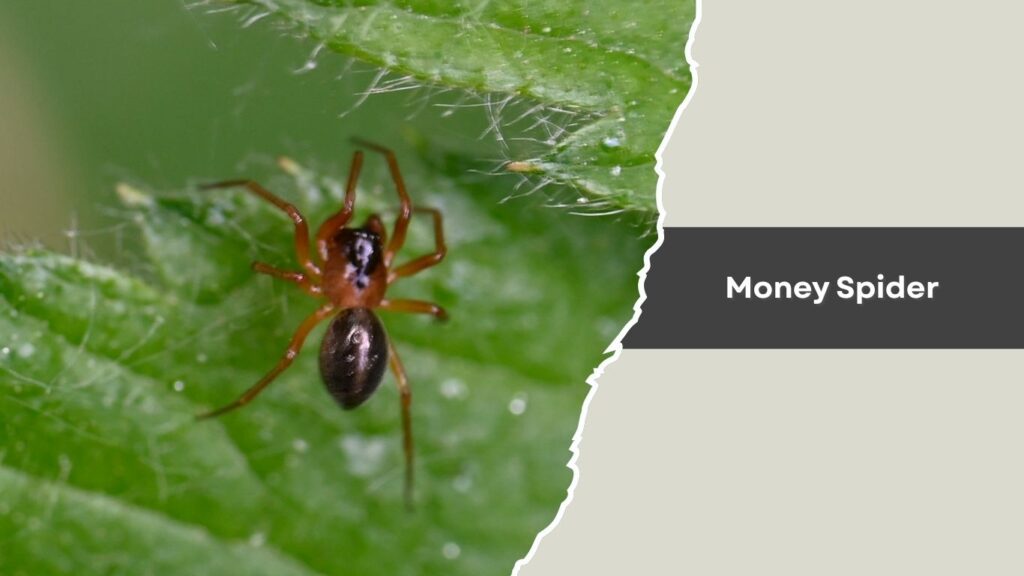
Money Spider is not the name of a single species. It refers to hundreds of tiny British spiders belonging mainly to the family Linyphiidae. They are among the most abundant spiders in the UK and may appear in gardens, windows, walls, and occasionally inside houses. Their traditional name comes from the old belief that finding one brings financial good luck.
Identification
- Most species are only a few millimeters long
- Body is usually black, brown, or gray
- Abdomen is often rounded or egg-shaped
- Legs are relatively thin
- Some species have patterned abdomens
- Many create tiny sheet-shaped webs
- Young spiders may travel through the air on silk
Habitat and Distribution
Money spiders occur throughout Britain in gardens, meadows, woodland, hedgerows, fields, leaf litter, shrubs, and trees.
They may also appear around windows and inside buildings after being carried by wind or accidentally entering through openings.
Behavior and Diet
Many money spiders build small horizontal sheet webs and wait underneath them for tiny insects to become trapped.
Their prey includes aphids, flies, springtails, midges, and other very small invertebrates. Because of their abundance, they play an important role in controlling small insect populations.
Lifespan and Reproduction
Many species have relatively short annual life cycles, although the exact lifespan varies greatly across the family.
Young money spiders are famous for ballooning. They release silk into moving air, allowing wind to carry them considerable distances to new habitats.
18. Buzzing Spider
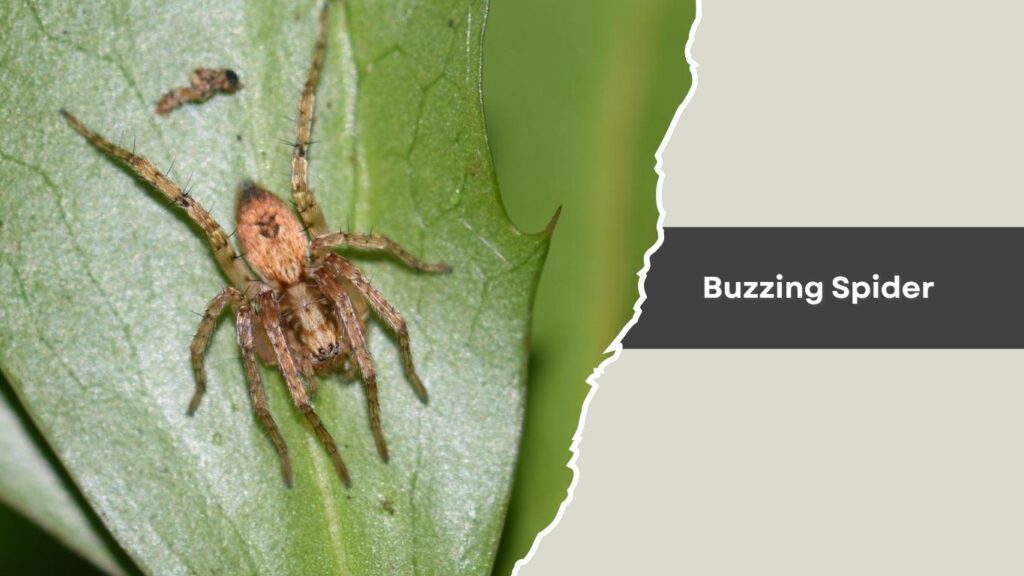
The Buzzing Spider (Anyphaena accentuata) is a small British hunting spider named after the unusual courtship behavior of males. Instead of producing a web-based signal, the male vibrates its abdomen against a leaf, producing a high-pitched buzzing sound that helps attract females.
Identification
- Usually about 4.5–7 mm long
- Body is pale brown or yellowish-brown
- Abdomen has distinctive dark arrow or chevron markings
- Legs are pale with darker markings
- Body is slender and relatively flat
- Does not build a large prey-catching web
- Often found resting on leaves
Habitat and Distribution
Buzzing Spiders are widespread across southern Britain and become more scattered toward central Scotland.
They usually live in woodland, hedgerows, gardens, bushes, and trees. Individuals occasionally wander into houses, particularly when vegetation grows close to windows or walls.
Behavior and Diet
Unlike orb-weavers, Buzzing Spiders hunt directly on leaves and branches. They search vegetation for flies, aphids, small insects, and other arthropods.
The male’s courtship is particularly distinctive. By vibrating his abdomen against a leaf, he creates both sound and vibration that can signal his presence to a nearby female.
Lifespan and Reproduction
Adults are most frequently encountered during early and mid-summer. Females may remain active into autumn.
Young spiders spend autumn and winter in vegetation, leaf litter, and beneath bark before becoming mature during the following warm season.
19. Garden Spider
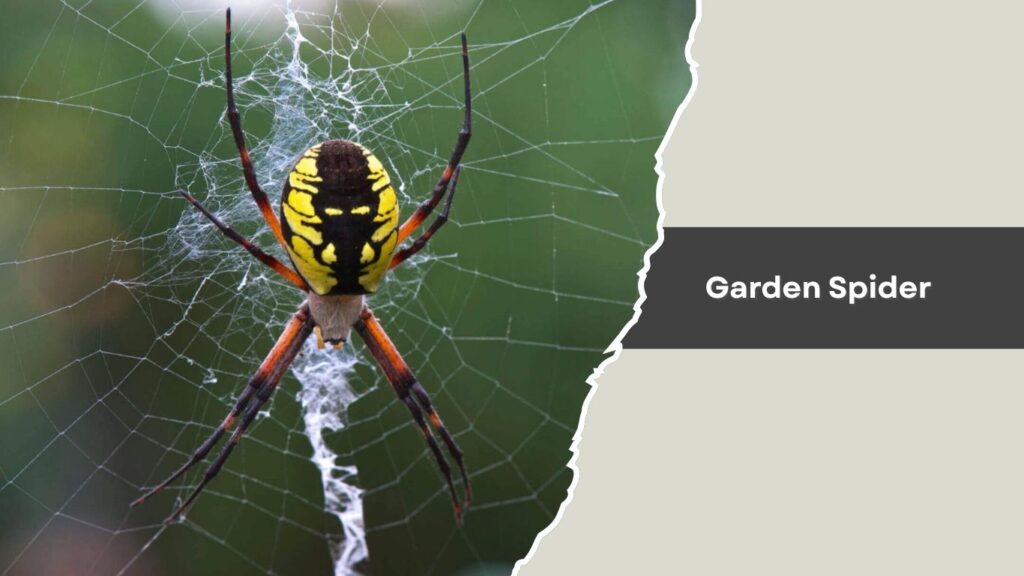
The Garden Spider (Araneus diadematus) is one of Britain’s most recognizable spiders. Also called the Cross Spider, it has a distinctive series of white spots forming a cross on its abdomen. Although mainly an outdoor species, its large orb webs frequently appear across doorways and windows, and individuals occasionally wander into houses.
Identification
- Abdomen usually has a clear white cross
- Color ranges from sandy brown to orange-red or almost black
- Females can reach about 15 mm in body length
- Males reach approximately 9 mm
- Abdomen is large and rounded
- Legs have alternating light and dark bands
- Builds a large circular orb web
Habitat and Distribution
Garden Spiders are widespread throughout most of Britain. They occur in gardens, woodland, hedgerows, grassland, roadside vegetation, buildings, and other habitats that provide supports for their webs.
Their orb webs may reach around 40 cm across and are commonly suspended between shrubs, fences, windows, or doorways.
Behavior and Diet
Garden Spiders usually remain close to the center of their web or within a nearby retreat.
Flying insects such as flies, wasps, mosquitoes, moths, and butterflies become trapped in the sticky web. The spider responds to vibrations, bites the prey, and wraps it in silk.
Lifespan and Reproduction
Adults are especially common from summer into late autumn. Females lay hundreds of eggs inside thick silk egg sacs.
The female normally dies as temperatures fall, while the eggs remain protected through winter and hatch the following spring. Young spiders can take approximately two years to reach maturity in Britain.
20. Running Crab Spider
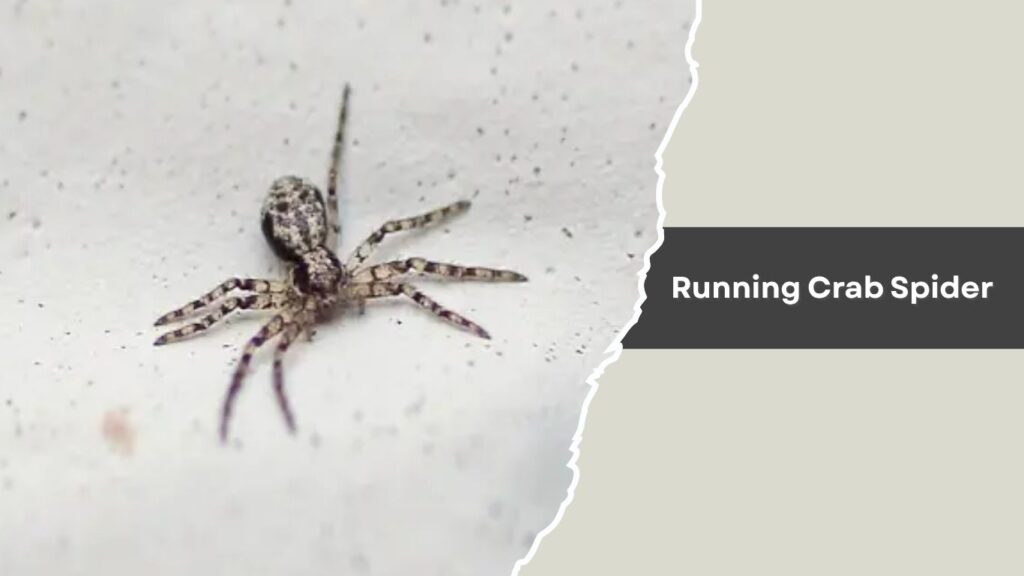
The Running Crab Spider represented here is Philodromus dispar, a small, fast-moving British species belonging to the family Philodromidae. Despite the name, it is not a true crab and does not rely on a capture web. Instead, it runs rapidly across leaves, branches, fences, and walls while hunting small insects. It may occasionally wander into UK houses.
Identification
- Body is approximately 5 mm long
- Male is usually dark brown or black
- Male often has pale or white edges
- Female is typically beige or light brown
- Body is somewhat flattened
- Legs extend partly sideways
- Moves rapidly across surfaces
Habitat and Distribution
Philodromus dispar is widespread through much of southern Britain and occurs in England and Wales.
It inhabits woodland, hedgerows, gardens, scrub, bushes, and lower tree branches. Individuals sometimes enter houses, especially where trees and shrubs grow close to buildings.
Behavior and Diet
Running Crab Spiders are active hunters and do not construct large webs for capturing prey.
They use speed to pursue flies and other small insects across vegetation. Their flattened shape and sideways-running ability help them quickly move around leaves, bark, and branches.
Lifespan and Reproduction
Adults are mainly seen during spring and early summer, although females may survive into autumn.
Females attach their egg cocoons to leaves and remain nearby to guard them. Young spiders hatch later and may overwinter beneath tree bark or within leaf litter before becoming adults.
FAQs
1. What is the biggest house spider in the UK?
The Giant House Spider is among the largest spiders regularly encountered inside British homes. Its body is not exceptionally large, but its very long legs can create a leg span of around 7–8 cm.
2. Are UK house spiders dangerous?
Most UK house spiders are harmless to people. Nearly all prefer running away or hiding rather than biting. Even species capable of biting generally cause only localized effects, although unusual or severe symptoms should always receive medical attention.
3. Why do large spiders appear inside UK homes in autumn?
Many sightings involve adult male Giant or Domestic House Spiders. During late summer and autumn, males leave their established webs and wander through buildings searching for females.
4. Do house spiders make nests?
Spiders do not build nests like ants or wasps. They may create webs, silk retreats, and egg sacs. Finding an egg sac can sometimes result in many tiny spiderlings appearing together after hatching.
5. Should I remove spiders from my house?
Most house spiders can safely be left alone because they feed on flies, mosquitoes, moths, and other household insects. If you prefer to remove one, place a container over it, slide stiff paper underneath, and relocate it to a suitable sheltered area.
