
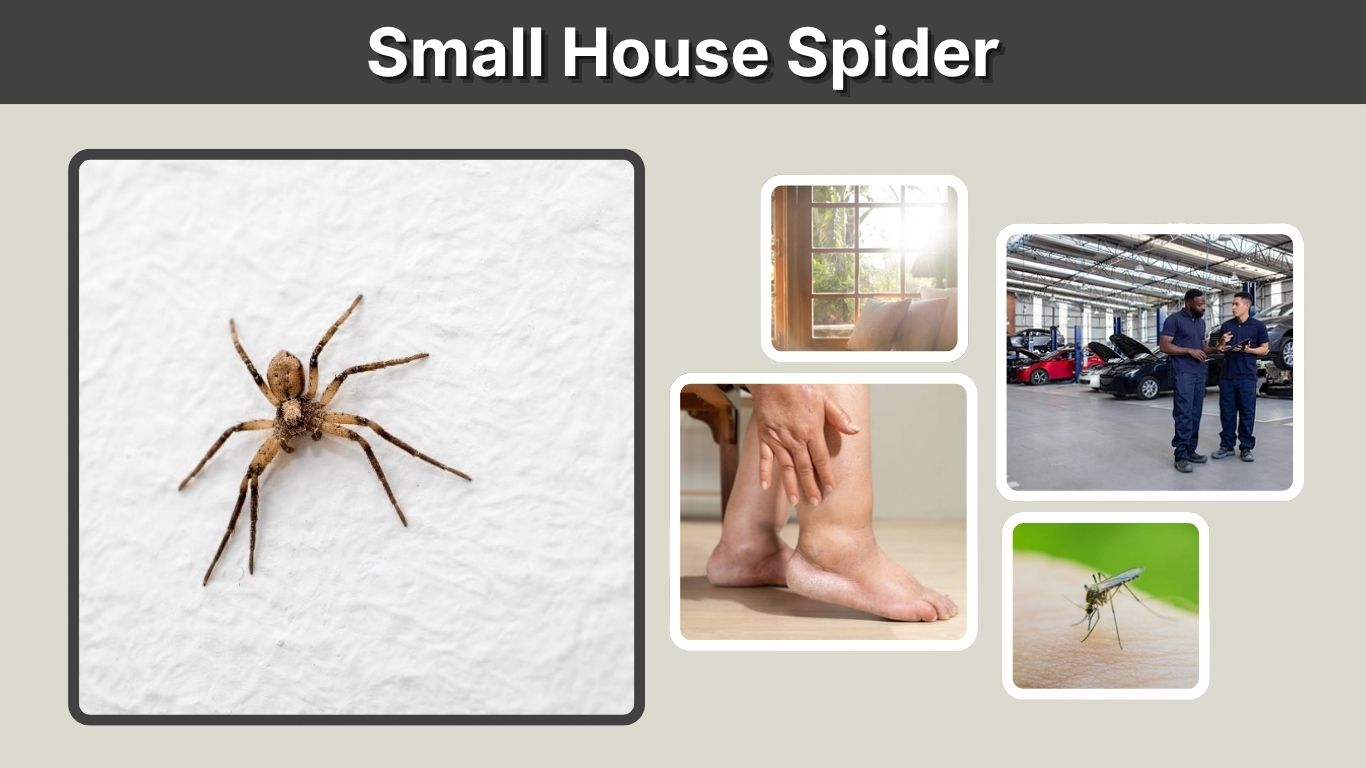
Small house spiders are common indoor visitors that may appear black, brown, red, white, yellow, gray, or even green. Most are harmless species that enter homes accidentally or live quietly in corners where they feed on flies, mosquitoes, and other insects. Because many unrelated spiders can look similar at first glance, color alone is rarely enough for identification. Size, body shape, leg length, web type, movement, and location are more useful clues. This guide explains common small house spiders, their appearance, bites, behavior, and what to do when you find one indoors.
What Is a Small House Spider?
“Small house spider” is not the name of one specific species. It is a general description for many spiders found inside houses, apartments, garages, sheds, and basements.
Some species naturally live around buildings, while others wander indoors while hunting prey or searching for shelter.
Small House Spider Identification
Common features may include:
- Body length of only a few millimeters
- Black, brown, gray, yellow, white, or reddish coloration
- Eight legs and no antennae
- Two main body sections
- Fine hairs on the legs or body
- Web-building or active hunting behavior
- Movement ranging from slow crawling to fast jumping
A photograph showing the spider from above, along with its approximate size and location, usually helps identification more than color alone.
Small Black House Spider
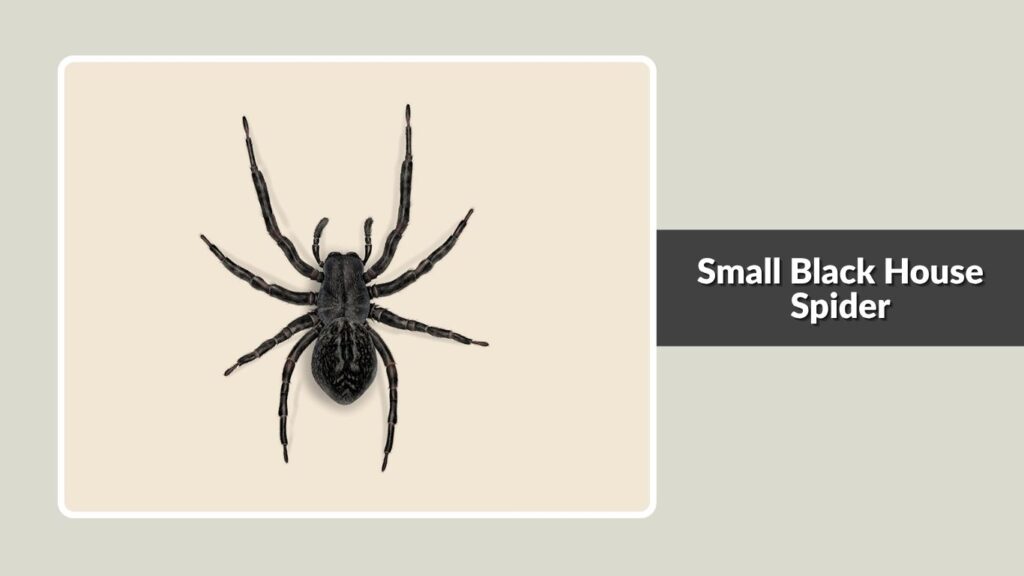
Small black spiders are among the most common spiders reported indoors. Several unrelated species can appear completely black, especially when viewed from a distance.
What Is a Tiny Black Spider in the House?
A tiny black spider may be a jumping spider, cobweb spider, juvenile house spider, ground spider, or another harmless wandering species.
Black jumping spiders are especially common around windows and walls because they actively hunt insects instead of relying on capture webs.
Small Black Jumping Spider
Jumping spiders generally have compact bodies, relatively short legs, and large forward-facing eyes. They may appear black with white, gray, orange, or metallic markings.
They move in short bursts and can jump several times their body length when hunting or escaping.
Most jumping spiders are harmless to people and can be beneficial indoors because they consume flies, gnats, mosquitoes, and other small insects.
Small Brown House Spider
Brown is probably the most common color among house spiders. A small brown spider indoors could belong to many different families.
Common Small Brown Spiders
Small brown spiders may include:
- Common house spiders
- Funnel weavers
- Cobweb spiders
- Juvenile wolf spiders
- Ground spiders
- Sac spiders
- Small orb-weavers that wandered indoors
Brown coloration often provides camouflage against wood, soil, bark, and dry vegetation.
Is Every Brown House Spider a Brown Recluse?
No. Most brown spiders found inside homes are not brown recluses.
Brown recluse identification requires several specific anatomical features, and their natural distribution is limited mainly to parts of the central and southern United States. Simply being small, brown, and found indoors does not make a spider a brown recluse.
Small Red or Orange Spider in the House
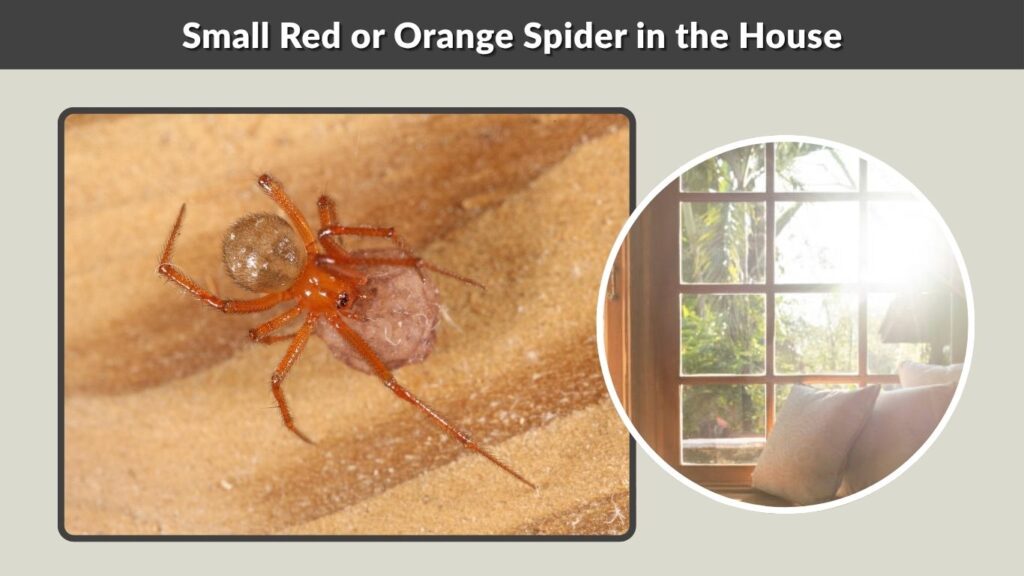
Tiny red spiders seen around windows, walls, and floors are sometimes not spiders at all.
Tiny Red Spiders
Very small bright red creatures may be clover mites. These arachnids have eight legs but belong to a different group from true spiders.
Clover mites are harmless to humans and do not bite. They often enter buildings in large numbers, especially around sunny windows and exterior walls.
True spiders can also appear reddish-brown, orange, or dark red depending on the species.
Small Orange House Spider
Orange spiders found indoors may be young orb-weavers, sac spiders, or wandering outdoor species. Their presence does not usually indicate an infestation.
If the spider is bright orange with a rounded abdomen, it may have accidentally entered from nearby vegetation.
Small White, Yellow, and Clear House Spiders
Pale spiders are commonly reported in bathrooms, bedrooms, kitchens, and around windows.
Small White Spider in the House
Small white or cream-colored spiders may include crab spiders, juvenile spiders, or recently molted individuals.
After molting, a spider’s new exoskeleton can appear unusually pale until it hardens and develops its normal coloration.
Small Yellow House Spider
Yellow sac spiders are among the better-known pale spiders that sometimes enter homes.
They are typically cream, pale yellow, or light tan with relatively long legs. Instead of building a large prey-catching web, they roam at night and create small silk retreats where they rest.
Small Clear Spider
Very pale juvenile spiders may look almost transparent because their exoskeleton is thin and lightly pigmented.
A newly molted spider may also temporarily appear clear or whitish.
Small Gray, Tan, and Beige Spiders
Gray, tan, and beige spiders often blend easily with indoor walls, carpet, furniture, and wooden surfaces.
Small Gray Spider in the House
Gray jumping spiders and young wolf spiders may occasionally enter homes. Many jumping spiders have fuzzy gray bodies with contrasting markings.
Small wolf spiders are active hunters that generally run across the floor rather than remain in webs.
Small Tan or Beige Spider
Tan spiders may include sac spiders, young funnel weavers, and several types of cobweb spiders. Shape and behavior are more reliable identification characteristics than shade alone.
Small Spider With Long Legs and a Tiny Body
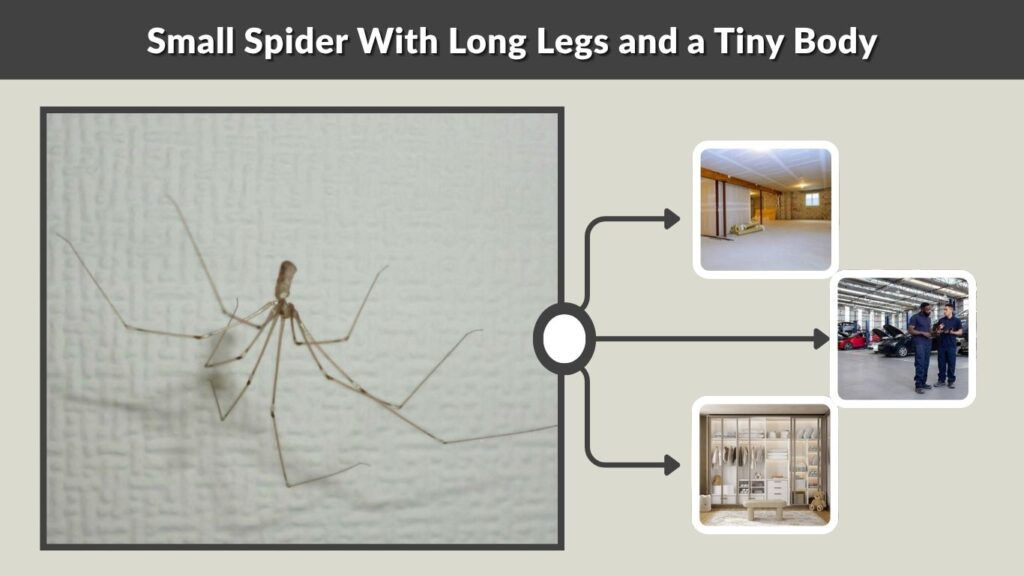
A spider with an extremely small body and very long thin legs is often a cellar spider.
Cellar Spiders
Cellar spiders are commonly found in:
- Basements
- Garages
- Bathrooms
- Closets
- Ceiling corners
- Under furniture
They construct loose, irregular webs and may shake rapidly when disturbed.
Cellar spiders are sometimes incorrectly called daddy longlegs. True harvestmen, which are also called daddy longlegs, are not spiders and have a different body structure.
Small Wolf Spider in the House
Wolf spiders occasionally enter houses while searching for prey or shelter.
They do not construct webs to capture food. Instead, they use their eyesight and speed to chase insects.
How to Recognize a Small Wolf Spider
Wolf spiders generally have:
- Brown or gray coloration
- Hairy bodies
- Strong running legs
- Distinct patterns on the back
- Large forward-facing eyes
- Fast ground-running behavior
Juvenile wolf spiders can be quite small and may easily be confused with other brown house spiders.
Small Crab Spider in the House
Crab spiders are named for their sideways leg orientation and crab-like stance.
Their first two pairs of legs are often longer and stronger than the rear legs. Some species are white, yellow, green, brown, or patterned.
Crab spiders usually live outdoors on flowers and vegetation, where they ambush insects. Finding one inside generally means it wandered in accidentally.
Small Fast Spider in the House
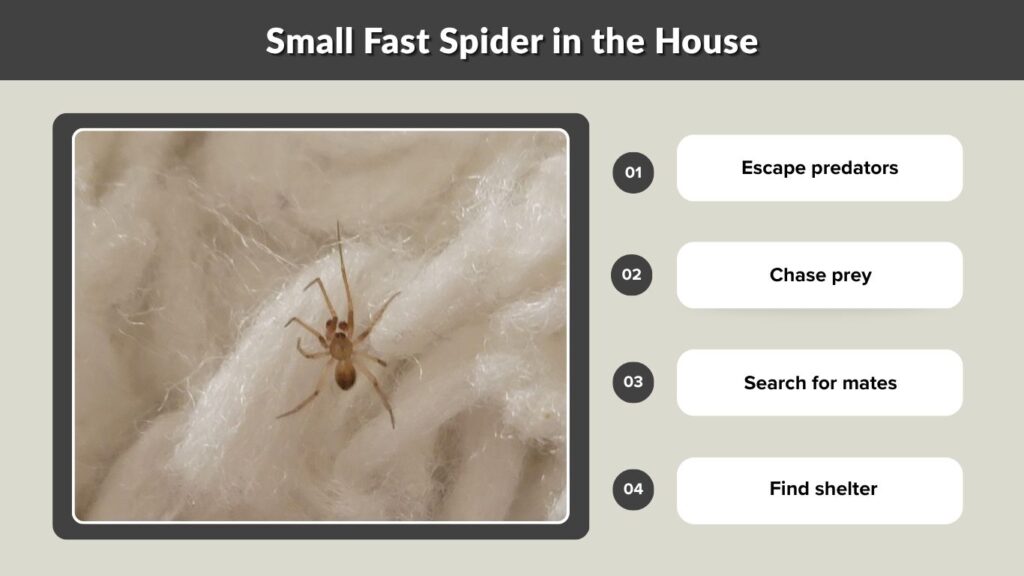
Fast movement often causes more alarm than the spider’s actual size.
Ground spiders, funnel weavers, wolf spiders, and jumping spiders can all move quickly.
Why Do House Spiders Run So Fast?
Running helps spiders:
- Escape predators
- Chase prey
- Search for mates
- Find shelter
- Avoid people
A spider running toward you is usually not attacking. It may simply be trying to reach a dark hiding place.
Small Fuzzy or Hairy House Spider
A small fuzzy black or brown spider is often a jumping spider.
Their bodies and legs may be covered with visible hairs, giving them a thick or furry appearance.
Jumping spiders rely heavily on vision. They may turn to face people or cameras because they are examining movement rather than preparing to attack.
Small House Spider Bites
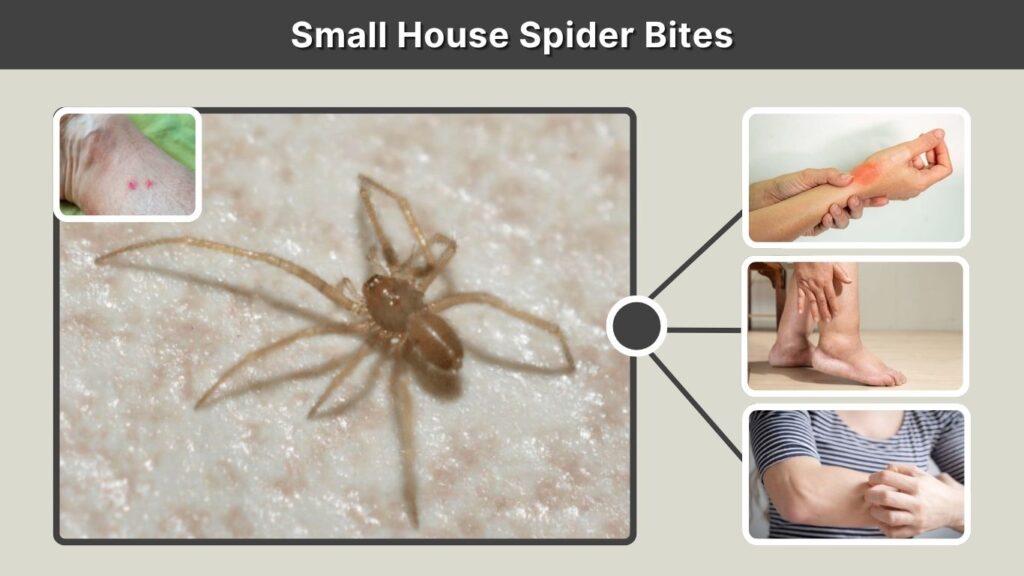
Most small house spiders are reluctant to bite people.
A bite is more likely if a spider becomes trapped against the skin inside clothing, bedding, shoes, or gloves.
What Does a Small House Spider Bite Feel Like?
A minor spider bite may cause:
- Brief pain or pinching
- Mild redness
- Slight swelling
- Temporary itching
- Local tenderness
These symptoms are not unique to spider bites. Mosquito bites, flea bites, skin irritation, bacterial infections, and other conditions are frequently mistaken for spider bites.
Seek medical help if a suspected bite causes severe pain, difficulty breathing, widespread swelling, tissue damage, fever, or other serious symptoms.
Should I Kill a Small Spider in My House?
Usually, there is no need.
Most small house spiders are harmless and actually reduce indoor insect populations.
How to Remove One Safely
Place a cup or container over the spider, slide a piece of stiff paper underneath, and move it to a sheltered location.
You can reduce future indoor sightings by sealing cracks around windows and doors, repairing screens, reducing clutter, and controlling insects that provide spiders with food.
Why Are Small Spiders Appearing in My House?
One or two spiders indoors is normal. Frequent sightings may indicate that the home provides good shelter or an abundant supply of insect prey.
Common Reasons
Spiders may enter because of:
- Seasonal temperature changes
- Open windows or doors
- Gaps around foundations
- Insects attracted to indoor lights
- Cluttered storage spaces
- Basements and garages providing shelter
- Males wandering in search of females
Small spiderlings can also appear after an egg sac hatches, sometimes resulting in dozens of tiny spiders appearing at once.
Small Black House Spiders by Location
People report small black spiders across California, Texas, Michigan, Ohio, Illinois, Colorado, Pennsylvania, Maryland, Canada, Ontario, the UK, Australia, and many other regions.
However, location matters greatly for identification.
A small black spider in California may be a completely different species from a similar-looking spider in Michigan or Australia. For this reason, identifying a spider from color alone without knowing its geographic location is unreliable.
Are Small House Spiders Dangerous?
The overwhelming majority are not dangerous to people.
Spiders generally prefer fleeing, hiding, or remaining motionless instead of confronting humans. Their venom evolved primarily to immobilize small prey such as insects.
Dangerous species exist in some regions, so unfamiliar spiders should not be handled with bare hands.
Benefits of Small House Spiders
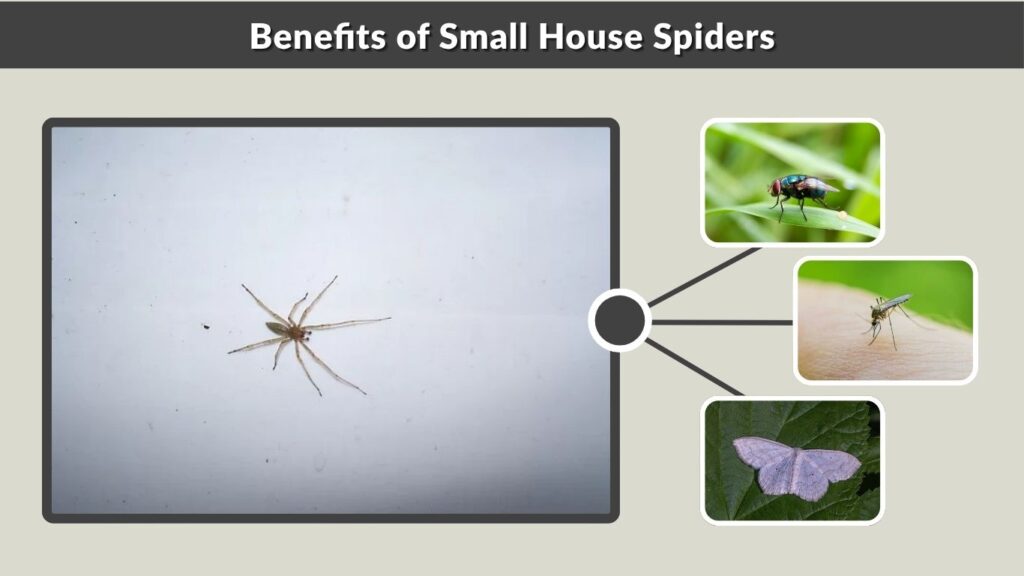
Small spiders provide natural pest control.
They commonly eat:
- Flies
- Mosquitoes
- Gnats
- Moths
- Roaches
- Other spiders
- Small crawling insects
A few harmless spiders around a home may actually indicate a functioning miniature predator system rather than a serious pest problem.
FAQs
1. What are the tiny black spiders in my house?
They may be jumping spiders, cobweb spiders, ground spiders, or juvenile house spiders. Exact identification requires more than color alone.
2. Are small black house spiders dangerous?
Most small black house spiders are harmless. They generally avoid people and bite only when trapped or threatened.
3. Why do I keep finding small brown spiders indoors?
Your home may provide shelter and insect prey. Seasonal weather changes can also cause outdoor spiders to wander inside.
4. Should I kill a small spider in my house?
Usually not. Most can simply be left alone or moved outside using a cup and piece of paper.
5. What is a small spider with a tiny body and very long legs?
It is often a cellar spider. These harmless web-building spiders commonly live in basements, bathrooms, garages, and quiet corners.
