
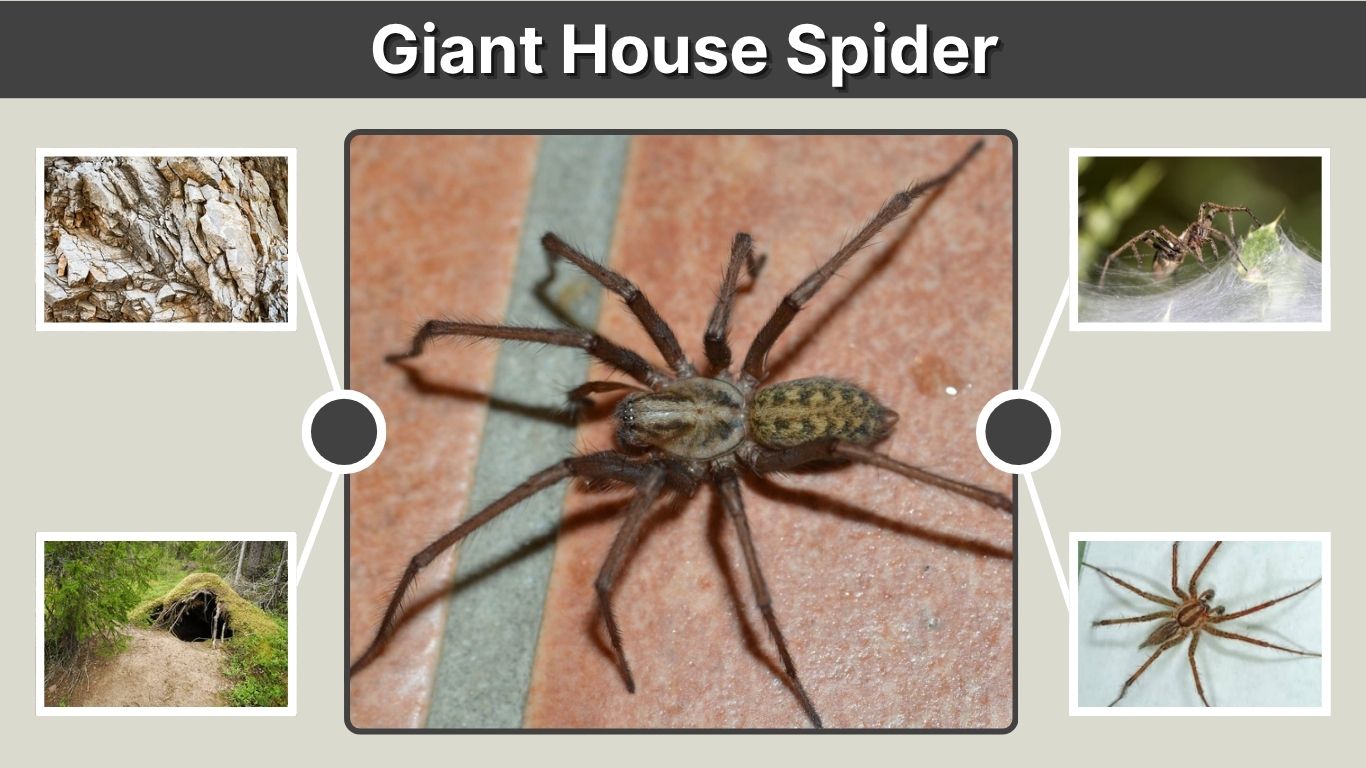
The giant house spider is a large, fast-moving funnel weaver commonly encountered in homes, garages, basements, and sheds. It is especially familiar in the Pacific Northwest and parts of Europe, where wandering males often appear indoors during late summer and fall. Despite its intimidating size and speed, the giant house spider is not considered medically dangerous to humans. It is a beneficial predator that feeds on insects and other small arthropods. This guide covers identification, size, bite, venom, web, lifespan, range, and comparisons with similar spiders.
What Is a Giant House Spider?
The name giant house spider generally refers to closely related spiders in the Eratigena atrica group. Taxonomy has changed over time, so older sources may use names such as Tegenaria gigantea, while some North American references use Eratigena duellica. Washington State University currently treats the giant house spider as Eratigena atrica.
Identification
- Large brown to grayish-brown spider
- Very long, hairy legs
- Brown patterned abdomen
- Body typically about 1/2–1 inch long
- Leg span can approach 4 inches in large adults
- Long spinnerets may be visible at the abdomen tip
- Usually has a dull rather than shiny appearance
- Builds a sheet-shaped web leading into a funnel retreat
Color and markings vary substantially, so photographs alone do not always provide a reliable species-level identification.
Why Are They Found Inside Houses?
Giant house spiders naturally prefer sheltered, dark spaces. Buildings provide many of the same conditions as caves, rock crevices, hollow trees, and other protected habitats.
Basements, garages, sheds, wall gaps, and spaces behind furniture are especially attractive. They may also occur outdoors beneath firewood, between stones, and around building foundations.
Giant House Spider Size
Its long legs make the giant house spider appear much larger than its actual body. Large individuals are among the most impressive spiders commonly encountered inside homes.
How Big Is a Giant House Spider?
Washington State University reports a body length of roughly 1/2–1 inch, excluding the legs, while large adults can reach a leg span of around 4 inches. UK sources commonly describe giant house spiders with leg spans around 7.5–8 cm.
Females tend to have larger, heavier abdomens. Adult males often look lankier because their legs are proportionally long.
Male vs Female Giant House Spider
Male giant house spiders generally have smaller bodies but longer-looking legs. Their enlarged pedipalps near the mouth resemble tiny boxing gloves and contain reproductive structures.
Females have larger, rounder abdomens and usually remain close to their webs. Males are responsible for many dramatic indoor sightings because they wander extensively in late summer and autumn searching for females.
Giant House Spider Web
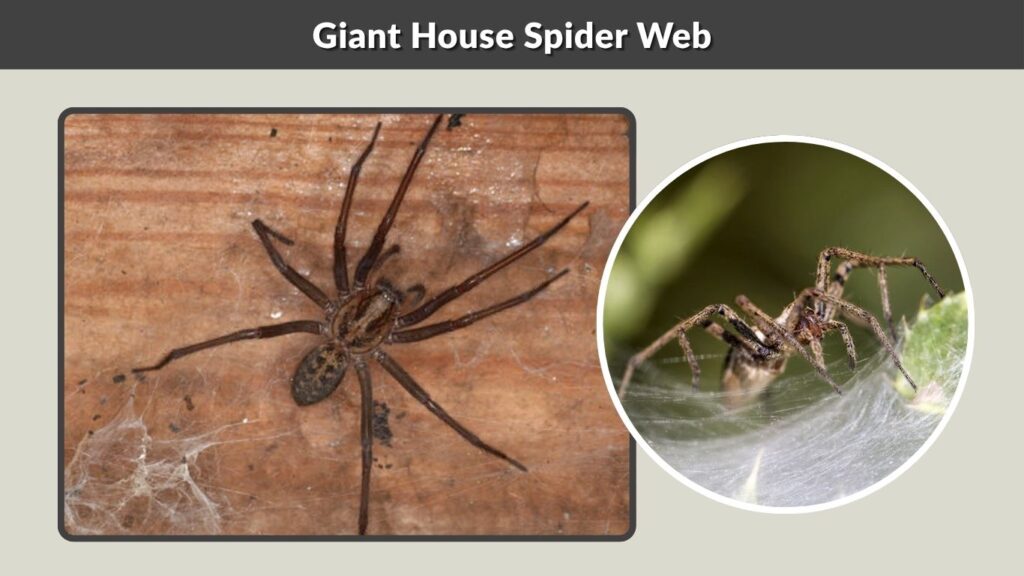
Giant house spiders belong to the funnel-weaver family Agelenidae. Their webs look very different from the circular webs produced by garden orb-weavers.
What Does the Web Look Like?
The web consists of a broad, relatively flat sheet of silk that narrows into a tubular or funnel-shaped retreat.
The spider normally waits inside or close to the funnel. When an insect walks across the sheet and creates vibrations, the spider races out, captures it, and returns toward its shelter.
Old webs in undisturbed garages, sheds, and basements can become large and dusty.
Giant House Spider Bite and Venom
Their size causes many people to assume giant house spiders are dangerous. In reality, documented information does not support that reputation.
Can a Giant House Spider Bite?
Yes. Like most spiders capable of penetrating human skin, a giant house spider could bite if trapped against the body, squeezed, or deliberately handled.
However, the species is not aggressive. When disturbed, its normal response is to run away extremely quickly. Washington State University states that its bite is not known to pose a threat to humans.
Are Giant House Spiders Poisonous?
Technically, giant house spiders are venomous, not poisonous. They use venom to immobilize insect prey.
Their venom is not considered medically significant to humans. Any confirmed spider bite that causes severe pain, spreading swelling, breathing difficulty, or other serious symptoms should still receive medical attention.
How Fast Is a Giant House Spider?
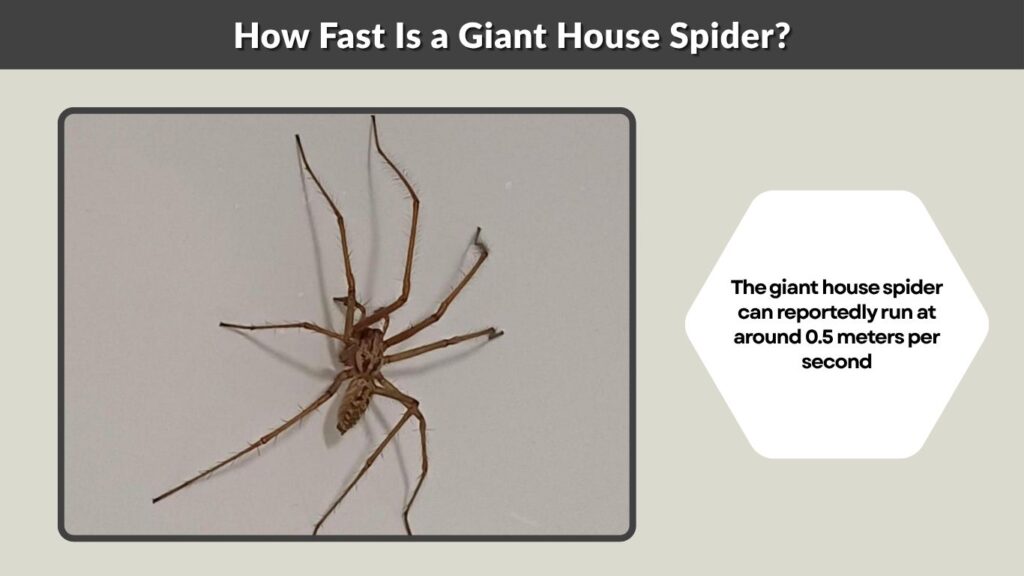
Speed is one reason these spiders appear so alarming when they suddenly run across a floor.
Giant House Spider Speed
The giant house spider can reportedly run at around 0.5 meters per second, making it one of the faster invertebrates commonly encountered in Britain.
This speed is mainly used for escaping danger, catching prey, and allowing males to travel while searching for mates.
They cannot climb every smooth surface effectively, which explains why giant house spiders are often discovered trapped in sinks and bathtubs.
Where Do Giant House Spiders Live?
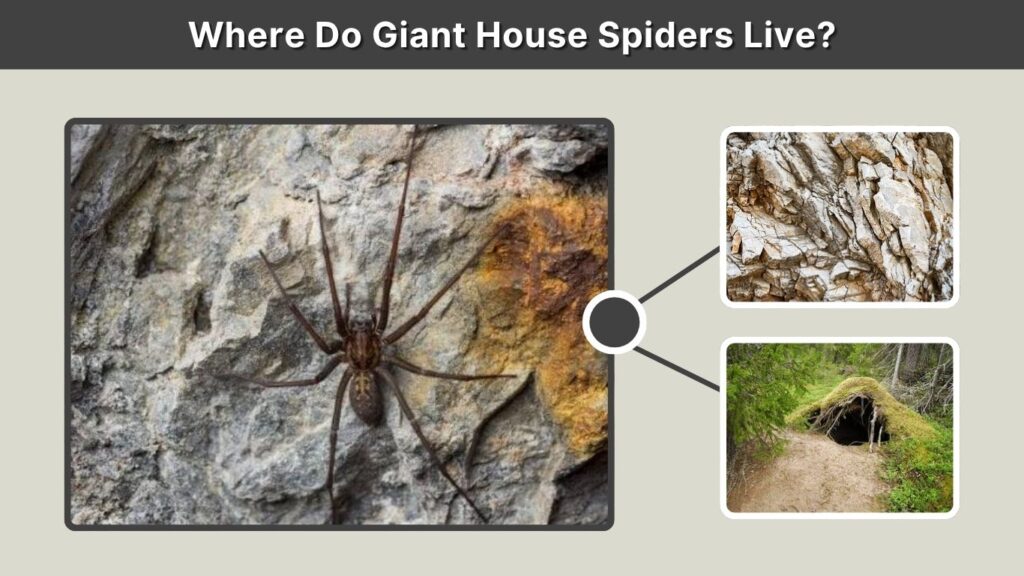
Giant house spiders have strong associations with Europe and the Pacific Northwest of North America. They have adapted exceptionally well to human buildings.
Washington, Oregon and the Pacific Northwest
They are particularly common in western Washington, including the Puget Sound and Seattle region, as well as parts of Oregon and coastal Canada.
WSU notes that they are common west of Washington’s Cascade Mountains and are not established east of the Cascades in the state. Oregon State University reports that the species was introduced from Europe into the Pacific Northwest by the early 1900s.
Giant House Spiders in the UK
Giant house spiders and related Eratigena species are widespread in Britain. They live both inside buildings and outdoors around rock faces, burrows, vegetation, and other sheltered locations.
Sightings increase dramatically from August through October as adult males leave their webs searching for females.
What About Other U.S. States?
Large brown spiders reported as “giant house spiders” in California, Michigan, Wisconsin, Arizona, Florida, and other states are not automatically this species. Several funnel weavers, wolf spiders, fishing spiders, and other large brown spiders can look similar.
Location should therefore be combined with anatomical features before making an identification.
Giant House Spider vs Similar Spiders
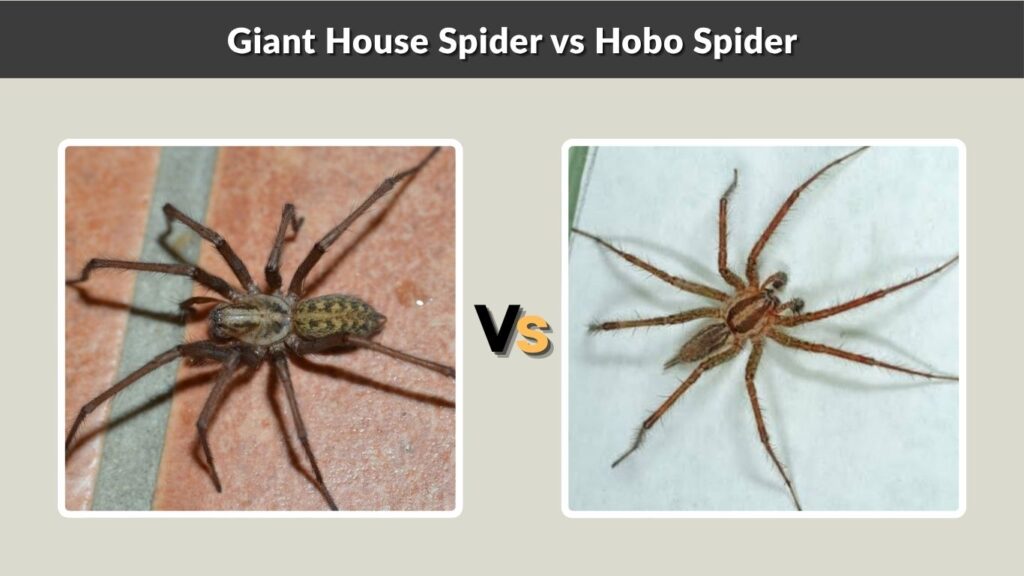
Giant house spiders are frequently confused with other large brown spiders. The hobo spider and wolf spiders account for many mistaken identifications. Your keyword set particularly emphasizes these comparisons.
Giant House Spider vs Hobo Spider
| Feature | Giant House Spider | Hobo Spider |
| Genus | Eratigena | Eratigena |
| Typical size | Larger | Usually smaller |
| Web | Funnel-shaped | Funnel-shaped |
| Appearance | Brown, hairy, long-legged | Brown, long-legged |
| Human danger | Not medically significant | Not considered medically dangerous |
| PNW occurrence | Very common west of Cascades | Present in parts of region |
Visual identification is difficult because the two are closely related. WSU specifically warns that giant house spiders are frequently mistaken for hobo spiders.
Giant House Spider vs Wolf Spider
Wolf spiders are active hunters and generally do not build the large sheet-and-funnel capture webs typical of giant house spiders.
They also belong to a completely different family, Lycosidae. Accurate identification often depends on eye arrangement rather than size or hairiness. The Burke Museum notes that many large hairy spiders found indoors and called wolf spiders are actually house spiders in Eratigena or related groups.
Giant House Spider vs Brown Recluse
A giant house spider has longer, hairier legs, obvious abdominal patterning, and a very different overall build. Brown recluses are comparatively plain and are identified using anatomical characteristics rather than simply looking for a violin-shaped mark.
Brown recluse spiders also do not naturally occur throughout the Pacific Northwest, making them an especially unlikely identification for large house spiders in Washington and Oregon.
Giant House Spider vs Huntsman
Huntsman spiders have a flatter body and legs that extend sideways in a crab-like orientation. Giant house spiders have a more conventional forward-and-back leg arrangement and construct funnel webs.
Huntsman spiders are also primarily associated with warmer regions.
Lifespan and Reproduction
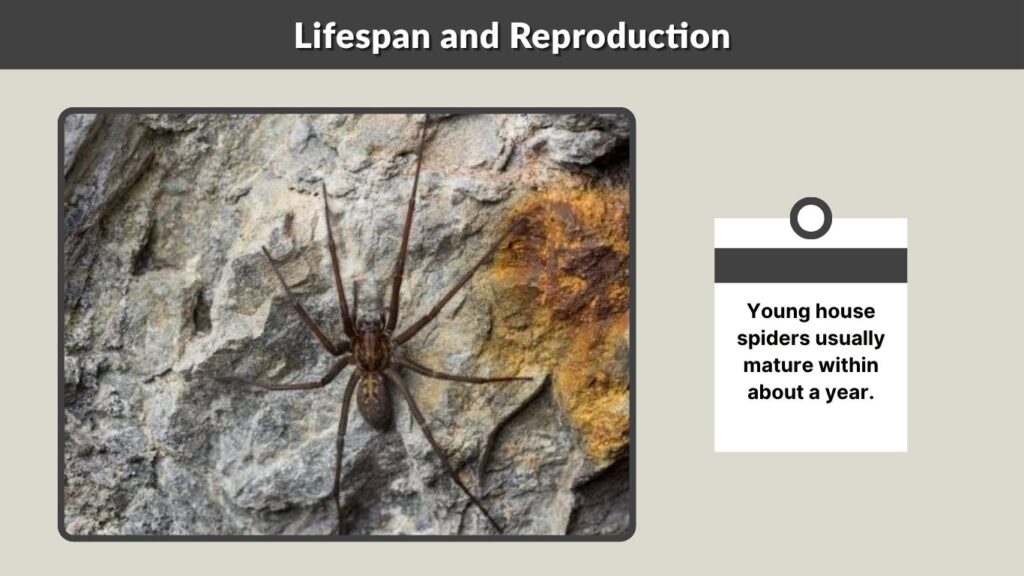
House spiders can remain around buildings much longer than many people realize. Females generally live longer than wandering adult males.
How Long Do Giant House Spiders Live?
Young house spiders usually mature within about a year. Adult males typically die after the mating season, while females may survive for several years and produce multiple egg sacs.
Females remain near established webs while males roam looking for mates. Egg sacs are placed in protected areas associated with the web, and young spiderlings emerge resembling miniature adults.
Are Giant House Spiders Good to Have Around?
Although their appearance can be startling, giant house spiders are useful predators. They help control flies, moths, mosquitoes, and other insects that enter buildings.
Should You Remove Them?
If the spider is not causing a problem, leaving it alone is usually the simplest option.
If removal is necessary, place a container over the spider, slide stiff paper underneath, and move it to a sheltered location. Sealing gaps around doors and windows and checking firewood before bringing it indoors can reduce future encounters. WSU recommends non-chemical management rather than routine pesticide treatment.
FAQs
1. Is a giant house spider dangerous?
No. Giant house spiders are not considered medically dangerous to humans and usually flee rather than bite.
2. Why do giant house spiders suddenly appear in fall?
Most conspicuous autumn spiders are adult males wandering away from their webs in search of females.
3. Is a giant house spider the same as a hobo spider?
No. They are closely related funnel weavers but are different spiders. Giant house spiders are commonly mistaken for hobos because their appearance is similar.
4. Can giant house spiders climb walls?
Yes, they can move across many walls and rough surfaces, but very smooth surfaces such as bathtubs and sinks may trap them.
5. Do giant house spiders make nests?
They do not build nests like social insects. Instead, they construct permanent sheet webs with funnel-shaped retreats where they hide, capture prey, mate, and protect egg sacs.
