
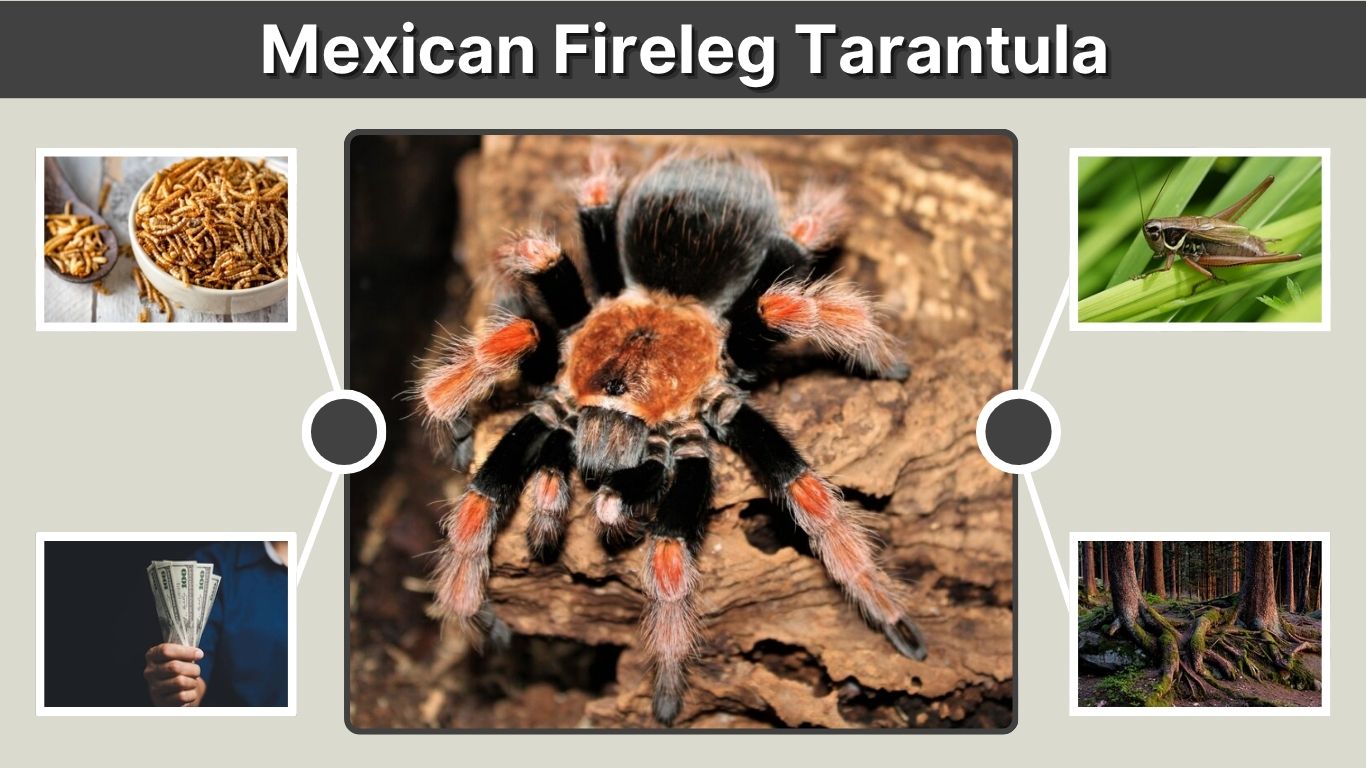
The Mexican fireleg tarantula (Brachypelma boehmei) is a colorful terrestrial spider known for its fiery orange legs, dark body, and relatively manageable care requirements. Native to Mexico’s Pacific coast, it inhabits dry scrubland where it shelters in burrows beneath rocks and vegetation. Although often recommended to beginners, this tarantula can be nervous and quick to release irritating abdominal hairs. A properly designed enclosure, dry substrate, fresh water, suitable prey, and minimal disturbance can support a female for several decades.
Mexican Fireleg Tarantula Identification
The Mexican fireleg is sometimes called the Mexican rustleg because of the rusty orange coloration covering much of its legs. It is a New World terrestrial tarantula in the family Theraphosidae. Its colors become especially vivid after molting but may gradually appear duller as the next molt approaches.
Identifying Features
- Scientific name: Brachypelma boehmei
- Family: Theraphosidae
- Common names: Mexican fireleg and Mexican rustleg
- Native country: Mexico
- Type: Terrestrial and opportunistic burrower
- Adult leg span: Approximately 5–6 inches
- Growth rate: Slow
- Activity: Primarily nocturnal
- Defensive feature: Urticating abdominal hairs
- Experience level: Beginner to intermediate
The carapace is orange or reddish-orange with a darker central area. Its upper legs are black, while the lower sections display intense orange and red coloration. The feet are dark, creating a distinctive black-and-orange pattern.
The World Spider Catalog recognizes Brachypelma boehmei as a valid Mexican species first described in 1993.
Mexican Fireleg vs Mexican Red-Knee
The Mexican fireleg can be confused with the Mexican red-knee tarantula. However, a red-knee generally has concentrated orange bands around its knee joints. The fireleg has more extensive orange coloration running across several leg segments.
“Giant Mexican fireleg” is not a separate recognized species. Sellers may use this name for a large adult female or as an informal marketing description.
Mexican Fireleg Tarantulas Natural Habitat and Distribution
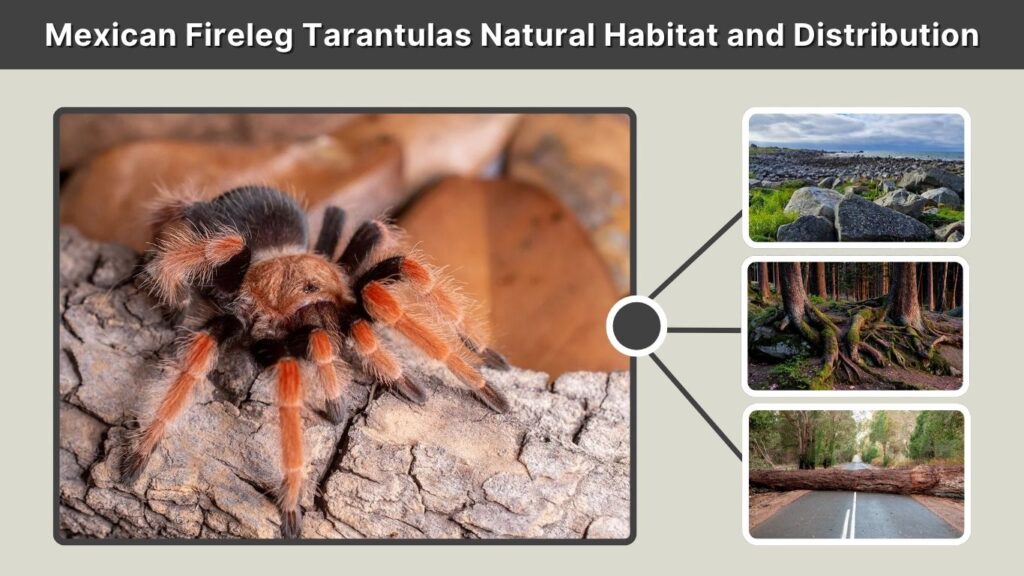
Mexican firelegs are endemic to Mexico and are associated primarily with the Pacific coastal region, particularly Guerrero and nearby areas. Their natural environment experiences seasonal rainfall followed by extended dry periods. Burrows allow the spiders to escape heat, predators, and changing surface conditions.
Natural Habitat
This tarantula inhabits dry scrubland, thorn forest, and seasonally dry tropical areas. It may excavate a shallow burrow or occupy a protected space beneath rocks, roots, fallen wood, or dense vegetation.
The burrow creates a stable microclimate that is cooler and slightly more humid than the surrounding surface. A wild Mexican fireleg may wait near its entrance after dark, detecting nearby prey through vibrations in the soil and silk.
Conservation Status
The Mexican fireleg is classified as Endangered on the IUCN Red List. Habitat loss, its limited natural range, and illegal collection for the pet trade threaten wild populations.
It is also protected under CITES Appendix II, meaning international commercial trade is regulated. Buyers should select captive-bred animals and request appropriate documentation when required. Never purchase a specimen suspected of being illegally collected from the wild.
Behavior and Temperament
Mexican firelegs are usually slow-moving when undisturbed, but their temperament varies. Some remain visible and calm, while others quickly retreat or release urticating hairs. They are generally less likely to bite than many defensive species, but they should never be treated as harmless.
Defensive Behavior
When disturbed, the tarantula may:
- Retreat into its hide
- Raise its front legs
- Turn its abdomen toward the threat
- Kick urticating hairs
- Slap the ground
- Bite as a final defense
Urticating hairs can cause intense itching, redness, or a rash. Contact with the eyes or respiratory system can produce more serious irritation. Keep the enclosure away from fans and wash your hands after maintenance.
Handling
Handling is not recommended. Even a calm specimen can move unexpectedly, and a fall may rupture its abdomen. Repeated handling can also stress the spider and expose the keeper to irritating hairs.
Use a catch cup and long soft-tipped tools when moving the tarantula. Maintenance should be performed slowly without placing bare hands close to the spider.
Mexican Fireleg Tarantula Care
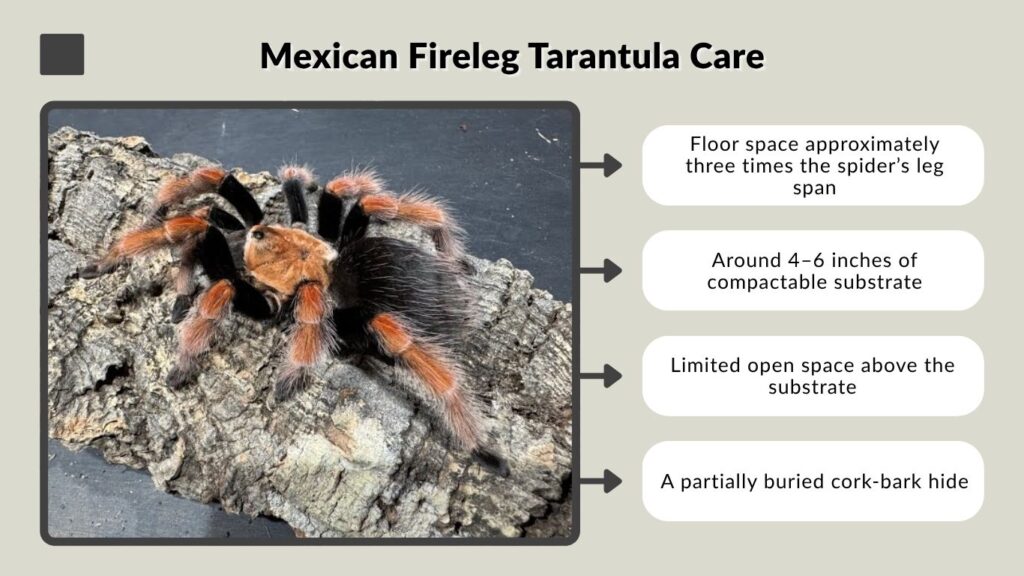
The Mexican fireleg has uncomplicated husbandry requirements, but its enclosure must prevent falls and support natural digging. A mostly dry terrestrial setup with a secure retreat, deep substrate, adequate ventilation, and constant access to clean water is generally suitable.
Enclosure and Terrarium
An adult enclosure should provide more horizontal space than height. Useful features include:
- Floor space approximately three times the spider’s leg span
- Around 4–6 inches of compactable substrate
- Limited open space above the substrate
- A partially buried cork-bark hide
- A shallow water dish
- Secure ventilation
- A tightly fitting lid
- Decorations without sharp edges
Excessive vertical space is dangerous because terrestrial tarantulas have heavy bodies and fragile abdomens. Avoid tall climbing decorations and hard rocks placed directly beneath areas where the spider might climb.
Spiderlings and juveniles should be housed in proportionately smaller containers. Small enclosures make it easier to monitor feeding, moisture, and general condition.
Substrate
A mixture of pesticide-free topsoil and coconut fiber provides a suitable digging surface. Pack the lower layers firmly enough to hold a shallow burrow. Commercial tarantula soil can also work if it contains no fertilizer or harmful chemicals.
Avoid gravel, sand-only mixtures, wood chips, calcium sand, scented bedding, and sharp materials. The substrate should be dry on the surface but capable of holding some moisture underneath.
Temperature and Moisture
Normal room temperatures between approximately 70–80°F (21–27°C) are generally appropriate. Avoid direct sunlight and uncontrolled heat mats. If supplemental heat is necessary, warming the room is usually safer than heating the enclosure directly.
Keep most of an adult’s enclosure dry and provide a full water dish. Occasionally overflowing one corner of the dish can create a gentle moisture gradient. Spiderlings require slightly more consistent moisture because they dehydrate more easily, but their containers still need good ventilation.
Mexican Fireleg Tarantulas Behavior and Diet
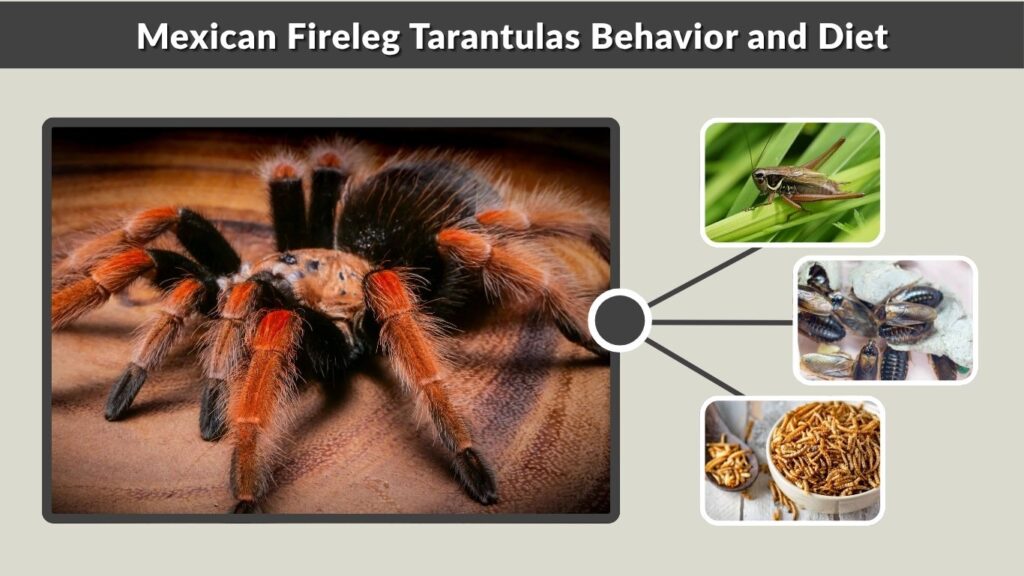
Mexican firelegs are ambush predators that sense prey through ground and silk vibrations. They do not require vertebrate prey or frequent large meals. A controlled feeding schedule prevents excessive abdomen growth, which can increase the risk of injury during a fall.
Feeding Schedule
Suitable captive-bred foods include:
- Crickets
- Dubia roaches
- Red runner roaches
- Mealworms
- Superworms
- Locusts where legally available
- Small pre-killed insects for tiny spiderlings
Feed spiderlings one or two small meals weekly. Juveniles can usually eat approximately once a week, while adults may be fed every 7–14 days. Adjust the amount according to the size of the abdomen and prey.
Remove uneaten food after 24 hours. Stop feeding when the tarantula enters premolt because live prey may injure it while its new exoskeleton is soft.
Mexican Fireleg Tarantulas Size, Growth, and Lifespan
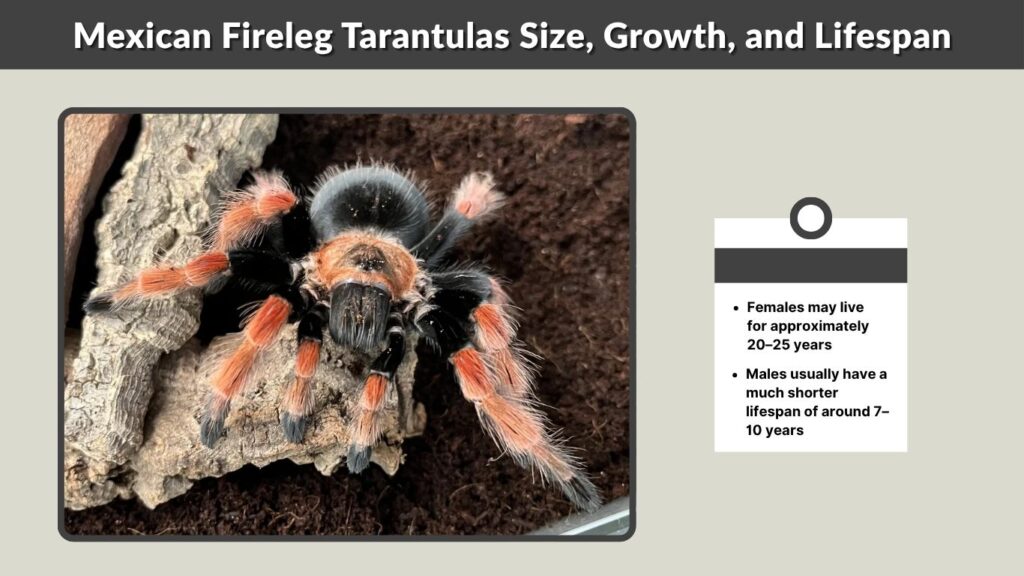
This species grows slowly, particularly when compared with many tropical South American tarantulas. A Mexican fireleg spiderling may require several years to reach adult size. Temperature, feeding frequency, sex, and individual genetics all influence development.
Adult Size
Adults commonly reach a diagonal leg span of around 5–6 inches. Females usually develop a heavier abdomen and broader overall build. Mature males have proportionately longer legs and a slimmer body.
The term “giant Mexican fireleg” should not be taken as evidence of a special variety. Differences in apparent size may result from sex, age, posture, feeding condition, or inaccurate seller descriptions.
Lifespan
Females may live for approximately 20–25 years under suitable captive conditions. Males usually have a much shorter lifespan of around 7–10 years in total and may survive only one or two years after reaching maturity.
These estimates vary considerably. Stable husbandry, safe housing, responsible feeding, and protection from falls are more important than trying to predict an exact lifespan.
Mexican Fireleg Tarantulas Molting and Sexing
Molting allows the tarantula to grow, replace damaged hairs, and renew its exoskeleton. Spiderlings molt more frequently than adults. A mature female may go more than a year between molts, while young spiderlings may molt several times annually.
Signs of Premolt
- Refusing food
- Reduced activity
- Increased hiding
- Darkened abdomen
- Creating a silk mat
- Closing the burrow entrance
- Lying on the back or side
A tarantula lying on its back is normally molting, not dying. Do not touch, turn, or feed it. Keep the water dish available and wait until its fangs become dark and hardened before offering food. Large specimens may need 10–14 days after molting before they can safely eat.
Male vs Female
Mature females are generally heavier and longer-lived. Mature males develop enlarged emboli at the ends of their pedipalps and may possess tibial hooks on their front legs.
The most reliable method for sexing an immature Mexican fireleg is examining the inside of a well-preserved molt. External photographs can provide an estimate but are less dependable.
Mexican Fireleg Tarantulas Bite and Venom
Mexican fireleg tarantulas are venomous, not poisonous. They inject venom through their fangs to immobilize prey. Their venom is not generally considered medically significant to healthy adults, but bites can still be painful and individual reactions vary.
Possible Bite Symptoms
A bite may produce puncture wounds, local pain, redness, tenderness, swelling, or muscle discomfort. The wound should be cleaned with soap and water and monitored carefully.
Seek medical assistance for severe pain, spreading swelling, breathing difficulty, faintness, vomiting, or other worsening symptoms. Urticating hairs in the eyes also require prompt professional medical care.
Mexican Fireleg Tarantulas for Sale
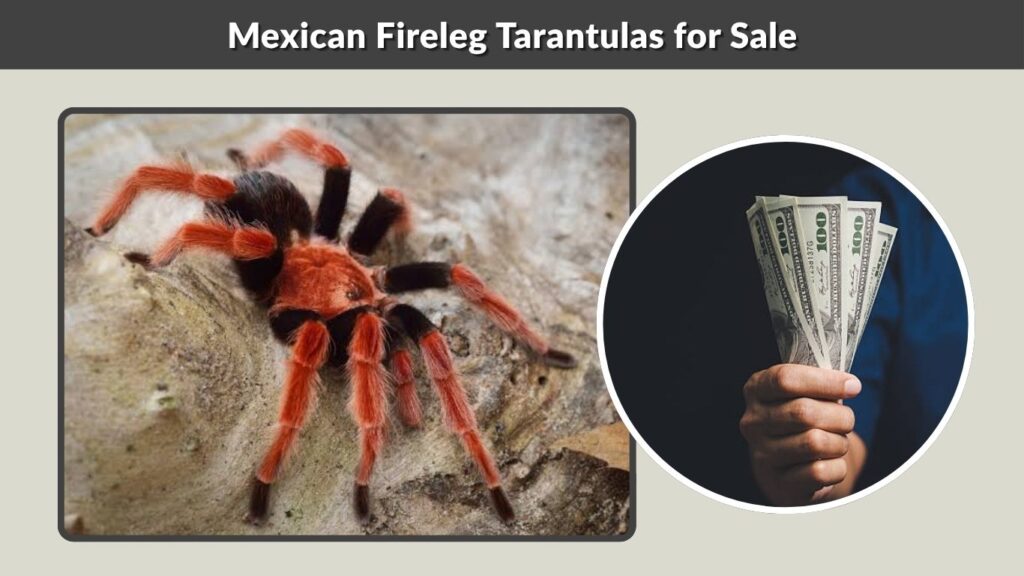
Price varies according to the animal’s sex, age, size, availability, country, and documentation. Adult females are generally the most valuable because of their long lifespan. Spiderlings are less expensive but require years of growth before reaching full size.
Choose a reputable breeder who can verify that the animal is captive-bred. Confirm its scientific name, feeding history, approximate age, last molt, sexing method, and legal origin before purchasing.
FAQs
Is a Mexican fireleg tarantula good for beginners?
Its basic care is beginner-friendly, but frequent hair-kicking and nervous behavior require caution. It is best for a prepared beginner who does not intend to handle it.
How large does a Mexican fireleg get?
Adults typically reach approximately 5–6 inches in diagonal leg span. Females generally have heavier bodies than males.
How often should it be fed?
Spiderlings may eat once or twice weekly. Adults usually need an appropriately sized meal every 7–14 days.
Is the Mexican fireleg poisonous?
It is venomous rather than poisonous. Its venom is delivered by a bite, while its abdominal hairs can cause skin and eye irritation.
How long does a Mexican fireleg live?
Females may live approximately 20–25 years. Males have shorter lives and often survive around 7–10 years in total.
