
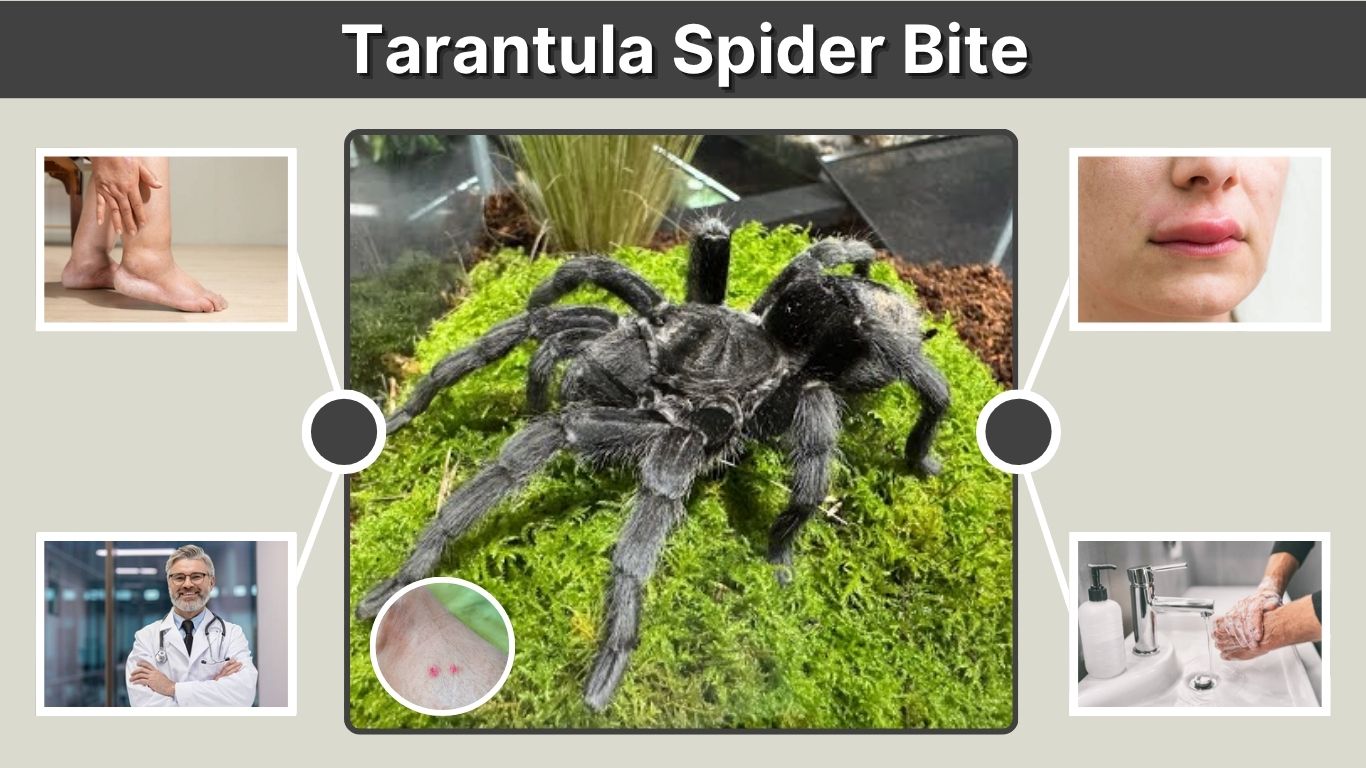
A tarantula spider bite can look frightening because these spiders have large fangs, but most bites cause only localized pain, redness, and swelling. Tarantulas are venomous rather than poisonous, and bites from many species—especially those native to the Americas—are generally mild in healthy adults. However, some species can produce more significant symptoms, and tarantula hairs can also irritate the skin and eyes. Here’s what a tarantula bite looks like, common symptoms, treatment options, and when medical attention is necessary.
What Does a Tarantula Spider Bite Look Like?
A tarantula bite usually leaves one or two small puncture marks where the spider’s fangs entered the skin. The surrounding area may become red, swollen, warm, and tender.
Immediately after the bite, it may resemble a bee sting or another ordinary insect bite rather than a distinctive spider bite. The appearance can vary depending on the tarantula species, the amount of venom injected, and the person’s reaction.
Common visible signs include:
- Two small fang or puncture marks
- Redness around the bite
- Mild to moderate swelling
- Local warmth
- Tenderness or soreness
- Occasionally minor bleeding
A photograph alone usually cannot confirm that a mark is a tarantula bite. Many insect bites, skin infections, and other conditions can look similar.
Tarantula Spider Bite Symptoms
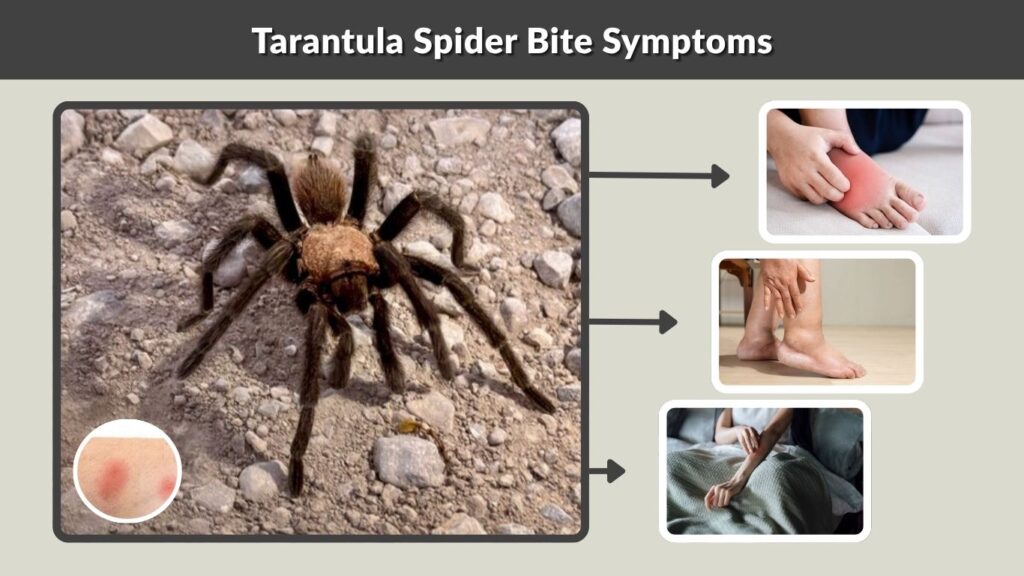
Most tarantula bite symptoms remain around the bite site. Pain may begin immediately and can sometimes throb for several hours.
The most common symptoms include:
- Immediate pain
- Redness
- Swelling
- Warmth around the bite
- Tenderness
- Itching
- Mild inflammation
MedlinePlus notes that bites may cause pain similar to a bee sting, while Poison Control reports that swelling and throbbing pain can last for hours.
Less commonly, a person may experience nausea, vomiting, fever, muscle discomfort, or other systemic symptoms.
Are Tarantula Spider Bites Poisonous?
Tarantulas are venomous, not poisonous.
Venom is delivered through the spider’s fangs when it bites. Poison generally causes harm when swallowed, inhaled, or absorbed.
The venom of many tarantulas found in North and South America usually causes relatively mild effects in humans. Serious complications are uncommon.
However, this does not mean every tarantula species has identical venom.
Some tarantulas native to Africa and Asia—often called Old World tarantulas—have been associated with more significant symptoms, including intense pain and muscle cramps. Research and documented cases show that some Poecilotheria and other Old World tarantula bites can cause prolonged muscle spasms.
How Painful Is a Tarantula Bite?
A tarantula bite can be painful because the spider has relatively large fangs capable of penetrating human skin.
For many New World tarantulas, the initial bite may feel similar to:
- A bee sting
- A sharp pinprick
- A wasp sting
- A brief stabbing sensation
Throbbing or soreness may continue afterward.
The severity of pain varies considerably by species. Some Old World tarantula bites have caused intense local pain followed by painful muscle cramps lasting several days.
There is no single standardized “tarantula bite pain index” that accurately represents every tarantula species.
Tarantula Spider Bite Treatment
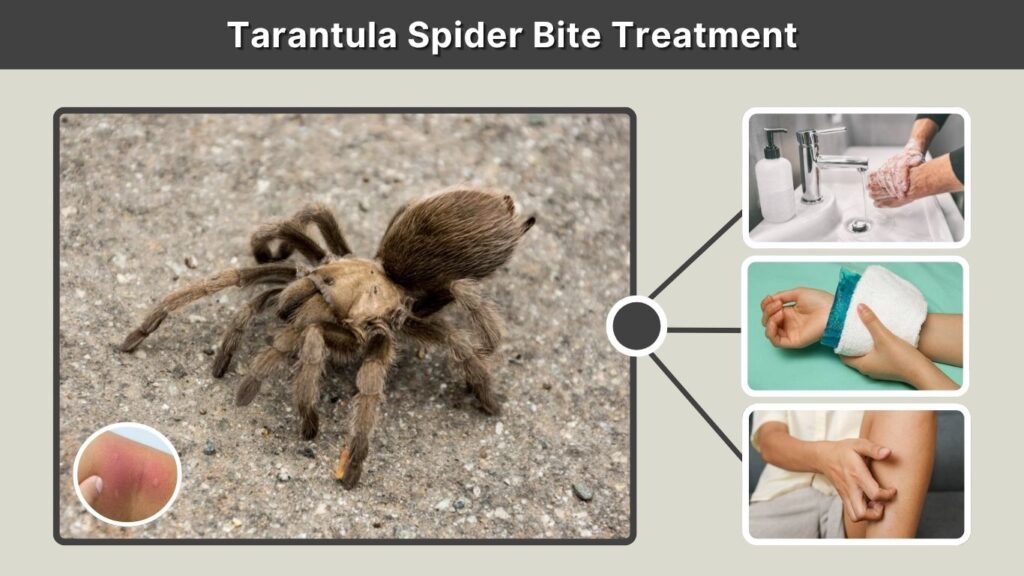
Most mild tarantula bites are treated with basic wound care and symptom relief.
1. Wash the Bite
Wash the affected area thoroughly with soap and clean water. Cleaning the puncture wounds helps reduce contamination and infection risk.
2. Apply a Cold Compress
Place a cold pack wrapped in cloth over the affected area. This can help reduce pain and swelling.
MedlinePlus recommends applying wrapped ice for about 10 minutes and then removing it for 10 minutes before repeating as needed.
3. Avoid Scratching
Scratching can damage the skin and increase the possibility of infection, especially if tarantula hairs are causing itching.
4. Consider Pain Relief
Over-the-counter pain medication may help with discomfort when appropriate for the individual. Poison Control notes that medications such as acetaminophen or ibuprofen may be used for pain management.
5. Monitor Your Symptoms
Watch the bite for increasing pain, swelling, spreading redness, breathing problems, muscle cramps, or other unusual symptoms.
Tarantula Hairs Can Cause Symptoms Too
Sometimes what seems like a tarantula bite is actually irritation caused by the spider’s defensive hairs.
Many tarantulas from the Americas have urticating hairs on their abdomen. When threatened, they may flick these tiny barbed hairs toward a predator.
Contact can cause:
- Intense itching
- Small swollen bumps
- Redness
- Skin irritation
- Eye irritation
The itching may persist considerably longer than the pain from a mild bite.
If hairs are visible on the skin, sticky tape may help lift them away. Avoid rubbing the area because this can push the hairs deeper into the skin.
What If Tarantula Hairs Get in Your Eyes?
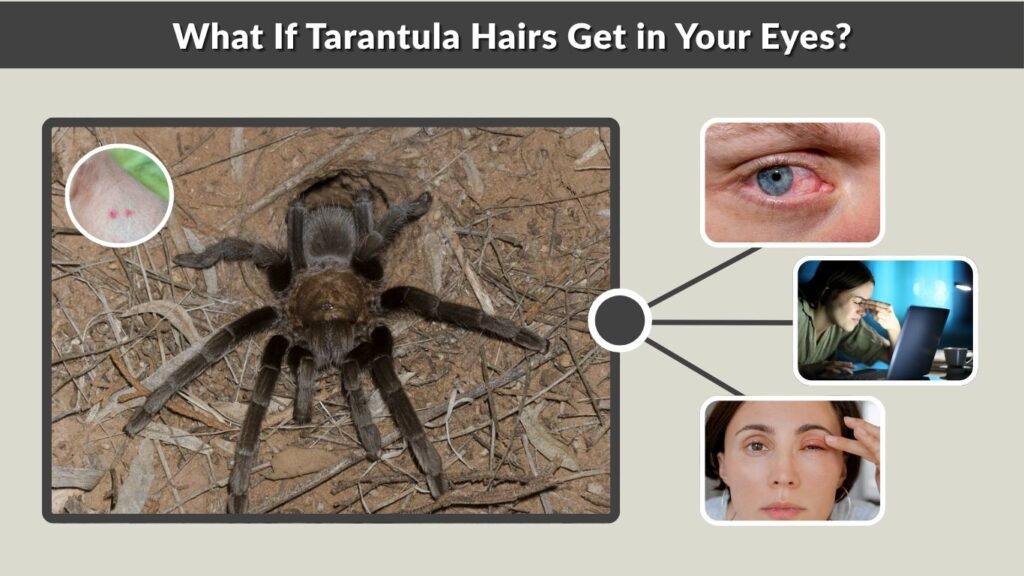
Eye exposure deserves particular attention.
Tiny urticating hairs can become embedded in the surface of the eye and cause persistent inflammation.
Symptoms may include:
- Eye redness
- Pain
- Excessive tearing
- Light sensitivity
- A gritty sensation
- Eyelid swelling
Do not rub your eyes after handling or disturbing a tarantula.
Poison Control recommends evaluation by an eye specialist when tarantula hairs affect the eyes because retained hairs can produce significant inflammation.
Can a Tarantula Bite Kill a Human?
Death from a tarantula bite is extremely rare.
For commonly encountered American tarantulas, serious poisoning is not expected in most healthy adults. Most bites produce temporary localized symptoms rather than life-threatening venom effects.
The greater concerns are severe allergic reactions, bites from certain Old World species, secondary infection, and urticating hairs entering the eyes or respiratory system.
Allergic Reaction to a Tarantula Bite
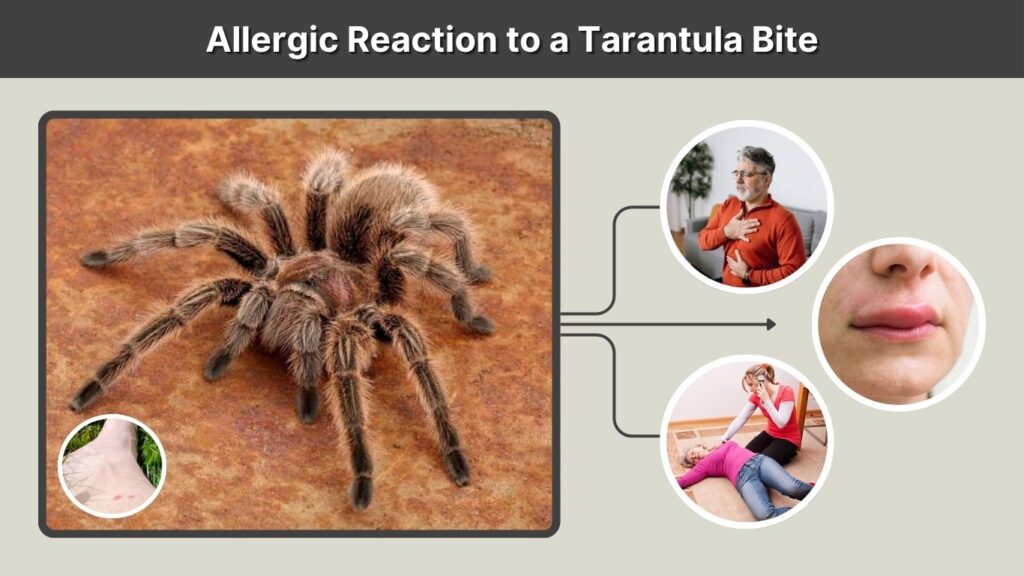
Although uncommon, a person can experience a severe allergic reaction.
Warning signs include:
- Difficulty breathing
- Swelling of the lips or throat
- Widespread rash or hives
- Severe dizziness
- Rapid heartbeat
- Fainting or collapse
These symptoms require emergency medical attention. MedlinePlus identifies breathing difficulty, throat swelling, low blood pressure, and shock as potential signs of a serious reaction.
Old World vs New World Tarantula Bites
Not all tarantula bites should be treated as identical.
New World Tarantulas
Species native to North, Central, and South America usually produce milder venom effects. Many also possess urticating hairs that serve as their primary defense.
Examples include Mexican Red Knee, Texas Brown, Chilean Rose, and Brazilian Black tarantulas.
Old World Tarantulas
Tarantulas from Africa and Asia generally lack the same defensive urticating hairs and may rely more heavily on biting and venom.
Some species have caused:
- Severe localized pain
- Swelling
- Muscle cramps
- Generalized muscle spasms
- Symptoms lasting several days
Clinical reports involving Poecilotheria species have documented painful muscle cramps following bites.
Do Tarantulas Bite Humans Often?
Tarantula bites are uncommon.
Tarantulas generally bite only when they feel threatened, trapped, or roughly handled. Many will attempt to escape first or display a defensive posture by raising their front legs.
New World species may flick urticating hairs before resorting to a bite.
Pet owners can reduce bite risk by avoiding unnecessary handling and using appropriate tools when moving a tarantula or maintaining its enclosure.
When Should You See a Doctor?
Seek prompt medical attention if symptoms become severe or unusual, particularly if you experience:
- Difficulty breathing
- Swelling of the mouth or throat
- Severe or worsening pain
- Widespread swelling
- Repeated vomiting
- Severe muscle cramps
- Fainting or dizziness
- Eye exposure to tarantula hairs
- Signs of infection around the bite
You should also be more cautious if you were bitten by an unidentified exotic tarantula or a known Old World species.
FAQs
What does a tarantula spider bite look like?
It usually appears as one or two small fang marks surrounded by redness, mild swelling, warmth, and tenderness. The appearance is not unique enough to identify the spider from the bite alone.
Do tarantula bites hurt?
Yes. A tarantula bite can cause immediate sharp or throbbing pain. Many bites are comparable to a bee sting, although some Old World species can cause considerably stronger symptoms.
Are tarantula bites dangerous?
Most bites from commonly encountered New World tarantulas are mild. However, allergic reactions and bites from certain Old World species can require medical evaluation.
How long does a tarantula bite last?
Mild pain and swelling may improve within several hours or days. Some reactions can last longer, especially itching caused by urticating hairs or muscle cramps associated with certain species.
Can a pet tarantula bite you?
Yes. Pet tarantulas can bite when frightened, trapped, or handled roughly. Avoid unnecessary handling and learn the defensive behavior of the particular species you keep.
