
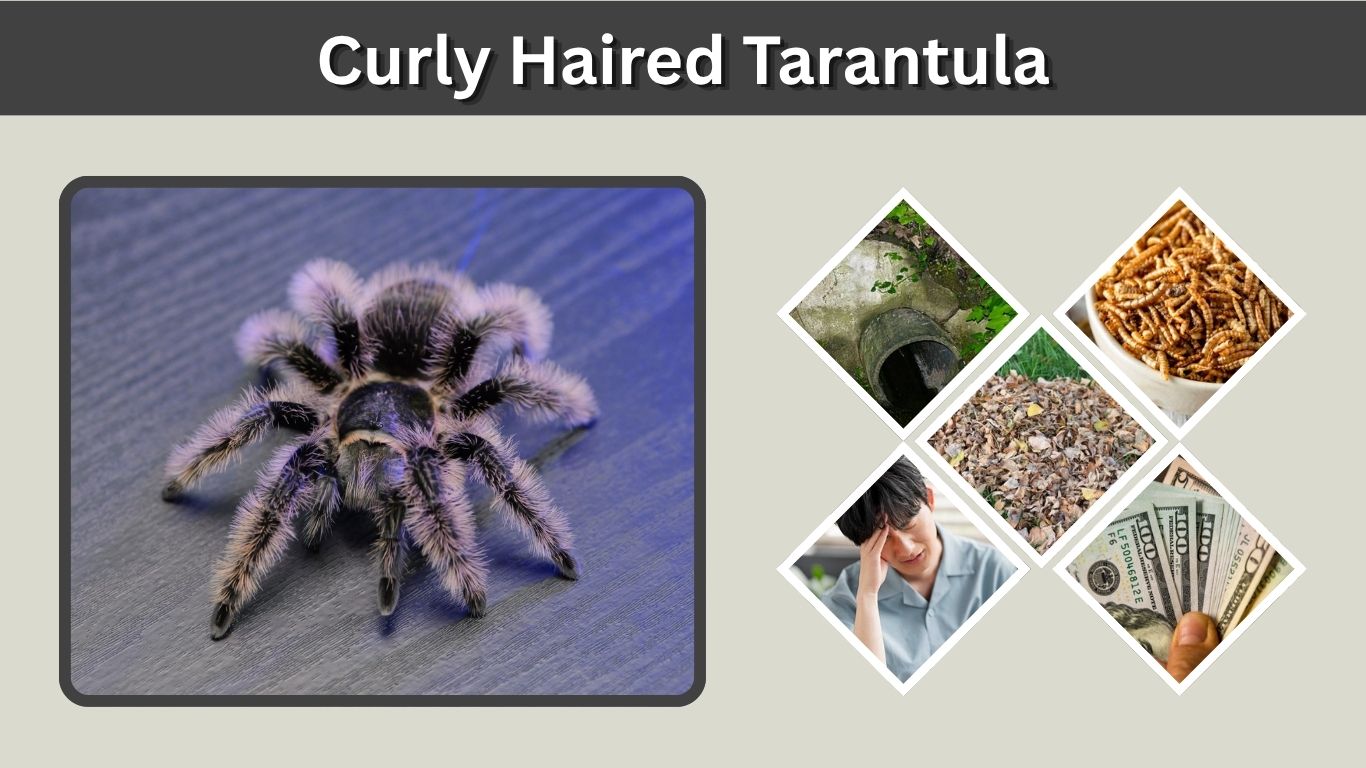
The curly haired tarantula is a popular terrestrial tarantula known for its distinctive curled body hairs, calm temperament, and relatively straightforward care requirements. Often called the Honduran curly haired tarantula, this Central American species is commonly kept by both beginner and experienced tarantula enthusiasts. Adults are sturdy, slow-moving spiders that spend much of their time near a burrow or hide. With suitable substrate, temperature, food, water, and minimal disturbance, a female curly hair tarantula can live for many years in captivity.
What Is a Curly Haired Tarantula?
The curly haired tarantula, scientifically known as Tliltocatl albopilosus, is a New World terrestrial tarantula native to Central America, particularly Nicaragua and Honduras.
Its common name comes from the long, curled hairs covering the legs and body. These hairs often give the spider a fluffy or woolly appearance.
Curly Haired Tarantula Identification
- Scientific name: Tliltocatl albopilosus
- Family: Theraphosidae
- Type: Terrestrial tarantula
- Native region: Central America
- Color: Brown to dark brown
- Hair: Long, curled, golden-brown hairs
- Adult leg span: Around 5–6 inches
- Temperament: Usually calm but individual behavior varies
- Defense: Urticating hairs and defensive biting
Adult females generally look heavier and more robust than mature males.
Honduran Curly Haired Tarantula
The name Honduran curly haired tarantula is commonly used in the pet trade for curly hair tarantulas associated with Honduras.
You may also encounter the term Nicaraguan curly haired tarantula. These geographic names have historically created some confusion among keepers because similar-looking animals from different localities have circulated in captivity.
Regardless of locality, proper identification by scientific name is more reliable than depending entirely on common trade names.
Curly Haired Tarantula Habitat
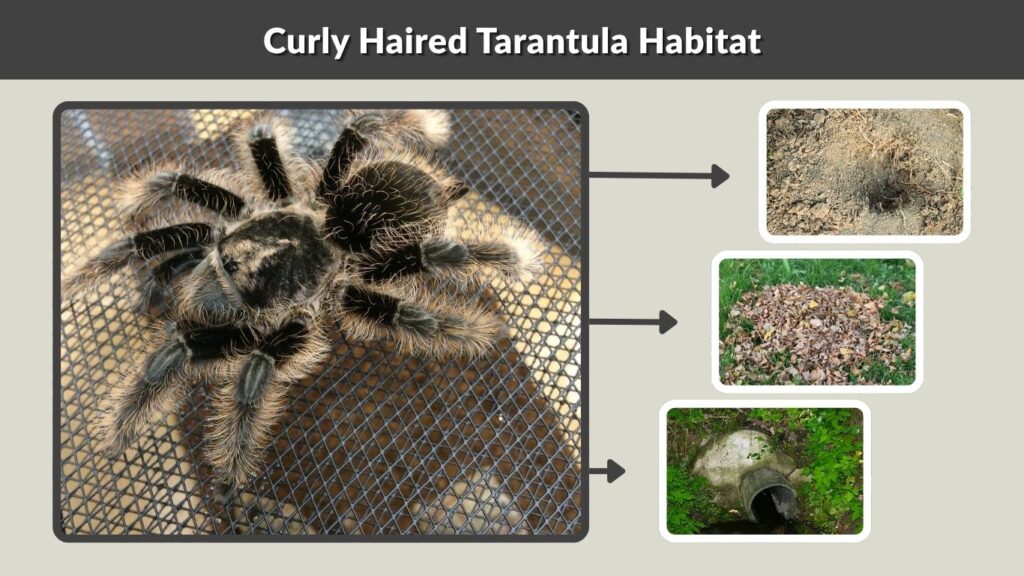
Wild curly haired tarantulas are terrestrial spiders that live in warm Central American environments.
They spend much of their time inside burrows, beneath roots, or in protected ground-level retreats. Burrows help them avoid predators and extreme environmental conditions.
Natural Habitat Features
Their habitat generally provides:
- Loose soil suitable for burrowing
- Leaf litter
- Roots and natural hiding places
- Seasonal moisture
- Warm temperatures
- Insects and other small prey
In captivity, providing a deep substrate and secure hide allows them to display similar natural behaviors.
Curly Haired Tarantula Size
Adult curly haired tarantulas commonly reach around 5 to 6 inches in leg span.
Females tend to become bulkier, while mature males usually develop a thinner body with proportionally longer legs.
Spiderlings begin extremely small and grow gradually through repeated molts.
Growth speed depends on factors such as temperature, feeding frequency, sex, and individual genetics.
Curly Haired Tarantula Lifespan
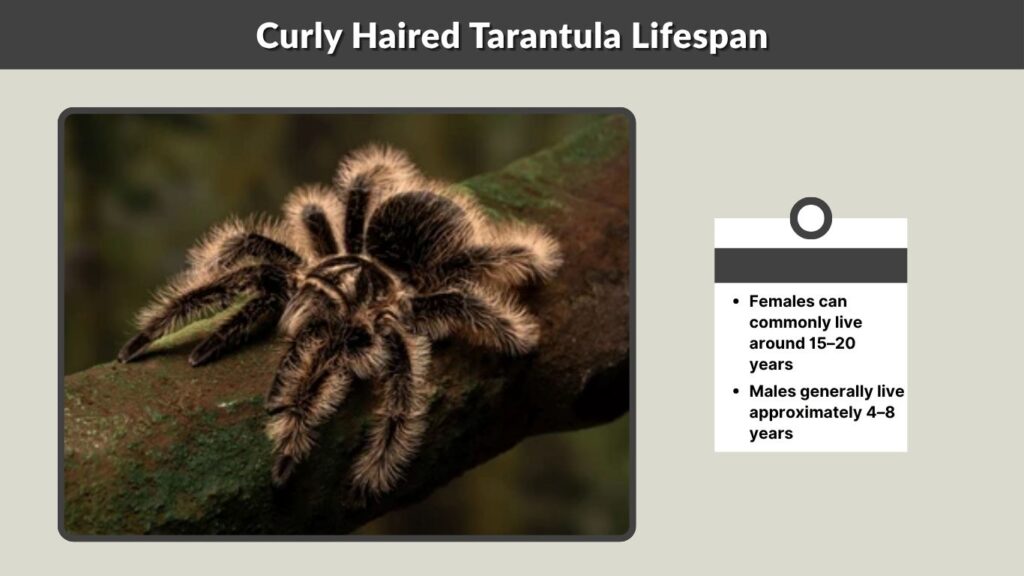
The lifespan of a curly haired tarantula differs greatly between males and females.
Male vs Female Lifespan
Females can commonly live around 15–20 years, and some individuals may survive even longer with good care.
Males generally live approximately 4–8 years, depending on how quickly they mature. After reaching sexual maturity, males typically have a much shorter remaining lifespan than females.
This major lifespan difference is one reason females are often preferred by keepers who want a long-term pet.
Curly Haired Tarantula Enclosure
A curly haired tarantula needs a terrestrial enclosure with plenty of floor space and relatively little climbing height.
An adult does not require a huge tank. A secure enclosure approximately 10–12 inches long can work well when properly arranged.
Enclosure Requirements
- Secure lid
- Several inches of substrate
- Cork bark or another hide
- Shallow water dish
- Adequate ventilation
- More floor space than height
- No sharp decorations
- Minimal fall distance
Because terrestrial tarantulas have vulnerable abdomens, excessive climbing height can be dangerous. A fall can cause serious injury.
Best Substrate for Curly Haired Tarantulas
Curly haired tarantulas are enthusiastic burrowers, so providing a good layer of substrate is particularly important.
Suitable options include:
- Coco fiber
- Chemical-free topsoil
- Peat-based substrate
- Coco fiber and soil mixtures
Around 4–6 inches of substrate is useful for adults, depending on enclosure dimensions.
The substrate should be slightly compacted rather than extremely loose so that tunnels and burrows are less likely to collapse.
Curly Haired Tarantula Temperature and Humidity
Curly hairs generally do well at typical comfortable indoor temperatures.
Temperatures around 70–78°F (21–26°C) are suitable for most captive individuals.
They do not require an extremely humid tropical enclosure. Maintaining a water dish and occasionally allowing some moisture in the lower substrate is usually more appropriate than continuously soaking the enclosure.
Good ventilation is essential because permanently wet conditions can encourage mold and unwanted microorganisms.
What Do Curly Haired Tarantulas Eat?
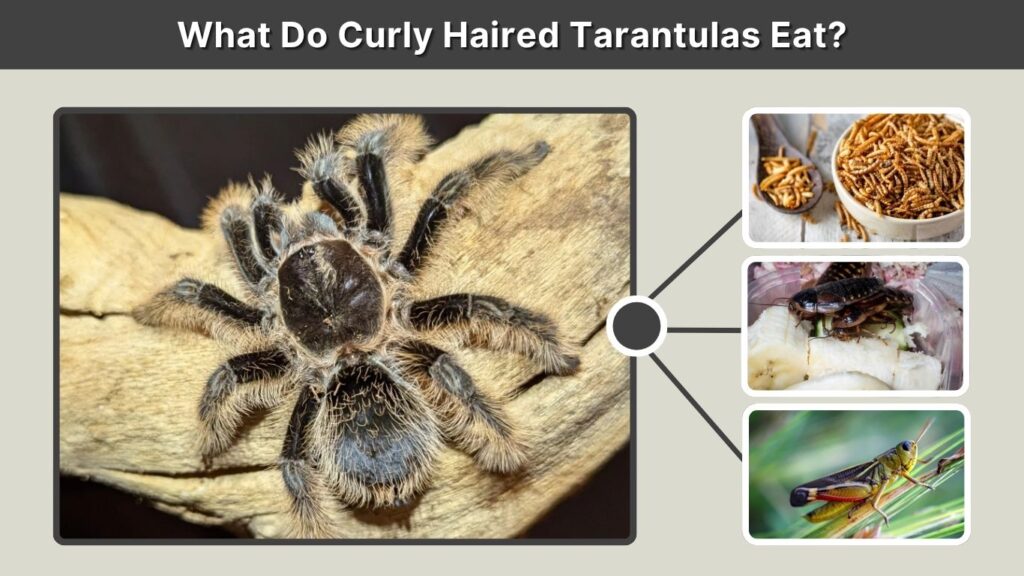
Curly haired tarantulas are carnivorous predators that mainly eat insects and other small invertebrates.
They generally have good feeding responses and may readily attack moving prey.
Curly Haired Tarantula Diet
Common captive foods include:
- Crickets
- Dubia roaches
- Red runner roaches
- Mealworms
- Superworms
- Other appropriately sized feeder insects
Young spiderlings need smaller prey but can usually be fed more frequently than adults.
Avoid feeding wild-caught insects because they may have been exposed to pesticides, parasites, or other contaminants.
How Often Should You Feed a Curly Haired Tarantula?
Feeding frequency depends heavily on age and body condition.
Spiderlings may be offered small meals two or three times per week. Juveniles can usually be fed once or twice weekly.
Healthy adults often require food only once every 7–14 days.
Feeding Tips
- Match prey size to the tarantula.
- Remove uneaten insects.
- Reduce feeding when the abdomen becomes very large.
- Stop feeding when premolt behavior appears.
- Always provide fresh drinking water.
A tarantula refusing food is not necessarily sick. Appetite often decreases dramatically before molting.
Why Does My Curly Haired Tarantula Stay Buried?
Curly haired tarantulas commonly spend long periods underground.
Burrowing is natural behavior and is especially common in young spiders.
Your tarantula may remain buried because it is:
- Preparing to molt
- Seeking security
- Adjusting to a new enclosure
- Avoiding excessive light
- Regulating temperature or moisture
- Simply following natural behavior
Avoid digging up a healthy tarantula just because you have not seen it for several days or weeks.
Curly Haired Tarantula Molting
Molting allows the tarantula to grow and replace its old exoskeleton.
Before molting, the spider may stop eating, become less active, darken in color, seal its burrow, or spend more time hidden.
During the actual molt, it commonly lies on its back.
Do not disturb it during this vulnerable period.
Live feeder insects should also be removed because they can injure a soft, freshly molted tarantula.
Wait until the new fangs have hardened and become dark before feeding again.
Is the Curly Haired Tarantula Aggressive?
Curly haired tarantulas are generally considered relatively calm compared with many faster and more defensive tarantula species.
However, describing any tarantula as completely harmless or predictable would be inaccurate.
Individual spiders can behave differently.
A frightened curly hair may retreat, kick urticating hairs, raise its front legs, or attempt to bite.
The Nicaraguan curly haired tarantula may sometimes appear more defensive simply because temperament varies between individual spiders rather than because all animals from one locality are aggressive.
Curly Haired Tarantula Bite
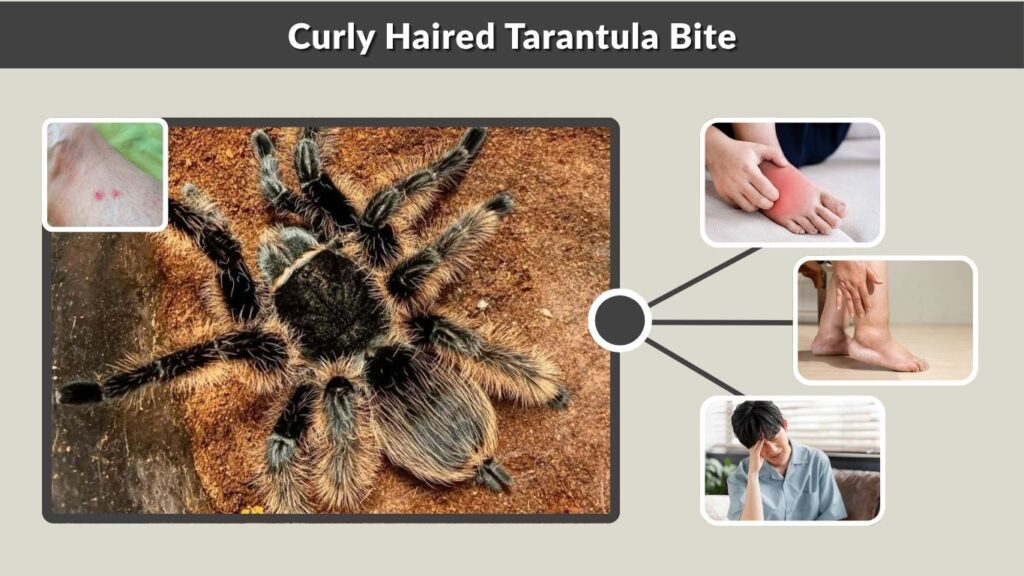
Yes, a curly haired tarantula can bite.
Its fangs are capable of piercing human skin, although biting is generally a defensive response rather than an attempt to attack humans.
Possible bite symptoms include:
- Local pain
- Redness
- Mild swelling
- Tenderness
- Burning or irritation
Its urticating hairs may also cause itching and irritation when they contact skin.
Avoid unnecessary handling to reduce both bite risk and the possibility of dropping and injuring the spider.
Curly Haired Tarantula Male or Female
Sex can sometimes be estimated from appearance after maturity, but examining a molt provides a more reliable method.
Mature Male
Mature males generally have:
- Longer legs
- Smaller abdomen
- Slender appearance
- Enlarged pedipalps
- Tibial hooks on the front legs
Female
Females generally have:
- Larger abdomen
- Heavier body
- More robust appearance
- Much longer lifespan
Determining the sex of very young spiderlings from appearance alone is extremely unreliable.
Curly Haired Tarantula Baby and Spiderlings
Baby curly haired tarantulas are commonly called spiderlings or slings.
Spiderlings should be housed in smaller containers so they can easily locate prey and water.
They may eat:
- Pinhead crickets
- Tiny roach nymphs
- Small mealworm pieces
- Pre-killed feeder insects
As the sling grows, enclosure and prey size should gradually increase.
Curly Haired Tarantula Price
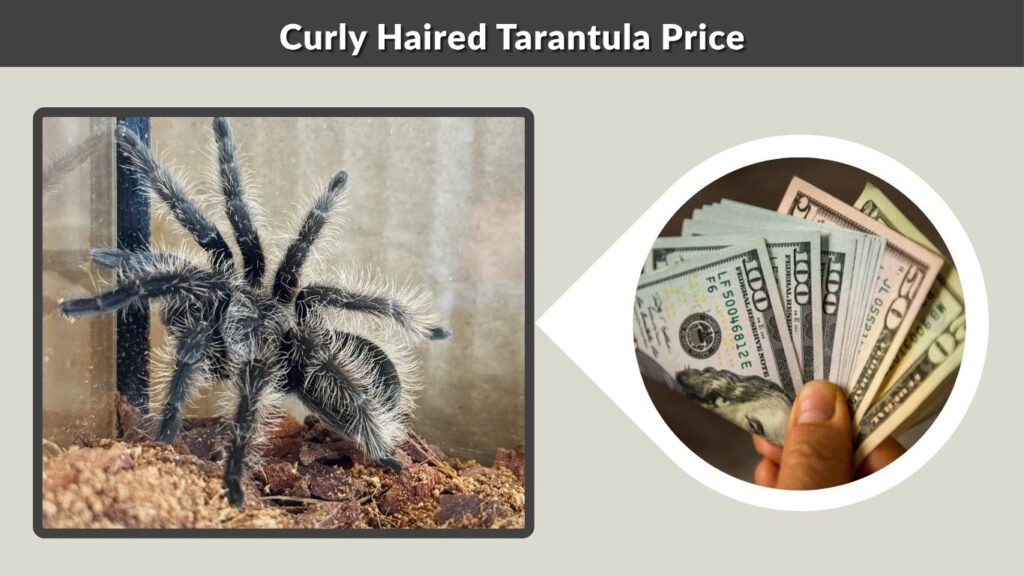
Curly haired tarantula prices vary according to size, age, sex, locality, availability, and seller.
Spiderlings are generally less expensive than confirmed adult females. Females often cost more because they can live much longer.
When looking for a curly haired tarantula for sale, choosing captive-bred animals from reputable breeders is preferable to buying specimens with uncertain origins.
FAQs
Are Curly Haired Tarantulas Good Pets?
Yes. Their manageable size, generally calm temperament, and straightforward care make curly haired tarantulas popular with beginner keepers.
How Big Does a Curly Haired Tarantula Get?
Adults commonly reach around 5–6 inches in leg span, although exact size varies between individuals.
How Long Do Curly Haired Tarantulas Live?
Females may live around 15–20 years or longer, while males generally have significantly shorter lifespans.
Why Is My Curly Haired Tarantula Not Eating?
Food refusal commonly occurs before molting. Adults may also naturally go long periods without eating. Keep fresh water available and remove uneaten prey.
Do Curly Haired Tarantulas Like to Be Handled?
No. Tarantulas do not need handling for social interaction. Keeping handling to a minimum reduces stress, bite risk, and the danger of accidentally dropping and injuring the spider.
