
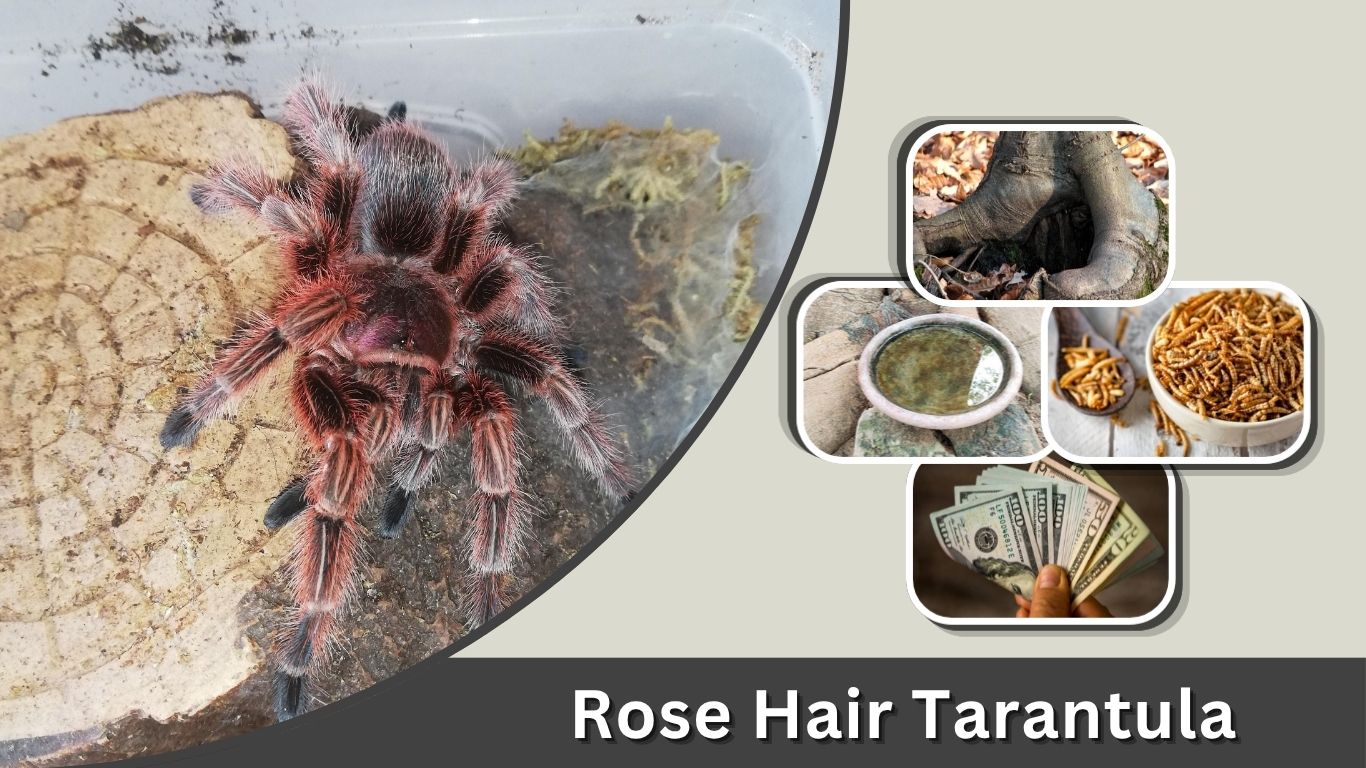
The rose hair tarantula is one of the best-known tarantulas in the pet trade, appreciated for its attractive brown-and-rose coloration, relatively calm nature, and simple care requirements. Commonly called the Chilean rose hair tarantula, Grammostola rosea is a terrestrial New World tarantula native to Chile. Adults spend much of their time resting in or near retreats and may go surprisingly long periods without eating. With appropriate housing, food, water, and minimal handling, females can remain fascinating pets for many years.
What Is a Rose Hair Tarantula?
The rose hair tarantula (Grammostola rosea) belongs to the family Theraphosidae. It is a ground-dwelling tarantula associated with dry scrub, shrubland, and other habitats across a broad portion of Chile. Research has recorded the species from the Atacama Region south into La Araucanía.
Its common name comes from the pinkish, reddish, or copper-colored hairs that contrast with its darker body.
Rose Hair Tarantula Identification
- Scientific name: Grammostola rosea
- Family: Theraphosidae
- Type: Terrestrial New World tarantula
- Color: Brown, gray-brown, reddish-brown, or coppery
- Adult leg span: Around 5–6 inches
- Native range: Chile
- Activity: Mostly evening and nighttime
- Defense: Fangs and urticating abdominal hairs
Females may reach roughly 14–15 cm in leg span, while mature males generally have proportionally longer legs and smaller abdomens.
Chilean Rose Hair Tarantula Natural Habitat
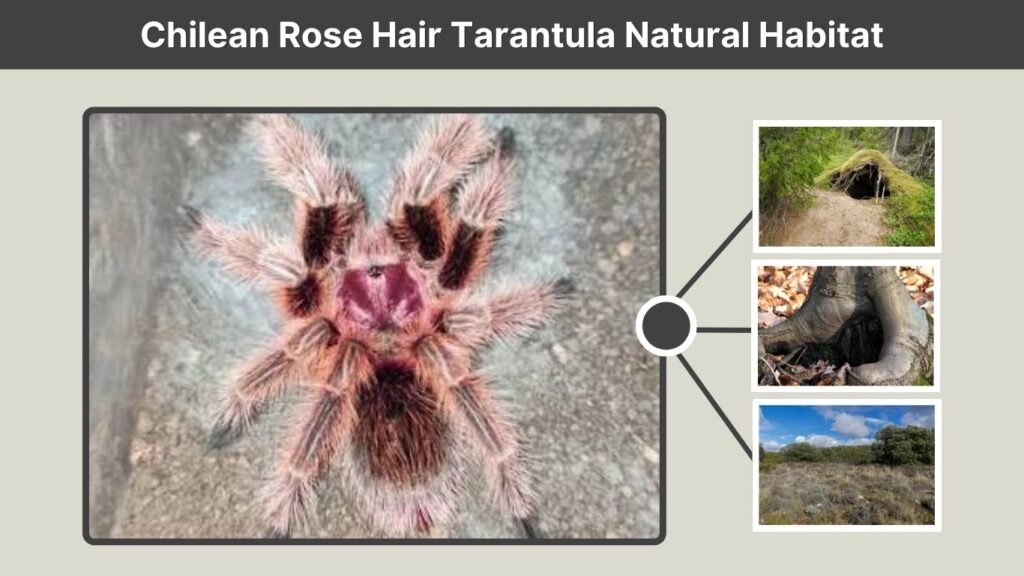
In nature, rose hair tarantulas occupy environments that may look surprisingly dry compared with the tropical habitats people often associate with tarantulas.
They are found in areas with sclerophyllous vegetation, xerophytic shrubs, thorny vegetation, and some deciduous woodland habitats.
They generally use burrows, natural cavities, or protected retreats where temperature and moisture conditions are more stable than on the exposed surface.
Natural Behavior
Rose hairs spend considerable time hidden or sitting motionless near their retreats. They are ambush predators rather than active hunters that constantly roam in search of prey.
Their slow lifestyle is one reason owners should not become concerned simply because a healthy tarantula spends long periods doing very little.
Rose Hair Tarantula Size
A full-grown rose hair tarantula generally reaches approximately 5 to 6 inches across the legs, although individual size varies.
Females typically appear heavier and more robust, particularly through the abdomen. Mature males tend to become leggier and slimmer after their final molt.
Growth is relatively slow, and reaching adult size can take several years.
Rose Hair Tarantula Lifespan
Rose hair tarantulas are long-lived spiders, particularly females.
Male vs Female Lifespan
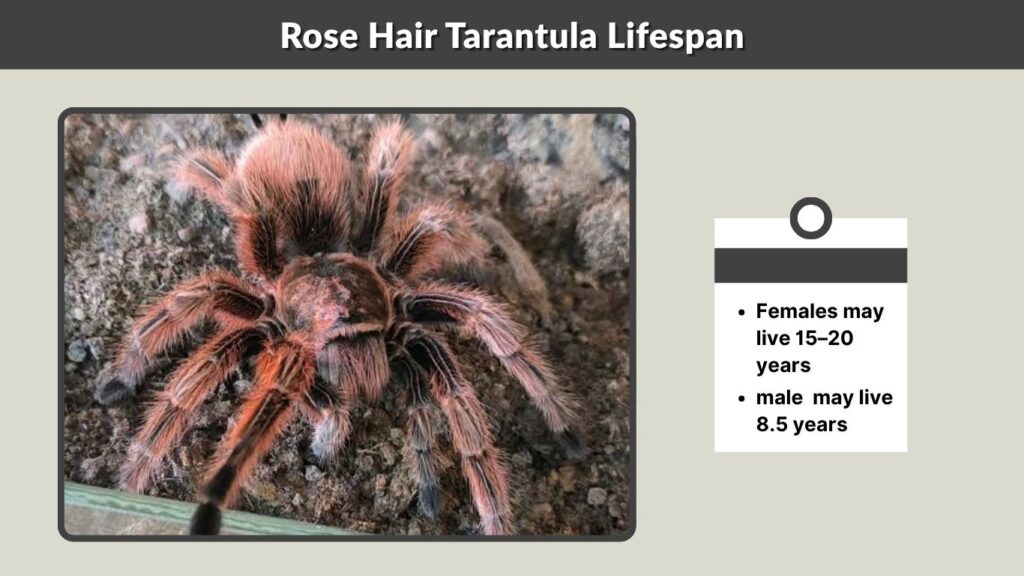
Females may live 15–20 years or longer in captivity under good conditions. Males generally have much shorter adult lives.
One documented captive male Grammostola rosea reached approximately 8.5 years of total age and survived about three years after maturity, illustrating that individual lifespan can vary considerably.
Because females live considerably longer, determining the sex can be important when someone wants a long-term pet.
Rose Hair Tarantula Enclosure Setup
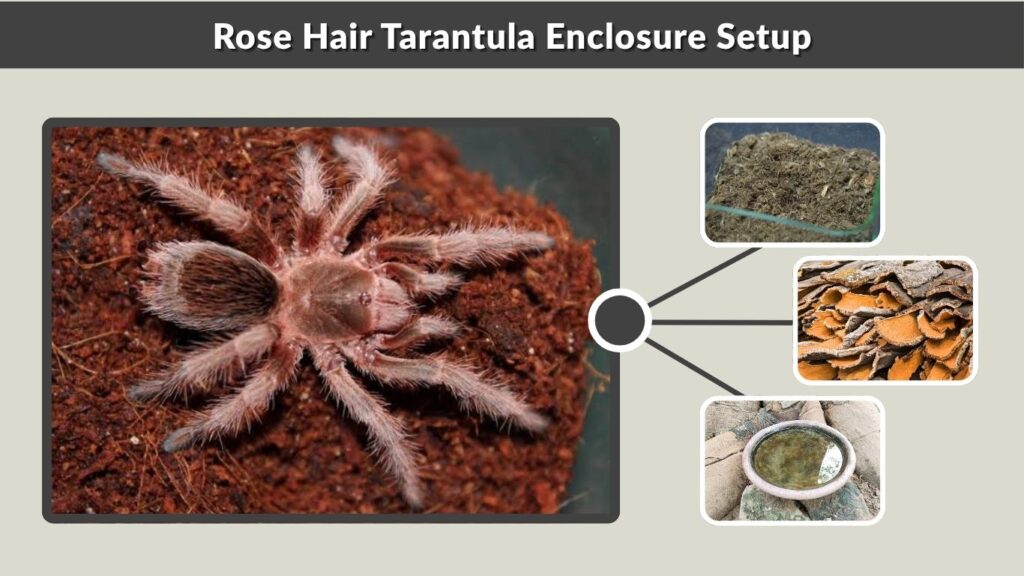
A rose hair tarantula needs a terrestrial enclosure that provides more floor area than climbing height.
Excessive enclosure height should be avoided. Terrestrial tarantulas have relatively delicate abdomens, and a fall onto a hard surface can cause serious or fatal injuries.
Basic Enclosure Requirements
- Secure, escape-resistant enclosure
- More horizontal than vertical space
- Several inches of substrate
- Cork bark or another hide
- Shallow water dish
- Good cross-ventilation
- No sharp decorations
- Limited climbing height
An adult can usually be kept comfortably in an enclosure approximately 10–12 inches long, provided there is adequate substrate and suitable ventilation.
Best Substrate for a Rose Hair Tarantula
Substrate should allow the spider to walk comfortably and create a shallow retreat or burrow if desired.
Good options include:
- Coco fiber
- Chemical-free topsoil
- Peat-based mixtures
- Soil and coco-fiber blends
A layer several inches deep is preferable to a thin covering.
Keepers should avoid constantly waterlogged substrate. Rose hairs come from relatively dry environments and generally do better with mostly dry substrate, access to clean drinking water, and appropriate ventilation.
Rose Hair Tarantula Temperature and Humidity
Rose hair tarantulas generally tolerate ordinary indoor temperatures well.
A range around 70–78°F (21–26°C) is suitable for many captive individuals. Extreme heat should be avoided, and direct sunlight should never heat the enclosure.
Rather than attempting to maintain tropical-level humidity, provide a clean water dish and avoid letting the enclosure become excessively wet.
Adequate airflow is particularly important because stagnant, overly damp conditions can encourage mold and other enclosure problems.
What Do Rose Hair Tarantulas Eat?
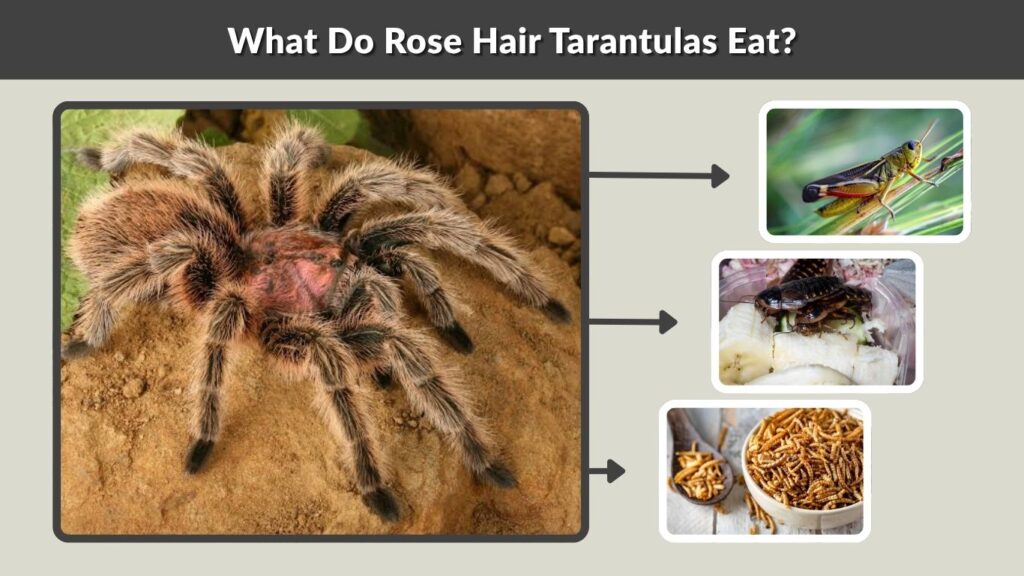
Rose hair tarantulas are carnivores that primarily eat insects and other small invertebrates.
Good Feeder Insects
- Crickets
- Dubia roaches
- Other captive-bred roaches
- Mealworms
- Superworms
- Appropriately sized insect larvae
Young tarantulas can be offered smaller prey more frequently, while adults require relatively little food.
A published captive male was fed cricket nymphs/adults and mealworm larvae, with feeding becoming much less frequent as the spider grew.
Remove uneaten prey if the tarantula loses interest, particularly when it appears to be approaching a molt.
Rose Hair Tarantula Molting
Molting allows a tarantula to replace its old exoskeleton and grow.
Before molting, a rose hair tarantula may become inactive, refuse food, darken in color, and spend more time inside its retreat.
It may eventually lie on its back. This is normal molting behavior and should not be confused with death.
During a Molt
Never disturb the tarantula or leave live feeder insects inside the enclosure while it is molting.
The new exoskeleton and fangs remain soft immediately afterward. Wait until the fangs have hardened and darkened before resuming feeding.
Adults molt much less frequently than spiderlings and juveniles.
Rose Hair Tarantula Temperament
Rose hair tarantulas have traditionally been considered relatively calm, which helped make them popular among beginner keepers.
However, individual temperament varies.
Some remain relaxed when their enclosure is opened, while others may kick hairs, retreat rapidly, or display a defensive posture.
Their behavior can also change over time, so a tarantula that was calm previously should never be assumed to remain completely predictable.
Can a Rose Hair Tarantula Bite?
Yes. Rose hair tarantulas have fangs and are physically capable of biting humans.
Biting is generally defensive rather than aggressive. The spider would normally prefer escaping or using another defense first.
Like many New World tarantulas, Grammostola rosea possesses urticating hairs on the abdomen. When threatened, it can release these tiny irritating hairs. Contact can irritate skin, while exposure to the eyes can be considerably more troublesome.
For this reason, avoid touching your face or eyes after enclosure maintenance and wash your hands afterward.
Is a Rose Hair Tarantula Poisonous?
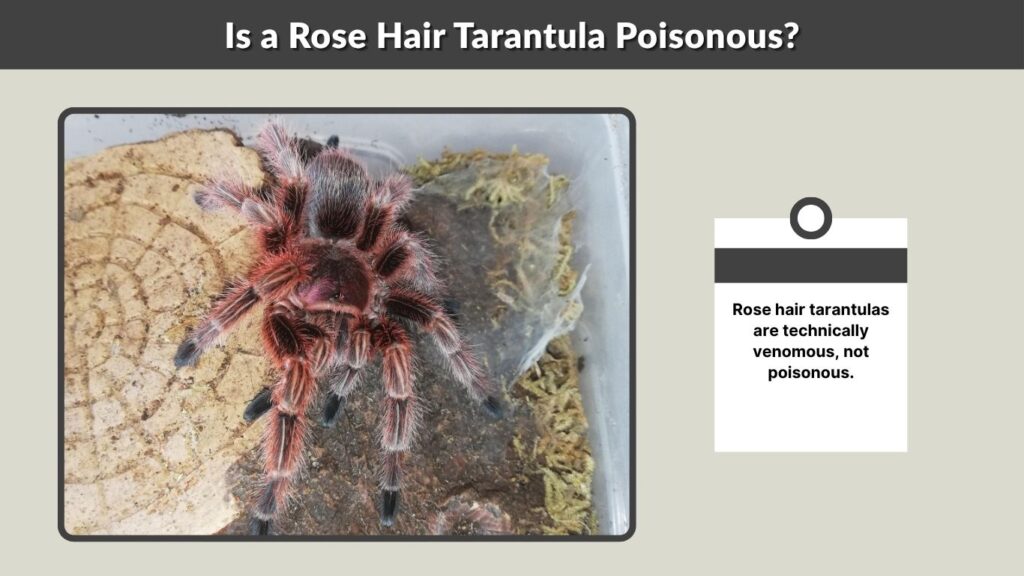
Rose hair tarantulas are technically venomous, not poisonous.
They inject venom through their fangs when capturing prey. Their venom is not generally considered highly dangerous to healthy humans, but a bite can still cause pain, swelling, and irritation.
Anyone experiencing severe symptoms following a bite should seek medical attention.
Should You Handle a Rose Hair Tarantula?
Although rose hairs are sometimes described as “handleable” tarantulas, routine handling is unnecessary.
The larger danger may actually be to the spider. A startled tarantula can suddenly run or fall, and its abdomen can rupture from impact.
For moving a tarantula between enclosures, using a catch cup and soft brush is usually safer than holding it.
Male vs Female Rose Hair Tarantula
Determining sex becomes easier as a tarantula matures.
Mature Male
Mature males generally have:
- Longer-looking legs
- Smaller abdomen
- More slender build
- Palpal bulbs
- Tibial hooks or spurs on the front legs
Female
Females generally have:
- Heavier body
- Larger abdomen
- More robust appearance
- Much longer potential lifespan
Sexing younger tarantulas reliably usually requires examining a good-quality molt rather than simply judging their appearance.
Rose Hair Tarantula Price
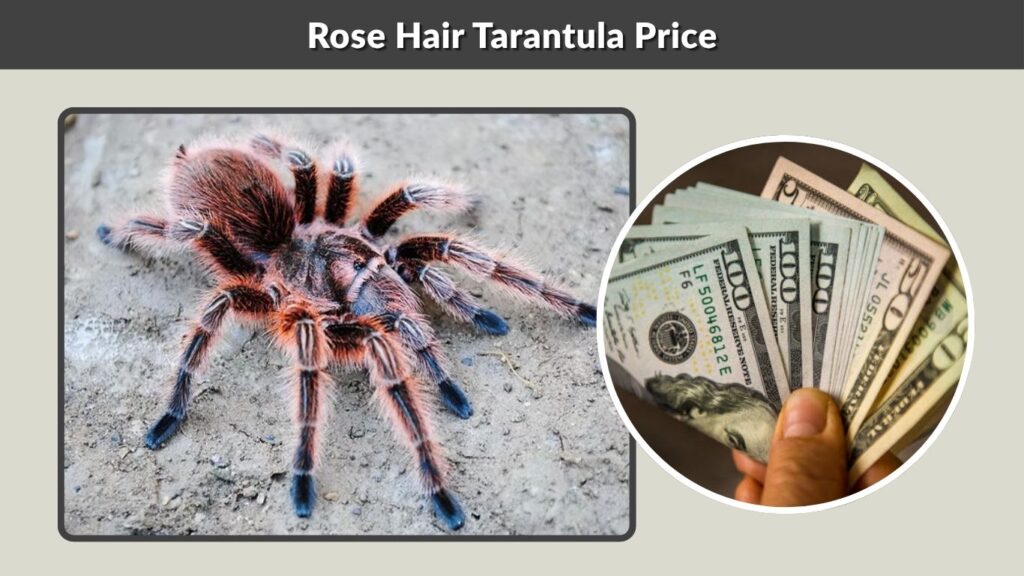
The cost of a rose hair tarantula varies significantly depending on availability, age, sex, size, captive-bred status, and seller.
Females often command higher prices because of their much longer lifespan. Captive-bred animals are also preferable when available because they reduce pressure on wild populations and usually come with better information about their history.
Be cautious about labels such as Mexican rose hair, blue rose hair, black rose hair, or red rose hair tarantula. These names may be informal trade descriptions or may refer to different species rather than true Grammostola rosea. Confirm the scientific name before purchasing.
FAQs
How Big Does a Rose Hair Tarantula Get?
An adult rose hair tarantula can reach around 5–6 inches in leg span, with females typically developing a heavier body than males.
How Long Does a Rose Hair Tarantula Live?
Females commonly live much longer than males and may survive 15–20 years or more under good captive care.
Are Rose Hair Tarantulas Good Pets?
They can be suitable for beginners because their enclosure and feeding requirements are relatively straightforward. However, they are observation pets and do not require regular handling.
How Often Should You Feed a Rose Hair Tarantula?
Juveniles can be offered appropriately sized prey once or twice weekly, while healthy adults may eat much less frequently. Appetite commonly decreases before molting.
Do Rose Hair Tarantulas Need High Humidity?
No. Rose hair tarantulas are associated with relatively dry habitats and should not be kept on constantly wet substrate. A clean water dish, suitable substrate, and good ventilation are more important than maintaining tropical humidity.
