
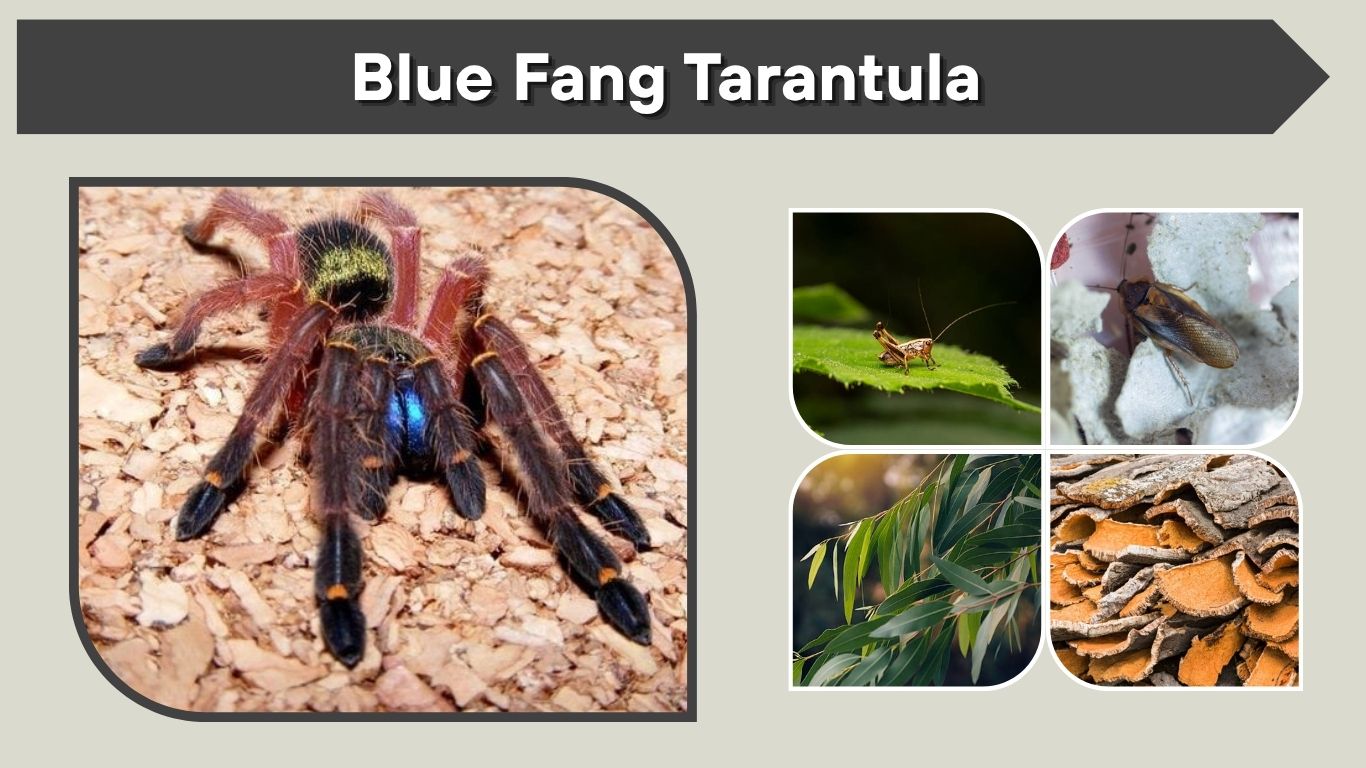
The blue fang tarantula, scientifically known as Ephebopus cyanognathus, is a colorful New World tarantula famous for its metallic-blue chelicerae, orange leg markings, and secretive burrowing lifestyle. It is also commonly called the blue fang skeleton tarantula. Native to French Guiana, this species can make an impressive display animal, but its speed and defensive temperament mean it is better suited to keepers with some tarantula experience.
What Is a Blue Fang Tarantula?
Ephebopus cyanognathus belongs to the tarantula family Theraphosidae. It was formally described by West and Marshall in 2000 and is recorded from French Guiana.
Despite its common name, the actual fang tips are not necessarily bright blue. The spectacular coloration comes mainly from metallic-blue hairs covering the chelicerae, the structures that hold the fangs.
Blue Fang Tarantula Identification
Typical characteristics include:
- Metallic blue or violet chelicerae
- Dark brown to reddish legs
- Orange or golden markings around leg joints
- Greenish or dark abdomen, especially in juveniles
- Heavy body covered with hairs
- Strong burrowing behavior
- Fast movements
- Approximately 4.5–5 inches in adult leg span
The vivid blue chelicerae are the species’ most recognizable feature and distinguish it from closely related Ephebopus species.
Blue Fang Tarantula Size
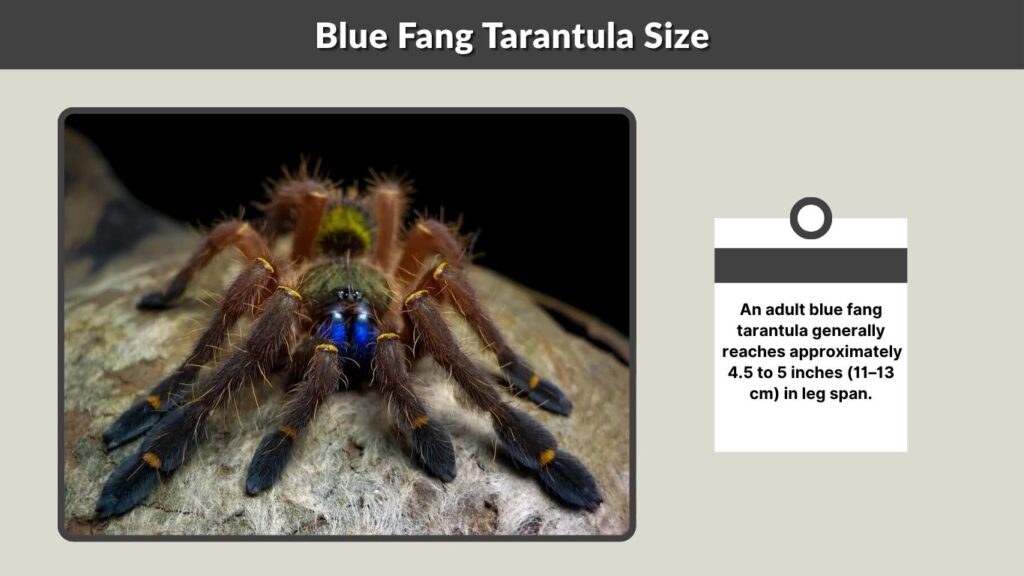
An adult blue fang tarantula generally reaches approximately 4.5 to 5 inches (11–13 cm) in leg span. Females normally develop a heavier body, while mature males tend to be slimmer.
Its moderate adult size makes it manageable in terms of enclosure dimensions, although substrate depth is more important than providing a very large tank.
How Fast Do Blue Fang Tarantulas Grow?
The species is considered a moderate-to-fast-growing tarantula in captivity. Spiderlings can change noticeably between molts, gradually developing the dramatic coloration associated with older individuals.
Growth rate varies according to feeding, temperature, sex, and individual genetics.
Where Do Blue Fang Tarantulas Live?
The blue fang tarantula is native to French Guiana in northeastern South America. The World Spider Catalog currently lists French Guiana as its distribution.
This makes terms such as “Brazilian blue fang tarantula” potentially misleading when they are used specifically for E. cyanognathus.
Natural Behavior
Blue fangs are primarily fossorial, meaning they spend much of their lives associated with burrows.
In captivity, they commonly:
- Dig deep tunnels
- Web around their burrow entrance
- Remain hidden for long periods
- Become active when feeding
- Rearrange substrate extensively
Spiderlings may behave somewhat differently and can show semi-arboreal tendencies before becoming more dedicated burrowers as they grow.
Blue Fang Tarantula Care
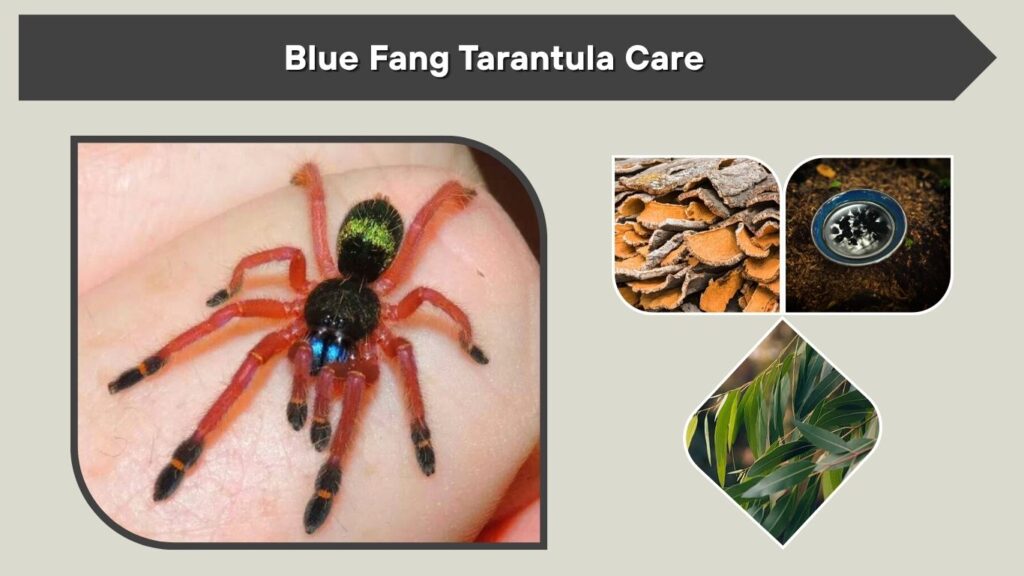
Good blue fang tarantula husbandry focuses on providing a secure burrowing environment with moisture available in the substrate without creating stagnant, waterlogged conditions.
This species is generally better suited to intermediate keepers than someone purchasing a first tarantula.
Blue Fang Tarantula Enclosure
A fossorial enclosure should provide more usable substrate than empty climbing height.
A suitable setup includes:
- Secure, escape-resistant lid
- Deep, compactable substrate
- Cork bark starter hide
- Good ventilation
- Water dish
- Leaves or bark for web anchors
- Limited falling distance
Adults benefit from roughly 5–8 inches of substrate, depending on enclosure size. Coco fiber mixed with pesticide-free topsoil or other moisture-retaining tarantula substrates can work well.
Give the spider enough depth to construct its own retreat rather than forcing it to remain above ground.
Temperature and Moisture
A stable room temperature in roughly the low-to-upper 70s°F (about 22–27°C) is generally appropriate.
The substrate should not be allowed to become completely bone dry for extended periods, but continuously soaking the enclosure is also undesirable. Keep lower portions slightly moist, provide fresh water, and ensure sufficient ventilation. Husbandry references particularly emphasize both moisture and ventilation for this species.
What Do Blue Fang Tarantulas Eat?
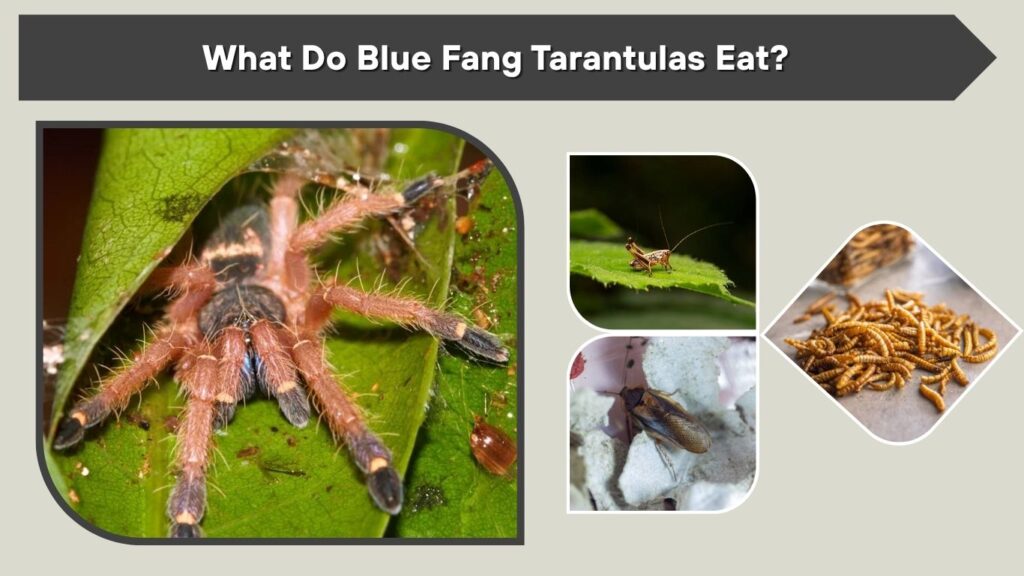
Blue fang tarantulas are insect predators with a strong feeding response.
Best Foods
Captive blue fangs can eat:
- Crickets
- Dubia roaches
- Red runner roaches
- Mealworms
- Superworms
- Other appropriately sized feeder insects
Spiderlings should receive much smaller prey or suitable portions of pre-killed insects.
Adults can usually be offered food around once every week or two, with frequency adjusted according to abdomen size, growth, and whether the spider is approaching a molt.
Remove uneaten insects if the tarantula refuses food.
Blue Fang Tarantula Molting
Like every tarantula, a blue fang must periodically shed its exoskeleton to grow.
Before molting, the spider may suddenly stop eating and remain inside its burrow. It might also seal its entrance with substrate and webbing.
Signs of an Upcoming Molt
Watch for:
- Refusing food
- Reduced activity
- Spending more time underground
- Darkening coloration
- Closing the burrow entrance
- Increased webbing
Do not dig up a hidden tarantula simply because you have not seen it for several days or weeks.
During molting, remove live feeder insects and keep water available. Wait until the new fangs have hardened before resuming normal feeding.
Blue Fang Tarantula Temperament
Blue fang tarantulas can be fast and defensive. They are not generally regarded as ideal handling animals.
The spider will often choose to retreat underground when given the opportunity. However, if cornered or repeatedly disturbed, it may defend itself.
Can You Handle a Blue Fang Tarantula?
Handling is best avoided.
A sudden sprint can result in an escape or accidental fall, while defensive behavior creates a risk of biting.
For rehousing, experienced keepers normally use:
- Catch cups
- Long tools
- Soft brushes
- Secure transfer containers
These techniques are safer for both the spider and keeper.
Blue Fang Tarantula Urticating Hairs
One of the most fascinating features of Ephebopus tarantulas involves their defensive hairs.
Most New World tarantulas with urticating hairs carry them on the abdomen. Ephebopus is unusual because its Type V urticating setae occur on the pedipalps instead. Research has documented these specialized hairs specifically in E. cyanognathus.
The spider can release them during defensive behavior, and contact may cause irritation.
Avoid touching your eyes after working inside the enclosure and wash your hands afterward.
Blue Fang Tarantula Bite and Venom
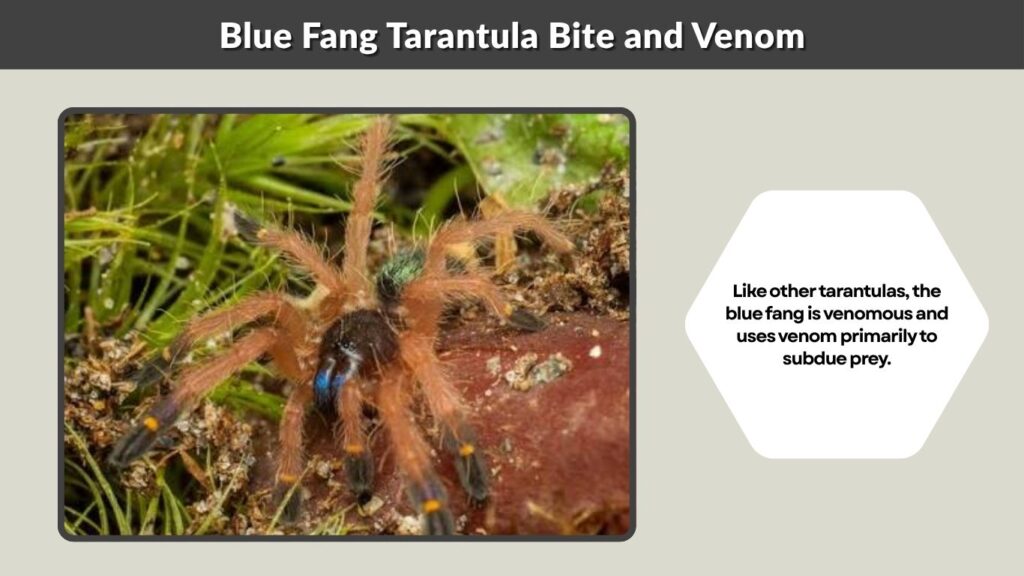
Like other tarantulas, the blue fang is venomous and uses venom primarily to subdue prey.
A defensive bite may cause puncture wounds, pain, swelling, and irritation. However, detailed clinical research establishing the exact medical potency of E. cyanognathus venom in humans is limited.
Is a Blue Fang Tarantula Dangerous?
It should be treated with respect, but there is no reason to portray the species as a deadly spider.
The greater practical risks for keepers are its:
- Fast movement
- Defensive behavior
- Large fangs
- Urticating hairs
- Ability to escape during maintenance
If a bite produces severe or worsening symptoms, seek appropriate medical attention.
Blue Fang Tarantula Lifespan
Exact lifespan figures are based largely on captive-keeping experience rather than extensive scientific lifespan studies.
Female blue fang tarantulas are commonly estimated to live around 10–15 years, while males normally live considerably shorter lives, often only several years. Captive husbandry sources commonly place males around 3–5 years.
This difference makes confirmed females particularly desirable among long-term keepers.
Blue Fang Tarantula Sling Care
Blue fang spiderlings, or slings, require secure containers because they are tiny and surprisingly fast.
Young spiders may spend more time webbing above the substrate than adults, so provide both digging material and small web anchor points.
For slings:
- Use a small escape-proof enclosure.
- Provide adequate ventilation.
- Keep some lower substrate lightly moist.
- Offer small prey regularly.
- Add tiny bark or leaves as web anchors.
- Increase enclosure size gradually as the spider grows.
Avoid putting a tiny sling into an oversized adult enclosure because monitoring its condition and feeding can become difficult.
Blue Fang Skeleton Tarantula vs Cobalt Blue Tarantula
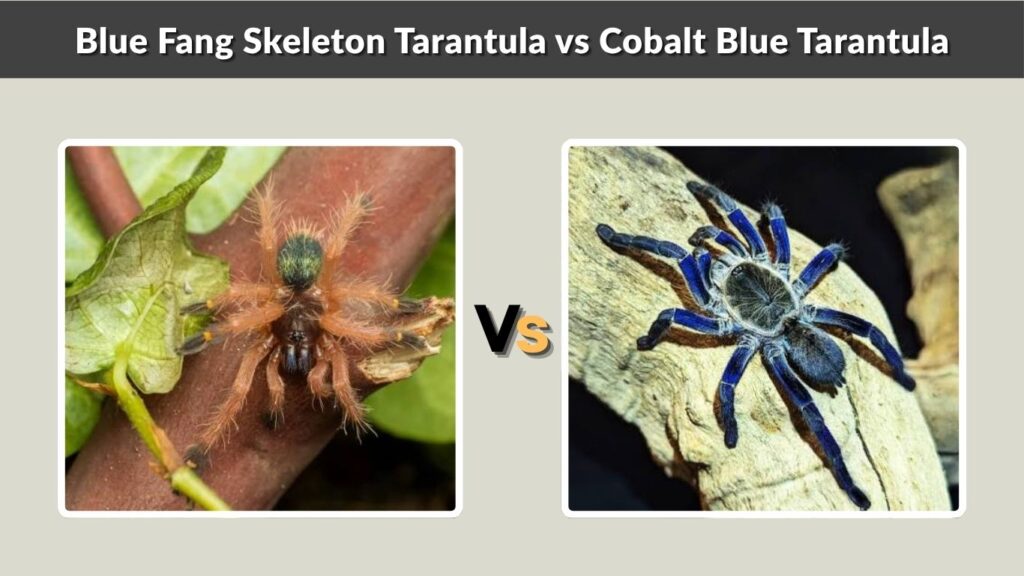
These names sometimes cause confusion, but they refer to very different spiders.
The blue fang tarantula (Ephebopus cyanognathus) is a New World South American species whose blue coloration is concentrated around its chelicerae.
The cobalt blue tarantula (Cyriopagopus lividus) is an Old World Asian species famous for having intensely blue legs.
They require different approaches to husbandry and should not be treated as interchangeable species.
FAQs
How big does a blue fang tarantula get?
Adults normally reach approximately 4.5–5 inches in leg span, although individual size varies.
Where does the blue fang tarantula live?
Ephebopus cyanognathus is native to French Guiana in South America.
Is a blue fang tarantula good for beginners?
It is usually better for intermediate keepers because it is fast, defensive, and spends much of its life in a burrow.
How long does a blue fang tarantula live?
Females are commonly estimated to live roughly 10–15 years, while males usually have substantially shorter lifespans.
Why is it called a blue fang tarantula?
The name comes from the striking metallic-blue coloration around its chelicerae—the structures that contain and support its fangs. This coloration is one of the main features used to recognize the species.
