
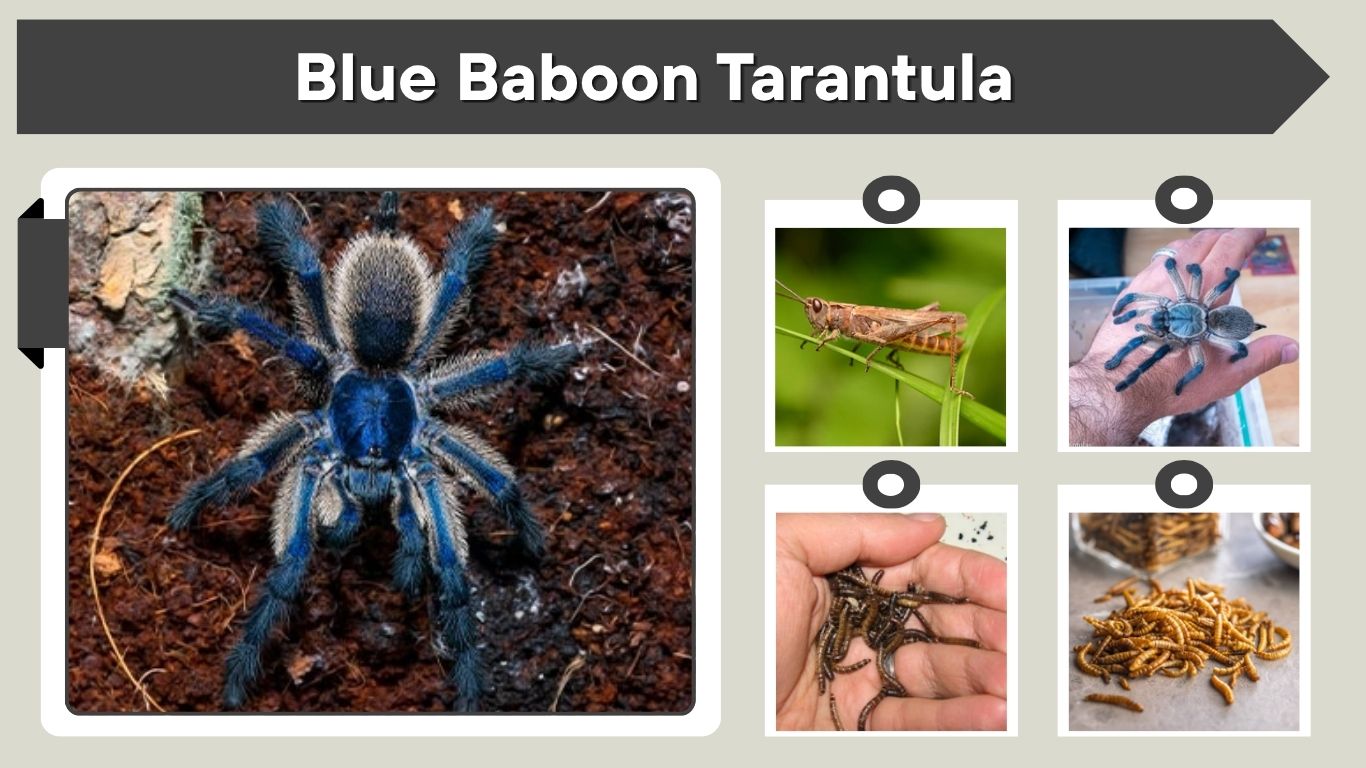
The blue baboon tarantula is a striking Old World tarantula known for its vivid blue legs, heavy webbing, and fascinating burrowing behavior. The name most commonly refers to the Socotra Island blue baboon tarantula (Monocentropus balfouri), a species native to Socotra, Yemen. Although beautiful and popular among enthusiasts, this fast-moving tarantula is better suited to experienced keepers because it lacks urticating hairs and can defend itself with a painful bite.
What Is a Blue Baboon Tarantula?
The Socotra Island blue baboon tarantula is an Old World species belonging to the family Theraphosidae. Adults have a striking combination of blue legs and a pale gray, cream, or tan body.
Unlike many American tarantulas, it does not possess urticating hairs. When threatened, it usually retreats but may display its fangs or bite when sufficiently provoked.
Identification
Common characteristics include:
- Bright blue or gray-blue legs
- Pale tan, cream, or gray carapace
- Thick, hairy appearance
- Heavy webbing behavior
- Strong burrowing instinct
- Fast defensive movements
- Large fangs
- No urticating hairs
The species creates impressive silk-lined tunnels and retreats, making it an interesting display tarantula even though it may remain hidden for long periods.
Blue Baboon Tarantula Size
Adult Socotra Island blue baboons usually have a leg span of roughly 5–6 inches, although individual measurements vary.
Females typically become heavier-bodied than males. Mature males generally develop a slimmer appearance and have shorter lifespans.
How Fast Do They Grow?
Growth rate depends on temperature, feeding, genetics, and individual conditions.
Spiderlings start relatively small and gradually develop their characteristic adult coloration as they mature. Younger animals molt more frequently than adults.
Natural Habitat
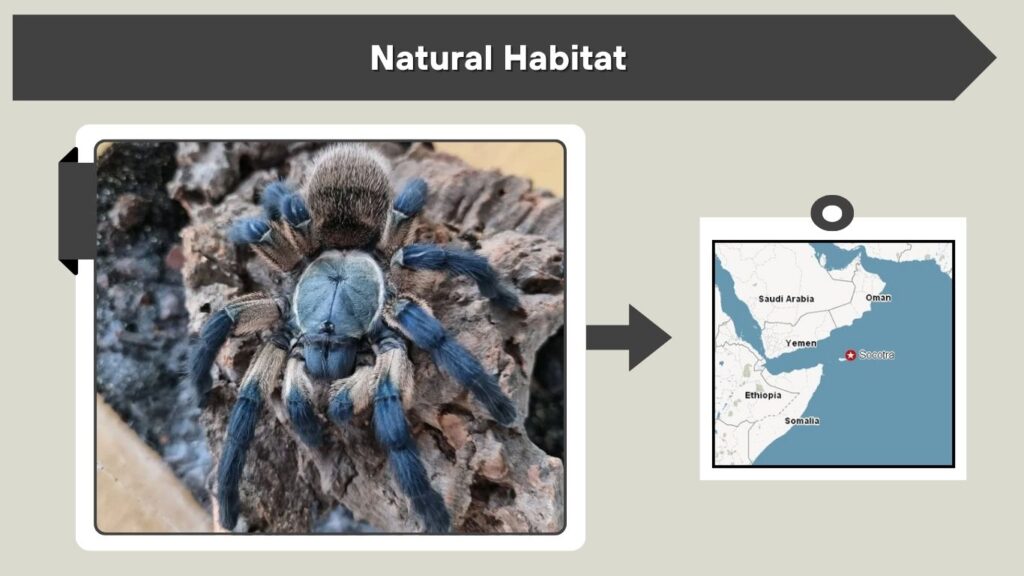
Monocentropus balfouri is native to Socotra Island, Yemen, an isolated island famous for its unusual plants and animals.
Unlike tropical rainforest tarantulas, this species comes from a comparatively dry environment.
Habitat and Behavior
In captivity, the blue baboon typically:
- Digs underground retreats
- Creates extensive web tunnels
- Hides during much of the day
- Becomes more active after dark
- Remodels substrate around its burrow
Providing opportunities for both digging and web construction is therefore important.
Blue Baboon Tarantula Care
Blue baboon tarantulas are hardy when their basic requirements are met, but their speed and defensive capabilities make enclosure maintenance more challenging than with beginner-friendly species.
A secure setup is especially important.
Enclosure Setup
A suitable adult enclosure should provide:
- Adequate floor space
- Several inches of substrate
- A secure lid
- Cross ventilation
- Cork bark or another hide
- A shallow water dish
- Anchoring points for webbing
- Limited fall distance
Around 4–6 inches of substrate gives the spider plenty of opportunity to construct underground retreats.
Coco fiber, pesticide-free topsoil, or suitable soil-based mixtures can work well.
Temperature
Temperatures around 75–85°F (24–29°C) are commonly recommended in captive husbandry.
Extreme heat should be avoided. In many homes, a stable warm room eliminates the need for direct heating equipment.
Moisture and Water
This species should not be maintained in constantly wet conditions.
Provide fresh water at all times and maintain adequate ventilation. Spiderlings may benefit from slightly more moisture than adults because they can dehydrate more easily.
Avoid continually soaking the entire substrate.
Blue Baboon Tarantula Food
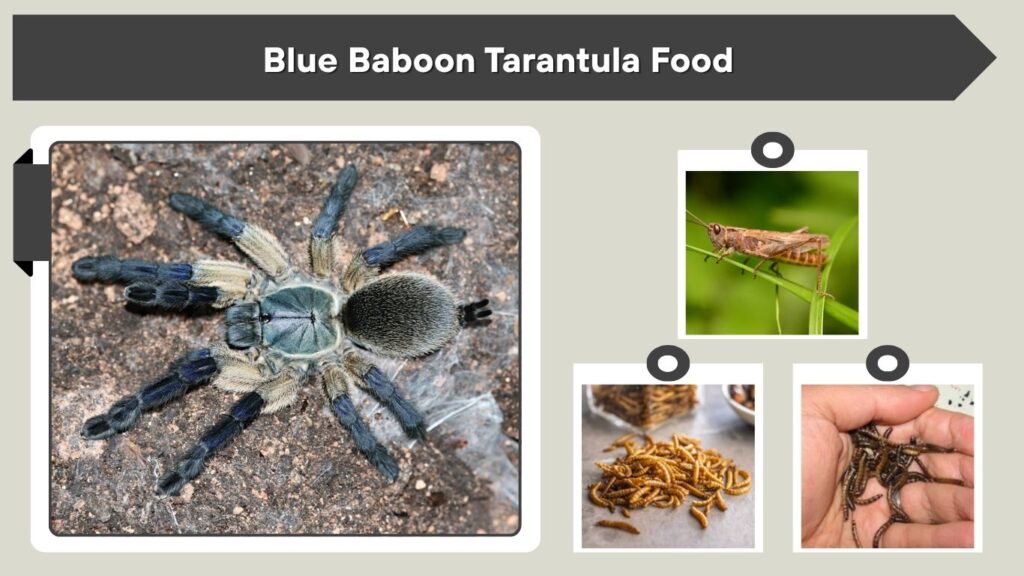
Blue baboon tarantulas are enthusiastic predators and normally show strong feeding responses.
Their captive diet should consist primarily of appropriately sized feeder insects.
Suitable Foods
Good options include:
- Crickets
- Dubia roaches
- Red runner roaches
- Mealworms
- Superworms
- Locusts
Adult tarantulas can often be offered prey approximately once per week, although feeding should be adjusted according to abdomen size and condition.
Spiderlings can receive smaller prey more frequently.
Remove uneaten insects when the tarantula appears ready to molt.
Blue Baboon Tarantula Molting
Molting is the natural process through which a tarantula replaces its exoskeleton and grows.
Before molting, a blue baboon may refuse food and disappear inside its retreat.
It may even seal the burrow entrance with webbing and substrate.
During a Molt
Do not:
- Dig the spider out
- Open its retreat
- Attempt handling
- Leave feeder insects inside
- Continuously disturb the enclosure
Simply keep water available and allow the spider to complete the process naturally.
Blue Baboon Tarantula Temperament
Socotra blue baboons are often considered less reactive than certain other baboon tarantulas, but they are still fast Old World spiders.
When threatened, they may flee into their retreats. If they cannot escape, they can raise their front legs, expose their fangs, and potentially bite.
Individual temperament varies considerably.
Can You Handle a Blue Baboon Tarantula?
Handling is not recommended.
These tarantulas can move quickly and do not have urticating hairs as a secondary defense mechanism. Direct interaction provides little benefit to the spider and increases the risk of bites, escapes, or falls.
Use a catch cup and appropriate tools when rehousing.
Blue Baboon Tarantula Venom and Bite
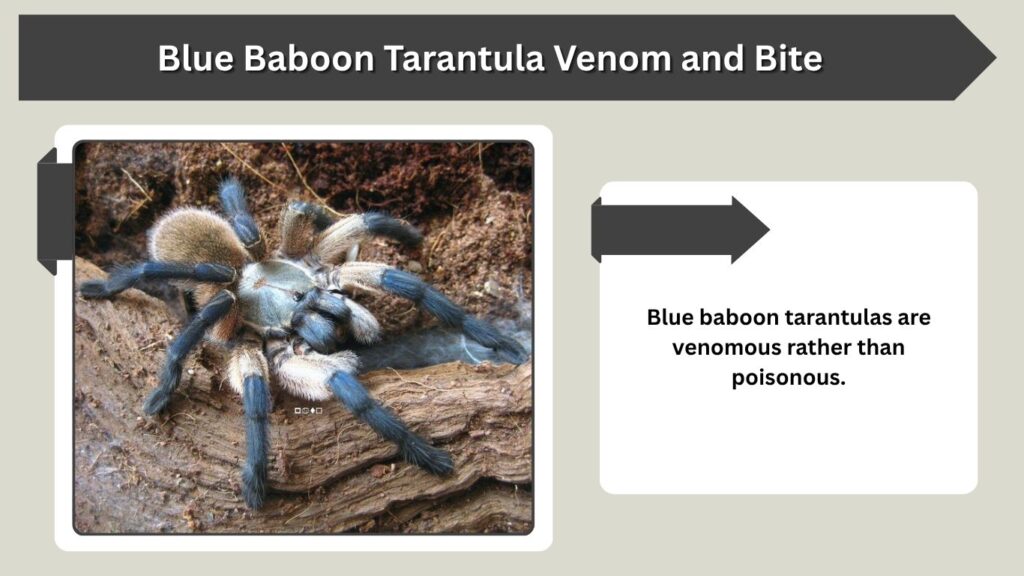
Blue baboon tarantulas are venomous rather than poisonous.
A bite from Monocentropus balfouri should not be treated casually. A published medical case described muscle cramps, muscle pain, and rhabdomyolysis following a Socotra Island blue baboon bite.
For this reason, preventing bites is essential.
If bitten and significant symptoms develop, seek prompt medical attention.
Can Blue Baboon Tarantulas Live Communally?
One of the most unusual characteristics of Monocentropus balfouri is its relatively high tolerance of other members of its own species.
Keepers have successfully maintained groups together, making it one of the most famous “communal” tarantulas in the hobby.
Communal Housing
Communal setups are still not guaranteed to succeed.
Problems may occur due to:
- Insufficient food
- Limited hiding areas
- Overcrowding
- Stress
- Size differences
- Individual aggression
Cannibalism remains possible. Communal housing should therefore be considered an advanced husbandry method rather than a requirement.
A blue baboon can live perfectly well alone.
Blue Baboon Tarantula Lifespan
Females generally live much longer than males.
Female Socotra blue baboons commonly have reported captive lifespans of around 10–15 years, while males often live only around 3–5 years.
Exact lifespan depends on genetics, care, temperature, growth rate, and other factors.
Different Types of Blue Baboon Tarantulas
Several different African and Arabian tarantulas contain “blue baboon” in their hobby names. They should not be confused as a single species.
Socotra Island Blue Baboon
Scientific name: Monocentropus balfouri
This is the species most commonly called simply the blue baboon tarantula. It has blue legs, a pale body, extensive webbing, and unusual communal tolerance.
Golden Blue-Legged Baboon
Scientific name: Harpactira pulchripes
The golden blue-legged baboon is a different South African species. It is recognizable by its golden carapace combined with vivid blue legs.
Blue-Foot Baboon
Scientific name: Idiothele mira
The blue-footed baboon is a smaller South African species reaching roughly 4 inches. It is particularly famous for metallic-blue feet and constructing trapdoor-style burrows.
Gabon Blue Dwarf Baboon
Scientific name: Heterothele gabonensis
This smaller African tarantula is another separate species and should not be confused with M. balfouri.
Blue Baboon Tarantula as a Pet
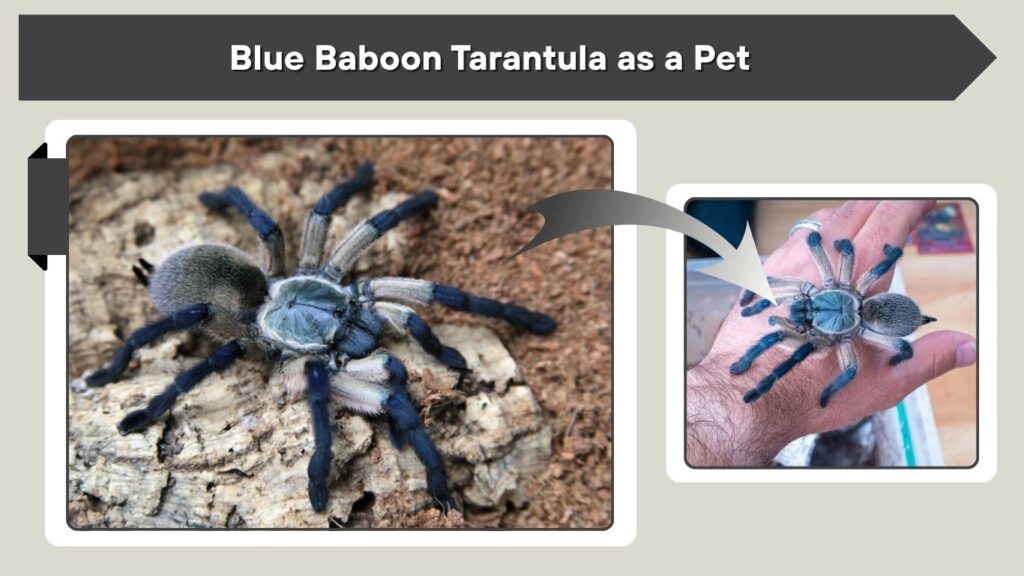
A blue baboon can be an impressive pet for someone who already understands tarantula behavior and safe rehousing techniques.
Its major attractions include vivid coloration, web construction, burrowing, strong feeding responses, and unusual social tolerance.
However, it is generally not ideal for someone looking for their first tarantula.
FAQs
Are blue baboon tarantulas aggressive?
They are better described as defensive rather than aggressive. Most prefer retreating, but they can bite if trapped or repeatedly disturbed.
How big does a blue baboon tarantula get?
Socotra Island blue baboons commonly reach approximately 5–6 inches in leg span.
Are blue baboon tarantulas poisonous?
They are venomous, not poisonous. Their venom is delivered through their fangs during a bite.
Can blue baboon tarantulas live together?
Monocentropus balfouri is well known for communal tolerance, but communal housing still carries risks and should generally be attempted only by experienced keepers.
Is a blue baboon tarantula good for beginners?
Usually not. Its speed, Old World defensive behavior, lack of urticating hairs, and potentially significant bite make it more appropriate for experienced tarantula keepers.
