
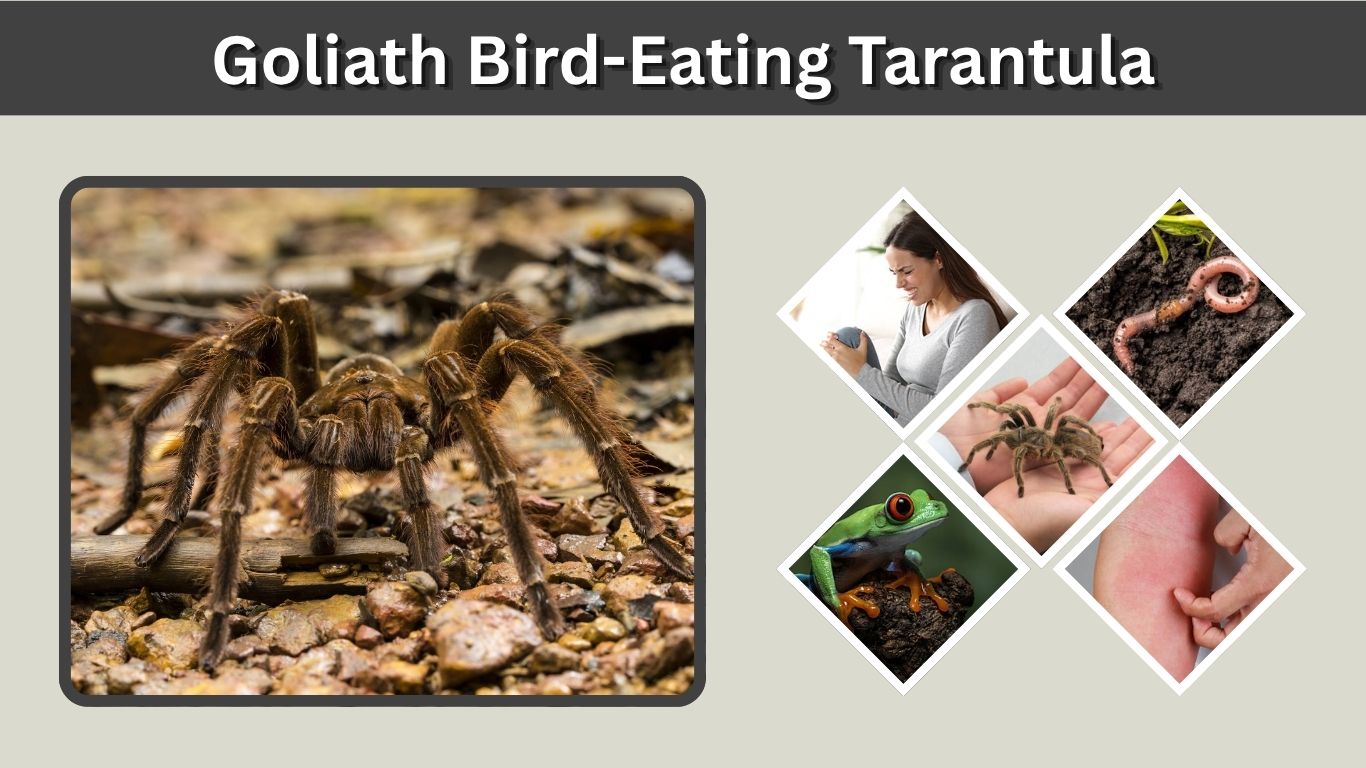
The Goliath bird-eating tarantula is one of the largest and heaviest spiders in the world. Native to the tropical rainforests of South America, this huge tarantula is famous for its impressive leg span, thick body, large fangs, and defensive hairs. Despite its name, birds are not its main food. It usually hunts insects and other small animals on the forest floor. Below, you’ll learn about its size, habitat, diet, bite, lifespan, behavior, pet care, and other fascinating facts.
What Is a Goliath Bird-Eating Tarantula?
The Goliath bird-eating tarantula, scientifically known as Theraphosa blondi, is a giant terrestrial tarantula belonging to the family Theraphosidae. It is native to northern South America and is best known for its extraordinary body mass and broad leg span. Although intimidating in appearance, it generally relies on defensive displays rather than actively attacking large animals.
Identification
Common features include:
- Scientific name: Theraphosa blondi
- Family: Theraphosidae
- Color: Brown to reddish-brown
- Body: Thick, muscular, and hairy
- Legs: Large and powerful
- Fangs: Long and downward-pointing
- Lifestyle: Ground-dwelling
- Activity: Mainly nocturnal
Its heavy body separates it from spiders such as huntsman spiders, which may have longer legs but are much lighter.
How Big Is a Goliath Bird-Eating Tarantula?
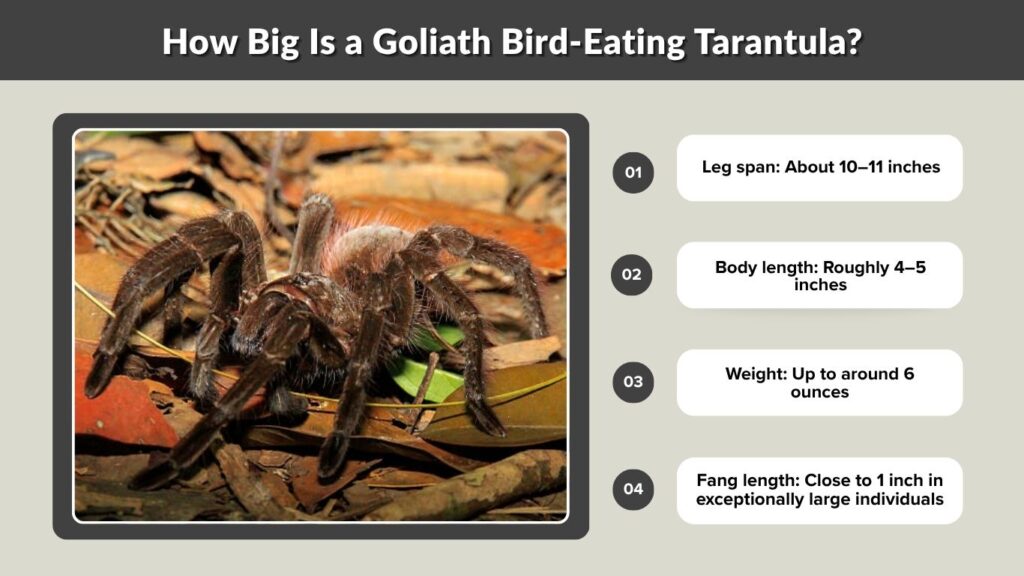
Size is the feature that made this tarantula famous. Large individuals can stretch almost a foot from leg tip to leg tip. However, its enormous reputation comes not only from leg span but also from its remarkably heavy body compared with most other spiders.
Adult Size and Weight
A large adult may reach:
- Leg span: About 10–11 inches
- Body length: Roughly 4–5 inches
- Weight: Up to around 6 ounces
- Fang length: Close to 1 inch in exceptionally large individuals
Females generally have heavier bodies, while mature males may look somewhat slimmer and longer-legged.
Is It the Biggest Spider in the World?
The Goliath bird-eating tarantula is commonly considered the world’s largest spider by body mass.
The giant huntsman spider can exceed it in leg span, reaching around 12 inches across in exceptional specimens. However, huntsman spiders have flatter, lighter bodies.
So, the comparison is simple: the giant huntsman may be wider, but the Goliath bird-eating tarantula is generally heavier and more robust.
Where Does the Goliath Bird-Eating Tarantula Live?
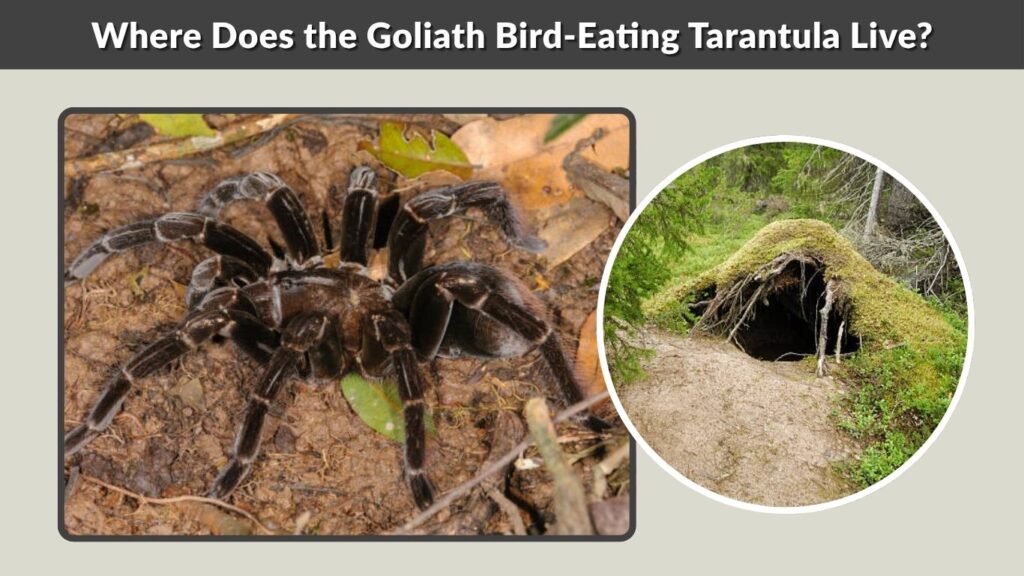
This spider inhabits warm, humid parts of northern South America. It is a terrestrial species that stays close to the ground rather than building large webs high in trees. Moist soil, dense vegetation, fallen leaves, and natural shelters create ideal conditions for its survival.
Habitat and Range
Goliath bird-eating tarantulas are associated with areas such as:
- Northern Brazil
- Guyana
- Suriname
- French Guiana
- Venezuela
They prefer tropical rainforest environments with high humidity and plenty of cover.
Burrows and Shelter
Most individuals spend considerable time inside underground retreats.
They may use abandoned burrows made by other animals or enlarge existing holes beneath roots, logs, and rocks. The entrance and interior may be lined with silk.
A burrow protects the spider from predators, harsh weather, and dehydration while providing a safe location for molting and resting.
What Does a Goliath Bird-Eating Tarantula Eat?
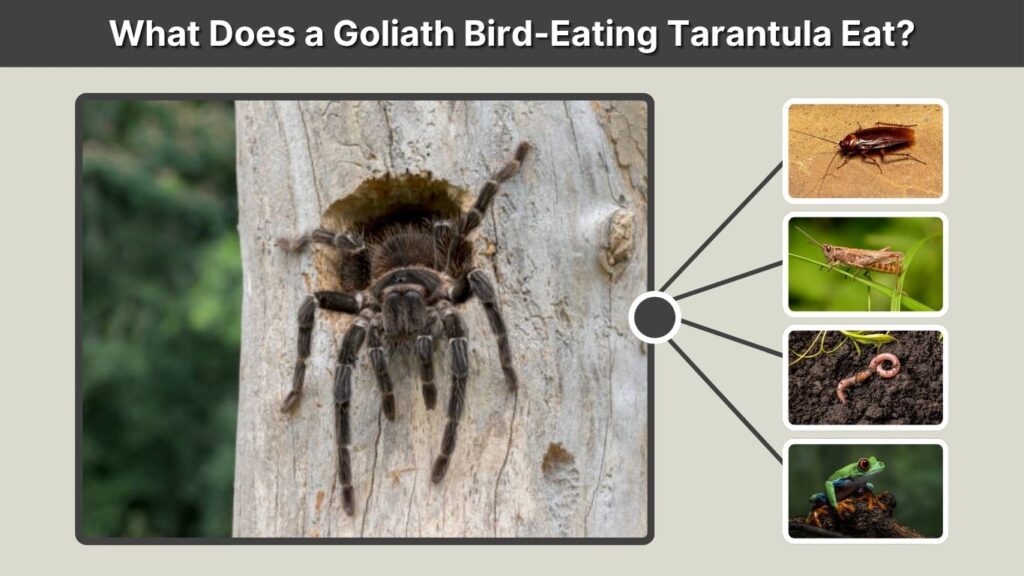
The name suggests that birds are its primary prey, but this is misleading. Goliath bird-eating tarantulas are opportunistic predators and usually feed on animals they can overpower near the forest floor.
Common Foods
Their diet may include:
- Cockroaches
- Crickets
- Beetles
- Other large insects
- Worms
- Frogs
- Small lizards
- Small rodents
- Occasionally small birds
Insects and other invertebrates make up a large portion of their natural diet.
Does It Really Eat Birds?
Yes, a sufficiently large individual could capture and eat a small bird, but this is uncommon.
The name “bird-eating” became popular because early illustrations and reports depicted very large South American spiders feeding on birds.
In reality, small mammals, amphibians, reptiles, and large insects are much more realistic prey.
Goliath Bird-Eating Tarantula Bite
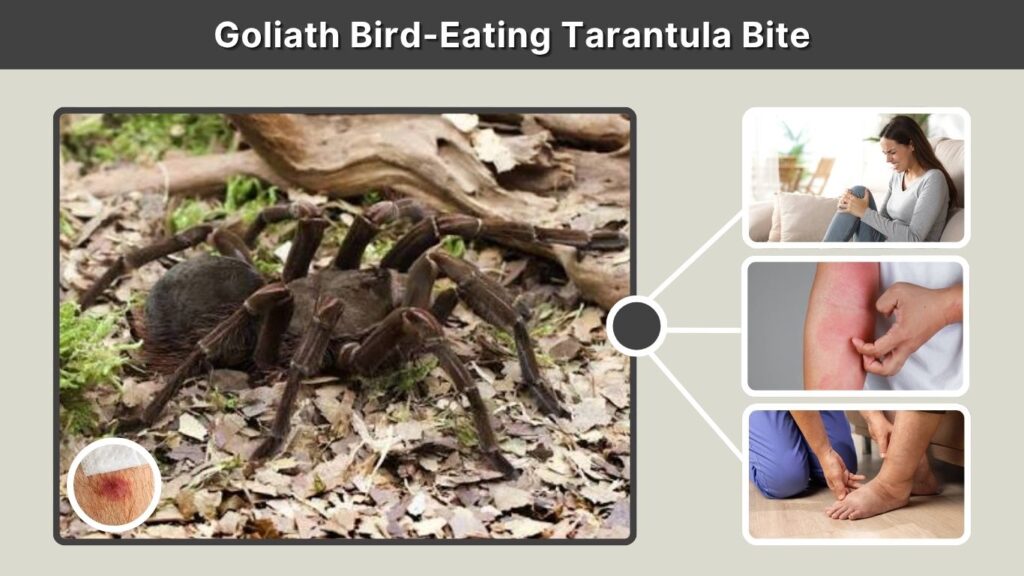
A Goliath bird-eating tarantula can bite humans if it feels threatened. Its large fangs can create painful puncture wounds, even before considering the effects of venom. However, biting is generally defensive and is not the spider’s first response when faced with danger.
Possible Bite Symptoms
A bite may cause:
- Immediate pain
- Two visible fang punctures
- Minor bleeding
- Redness
- Swelling
- Tenderness
- Burning or aching
Its venom is primarily used to immobilize prey. Although a bite should be treated seriously, this species is not generally considered one of the spiders most dangerous to humans.
Other Defensive Behaviors
The Goliath bird-eating tarantula has several defenses besides biting.
It can rub specialized structures together to create a noticeable hissing or rasping sound known as stridulation.
It can also release tiny urticating hairs from its abdomen. These defensive hairs may cause itching, redness, burning, and irritation if they contact skin. Eye exposure can be particularly uncomfortable and should be avoided.
Is the Goliath Bird-Eating Tarantula Poisonous?
The correct term is venomous, not poisonous.
A venomous animal injects venom through a structure such as fangs or a stinger, while a poisonous animal causes harm when touched or eaten.
Is Its Venom Dangerous?
For most healthy adults, the bite is considered more concerning because of the large fang punctures and pain than because of extreme venom toxicity.
However, reactions vary between people.
Seek medical attention after a bite if symptoms become severe, especially if there is difficulty breathing, extensive swelling, severe pain, faintness, or signs of an allergic reaction.
Goliath Bird-Eating Tarantula as a Pet
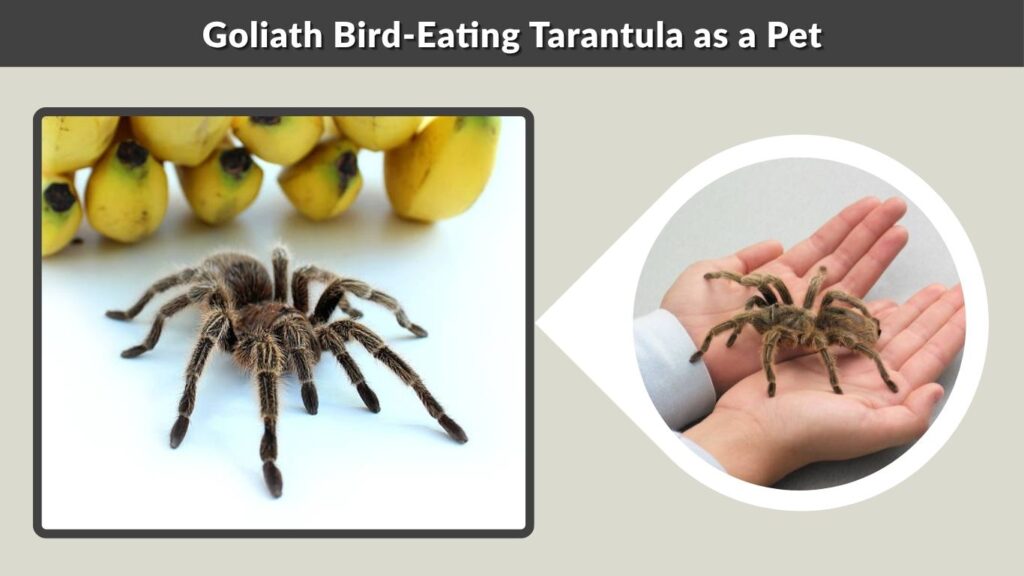
These enormous spiders are sometimes kept by experienced tarantula enthusiasts. Their impressive appearance makes them attractive display animals, but they are generally unsuitable for people who want a tarantula they can regularly handle.
Basic Care Requirements
A captive Goliath bird-eating tarantula needs:
- A secure terrestrial enclosure
- Deep substrate suitable for burrowing
- High but well-managed humidity
- Good ventilation
- A dark hide
- Fresh drinking water
- Appropriately sized feeder insects
- Plenty of floor space
The enclosure should emphasize horizontal room rather than climbing height because this is primarily a ground-dwelling species.
Should You Handle One?
Handling is generally best avoided.
The spider may bite or release irritating hairs when stressed. Its heavy body also makes falls dangerous. Even a relatively short fall can potentially injure a large terrestrial tarantula.
For this reason, keepers usually observe rather than handle them.
Goliath Bird-Eating Tarantula Lifespan
Females can live much longer than males. Their long lifespan makes them a significant commitment when kept in captivity.
Male vs Female Lifespan
Typical lifespan differences include:
- Females: Potentially 15–20 years or more
- Males: Often approximately 3–6 years
Males generally live only a short period after reaching sexual maturity, whereas mature females continue molting and may survive for many additional years.
Interesting Goliath Bird-Eating Tarantula Facts
Beyond its enormous size, the species has several unusual traits that make it one of the world’s most recognizable spiders.
Fun Facts
- It is among the heaviest spiders alive.
- Large specimens can approach 11 inches across.
- Birds are not its primary food.
- It produces a defensive hissing-like sound.
- It has urticating hairs on its abdomen.
- It hunts mainly at night.
- It does not use a large web to trap prey.
- Females can live for many years.
- It has poor eyesight compared with its vibration sensitivity.
- Its sensitive body hairs help detect nearby movement.
Goliath Bird-Eating Tarantula vs Other Giant Spiders
Several spiders are described as giants, but their body shapes and measurements differ significantly. The Goliath bird-eating tarantula is especially impressive because it combines an enormous leg span with a thick, heavy body.
Quick Comparison
- Goliath bird-eating tarantula: Heaviest overall build
- Giant huntsman spider: Usually longer maximum leg span
- Other large tarantulas: Similar body shape but often somewhat smaller
- Typical house spiders: Dramatically smaller and lighter
Its bulky construction is what makes the Goliath look especially massive even beside other very large spider species.
FAQs
1. How big is a Goliath bird-eating tarantula?
Large adults can reach around 10–11 inches across the legs, while the body itself may be approximately 4–5 inches long.
2. Does the Goliath bird-eating tarantula really eat birds?
It can occasionally eat a small bird, but birds are not its normal food. Large insects and small vertebrates are more common prey.
3. Can a Goliath bird-eating tarantula bite humans?
Yes. It can bite if threatened or mishandled. Its large fangs can produce painful puncture wounds, redness, and swelling.
4. Is the Goliath bird-eating tarantula poisonous?
No. It is venomous rather than poisonous because it delivers venom through its fangs.
5. Can you keep a Goliath bird-eating tarantula as a pet?
Yes, but it is more suitable for experienced keepers. Its large size, defensive hairs, moisture requirements, and potential bite make careful enclosure management important.
