
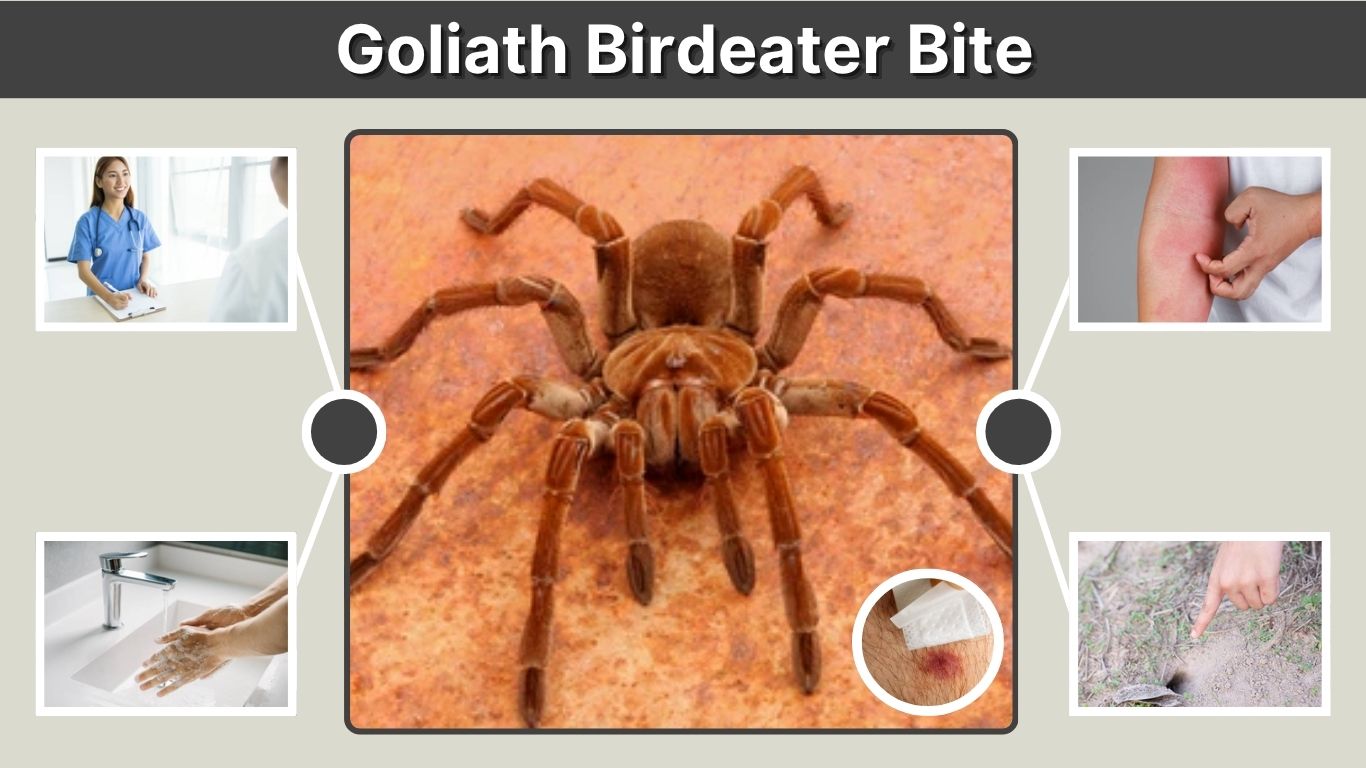
The Goliath birdeater is intimidating because of its huge body and large fangs, but how dangerous is its bite to humans? This South American tarantula can bite when seriously threatened, delivering venom through powerful downward-pointing fangs. Although a bite can cause considerable pain and puncture wounds, Goliath birdeaters are not regarded as spiders that normally cause life-threatening human envenomation. Their irritating defensive hairs can sometimes create additional problems. Here is what a Goliath birdeater bite looks and feels like, its potential risks, and what to do afterward.
Do Goliath Birdeaters Bite Humans?
Goliath birdeaters (Theraphosa blondi) can bite humans, but biting is primarily defensive rather than predatory behavior. Their fangs and venom are designed mainly for capturing prey. When threatened, the spider has several defensive options and may warn an attacker before resorting to a bite.
Why Would a Goliath Birdeater Bite?
Situations that may increase the chance of a bite include:
- Trying to pick up or restrain the spider
- Accidentally pressing or trapping it
- Putting a hand close to its retreat
- Disturbing it repeatedly
- Handling it during enclosure maintenance
- Ignoring defensive postures
The safest approach is therefore to observe the animal rather than handle it.
Warning Signs Before a Bite
A threatened Goliath birdeater may raise the front part of its body and display its fangs. It can also produce a warning sound by rubbing specialized structures together.
Another important defense is the release of urticating hairs from the abdomen. These microscopic hairs can irritate human skin and are particularly troublesome if they reach the eyes or other sensitive tissues.
What Does a Goliath Birdeater Bite Look Like?
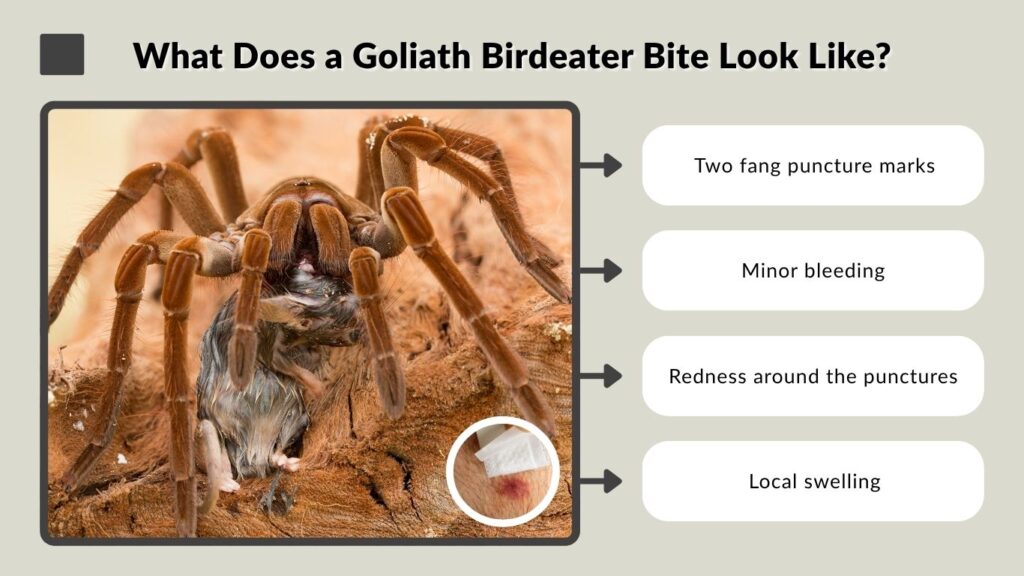
The spider has large downward-striking fangs capable of puncturing human skin. Consequently, the physical injury itself may be more noticeable than bites from many smaller spiders. The appearance varies depending on where the bite occurs, how deeply the fangs penetrate, and whether venom is injected.
Goliath Birdeater Bite Marks
Possible signs around the bite include:
- Two fang puncture marks
- Minor bleeding
- Redness around the punctures
- Local swelling
- Tenderness
- Burning or aching pain
- Mild inflammation
The two fang marks may not always be equally visible. Clothing, movement during the bite, and the depth of penetration can affect the final appearance.
What Does the Bite Wound Look Like?
Initially, the wound may resemble two relatively deep punctures surrounded by redness or swelling.
A dramatic area of tissue destruction is not considered a typical feature of tarantula bites. Medical references describe routine management of most spider bites with wound cleaning, ice, observation, and symptom control rather than the specialized treatment associated with medically important necrotic spiders.
A wound that becomes progressively hotter, increasingly swollen, drains pus, develops spreading redness, or causes fever should be medically evaluated because those findings can indicate a complication such as infection rather than a normal healing response.
How Painful Is a Goliath Birdeater Bite?
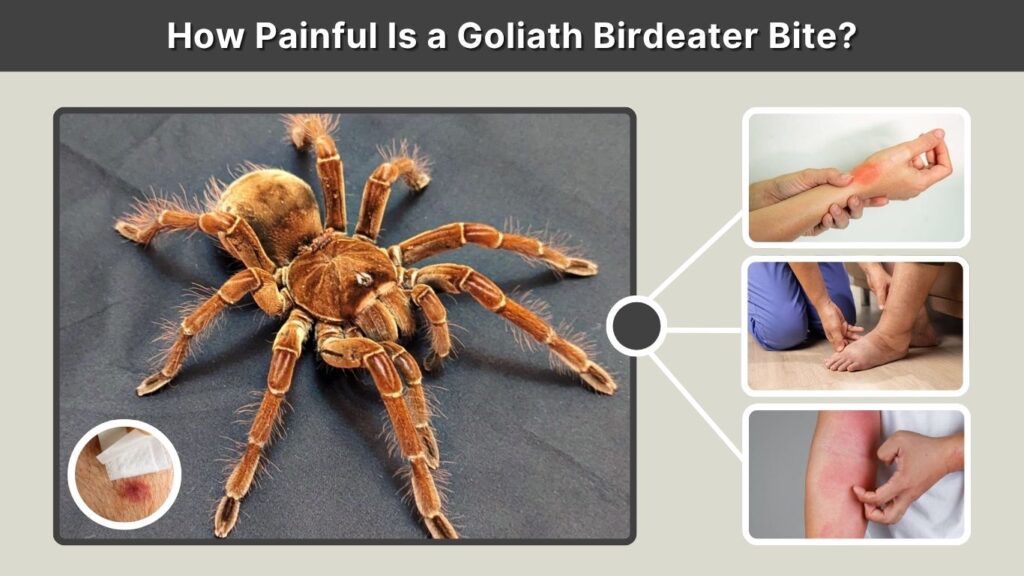
A bite has two components: mechanical injury from the fangs and possible effects from venom. Because Goliath birdeaters possess substantial fangs, puncturing the skin can itself be painful even when systemic venom effects are limited.
Clinical literature covering tarantulas more broadly indicates that local pain is a common effect of theraphosid bites, while major human toxicity is uncommon in documented cases.
Possible Bite Symptoms
A person may experience:
- Immediate pain at the bite site
- Burning or stinging
- Redness
- Local swelling
- Tenderness around the punctures
- Bleeding from fang wounds
- Itching or irritation
- Temporary discomfort around the affected area
The severity of symptoms varies between individuals and species.
Is the Venom Dangerous?
Goliath birdeaters are venomous because venom is delivered through their fangs. However, “venomous” does not automatically mean deadly to humans.
Research on tarantulas indicates that these spiders use venom effectively against small prey, whereas severe human effects are generally uncommon. Published research involving theraphosid bites has likewise found major human complications to be unusual, although tarantula species differ and individual reactions cannot be predicted with certainty.
Are Goliath Birdeater Bites Fatal?
A Goliath birdeater should be treated respectfully, but it is not generally regarded as a spider whose bite routinely kills humans. The much greater practical concerns are painful fang punctures, local reactions, and exposure to urticating hairs.
When Should You Seek Medical Attention?
Get prompt medical care if symptoms include:
- Difficulty breathing
- Swelling of the face, tongue, or throat
- Fainting or severe weakness
- Severe or rapidly worsening pain
- Extensive swelling
- Persistent vomiting
- Significant uncontrolled bleeding
- Fever or signs of wound infection
- Eye exposure to urticating hairs
Any serious allergic-type reaction requires emergency medical attention.
Children, people with significant medical conditions, and anyone experiencing an unusual reaction should also be assessed more cautiously.
Goliath Birdeater Bite Wound Care
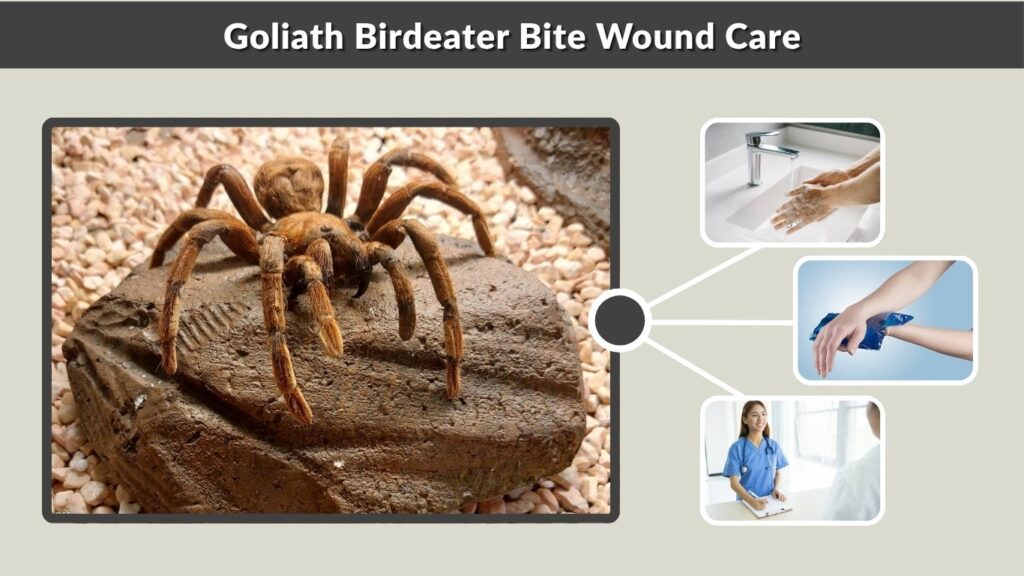
Even when venom effects are limited, a tarantula bite creates punctures in the skin and should be treated as a wound. Poison Control recommends thoroughly washing tarantula bites with soap and water and managing discomfort with measures such as a cool compress. Tetanus vaccination status should also be considered.
What to Do After a Bite
Basic first aid includes:
- Move safely away from the spider without trying to capture it by hand.
- Wash the wound thoroughly using soap and clean water.
- Apply a wrapped cold pack for short intervals to reduce pain and swelling.
- Keep the area clean while the punctures heal.
- Monitor symptoms for increasing redness, swelling, pain, or other changes.
- Check your tetanus vaccination status with a healthcare professional if necessary.
- Seek medical help if significant or unusual symptoms develop.
Poison Control notes that there is no specific antidote for tarantula bites; treatment is generally directed at symptoms and wound care.
Bite vs. Urticating Hairs
Surprisingly, a bite is not the only concern when dealing with a Goliath birdeater. Like other New World tarantulas, it possesses specialized defensive hairs that can be released when the spider feels threatened.
These hairs may cause significant irritation even without a bite.
Symptoms From Defensive Hairs
Contact may cause:
- Intense itching
- Redness
- Burning
- Small irritated bumps
- Skin inflammation
- Eye irritation if hairs become airborne
Avoid rubbing affected skin because this may push the tiny hairs farther into the surface.
Eye exposure deserves particular attention. Poison Control specifically recommends avoiding tarantula hairs in the eyes, where they can cause more significant irritation.
Burgundy Goliath Birdeater Bite
The Burgundy Goliath birdeater (Theraphosa stirmi) is a close relative of T. blondi. It is another extremely large South American tarantula and possesses similarly substantial fangs and defensive urticating hairs.
Is a Burgundy Goliath Bite Dangerous?
A Burgundy Goliath should be treated with the same basic caution: avoid unnecessary handling and do not provoke defensive behavior.
A bite can create substantial puncture wounds simply because of the spider’s fang size. Defensive hairs are another important hazard, especially around the face and eyes.
These spiders are therefore better treated as observation animals rather than pets intended for regular handling.
How to Prevent a Goliath Birdeater Bite
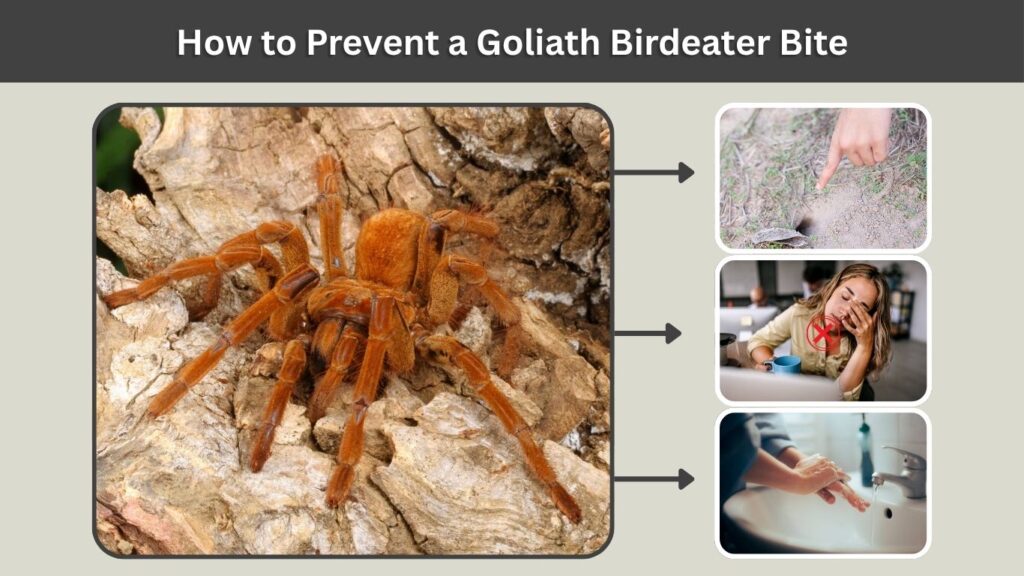
Most bite prevention comes down to minimizing unnecessary interaction. Tarantulas generally use defensive behaviors when they perceive a threat, so allowing them space greatly reduces the opportunity for bites.
Bite Prevention Tips
- Do not handle the spider unnecessarily.
- Keep hands away from its burrow.
- Use appropriate tools during enclosure maintenance.
- Never intentionally provoke a threat posture.
- Secure the enclosure before maintenance.
- Keep your face away from the spider.
- Avoid touching your eyes after working around the enclosure.
- Wash your hands and exposed skin after maintenance.
Handling also creates a risk to the tarantula itself because a fall can seriously injure a large, heavy-bodied terrestrial spider.
FAQs
1. Does the Goliath birdeater bite humans?
Yes. A Goliath birdeater can bite a human when threatened or physically disturbed. Bites are defensive rather than attempts to hunt humans.
2. How painful is a Goliath birdeater bite?
A bite can be quite painful because the spider has large fangs that create deep punctures. Local pain, swelling, redness, and tenderness may occur.
3. Can a Goliath birdeater bite kill you?
Available evidence on tarantula envenomation indicates that serious human toxicity is uncommon, and Goliath birdeaters are not generally considered deadly to humans. However, severe or unusual reactions require medical attention.
4. What do Goliath birdeater bite marks look like?
The bite may leave two fang punctures accompanied by minor bleeding, redness, swelling, and tenderness. The exact appearance varies according to the depth and location of the bite.
5. What should I do if a Goliath birdeater bites me?
Wash the wound thoroughly with soap and water, use a wrapped cold pack for pain and swelling, monitor the area, and check whether your tetanus vaccination is current. Seek medical attention for severe symptoms or signs of infection.
