
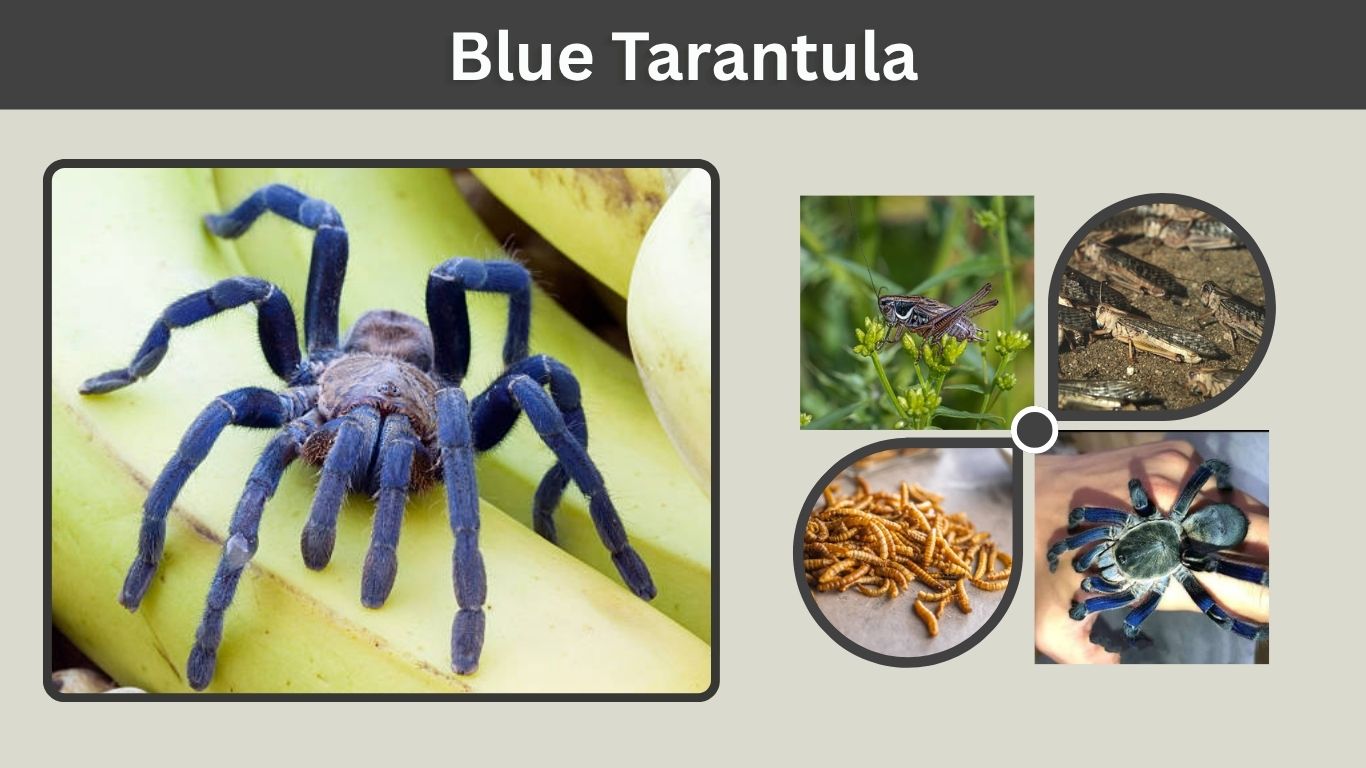
Blue tarantulas are among the most striking spiders in the world, displaying colors ranging from deep cobalt and metallic navy to turquoise and electric blue. “Blue tarantula” does not describe a single species; several unrelated tarantulas have evolved brilliant blue coloration. Popular examples include the cobalt blue, greenbottle blue, Brazilian blue, Singapore blue, and electric blue tarantulas. Some are suitable for experienced hobbyists, while others are extremely fast or defensive. This guide covers common blue tarantula species, identification, size, habitat, temperament, care, lifespan, and bite risks.
What Is a Blue Tarantula?
A blue tarantula is any tarantula species displaying noticeable blue or blue-green coloration. These spiders occur in several parts of the world, particularly tropical regions of Asia and South America. Their coloration may appear bright metallic blue under strong lighting but much darker in shade.
Why Are Some Tarantulas Blue?
Tarantula blue usually comes from microscopic structures on their hairs rather than conventional blue pigment. These structures interact with light and reflect particular wavelengths, producing vivid blue coloration.
Depending on the species and lighting, a tarantula may look:
- Cobalt blue
- Metallic navy
- Turquoise
- Blue-green
- Violet-blue
- Iridescent blue
Molting can temporarily make the colors appear especially bright because the spider has a fresh exoskeleton and hairs.
Common Blue Tarantula Species
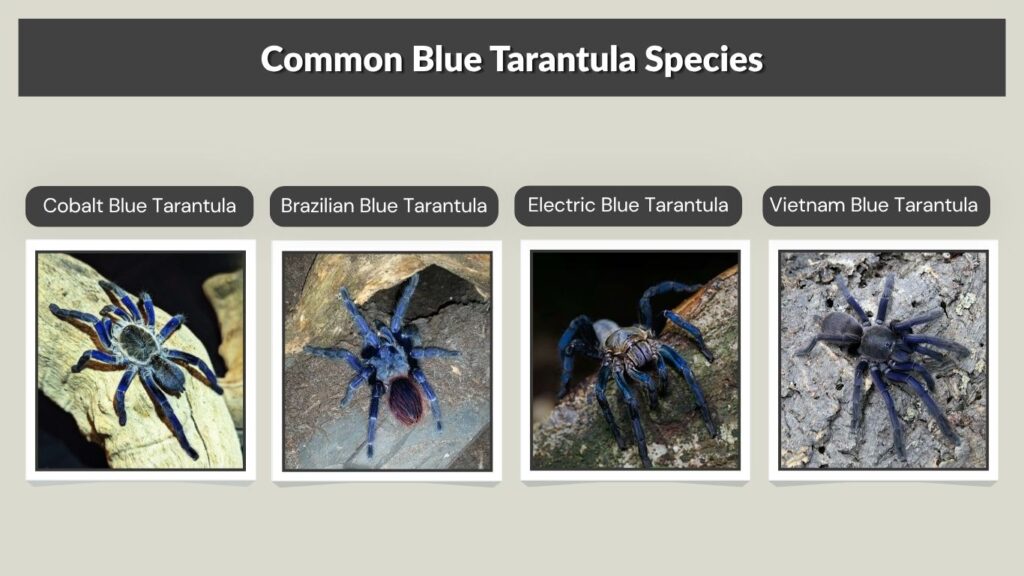
There is no single “blue tarantula species.” Instead, several species are known for blue coloration. Their sizes, lifestyles, behavior, and care requirements can differ considerably, so identifying the exact species is important before keeping one as a pet.
Popular Types of Blue Tarantulas
Some of the best-known examples include:
- Cobalt Blue Tarantula – Famous for intensely blue legs and a darker body.
- Greenbottle Blue Tarantula – Combines metallic blue legs with an orange abdomen and greenish carapace.
- Brazilian Blue Tarantula – Known for beautiful blue coloration and a relatively robust terrestrial build.
- Singapore Blue Tarantula – A large Asian species with impressive blue or violet coloration.
- Electric Blue Tarantula – Recognized for exceptionally vivid electric-blue coloration.
- Vietnam Blue Tarantula – An Asian tarantula often displaying dark blue or bluish tones.
- Gooty Sapphire Ornamental – A striking arboreal species with vivid blue markings.
- Emerald or Blue-Green Tarantulas – Several hobby species may show combinations of green, turquoise, and blue.
Common names can sometimes vary among breeders and sellers, making scientific identification useful when purchasing or researching a particular spider.
Cobalt Blue Tarantula
The cobalt blue tarantula is one of the species most strongly associated with the term “blue tarantula.” Its intense blue legs contrast with a darker body, especially after a fresh molt. Although visually spectacular, it is generally considered better suited to experienced keepers.
Size and Appearance
Adult cobalt blue tarantulas commonly reach approximately 4–5 inches in leg span, although individual sizes vary.
Typical characteristics include:
- Deep cobalt-blue legs
- Dark brown or grayish body
- Stocky appearance
- Powerful digging legs
- Dense covering of hairs
- Relatively large fangs
Females usually become heavier-bodied than mature males.
Temperament and Behavior
Cobalt blues are fossorial, meaning they spend much of their lives underground. They construct deep burrows and may remain hidden for extended periods.
They are also fast and can become defensive when disturbed. Rather than being a tarantula for regular handling, the cobalt blue is best treated as a display animal.
Greenbottle Blue Tarantula
The greenbottle blue is one of the most colorful tarantulas kept in captivity. Unlike a spider that is completely blue, it combines several vivid colors across its body.
Identification
A typical adult may display:
- Metallic blue legs
- Green or blue-green carapace
- Orange abdomen
- Bright orange abdominal hairs
- Approximately 4.5–6 inches of leg span
Its combination of blue, green, and orange makes it relatively easy to distinguish from most other tarantulas.
Webbing and Behavior
Greenbottle blues are famous for producing substantial amounts of webbing. In captivity, they often cover substrate, hides, plants, and other enclosure structures with dense silk.
They generally prefer a relatively dry environment compared with tropical moisture-dependent species and need good ventilation. Their attractive colors and visible webbing behavior make them popular display tarantulas.
Brazilian Blue Tarantula
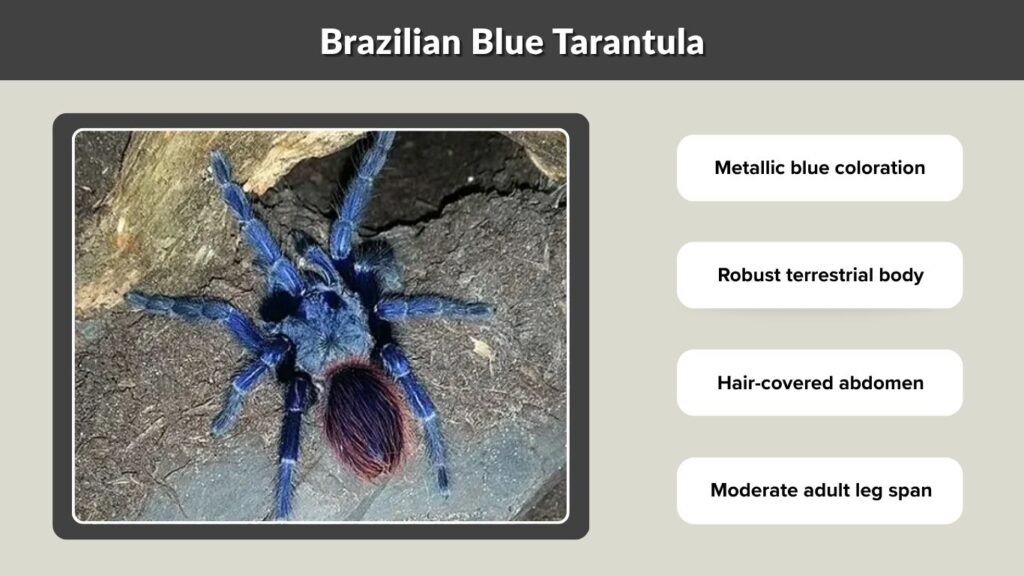
The Brazilian blue tarantula is another highly sought-after blue species. Mature individuals can develop beautiful metallic-blue coloration that becomes particularly noticeable after molting.
Size and Characteristics
The Brazilian blue typically has a medium-sized tarantula build rather than the enormous proportions of Goliath birdeaters.
Notable traits include:
- Metallic blue coloration
- Robust terrestrial body
- Hair-covered abdomen
- Moderate adult leg span
- Stronger coloration after molts
This species is sometimes chosen by hobbyists looking for a blue South American tarantula rather than the more defensive fossorial blue species from Asia.
Electric Blue and Other Asian Blue Tarantulas
Some of the most spectacular blue tarantulas originate in Southeast Asia. Electric blue, Singapore blue, Vietnam blue, and related species may display intense blue, violet, or turquoise colors.
Typical Characteristics
Many Asian blue tarantulas share several traits:
- Fast movement
- Strong burrowing behavior
- Defensive temperament
- Impressive blue coloration
- Preference for secure retreats
- Greater handling difficulty
Exact requirements vary by species. Because many are quick and defensive, they are generally better suited to experienced tarantula keepers.
Blue Tarantula Size
Blue tarantulas vary significantly because the term includes numerous species rather than a single animal. Some are relatively compact, while large Asian species can achieve impressive leg spans.
Typical Size Range
Depending on species, an adult blue tarantula may have:
- Small-to-medium species: Around 3–5 inches
- Medium species: Around 4–6 inches
- Larger species: Around 6–8 inches or occasionally more
Female tarantulas usually have bulkier bodies, while mature males often develop proportionally longer, thinner legs.
Are Blue Tarantulas Good Pets?
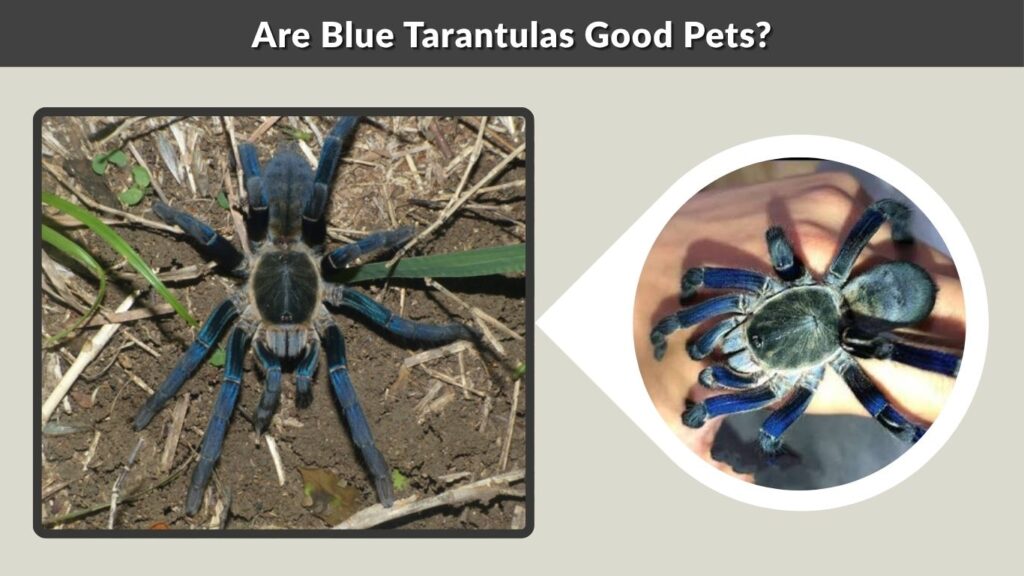
Blue tarantulas can be excellent display animals, but suitability depends heavily on the species and keeper’s experience. A greenbottle blue and a cobalt blue, for example, can present very different husbandry and behavioral challenges.
Before Choosing a Blue Tarantula
Consider:
- Adult size
- Burrowing or climbing behavior
- Temperament
- Speed
- Humidity requirements
- Ventilation needs
- Experience level required
- Expected lifespan
- Availability of suitable feeder insects
Beginners should research the exact species instead of choosing solely because of its color.
Blue Tarantula Care
There is no universal blue tarantula care sheet because their natural habitats differ greatly. Some species come from relatively dry environments, while others inhabit humid tropical forests.
Basic Enclosure Requirements
Most pet tarantulas need:
- Secure, escape-proof enclosure
- Appropriate substrate
- Suitable hide or burrow
- Clean water dish
- Good ventilation
- Correct moisture level
- Appropriate temperature
- Properly sized feeder insects
Terrestrial and burrowing species generally need more substrate and floor space. Arboreal species require vertical structures and climbing opportunities.
Always base enclosure design on the individual species.
What Do Blue Tarantulas Eat?
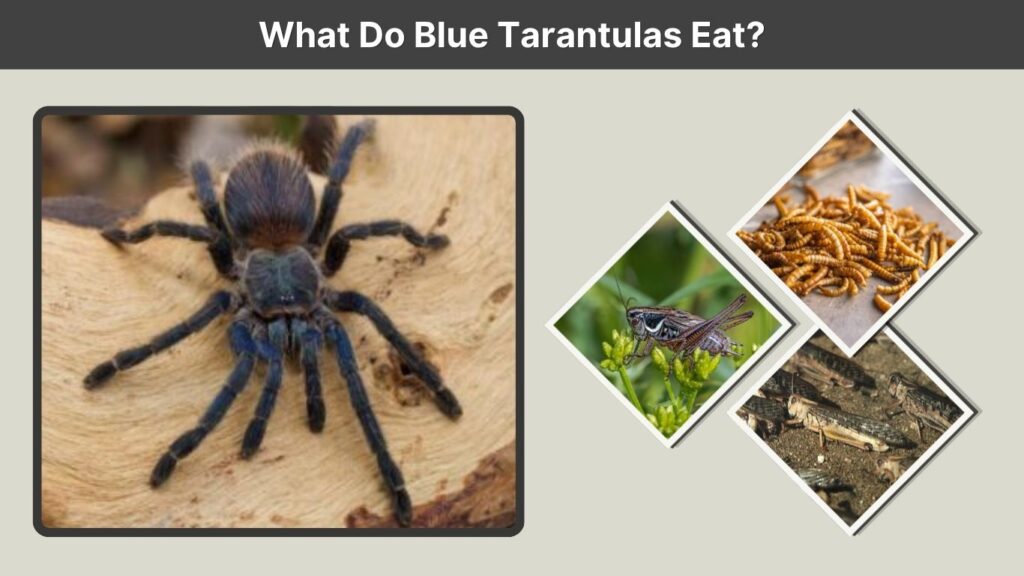
Blue tarantulas are carnivorous predators. They primarily capture insects and other small invertebrates using their fangs and venom.
Common Captive Foods
Appropriate foods may include:
- Crickets
- Cockroaches
- Mealworms
- Superworms
- Locusts
- Other suitable feeder insects
Feeder size should be appropriate for the tarantula’s body size. Uneaten prey should generally be removed, particularly when a tarantula is preparing to molt.
Are Blue Tarantulas Dangerous?
All tarantulas should be treated respectfully. They possess fangs and venom and can defend themselves when threatened. However, the risk differs among species.
Blue Tarantula Bite
A bite may cause:
- Fang puncture wounds
- Local pain
- Redness
- Swelling
- Burning sensations
- Tenderness
Some Asian tarantulas are considered to have more medically significant venom effects than many commonly kept New World species. Therefore, bites should never be deliberately risked.
Handling fast or defensive species such as cobalt blue tarantulas is generally discouraged.
Blue Tarantula Lifespan
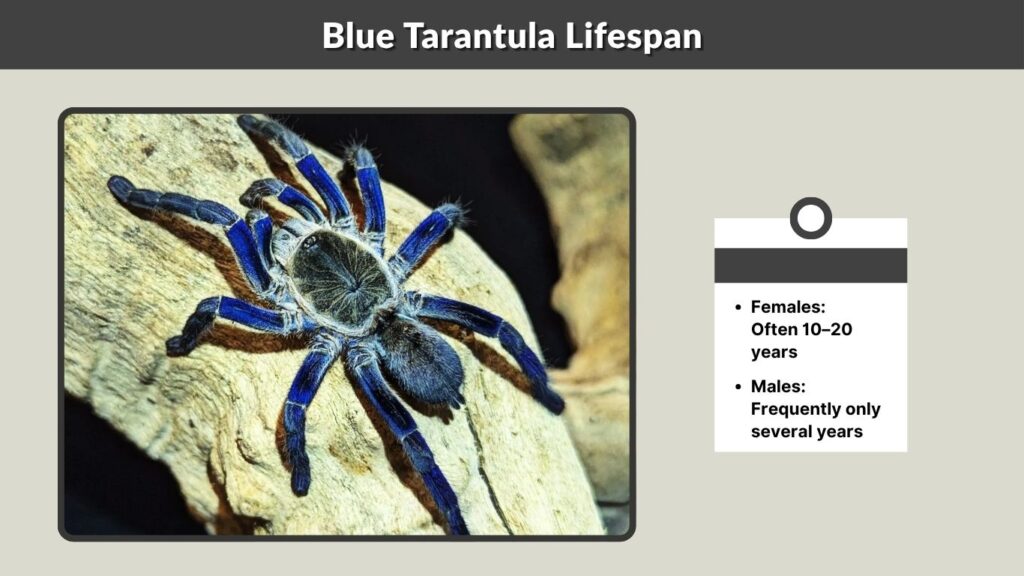
Lifespan depends on species and sex. Female tarantulas typically live dramatically longer than males.
Male vs. Female Lifespan
As a general pattern:
- Females: Often 10–20 years, depending on species
- Males: Frequently only several years, with a relatively short lifespan after maturity
Anyone buying a young female tarantula should therefore be prepared for a long-term commitment.
FAQs
1. Are blue tarantulas naturally blue?
Yes. Their blue appearance is natural. Microscopic structures in their hairs reflect light in ways that create metallic or iridescent blue coloration.
2. What is the brightest blue tarantula?
Several species display remarkable blue coloration, including cobalt blue, electric blue, Gooty sapphire ornamental, and Singapore blue tarantulas.
3. Can you keep a blue tarantula as a pet?
Yes. Many blue tarantulas are kept in captivity, but some fast and defensive species are better suited to experienced keepers.
4. Can a cobalt blue tarantula kill you?
Cobalt blue tarantulas are venomous and can deliver a painful bite, but they are not generally regarded as spiders that routinely cause fatal human envenomation. Any serious reaction should receive medical attention.
5. How big do blue tarantulas get?
Size depends on species. Many adults reach approximately 4–6 inches in leg span, while some larger blue tarantulas may approach 7–8 inches or more.
