
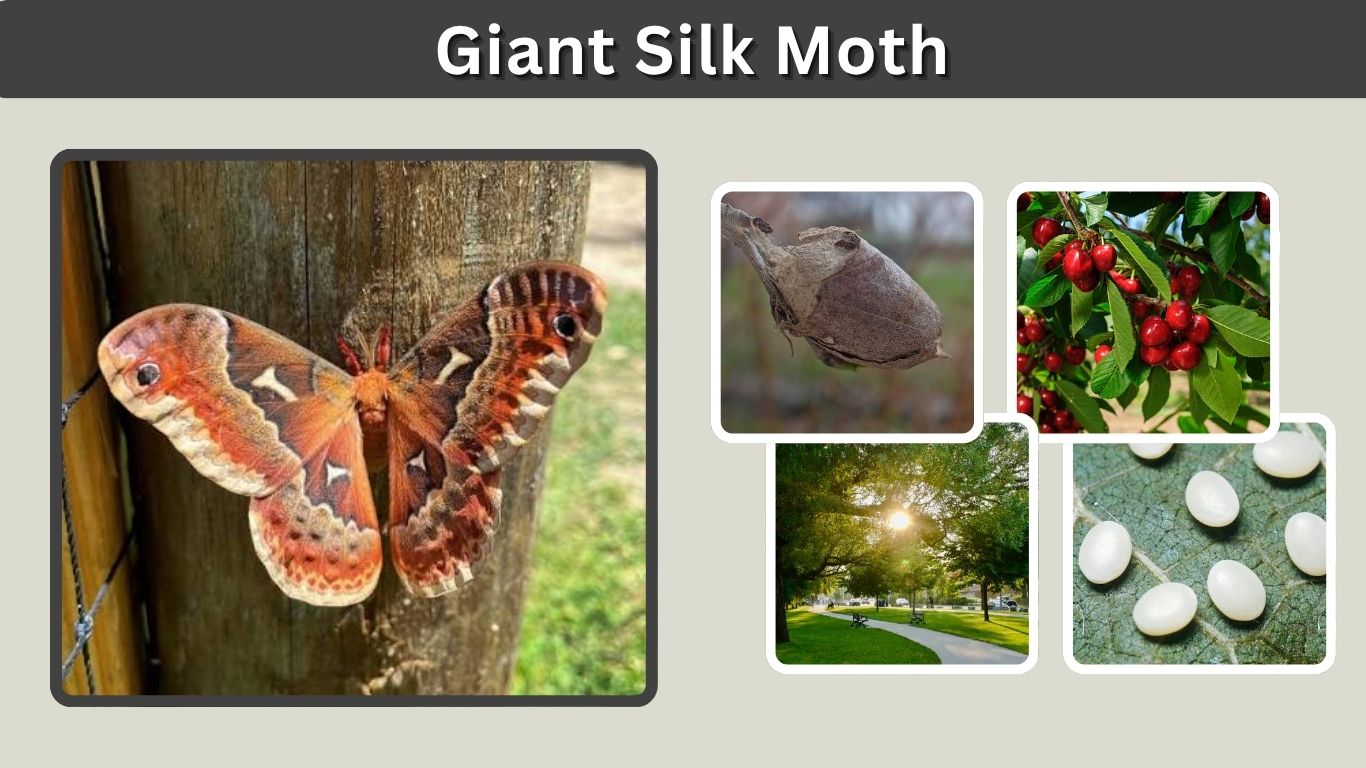
The giant silk moth is one of the largest and most impressive moths found in North America and other parts of the world. Known for broad wings, colorful patterns, and large caterpillars, these moths belong to the family Saturniidae. Popular species include the Cecropia, Polyphemus, Luna, and Promethea moths. Although their dramatic appearance can seem intimidating, giant silk moths are generally harmless to people. This guide covers giant silk moth identification, caterpillars, diet, lifespan, habitat, cocoons, life cycle, size, and other interesting facts.
What Is a Giant Silk Moth?
Giant silk moths are large moths belonging mainly to the family Saturniidae, commonly called giant silkworm moths or royal moths. The family contains hundreds of species distributed across many parts of the world. North America is especially well known for spectacular species such as the Cecropia moth and Polyphemus moth. Their caterpillars produce silk when preparing for pupation.
Giant Silk Moth Identification
Several physical characteristics can help identify a giant silk moth:
- Size: Many species have wingspans between 3 and 6 inches.
- Wings: Usually broad, rounded, and covered with colorful markings.
- Eyespots: Some species have large eye-like markings on their wings.
- Body: Thick, furry, and noticeably larger than many common moths.
- Antennae: Males usually have large, feathery antennae.
- Colors: Depending on species, wings may include brown, red, orange, white, green, pink, or gray.
- Flight: Adults are generally strongest during nighttime hours.
Some giant silk moths can look almost butterfly-like because of their impressive size and vivid coloration.
Giant Silk Moth Scientific Classification
Giant silk moths belong to the order Lepidoptera, which includes both moths and butterflies. They are members of the family Saturniidae.
The exact scientific name depends on the species. For example, the Cecropia moth is Hyalophora cecropia, while the Polyphemus moth is Antheraea polyphemus.
Common Giant Silk Moth Species
There are many giant silk moth species around the world. Their appearance, range, caterpillar food plants, and adult coloration can differ substantially. Several species are particularly well known because of their exceptional size or unusual wing patterns.
Giant Silk Moths of North America
Some of the best-known North American giant silk moths include:
- Cecropia moth (Hyalophora cecropia) – One of North America’s largest native moths.
- Polyphemus moth (Antheraea polyphemus) – Recognized by large eyespots on its hindwings.
- Luna moth (Actias luna) – Famous for pale-green wings and long hindwing tails.
- Promethea moth (Callosamia promethea) – A striking species with strong differences between males and females.
- Imperial moth (Eacles imperialis) – A large yellow moth marked with purple or brown.
- Io moth (Automeris io) – Smaller than some giant silk moths but famous for dramatic eyespots.
- Columbia silkmoth (Hyalophora columbia) – Similar in appearance to the Cecropia moth.
Cecropia Giant Silk Moth
The Cecropia moth is frequently considered the largest native moth in North America. Adults may reach a wingspan of approximately 5 to 7 inches under favorable conditions.
Its wings combine reddish-brown, black, white, orange, and gray patterns. The caterpillar is also impressive, becoming large and green with colorful tubercles before forming its cocoon.
Polyphemus Giant Silk Moth
The Polyphemus moth is another widespread North American species. Its name comes from Polyphemus, the one-eyed giant of Greek mythology, referring to the enormous eyespots visible on its hindwings.
Adults are usually tan or brown, helping them blend into tree bark and dried vegetation.
Giant Silk Moth Caterpillar
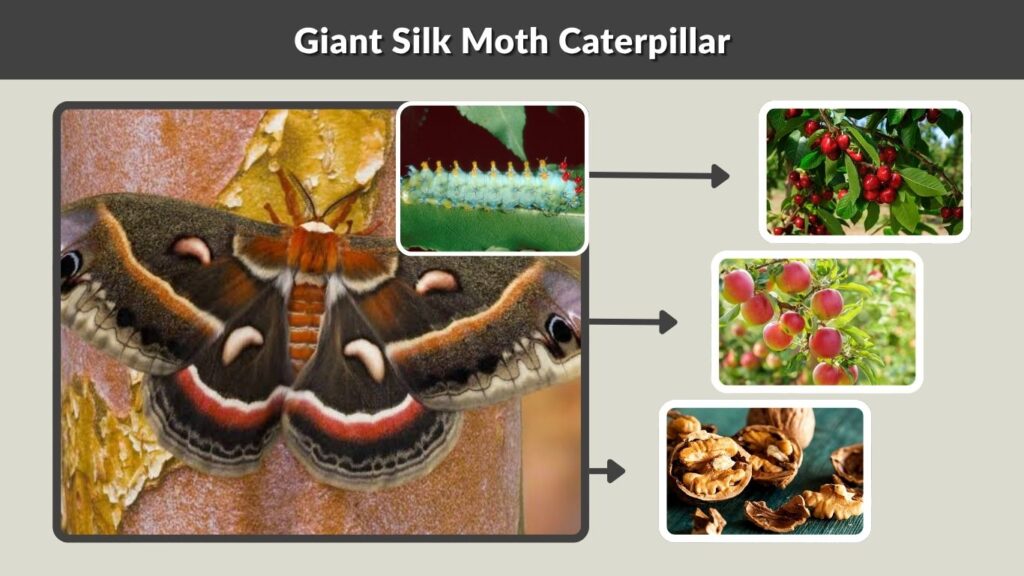
The giant silk moth caterpillar is often just as remarkable as the adult. Depending on the species, larvae may become several inches long before pupation. Most feed heavily on leaves because the caterpillar stage is when the insect obtains nearly all the energy it will use throughout adulthood.
What Do Giant Silk Moth Caterpillars Eat?
Food plants vary by species, but giant silk moth caterpillars commonly eat leaves from:
- Maple
- Oak
- Willow
- Birch
- Cherry
- Apple
- Walnut
- Hickory
- Sassafras
- Sweetgum
- Ash
- Poplar
A caterpillar normally remains relatively close to an acceptable host plant. Feeding becomes especially heavy during later larval stages as the caterpillar prepares to form a cocoon.
What Does a Giant Silk Moth Caterpillar Look Like?
Most giant silk moth caterpillars are large, thick-bodied, and usually green during their later stages. Cecropia caterpillars, for example, have noticeable colorful bumps across their bodies.
Appearance varies considerably between species. Some have smooth bodies, while others possess spines, knobs, or hair-like structures that make them look intimidating.
Are Giant Silk Moth Caterpillars Poisonous?
Most commonly encountered giant silk moth caterpillars are not dangerous to humans. However, certain members of the Saturniidae family have defensive spines capable of causing painful skin irritation.
For this reason, unfamiliar caterpillars should be observed rather than handled. Species such as the Io moth caterpillar possess venomous spines that can cause burning, redness, itching, and discomfort after skin contact.
Giant Silk Moth Life Cycle
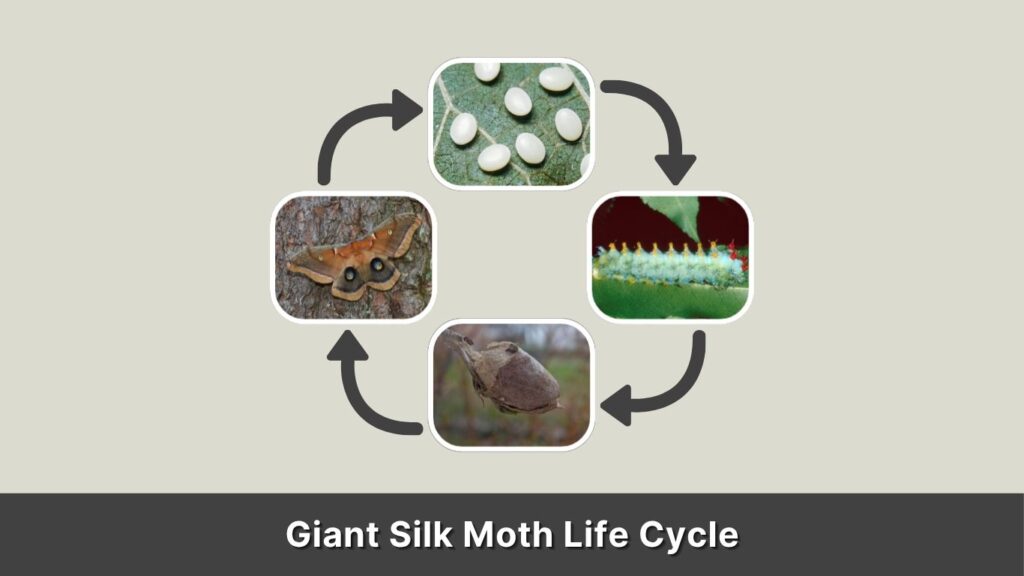
The life cycle of a giant silk moth includes four major developmental stages: egg, caterpillar, pupa, and adult. The entire process is adapted around seasonal temperature changes and the availability of suitable host plants. In colder regions, many species spend winter safely protected inside their cocoons before emerging during warmer weather.
Egg Stage
Female giant silk moths lay eggs on or near suitable host plants. Depending on the species and temperature, the eggs usually hatch after several days or a couple of weeks.
Newly emerged caterpillars immediately begin feeding on leaves.
Caterpillar Stage
The caterpillar grows through several developmental stages known as instars. During each stage, it eats heavily before shedding its old skin.
The larval stage may last several weeks. Caterpillars become dramatically larger before eventually searching for an appropriate location to pupate.
Giant Silk Moth Cocoon
When development is complete, the caterpillar produces silk and constructs a protective cocoon.
Cocoons may be attached to branches, leaves, shrubs, tree trunks, or vegetation near the ground. Inside the cocoon, the caterpillar transforms into a pupa and eventually develops into an adult moth.
Adult Stage
When conditions become suitable, the adult emerges from its cocoon. Its wings initially appear soft and folded. The moth pumps fluid into its wings until they expand and harden.
Once capable of flying, adults focus almost entirely on finding mates and reproducing.
Giant Silk Moth Size
Size is one of the most recognizable characteristics of these insects. Some giant silk moths have wingspans larger than a person’s hand. However, measurements depend heavily on species, sex, nutrition during the caterpillar stage, and environmental conditions.
How Big Is a Giant Silk Moth?
Typical measurements include:
- Wingspan: Approximately 3–7 inches depending on species.
- Body length: Often around 1–3 inches.
- Caterpillar length: Large larvae may reach approximately 3–5 inches.
- Female size: Females are often heavier-bodied because they carry eggs.
- Male antennae: Males usually have larger, more feather-like antennae than females.
Some tropical Saturniid species become even larger than most North American giant silk moths.
What Do Giant Silk Moths Eat?
One of the most fascinating characteristics of many giant silk moths is that adults eat very little or nothing at all. Their adult stage exists primarily for reproduction rather than feeding. Energy accumulated while they were caterpillars supports their brief adult lives.
Do Giant Silk Moths Have Mouths?
Many adult giant silk moths have reduced or nonfunctional mouthparts. They cannot feed normally like butterflies or nectar-drinking moths.
After emerging, males search for females, while females concentrate on mating and finding suitable locations for their eggs.
Because adults cannot replenish their energy, their lifespan is naturally short.
Giant Silk Moth Habitat and Range
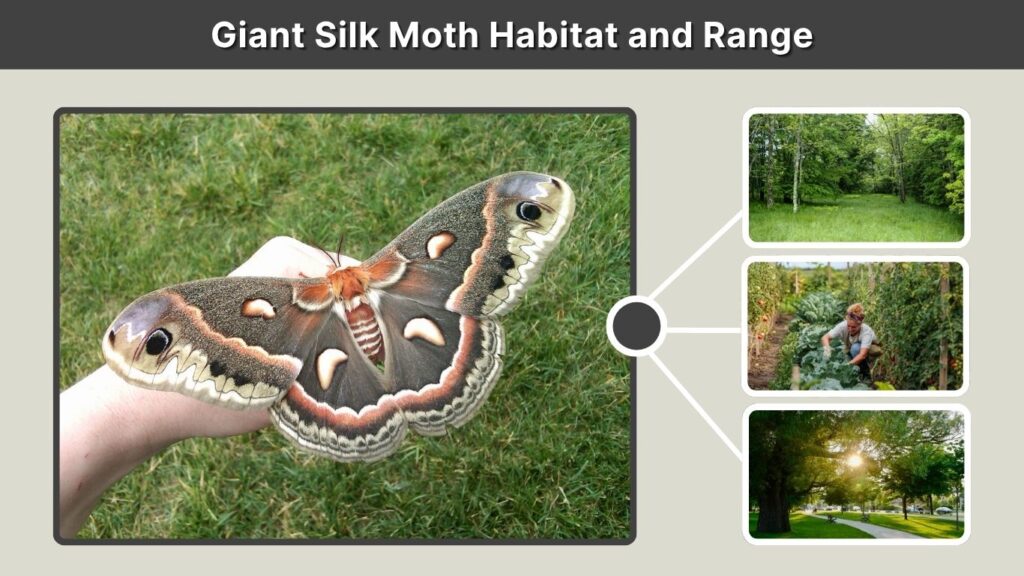
Giant silk moths occur in forests, woodland edges, gardens, parks, and other areas containing suitable caterpillar host plants. Different species have different geographic ranges, making some much more common in particular regions.
Giant Silk Moths in North America
Giant silk moths can occur throughout large portions of the United States and Canada.
Species may be encountered in states and regions such as:
- Michigan
- Minnesota
- Wisconsin
- Illinois
- Indiana
- Ohio
- Pennsylvania
- Virginia
- Alabama
- Florida
- Oregon
- Washington
- California
Their exact distribution depends on species, climate, elevation, and availability of suitable vegetation.
Giant Silk Moth Lifespan
The adult giant silk moth has an exceptionally short life compared with its earlier developmental stages. Most of its lifetime is spent as an egg, growing caterpillar, or pupa.
How Long Do Giant Silk Moths Live?
Once an adult emerges from its cocoon, it often survives for only about one to two weeks, although lifespan varies between species and conditions.
Because many adults cannot eat, they rely entirely on fat reserves accumulated during the caterpillar stage.
The complete life cycle may take several months, especially when the insect overwinters inside its cocoon.
Are Giant Silk Moths Dangerous?
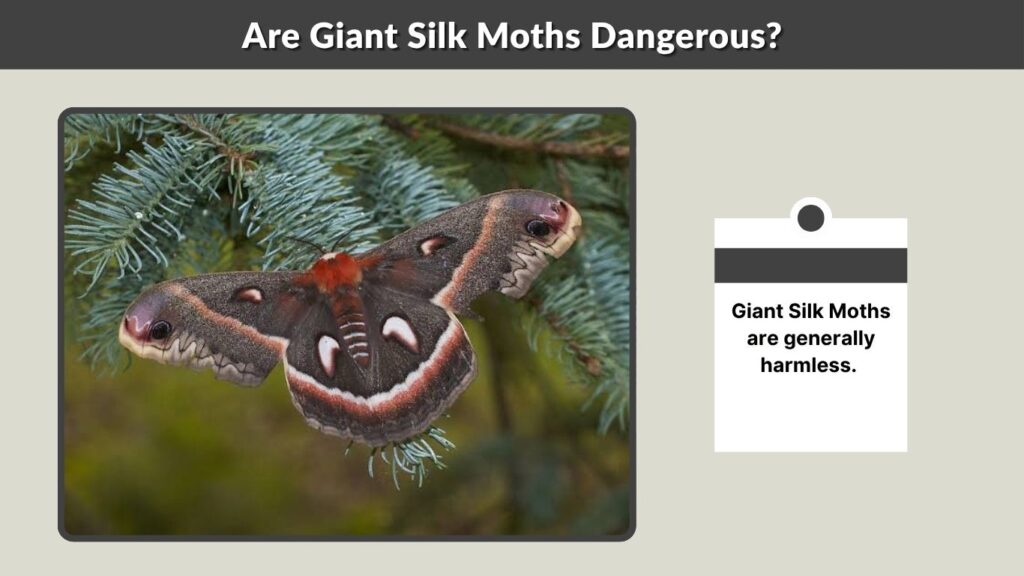
Their enormous bodies and dramatic markings may make giant silk moths look threatening, but adult moths are generally harmless. They do not actively attack humans, and adult Saturniid moths lack the structures necessary for biting or stinging.
Can Giant Silk Moths Bite or Sting?
Adult giant silk moths:
- Do not sting.
- Generally cannot bite humans.
- Are not aggressive.
- Are not poisonous to touch.
- Do not damage clothing.
- Do not infest houses like pantry or clothes moths.
Caution is mainly necessary around certain caterpillar species possessing irritating or venomous spines.
Interesting Giant Silk Moth Facts
Giant silk moths are among the most visually remarkable insects in the moth world. Their enormous wings, short adult lifespan, powerful pheromone detection, and dramatic transformation have made them popular among insect enthusiasts.
Fascinating Facts
- Male giant silk moths can detect female pheromones from considerable distances.
- Their large feathery antennae contain highly sensitive chemical receptors.
- Many adults never eat after leaving their cocoon.
- Females can carry hundreds of eggs.
- Caterpillars may increase dramatically in size before pupating.
- Large eyespots may help frighten or confuse predators.
- Some species spend the winter as pupae inside silk cocoons.
- Cecropia moths are among the largest native moths in North America.
- Giant silk moths are mostly active after sunset.
- Outdoor lights sometimes attract adults during nighttime flights.
FAQs
Are Giant Silk Moths Rare?
Some giant silk moth species are relatively common within suitable habitat but are rarely noticed because adults are nocturnal and live for only a short time. Habitat quality, pesticide use, artificial lighting, climate, and local host plants can influence how frequently they are encountered.
What Is the Largest Giant Silk Moth?
The Cecropia moth is generally regarded as the largest native moth in North America, with exceptionally large individuals reaching wingspans of around 6 inches or more. Worldwide, several tropical Saturniid species can achieve even greater wingspans.
Can You Keep a Giant Silk Moth as a Pet?
Giant silk moths can sometimes be raised for educational or observation purposes, but their requirements depend on species. Caterpillars need fresh leaves from appropriate host plants, proper ventilation, and enough space. Local regulations should also be checked before collecting or transporting native insects.
How Can You Attract Giant Silk Moths?
Maintaining native host trees and shrubs can encourage giant silk moths to visit your property. Reducing pesticide use is particularly important because caterpillars depend on healthy foliage. Adults may occasionally be attracted by outdoor lights, although excessive nighttime lighting can interfere with natural moth behavior.
Why Do Giant Silk Moths Live Such Short Lives?
Many adult giant silk moths cannot feed because their mouthparts are reduced or nonfunctional. They survive using energy stored during the caterpillar stage. Their adult life is therefore focused on mating and egg laying, usually lasting only several days to around two weeks.
