
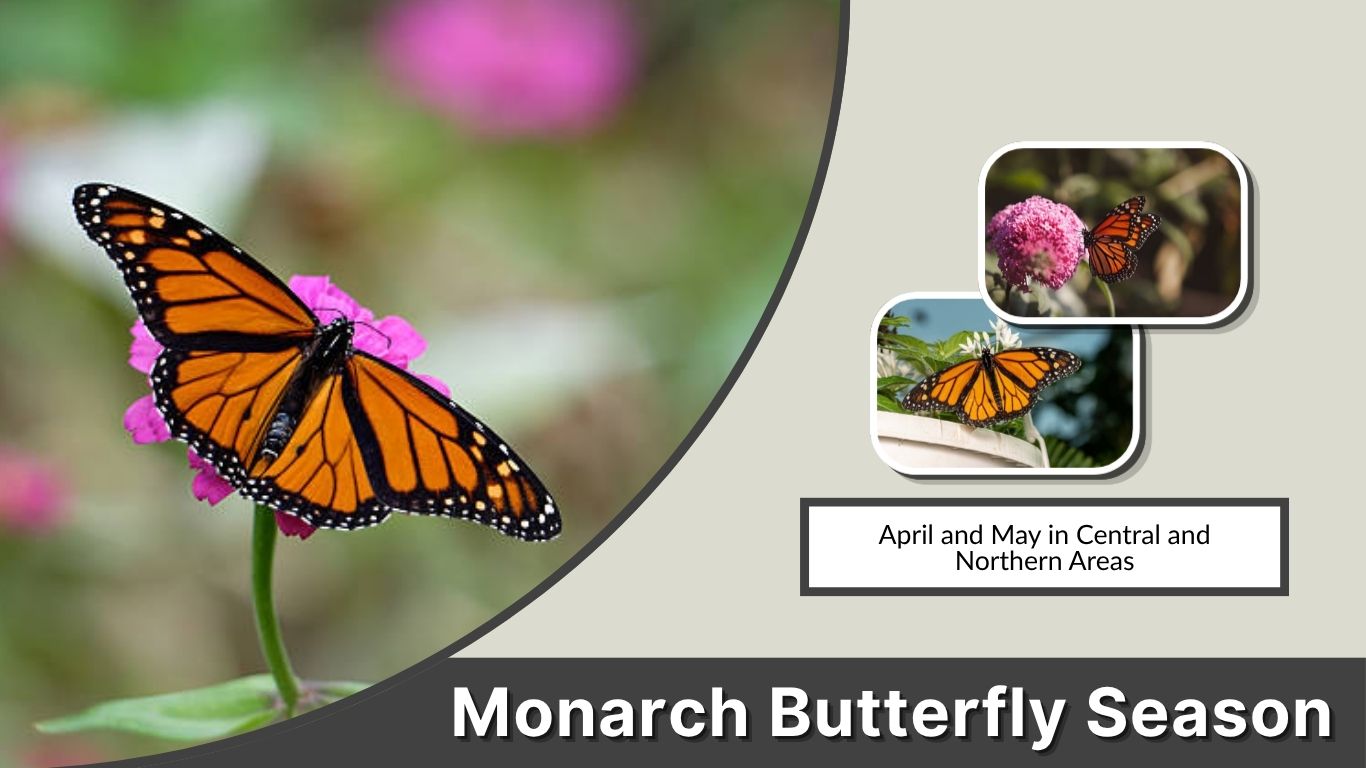
Monarch butterfly season changes according to location. Across much of the United States and Canada, monarchs are most visible from late spring through early fall, when they breed, lay eggs, and feed on flowers. In Texas and other southern states, spring and fall migration create two distinct viewing periods. Along coastal California and in central Mexico, the best season is winter, when migrating monarchs gather at protected overwintering sites.
When Is Monarch Butterfly Season?
There is no single monarch season for every region. Their annual cycle includes spring migration, summer breeding, fall migration, and winter overwintering.
| Region | Typical monarch season | Main activity |
| Northern United States and southern Canada | May–September | Breeding, feeding, and fall departure |
| Central United States | April–October | Spring arrival, breeding, and fall migration |
| Texas | March–April and late September–November | Northbound and southbound migration |
| Coastal California | Mid-October–mid-February | Overwintering in sheltered groves |
| Central Mexico | November–mid-March | Winter clustering |
| Southern Florida | Potentially year-round | Breeding, feeding, and non-migratory activity |
These periods are approximate. Temperature, storms, drought, wind, milkweed growth, and flower availability can cause monarchs to arrive earlier or later in a particular year.
Spring Monarch Butterfly Season
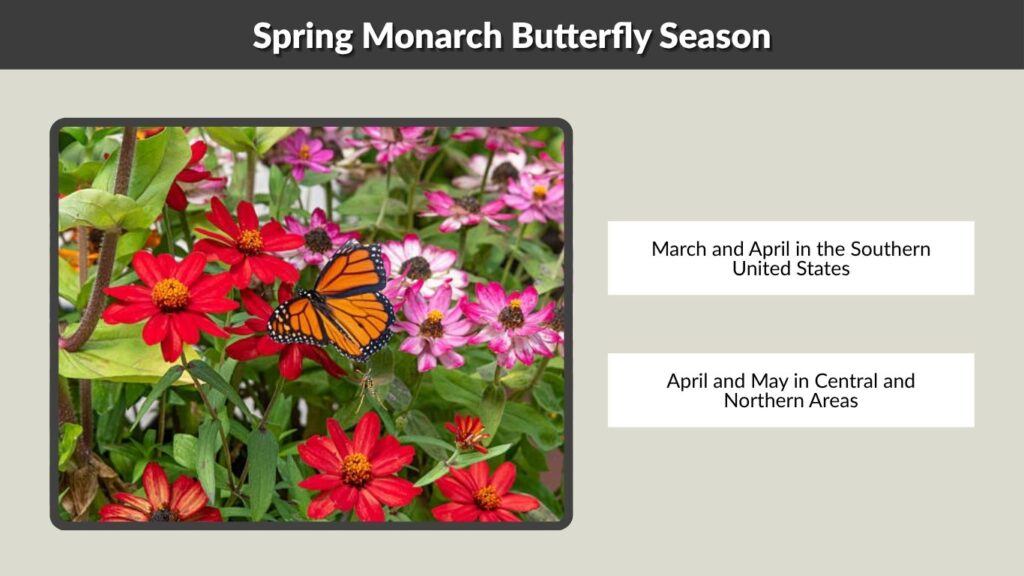
Spring migration begins when overwintering monarchs leave central Mexico and coastal California. Eastern monarchs generally begin moving north from Mexico in March, reaching Texas and other southern states as milkweed emerges.
March and April in the Southern United States
Texas usually experiences its main spring monarch season during March and April. The adults that survived winter in Mexico feed on nectar and lay eggs on newly growing milkweed as they move northward. Most of these older butterflies do not reach the northern United States; their offspring continue the journey.
Spring viewing is often less dramatic than fall migration. Instead of enormous groups, people usually notice individual monarchs visiting milkweed patches, gardens, fields, and roadside flowers.
April and May in Central and Northern Areas
The next generation emerges in the southern United States and continues north. New adults commonly reach central and northern breeding areas during late April and May. Their exact arrival depends heavily on temperature and the development of milkweed.
Gardeners may begin seeing eggs beneath milkweed leaves shortly after adult females arrive. Caterpillars usually follow within several days if conditions are warm enough for the eggs to develop.
Summer Breeding and Caterpillar Season
Summer is the main breeding period across the northern and central parts of the monarch’s range. During this time, several short-lived generations develop through the egg, caterpillar, chrysalis, and adult stages. The population generally expands throughout spring and summer.
When Is Monarch Caterpillar Season?
Monarch caterpillars may be found whenever actively growing milkweed and egg-laying females are present. In many northern areas, the most productive period runs from late spring through August. Southern regions may see eggs and caterpillars earlier in spring and later in fall.
A newly hatched monarch caterpillar eats only milkweed. As it grows, it passes through five larval stages before forming a chrysalis. Milkweed is therefore essential during the breeding season, while flowering plants provide nectar for adults.
Late-season caterpillars are sometimes seen as temperatures begin falling. Cooler weather slows their growth, while frost can destroy both milkweed and nectar flowers.
Monarch Mating and Egg-Laying Season
Adult monarchs normally mate during the spring and summer breeding period. Females lay eggs individually on milkweed, often placing them on the underside of young leaves.
A female may lay approximately 300–500 eggs during two to five weeks, although many eggs and young caterpillars are lost to predators, disease, weather, and food shortages.
The late-summer generation behaves differently. Rather than immediately mating, many enter reproductive diapause, delaying reproduction while they migrate and overwinter.
Fall Monarch Migration Season
Fall is often the best monarch butterfly season for observers in the central and eastern United States. Butterflies born during late summer begin traveling south toward Mexico, sometimes forming temporary clusters in trees at night.
When Does Fall Migration Begin?
Monarchs may begin leaving Canada and the northern United States in mid-to-late August. Migration becomes more noticeable through September as butterflies use favorable winds, stop at nectar-rich flowers, and gather in overnight roosts.
The timing progresses southward:
- Northern states: late August through September
- Central states: September through early October
- Texas inland route: late September through early November
- Texas coastal route: late October through mid-November
- Central Mexico arrival: mainly October and November
These dates are not fixed. A strong cold front may produce a sudden wave of butterflies, while unfavorable winds or intense heat can temporarily delay movement.
Peak Monarch Season in Texas
Texas lies between the monarchs’ northern breeding grounds and their overwintering forests in Mexico. The main inland migration corridor begins receiving monarchs during the final days of September, and most have passed into Mexico by early November. A later coastal movement may continue from roughly the third week of October to mid-November.
During peak movement, monarchs may be seen feeding heavily on frostweed, goldenrod, asters, mistflower, and other autumn-blooming plants. Sheltered trees near rivers and creeks may hold overnight roosts.
Monarch Butterfly Season in California

California’s most famous monarch season occurs during fall and winter. Western monarchs migrate to sheltered coastal groves, where they cluster in trees to escape freezing temperatures and strong winds.
Santa Cruz and Natural Bridges
At Natural Bridges State Beach in Santa Cruz, monarchs typically begin arriving in mid-October and leave by mid-February. Late October and November are often among the best times to observe them.
On cold mornings, the butterflies may remain tightly clustered and look like dry leaves. They become more active as temperatures rise, opening their wings and flying to find nectar and water.
Pacific Grove and Monterey
The Pacific Grove Monarch Sanctuary historically receives monarchs from mid-October through mid-February. Peak viewing generally occurs from November through January.
The number of monarchs can vary greatly from year to year. Visitors should check recent local counts before planning a long trip because historical photographs do not necessarily represent current conditions.
Pismo Beach
The official Pismo State Beach Monarch Butterfly Grove season runs from November through February. The grove provides sheltered overwintering habitat and nearby flowering plants that supply nectar on mild winter days.
Monarch Butterfly Season in Mexico
Eastern monarchs generally reach the mountain forests of central Mexico by late October or early November. They remain clustered there through winter, with the viewing season usually lasting from November until the first half of March.
The butterflies conserve energy by remaining relatively inactive during cool weather. On warm, sunny days, large numbers may leave their clusters to fly, drink water, and move among the trees. As temperatures rise in March, they begin their northward journey.
Monarch Butterfly Season in Florida
Florida differs from most of the United States because its warm climate can support monarch activity during much of the year. Migratory butterflies pass through the state, but some monarchs remain in southern Florida through winter and may form locally breeding, non-migratory groups.
Although year-round sightings are possible, abundance still changes with weather, drought, flowers, milkweed availability, and migration. Spring and fall often produce additional sightings as traveling monarchs move through the region.
Best Time of Day to See Monarch Butterflies

Warm, calm, sunny conditions usually offer the best chance of seeing monarchs flying and feeding. Late morning through early afternoon is often productive after the butterflies have warmed their flight muscles.
During fall migration or winter overwintering, early morning can be useful for finding clusters. The butterflies may hang together quietly before sunlight and warmer air encourage them to fly.
Avoid disturbing roosting or overwintering butterflies. Remain on designated paths, keep noise low, and use binoculars or a zoom camera when clusters are high in the trees.
FAQs
What month is monarch butterfly season?
The best month depends on location. Northern areas often have the most monarchs from July through September. Texas usually peaks during October, while California’s coastal sanctuaries are most active from November through January.
What season do monarch butterflies migrate?
Monarchs migrate north during spring and south during fall. Spring migration begins from Mexico around March, while the southbound generation begins leaving northern breeding areas in August and travels through the United States during September and October.
Is summer a good time to see monarch butterflies?
Yes. Summer is the main breeding season across much of the United States and southern Canada. Adults visit flowers and milkweed, while eggs, caterpillars, and chrysalises may be found in suitable habitats.
When is peak monarch season in Santa Cruz and Monterey?
Natural Bridges in Santa Cruz is often best during late October and November. Pacific Grove’s historical peak extends from November through January. Actual numbers and arrival dates vary each year with weather and habitat conditions.
Can monarch butterflies be seen during winter?
Yes. Large overwintering groups occur in central Mexico and coastal California. Some monarchs also remain active in southern Florida and other warm coastal areas, although winter breeding outside traditional overwintering sites varies.
