
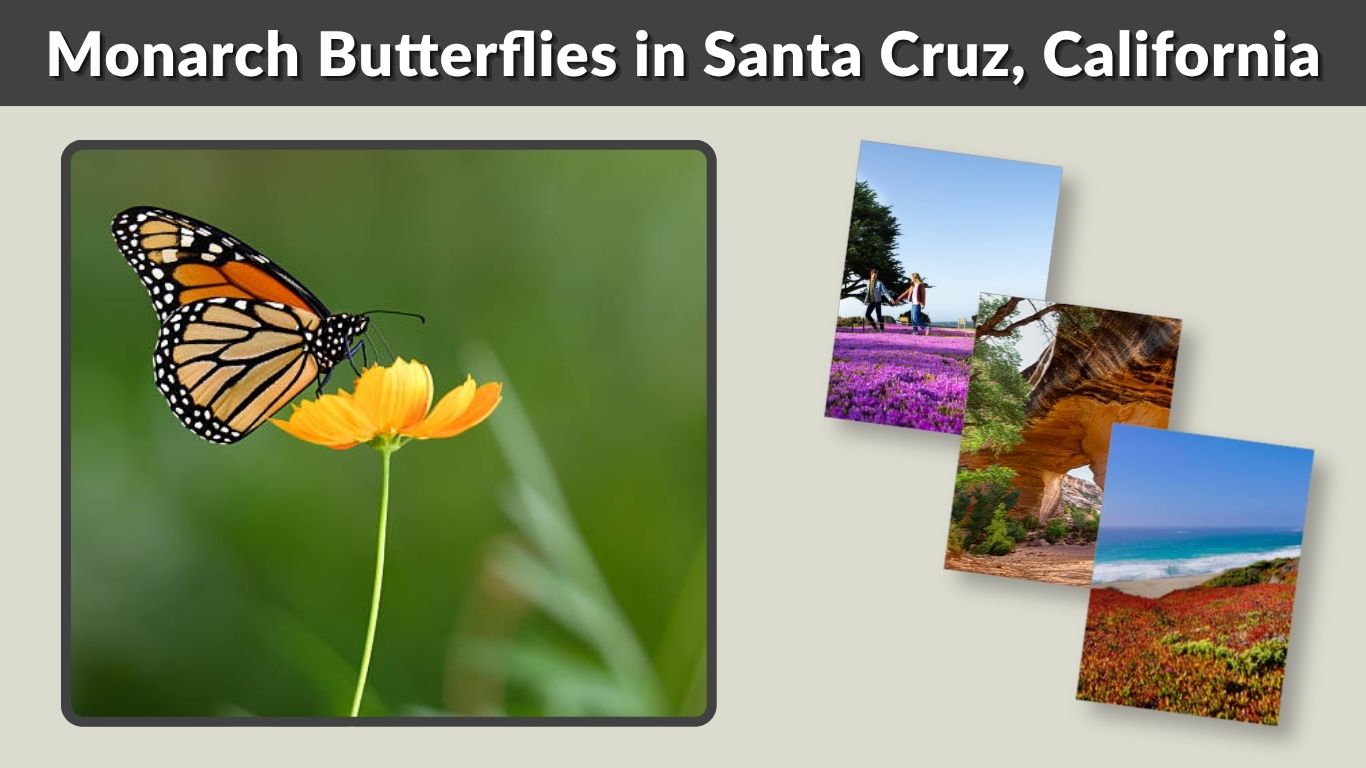
Every autumn, western monarch butterflies travel to protected groves along the California coast, where they spend the colder months clustered in trees. Santa Cruz is one of the best-known destinations for witnessing this migration, particularly at Natural Bridges State Beach. Visitors may see hundreds or thousands of orange-and-black butterflies hanging from eucalyptus branches or flying through the grove on warm, sunny days. However, monarch numbers vary considerably each year, so timing and weather can affect the experience.
Monarch Butterfly Migration in California
California supports the western migratory population of monarch butterflies. These butterflies move between breeding areas across western North America and protected overwintering sites along the California coast.
Where Do California Monarchs Migrate?
Western monarchs generally spread through California and other western states during spring and summer. Successive generations reproduce in areas where milkweed and flowering plants are available.
In autumn, a special long-lived generation travels toward coastal California and northern Baja California. By November, many have gathered in sheltered groves from the San Francisco Bay Area south toward San Diego. These locations offer protection from strong wind, heavy rain, and freezing temperatures.
Unlike most summer monarchs, which live only several weeks, the overwintering generation can survive approximately six to eight months. It delays reproduction until warmer weather returns, then begins moving inland and northward in late winter or early spring.
Why Do Monarchs Choose Coastal California?
Monarchs need very specific conditions during winter. A suitable grove must be cool enough to slow their metabolism but not so cold that they freeze. Trees must also block strong wind while allowing filtered sunlight and access to nearby nectar and water.
Many California groves contain eucalyptus, Monterey pine, Monterey cypress, and other tall trees that create a protected microclimate. Although eucalyptus is not native to California, some established groves now provide important shelter and winter nectar for migrating monarchs.
Monarch Butterflies at Natural Bridges, Santa Cruz
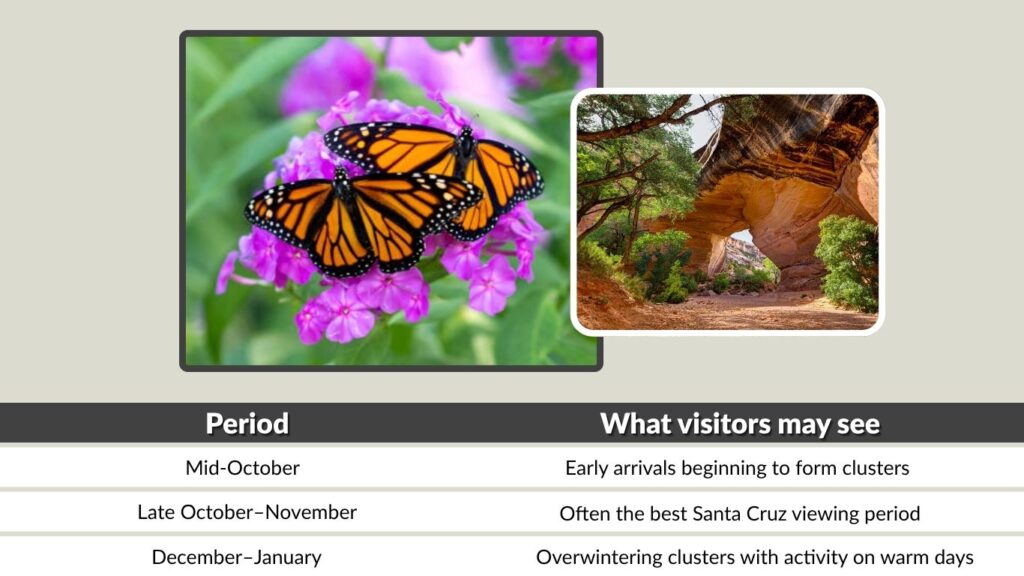
Natural Bridges State Beach is Santa Cruz’s most famous monarch-viewing location. Its protected grove provides a sheltered winter habitat in a gently sloping coastal canyon.
When Do Monarchs Arrive at Natural Bridges?
Monarchs typically begin arriving at Natural Bridges in mid-October and leave by mid-February. California State Parks identifies late October and November as an especially good period for observing them, although migration dates and numbers change from year to year.
The butterflies usually remain clustered when morning temperatures are low. As the air warms to around 60°F or higher, they become more active and may leave the trees to drink nectar, find water, or move around the grove.
| Period | What visitors may see |
| Mid-October | Early arrivals beginning to form clusters |
| Late October–November | Often the best Santa Cruz viewing period |
| December–January | Overwintering clusters with activity on warm days |
| Early to mid-February | Butterflies beginning their spring departure |
| Spring and summer | Few or no overwintering monarchs in the grove |
How to Visit the Monarch Grove
Visitors can reach the viewing area by following a wheelchair- and stroller-accessible boardwalk to an observation deck. The grove at Natural Bridges is California’s only State Monarch Preserve, giving the butterflies and their winter habitat special protection.
Visitors should remain on the boardwalk, avoid touching butterflies, and keep noise low. Dogs, bicycles, smoking, skates, and skateboards are prohibited on the boardwalk. Binoculars can make it easier to see clusters hanging high in the branches.
Natural Bridges is also known for its natural sea arch, coastal trails, beach, tide pools, visitor center, and seasonal wildlife programs. Conditions and park operations can change, so checking current California State Parks information before traveling is sensible.
Best Places to See Monarch Butterflies in California
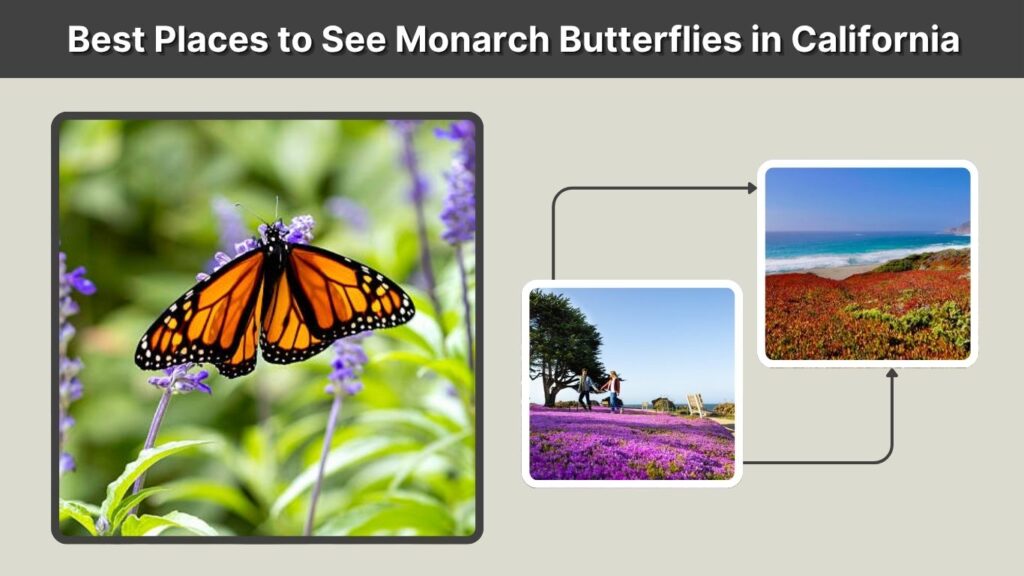
Although Santa Cruz is a leading destination, California contains numerous coastal overwintering sites. The number of butterflies at each location can differ dramatically between seasons.
Pacific Grove Monarch Sanctuary
The Pacific Grove Monarch Sanctuary is one of California’s largest publicly accessible overwintering sites and the largest in Monterey County. Monarchs usually begin arriving in mid-October, with peak viewing generally occurring from November through January. Most leave by February.
The sanctuary is located at 250 Ridge Road in Pacific Grove. It is open from sunrise to sunset, admission is free, and reservations are not normally required. The trail is ADA accessible, although parking is limited and pets are not permitted. Volunteer docents are often present during monarch season when weather allows.
Pismo State Beach Monarch Butterfly Grove
Pismo State Beach in San Luis Obispo County is another major public viewing site. Its butterfly season generally runs from November through mid-February. The grove offers educational programs explaining monarch migration, habitat, and conservation.
Butterfly numbers at Pismo vary widely. Visitors should not assume that historical photographs or old population figures represent current conditions. Checking recent counts or contacting the park can provide a more realistic idea of what is present.
Other California Overwintering Areas
Additional monarch sites occur in Santa Cruz, Monterey, San Luis Obispo, Santa Barbara, Ventura, Los Angeles, Orange, and San Diego counties. Some are located on public land, while others are privately owned or closed to protect fragile habitat.
Lighthouse Field State Beach and Moran Lake are other notable Santa Cruz County locations. However, monarchs may shift between nearby groves during the same season as weather, tree conditions, and food availability change.
California Monarch Population
Western monarch numbers have fallen dramatically from their historical levels. In the 1980s, an estimated one to four million butterflies regularly overwintered in California, but recent counts have shown severe annual fluctuations and a much lower overall population.
Recent Santa Cruz Counts
During the 2025–2026 overwintering season, Natural Bridges recorded approximately 2,500 monarchs during an early-December count, the highest total reported at a California site during that period. However, the final statewide winter count recorded only 6,464 monarchs across 193 sites, showing that the western population remained at a historically low level.
Counts can decline between autumn and late winter because of storms, cold weather, predation, disease, mortality, movement between groves, and early spring dispersal. Therefore, a low count on one day does not necessarily mean all previously recorded butterflies died.
Why Are Western Monarchs Declining?
The decline is associated with several overlapping pressures:
- Loss and degradation of overwintering groves
- Declining milkweed and nectar resources
- Pesticide and herbicide exposure
- Drought, wildfire, and extreme weather
- Climate-related habitat changes
- Disease and habitat fragmentation
The California Department of Fish and Wildlife recommends protecting overwintering habitat, planting locally appropriate native flowers and milkweed, purchasing pesticide-free plants, and limiting pesticide use near monarch habitat.
Milkweed and Monarch Gardens in California
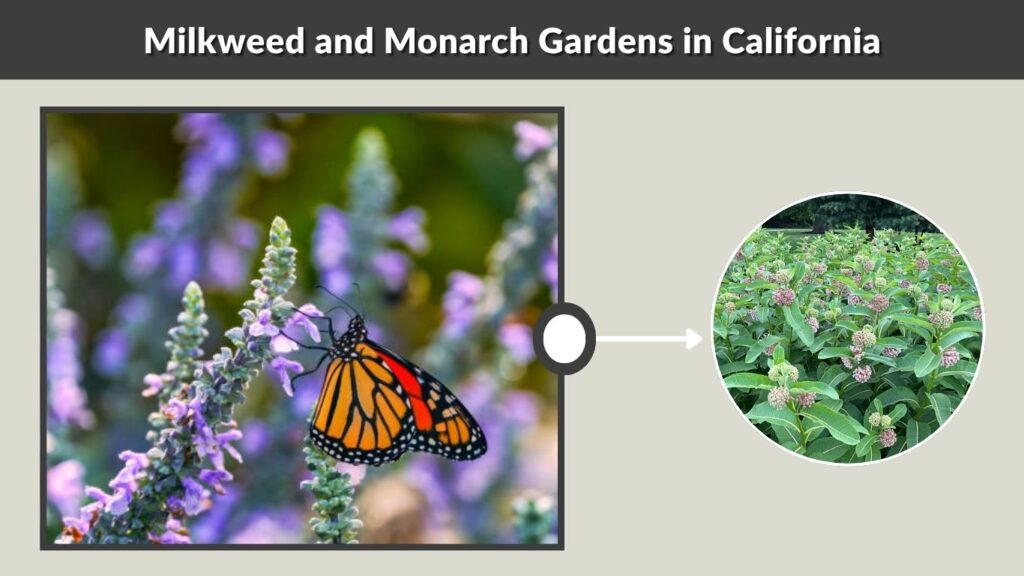
Milkweed is essential because it is the only host plant on which monarchs lay their eggs and the only plant their caterpillars can eat. Adult butterflies use many different flowering plants for nectar.
Choosing Milkweed Carefully
Gardeners should select native milkweed suited to their specific California region. Recommended species may include California milkweed, heartleaf milkweed, desert milkweed, and woolly milkweed, depending on local climate and natural range. Plants should be pesticide-free.
Milkweed should generally not be planted directly beside coastal overwintering groves. Nectar-rich native flowers are usually more appropriate near those winter habitats, while milkweed is most useful within natural breeding and migration areas.
Can You Raise Monarch Butterflies in California?
California residents cannot legally collect, handle, or captively rear wild monarchs for education, research, or propagation without a valid Scientific Collecting Permit. This restriction applies to eggs, caterpillars, chrysalises, and adults removed from the wild.
Captive rearing may spread disease, interfere with normal migration, and remove individuals from an already vulnerable population. Creating outdoor habitat with native nectar plants and regionally suitable milkweed is a safer way to support monarchs.
FAQs
When is monarch butterfly season in Santa Cruz?
Monarch season typically begins in mid-October and lasts until mid-February. Late October and November are often the most reliable months at Natural Bridges, although weather and population changes influence arrival dates, butterfly numbers, and daily activity.
What is the best time of day to see monarchs?
Late morning or early afternoon on a mild, sunny day usually offers the most activity. On cold mornings, monarchs remain tightly clustered and may resemble dead leaves. Once temperatures rise, some open their wings and begin flying around the grove.
Are monarch butterflies native to California?
Monarchs naturally occur in California and have long used the state for breeding, migration, and overwintering. The western migratory population spends winter mainly along the California coast before dispersing into western breeding areas during spring.
Where is the best monarch sanctuary in California?
Natural Bridges State Beach, Pacific Grove Monarch Sanctuary, and Pismo State Beach Monarch Butterfly Grove are among the best publicly accessible options. The best location in a particular year depends on current counts, weather, and the condition of each grove.
Can visitors touch monarch butterflies?
No. Visitors should never touch, capture, move, or disturb clustering monarchs. Handling can damage their wings, waste stored energy, and spread disease. Observe them from designated paths or platforms and use binoculars or a zoom camera for a closer view.
